
Oxidation process in the presence of carbon dioxide
a carbon dioxide and oxidation process technology, applied in the field of oxidation process, can solve the problems of prior art processes, incur additional costs, and reduce the conversion selectivity of various reactions, so as to reduce solvent content, reduce the size of the reactor, and improve the utilization rate
Patent Information
- Authority / Receiving Office
- US · United States
- Patent Type
- Patents(United States)
- Current Assignee / Owner
- Publication Date
- 2010-01-19
- Estimated Expiration
- Not applicable · inactive patent
Smart Images
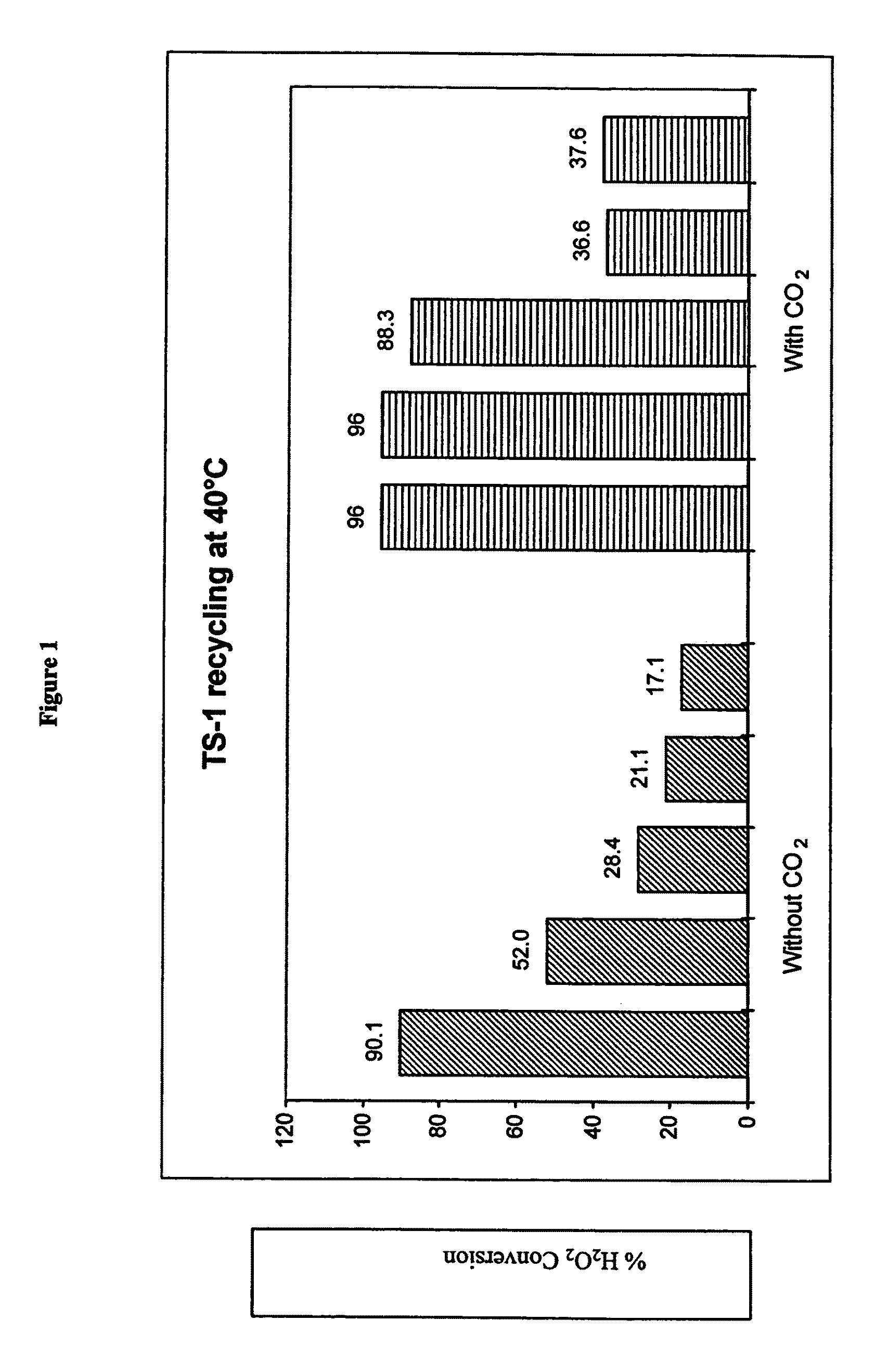
Figure 1 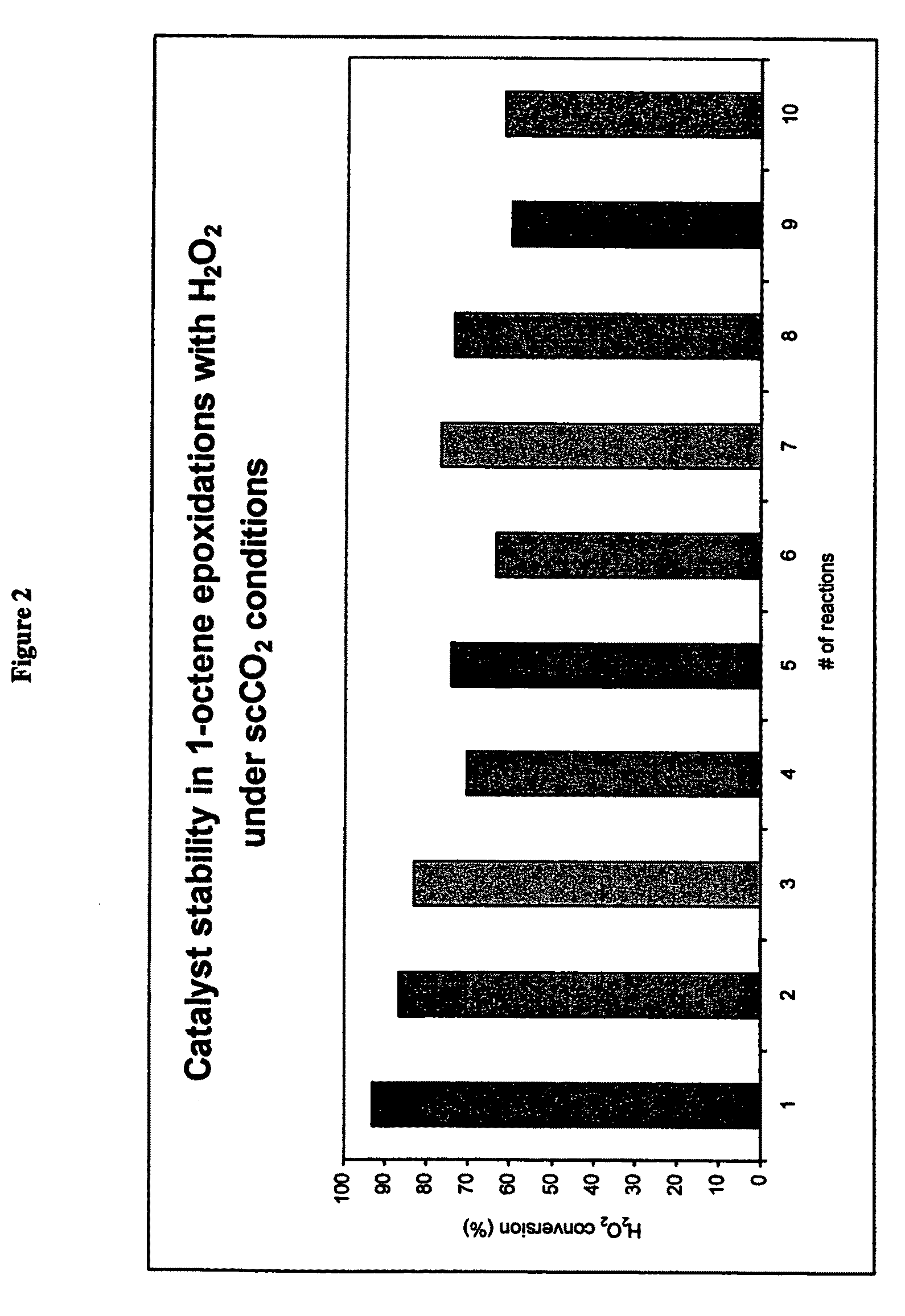
Figure 2 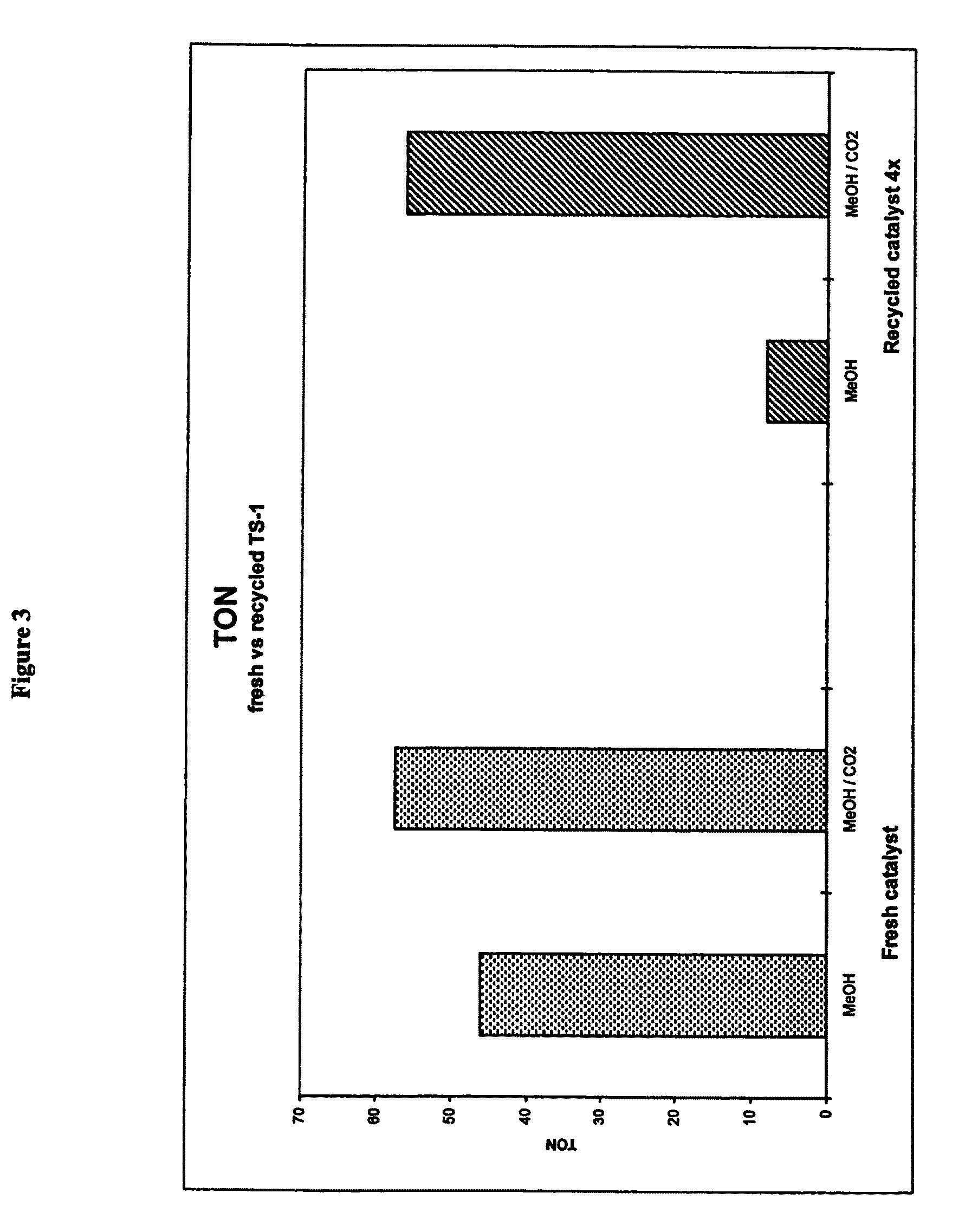
Figure 3
Abstract
Description
CROSS-REFERENCE TO RELATED APPLICATIONS
[0001] The present application is a U.S. National Stage Patent Application of PCT application PCT / EP 99 / 03998, filed Jun. 8, 1999, which claims priority to Great Britain application GB 98122.35.1, filed Jun. 8, 1998. Both of these applications are fully incorporated by reference herein.BACKGROUND OF THE INVENTION
[0002] The present invention relates to an oxidation process and in particular to a process for the oxidation of unsaturated hydrocarbons in the presence of catalyst under heterogeneous conditions.
[0003] It is well known that the epoxidation of unsaturated hydrocarbons e.g. olefinic compounds, with various oxidants such as hydrogen peroxide may be effectively catalyzed by certain synthetic zeolites containing metal atoms such as titanium atoms (see, for example, U.S. Pat. No. 4,833,260).
[0004] Various process modifications have been proposed to improve the conversion and selectivity of these oxidation reactions. U.S. Pat. No. 4,824,976 prop...
Examples
example 1
[0042]A TS-1 catalyst (prepared by the procedure given in Applied Catalysis, 99, (1993), pages 71-84) was utilised in the oxidation of 1-octene to 1,2-epoxyoctane with and without supercritical carbon dioxide as the solvent. A 250 cm3 batch autoclave equipped with a temperature controller, mechanical stirrer (1000 rpm), reagents feed line, sampling line and vent line was charged in two separate experiments with the following reagents.
[0043]
Experiment 1Experiment 2ReagentsWeight (g)Weight (g)1-octene14.527.26H2O2 (30 wt % in H2O)0.44*0.22*Methanol112.556.25Carbon Dioxide074.2TS-1 catalyst1.00.5Total128.46138.43*= the weight of H2O2does not include the weight of H20
[0044]For Experiment 1 the reaction was undertaken at 65° C. for 60 minutes. For Experiment 2 the reactor was first pressurised with carbon dioxide gas to 48 bar (48×105 Nm−2), after which 74.2 g of liquid carbon dioxide was added. The reaction was undertaken at 65° C. for 60 minutes and at a pressure of 106 bar (106×105 Nm...
example 2
[0048]In a further set of experiments the solvent system utilised was methanol or methanol / CO2 under supercritical conditions.
[0049]In a first set of experiments (Experiment 3) the TS-1 catalyst was used in a methanol solvent and recycled without treatment or regeneration. In a second set of experiments (Experiment 4) the TS-1 catalyst was used in a methanol / carbon dioxide solvent system under supercritical conditions with respect to the carbon dioxide again the catalyst was recycled without further treatment or regeneration.
Methanol Solvent—Catalyst Recycle
[0050]The following reagents were used:
[0051]
Experiment 3ReagentsWeight (g)1-octene7.26H2O2(30 wt % in H2O)0.22*Methanol56.3Carbon Dioxide0TS-1 catalyst0.5Total64.23*=the weight of H2O2 does not include the weight of H2O
[0052]The reaction was undertaken at 40° C. for 60 minutes in a 100 cm3 glass reactor with magnetic stirrer and chilled water cooler on an electrical heating mantle. On completion the reactor was recharged with re...
example 3
[0061]Example 1 was repeated with the exception that the reaction time was 30 minutes and the reaction temperature was 40° C. The results are provided in FIG. 4; these results illustrate that at short reaction times and low temperature the process of the invention provides improved selectivity and oxidant conversion.