
Organic/inorganic composite microporous membrane and electrochemical device prepared thereby
a microporous membrane and organic/inorganic composite technology, applied in the field of organic/inorganic composite porous separators, can solve the problems of low capacity of secondary lithium ion polymer batteries compared to secondary lithium ion batteries, insufficient discharge capacity, safety problems, etc., and achieve easy assembly and assembly of batteries. , excellent adhesion of polymer
Patent Information
- Authority / Receiving Office
- US · United States
- Patent Type
- Patents(United States)
- Current Assignee / Owner
- Publication Date
- 2010-02-16
Smart Images
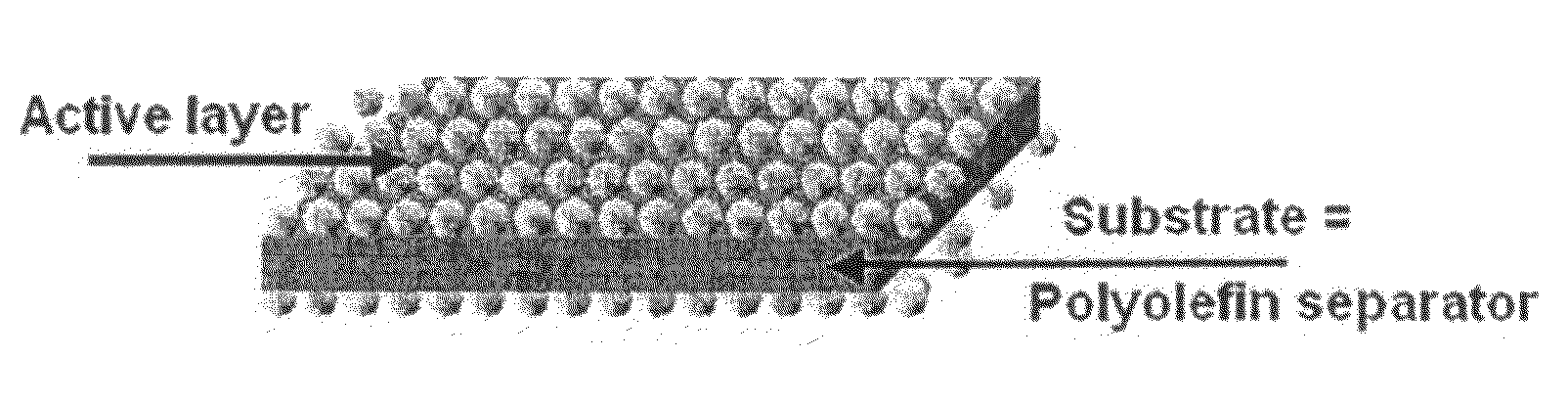
Figure 1 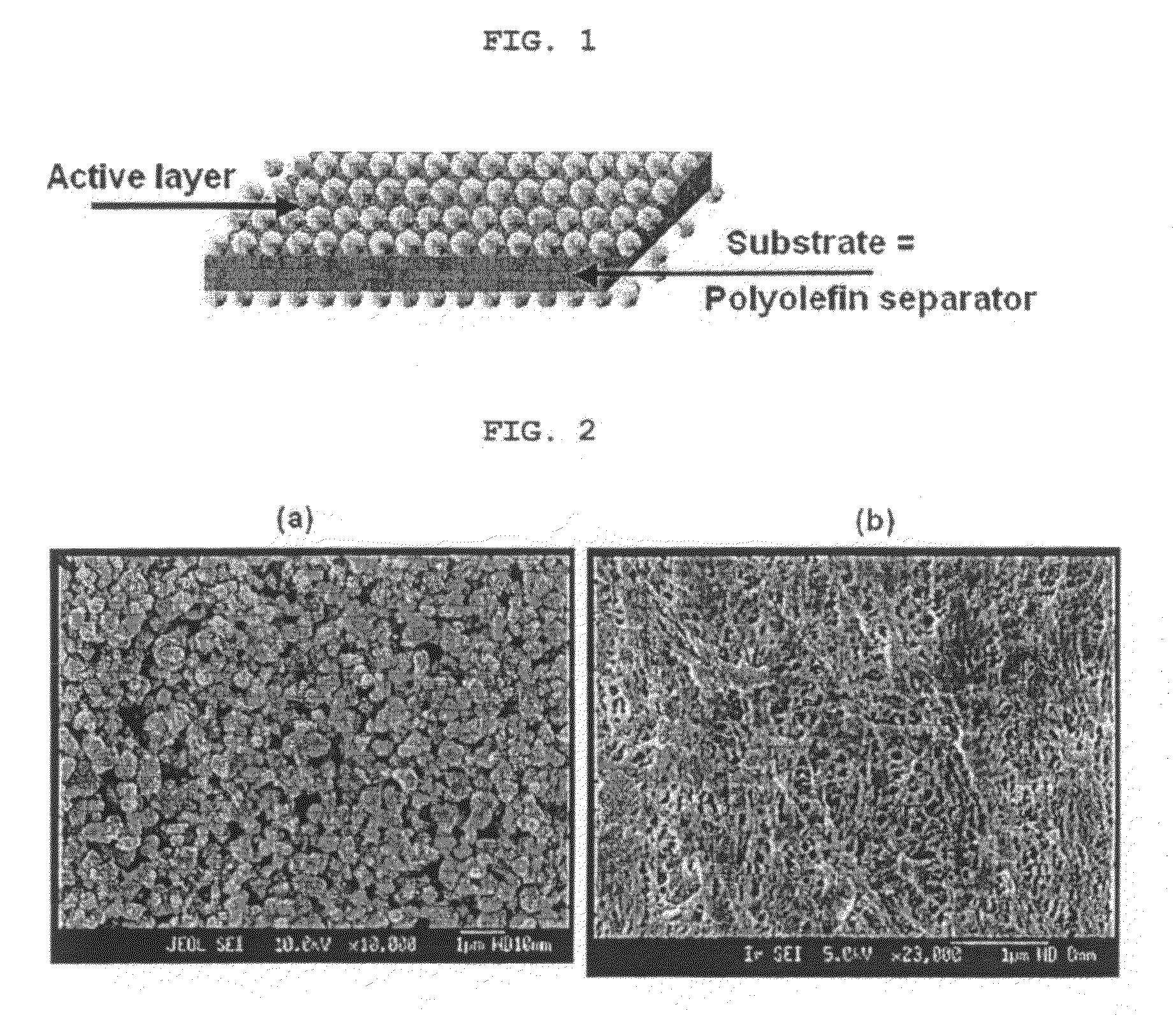
Figure 2 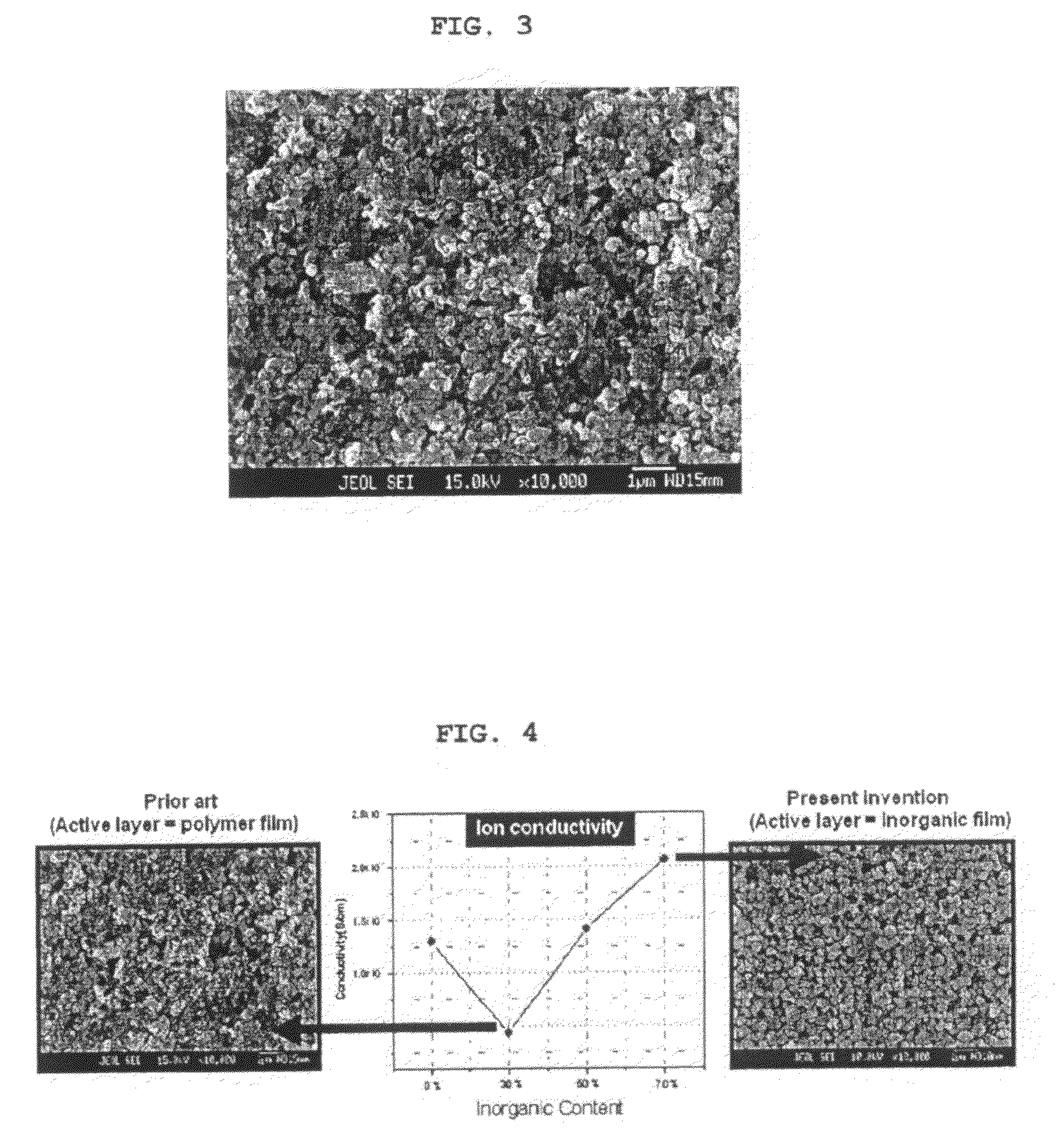
Figure 3
Abstract
Description
TECHNICAL FIELD
[0001] The present invention relates to a novel organic / inorganic composite porous separator that can show excellent thermal safety, electrochemical safety and lithium ion conductivity and a high degree of swelling with electrolyte, compared to conventional polyolefin-based separators, and an electrochemical device comprising the same, which ensures safety and has improved quality.BACKGROUND ART
[0002] Recently, there is increasing interest in energy storage technology. Batteries have been widely used as energy sources in portable phones, camcorders, notebook computers, PCs and electric cars, resulting in intensive research and development for them. In this regard, electrochemical devices are the subject of great interest. Particularly, development of rechargeable secondary batteries is the focus of attention.
[0003] Among the currently used secondary batteries, lithium secondary batteries, developed in early 1990's, have a drive voltage and an energy density higher than t...
Examples
example 1-7
Example 1
[0082]1-1. Preparation of Organic / Inorganic Composite Porous Separator (PVdF-CTFE / BaTiO3)
[0083]Polyvinylidene fluoride-chlorotrifluoroethylene copolymer (PVdF-CTFE) was added to acetone in an amount of about 5 wt % and dissolved therein at 50° C. for about 12 hours or more to form a polymer solution. To the polymer solution obtained as described above, BaTiO3 powder was added in an amount corresponding to the ratio of BaTiO3 / PVdF-CTFE=90 / 10 (wt % ratio). Next, the BaTiO3 powder was crushed and pulverized for about 12 hours or more by using a ball mill method to form slurry. The BaTiO3 powder in the slurry obtained as described above has a size controllable according to the size (particle size) of the beads used in the ball mill and the application time of the ball mill. In this example, the BaTiO3 powder was pulverized into a size of about 400 nm to provide the slurry. Then, the slurry obtained as described above was coated on a polyethylene separator (porosity: 45%) having...
example 2
[0091]Example 1 was repeated to provide an organic / inorganic composite porous separator (PVdF-HFP / BaTiO3) and a lithium secondary battery comprising the same, except that PVDF-HFP was used instead of PVDF-CTFE. After measuring with a porosimeter, the final organic / inorganic composite porous separator had a thickness of 3 μm, and showed a pore size of 0.4 μm and a porosity of 56%.
example 3
[0092]Example 1 was repeated to provide an organic / inorganic composite porous separator (PVdF-CTFE / PMNPT) and a lithium secondary battery comprising the same, except that PMNPT powder was used instead of BaTiO3 powder. After measuring with a porosimeter, the final organic / inorganic composite porous separator had a thickness of 3 μm and showed a pore size of 0.5 μm and a porosity of 57%.