
Rule-based network management approaches
a network management and rule-based technology, applied in the field of computer network management, can solve the problems of unfavorable network events, unfavorable network events, and large amount of prior approaches, and achieve the effect of high level of flexibility and power to the languag
Patent Information
- Authority / Receiving Office
- US · United States
- Patent Type
- Patents(United States)
- Current Assignee / Owner
- Publication Date
- 2010-02-23
- Estimated Expiration
- Not applicable · inactive patent
Smart Images
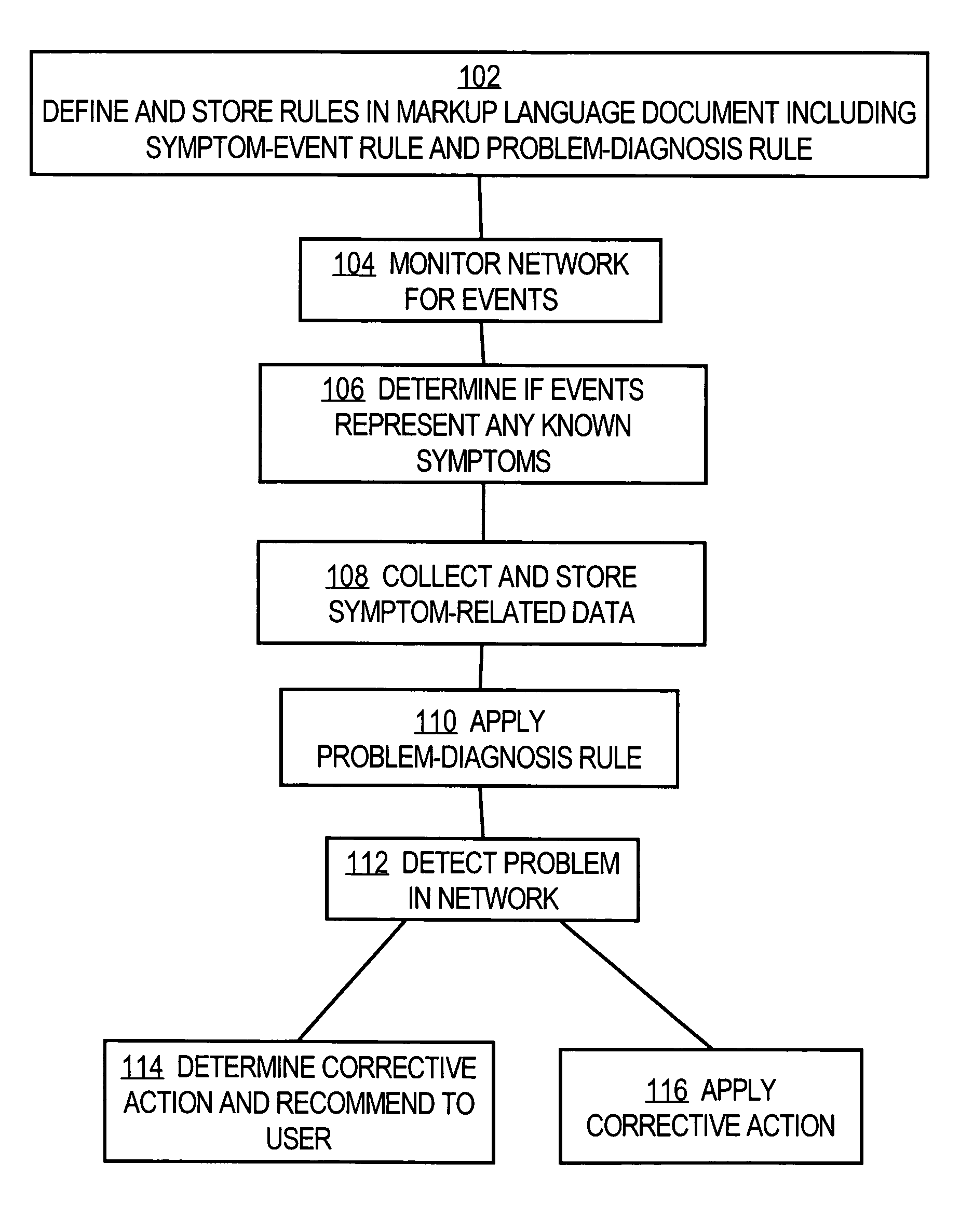
Figure 1 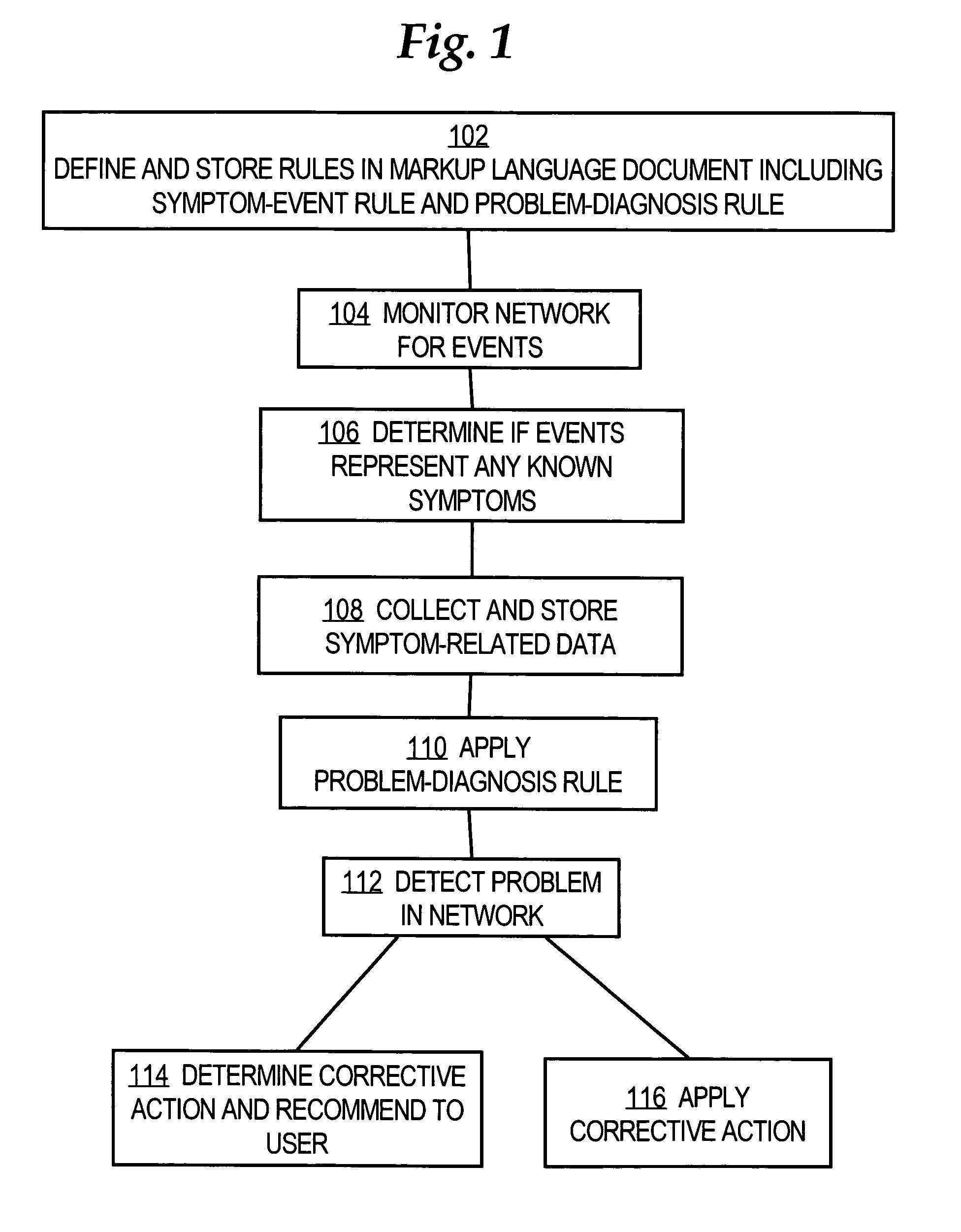
Figure 2 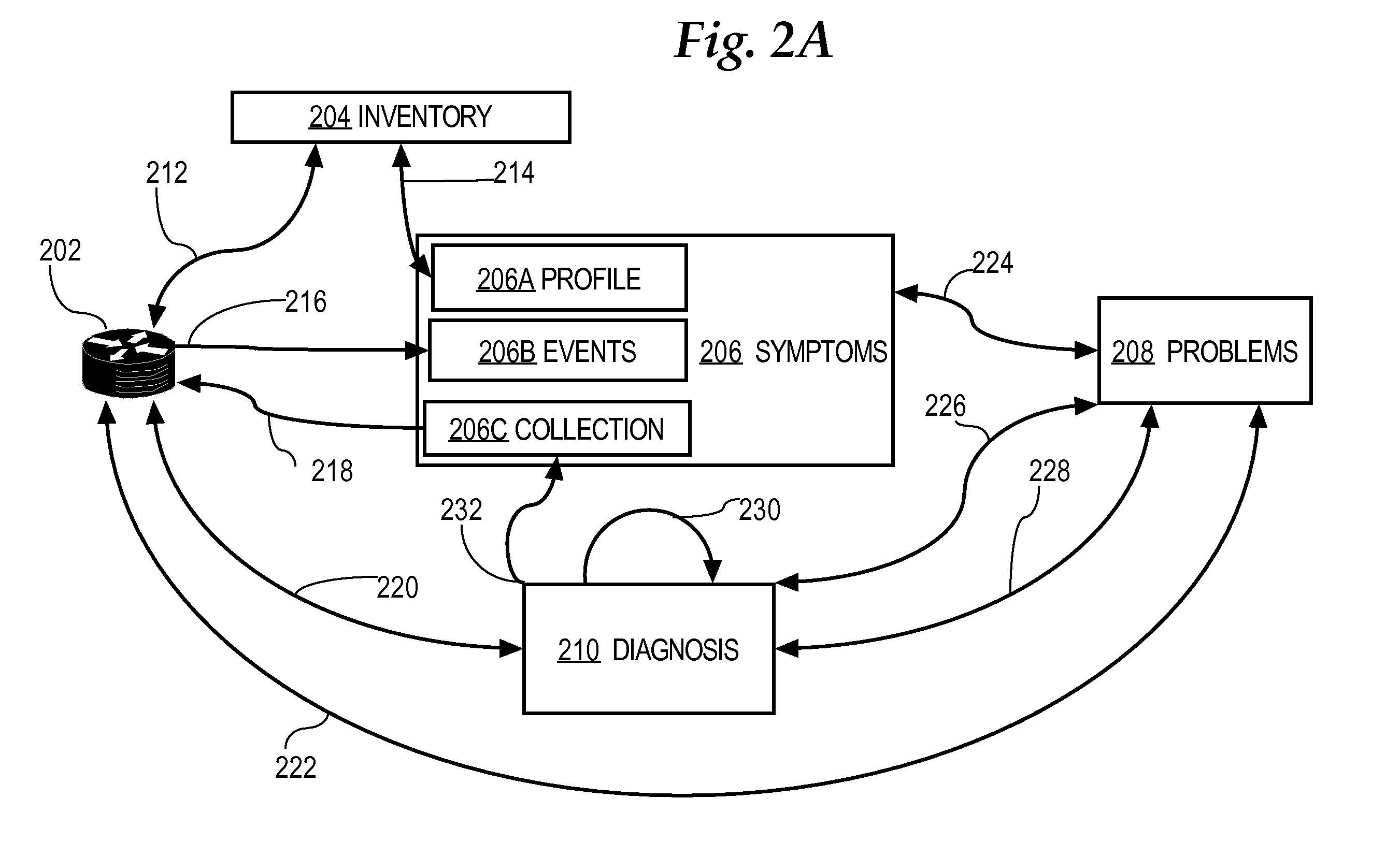
Figure 3
Abstract
Description
FIELD OF THE INVENTION
[0001] The present invention generally relates to management of computer networks. The invention relates more specifically to rule-based network management approaches.BACKGROUND OF THE INVENTION
[0002] The approaches described in this section could be pursued, but are not necessarily approaches that have been previously conceived or pursued. Therefore, unless otherwise indicated herein, the approaches described in this section are not prior art to the claims in this application and are not admitted to be prior art by inclusion in this section.
[0003] Computer networks that use routers, switches and other network elements are commonly managed using network management software systems. Examples of network management systems include Resource Management Essentials from Cisco Systems, Inc., San Jose, Calif.; HP OpenView from Hewlett-Packard Company, Palo Alto, Calif., and others. Such network management systems are commonly used to support detection of network events, in...
Examples
example diagnosis rules
Sample Rules
Rule-1: This sample rule shows the usage of most of the functions available in the Diagnosis Engine
[0180]
test2 true IOS Node Suresh 9 / 15 / 2002 3 months Cisco Systems Customer Advocacy Output Interpreter Diagnosis A feature Test $wds$ = ( ) $c_wds$ = 0 $trm$ =“” $maskXOR$ =“” $bitop$ =“38 $m_loop$ =0 $m_loop2$ =( ) $m_header$ =( ) $count_cp$ =0 $child_parent$ = ( ) sh_test2 collection en_1 check_parent $sub$ eq $header$ $$push($child_parent$, $sub$) $count_cp$ = $$count($child_parent$) / operation> true header $header$ has a duplicate child / result> child_parent has $count_cp$ elements / result> Fix the thing. 4 check_break $$count($loop2$) gt4 $$break( ) Breaking check_independant $sub$ eq $loop2$ IOS true sub and loop2 both contain $sub$ / result> print_pre_merge $loop2$...