
Decentrally controlled imaging-based patient data extraction
a data extraction and decentral control technology, applied in speech analysis, medical equipment, instruments, etc., can solve the problems of large number of qualified people, no radiologists are locally available for the diagnosis of image data, and the evaluation of generated image data is not sufficient, so as to reduce the number of people and increase the availability and reliability of diagnosis.
Patent Information
- Authority / Receiving Office
- US · United States
- Patent Type
- Applications(United States)
- Current Assignee / Owner
- Publication Date
- 2020-11-19
- Estimated Expiration
- Not applicable · inactive patent
Smart Images
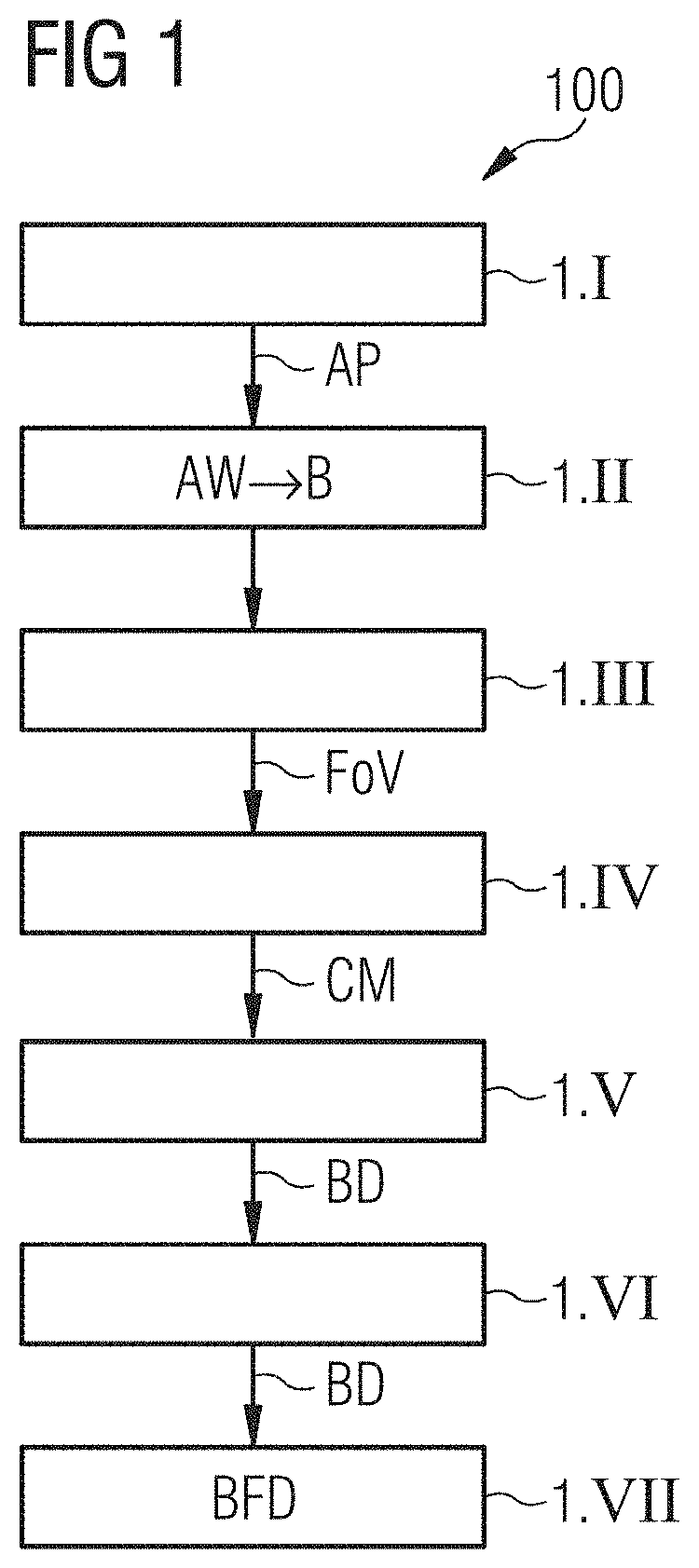
Figure 1 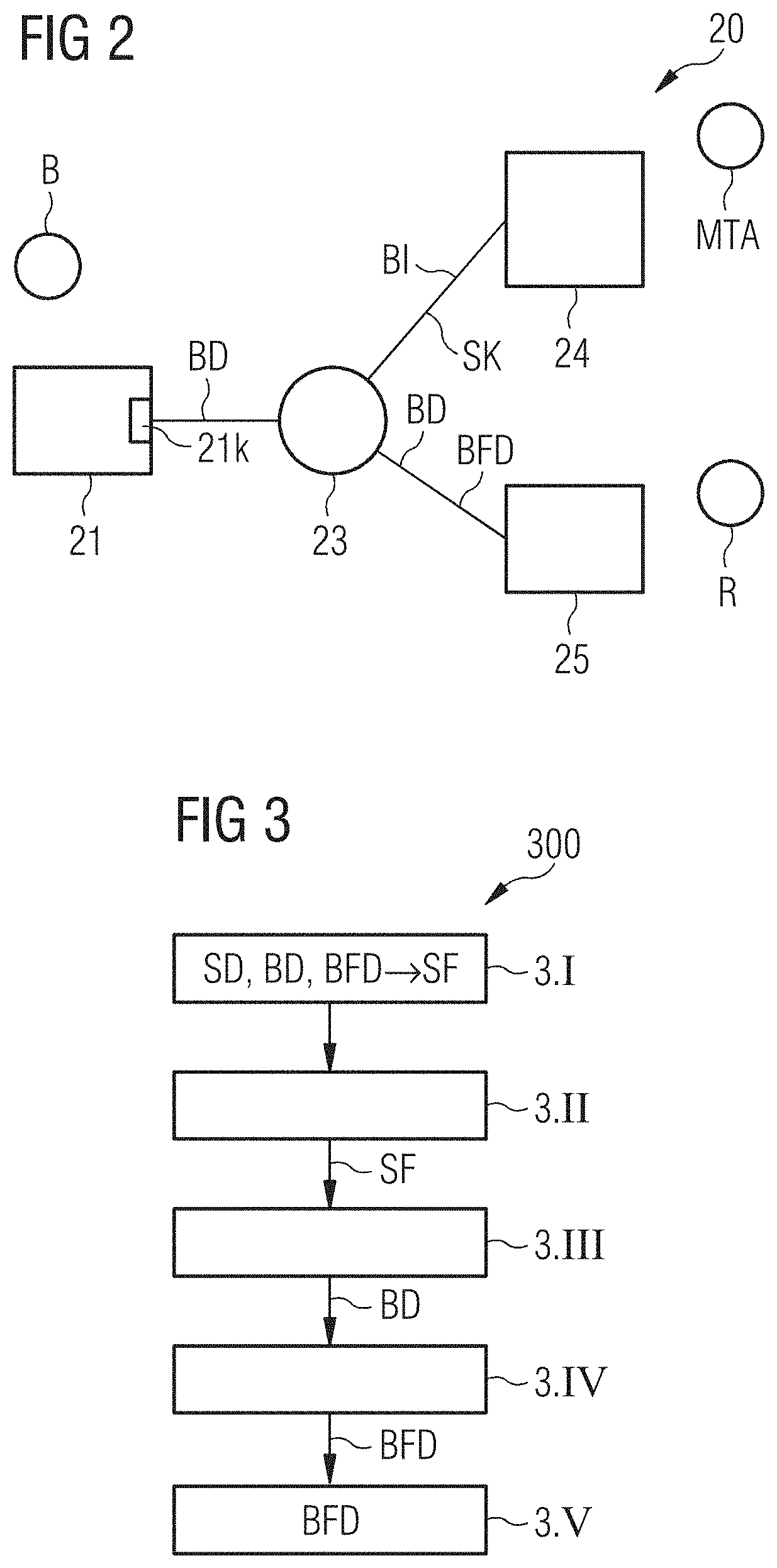
Figure 2 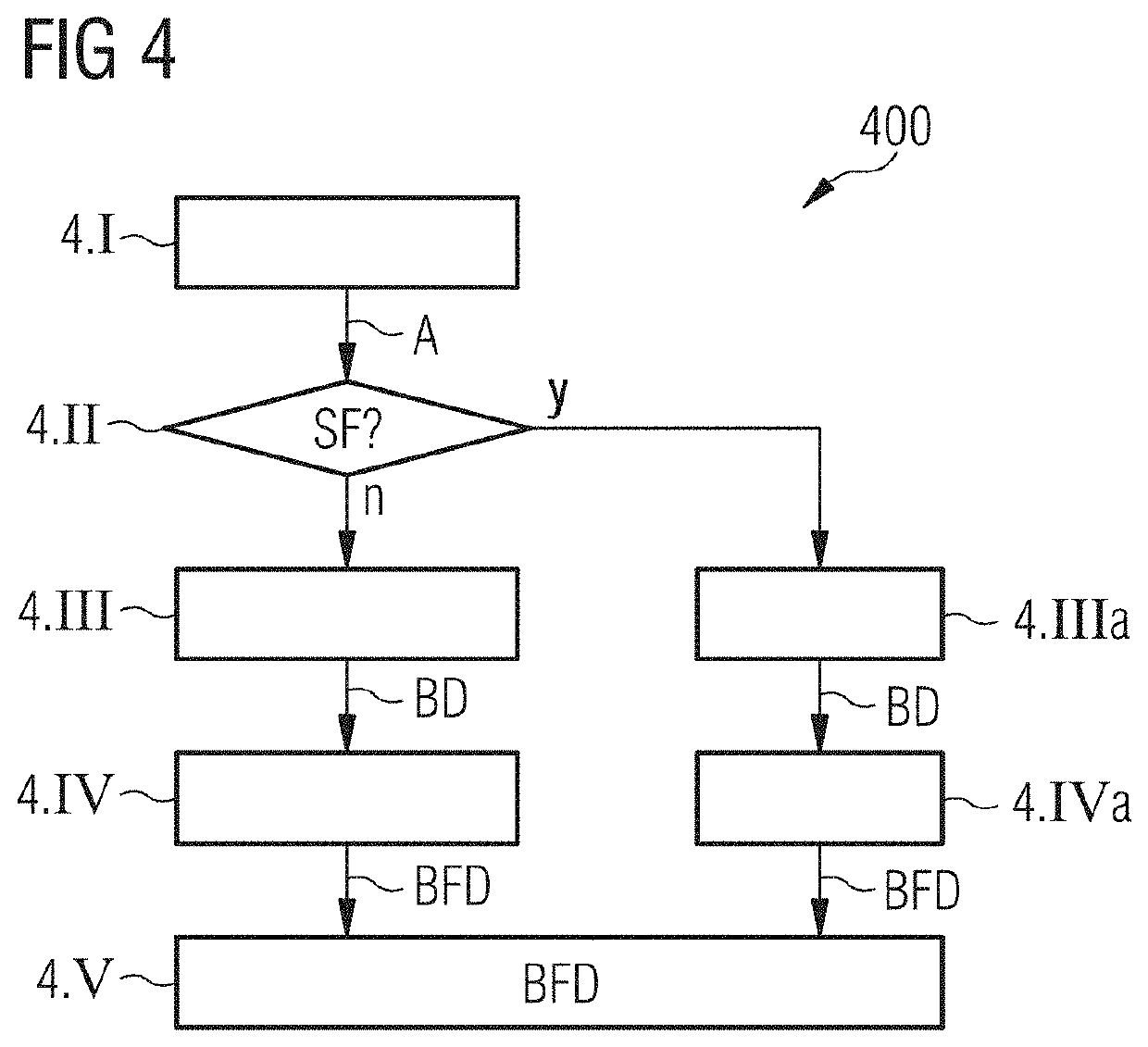
Figure 3
Abstract
Description
CROSS REFERENCE TO RELATED APPLICATIONS
[0001] This patent application claims the benefit of EP 19174633.8 filed May 15, 2019, which is hereby incorporated in its entirety FIELD
[0002] Embodiments relate to a decentrally controlled imaging method, a diagnosis data extraction method, and a decentralized image data extraction system.BACKGROUND
[0003] Medical technical imaging systems are in many cases indispensable for making a diagnosis. However, for effective use of such devices, a large number of qualified people is required, that, for example, in less developed countries, are not always available. For example, qualified personnel are required for the preparation of an imaging process, for example, for defining an imaging protocol. A medical technical assistant (MTA) is conventionally available for this task. Qualified personnel, in other words a qualified radiologist, are also required for evaluation of the image data. If qualified personnel are scarce, then, conventionally, control and...
Examples
Embodiment Construction
[0048]FIG. 1 depicts a flowchart 100, that illustrates an automated imaging-based data extraction method according to an embodiment. In the embodiment, a telephonically controlled imaging method is implemented. In the preliminary stage of the method illustrated in FIG. 1, a user B, for example a nurse, together with the patient, makes their way to a medical technical imaging system, in this embodiment an MR system, and switches the system on. In step 1.I, the user B presses a button, that is arranged directly on the scanning unit of the MR system. This triggers a Cloud-based application program AP, that automatically searches for an available medical technical assistant MTA via the Cloud or a data network and establishes a speech and image link between the assistant MTA and the user B. The assistant MTA includes the user interface and the entire examination space in sight via an IP camera. In step 1.II, the user B receives via the voice connection instructions AW for patient registe...