
Wedge assembly
a wedge and assembly technology, applied in the field of displacement limiting systems, can solve the problems of non-parallel deflection, additional vehicle noise, undesirable match-boxing, etc., and achieve the effects of reducing the sound level of the interior vehicle, sliding the wedge, and improving the acoustic performance of the vehicl
Patent Information
- Authority / Receiving Office
- US · United States
- Patent Type
- Patents(United States)
- Current Assignee / Owner
- Publication Date
- 2010-03-23
Smart Images
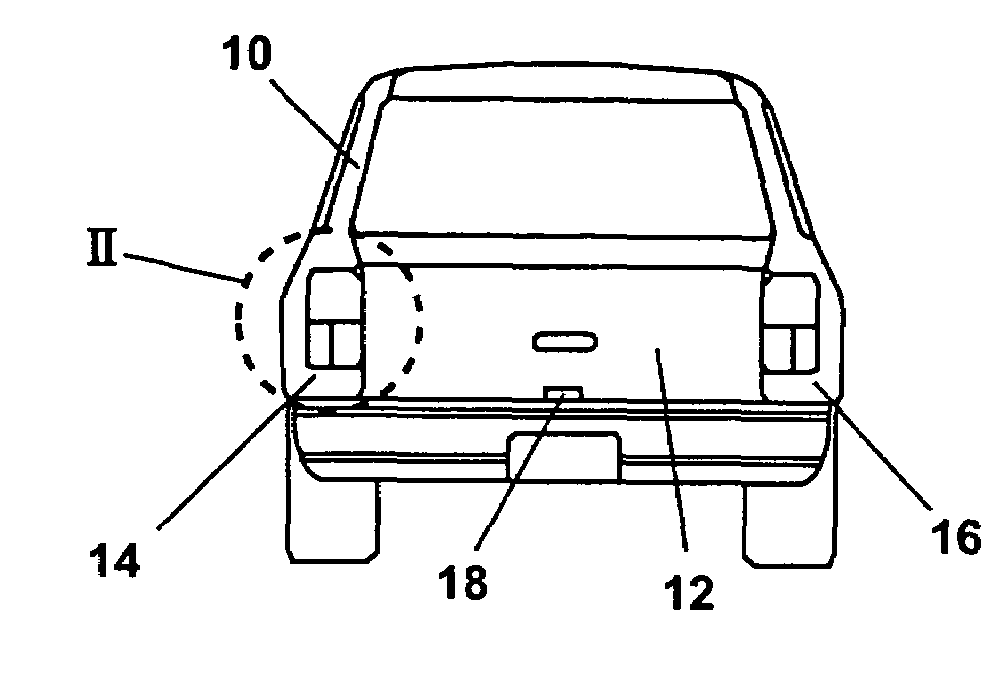
Figure 1 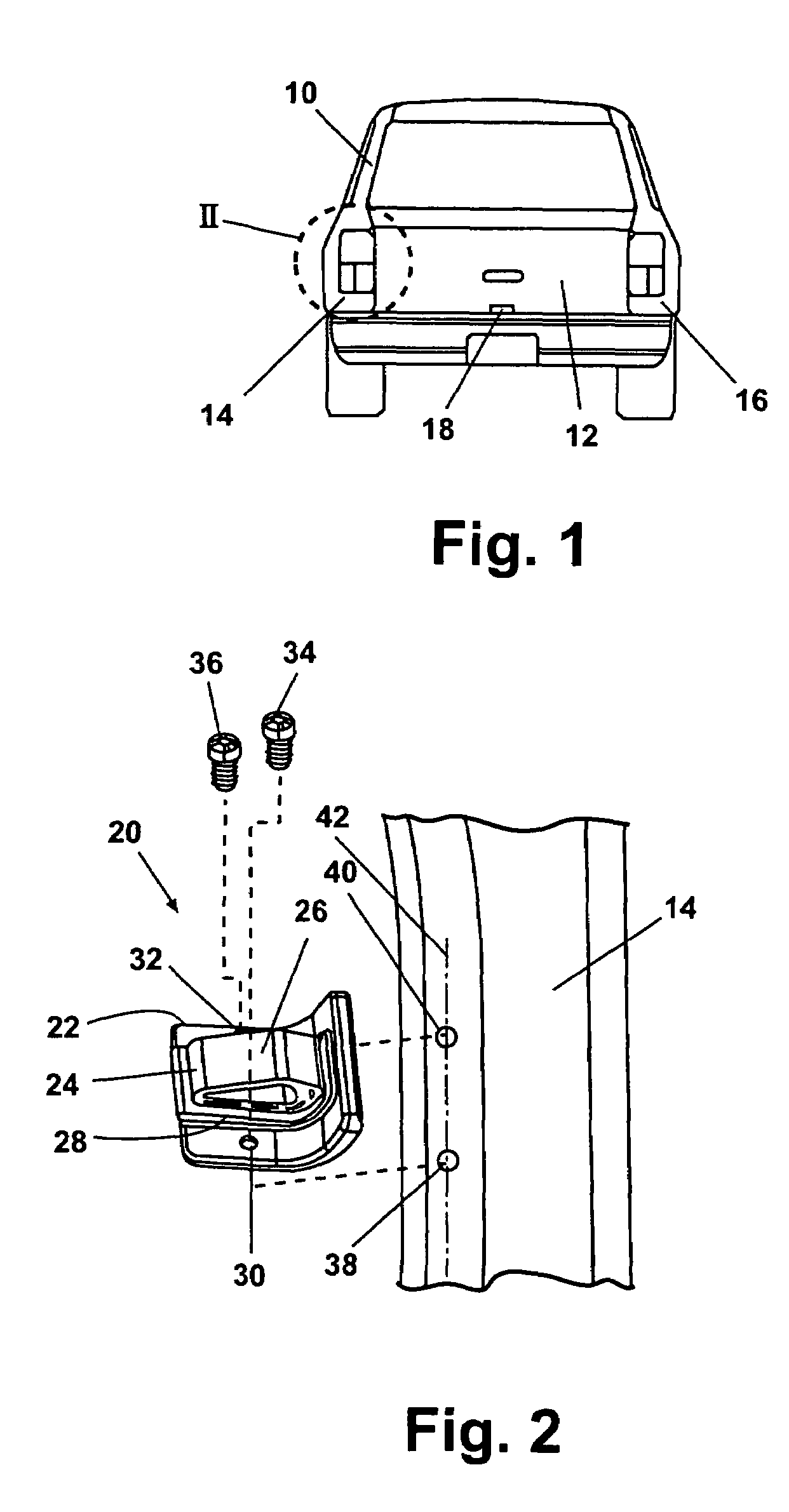
Figure 2 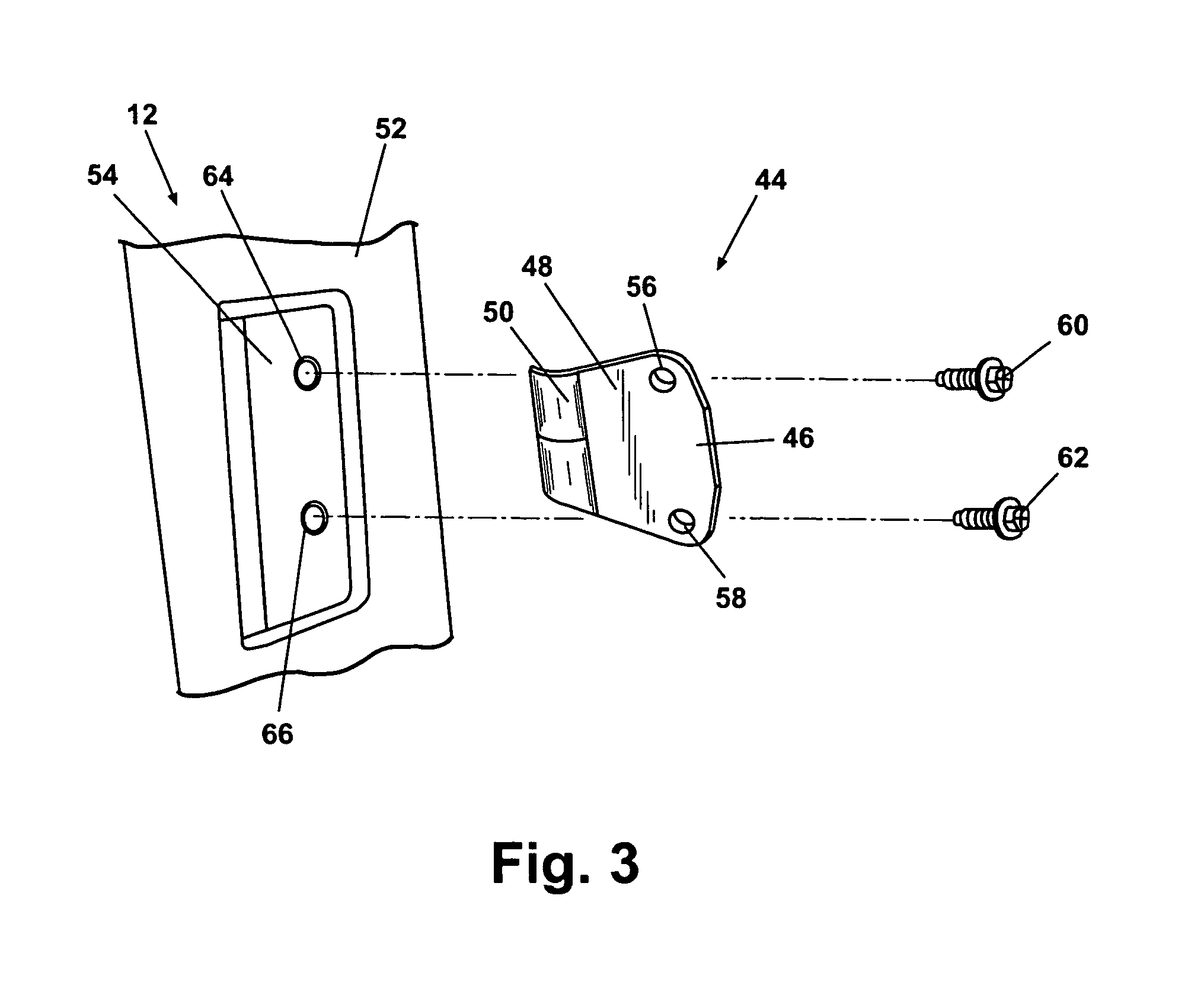
Figure 3
Abstract
Description
FIELD OF THE INVENTION
[0001] The present invention relates in general to displacement limiting systems and more specifically to a device and method for coupling use for vehicle door wedge systems.BACKGROUND OF THE INVENTION
[0002] Vehicles including automobile sport utility vehicles, station wagons, mini-vans, cross-over vehicles, cargo vans and trucks often provide an access door, commonly known as a lift-gate door. Other similar door designs include hatchback doors, sliding doors and horizontally swinging doors. Although these door designs can be mounted differently, for simplicity, these door designs will hereinafter be summarized in reference to lift-gate doors. Lift-gate doors are frequently hinged along an upper horizontal surface, and latch adjacent to a flooring system of the automobile, commonly adjacent to the rear fender of the automobile. One or more latches can be used. The side edges of lift-gate doors are generally not hinged or physically connected to the vehicle struct...
Examples
Embodiment Construction
[0023]The following description is merely exemplary in nature and is in no way intended to limit the invention, its application, or uses.
[0024]According to one preferred embodiment of the present invention and referring to FIG. 1, a vehicle 10 includes a rear lift-gate door 12 positioned between both a left support post 14 and a right support post 16 of vehicle 10. A latch 18 is generally provided about mid span along a bottom edge of rear lift-gate door 12. Side edges of rear lift-gate door 12 adjacent to left support post 14 and right support post 16, respectively, are generally not latched or otherwise connectable to left support post 14 or right support post 16.
[0025]As best seen in FIG. 2, a wedge sub-assembly 20 having a wedge support member 22 is supported from left support post 14. Wedge support member 22 is preferably provided of a “hard” polymeric material, for example a glass fiber reinforced polyamide material such as nylon 6-6, molded into the configuration shown. The t...