
Computationally enhanced image recognition device
Patent Information
- Authority / Receiving Office
- US · United States
- Current Assignee / Owner
- Publication Date
- 2010-03-30
- Estimated Expiration
- Not applicable · inactive patent
Smart Images
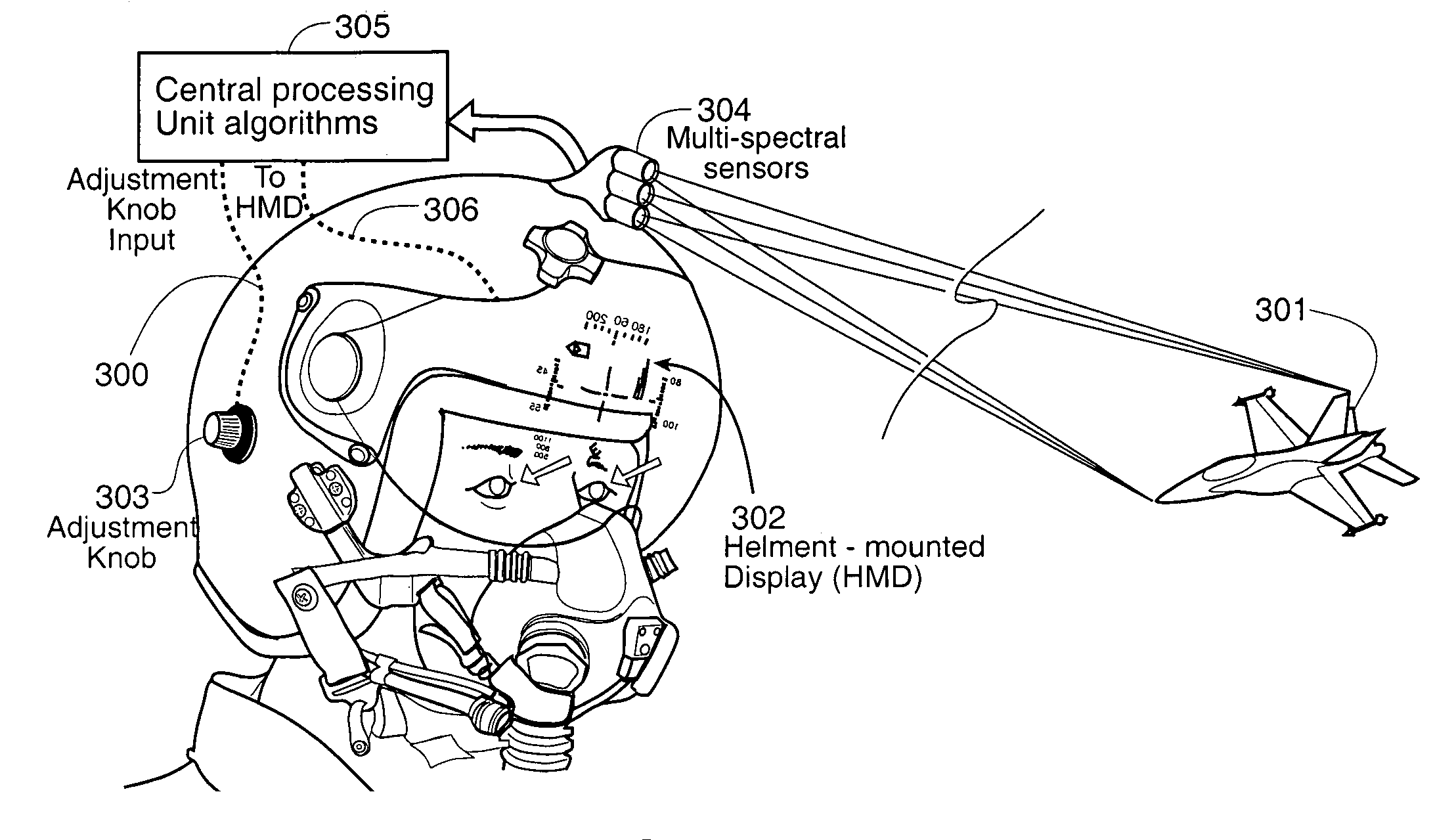
Figure 1 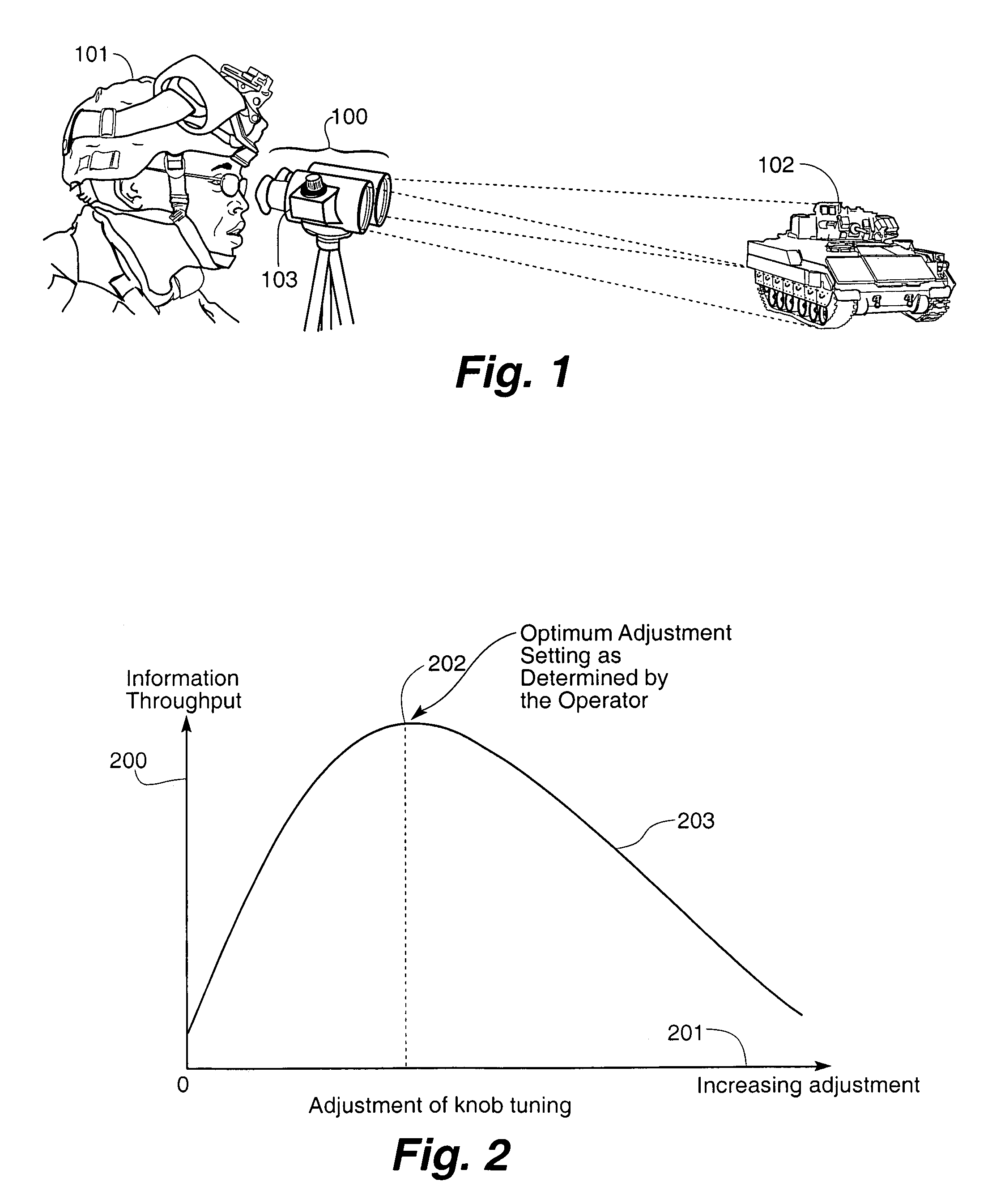
Figure 2 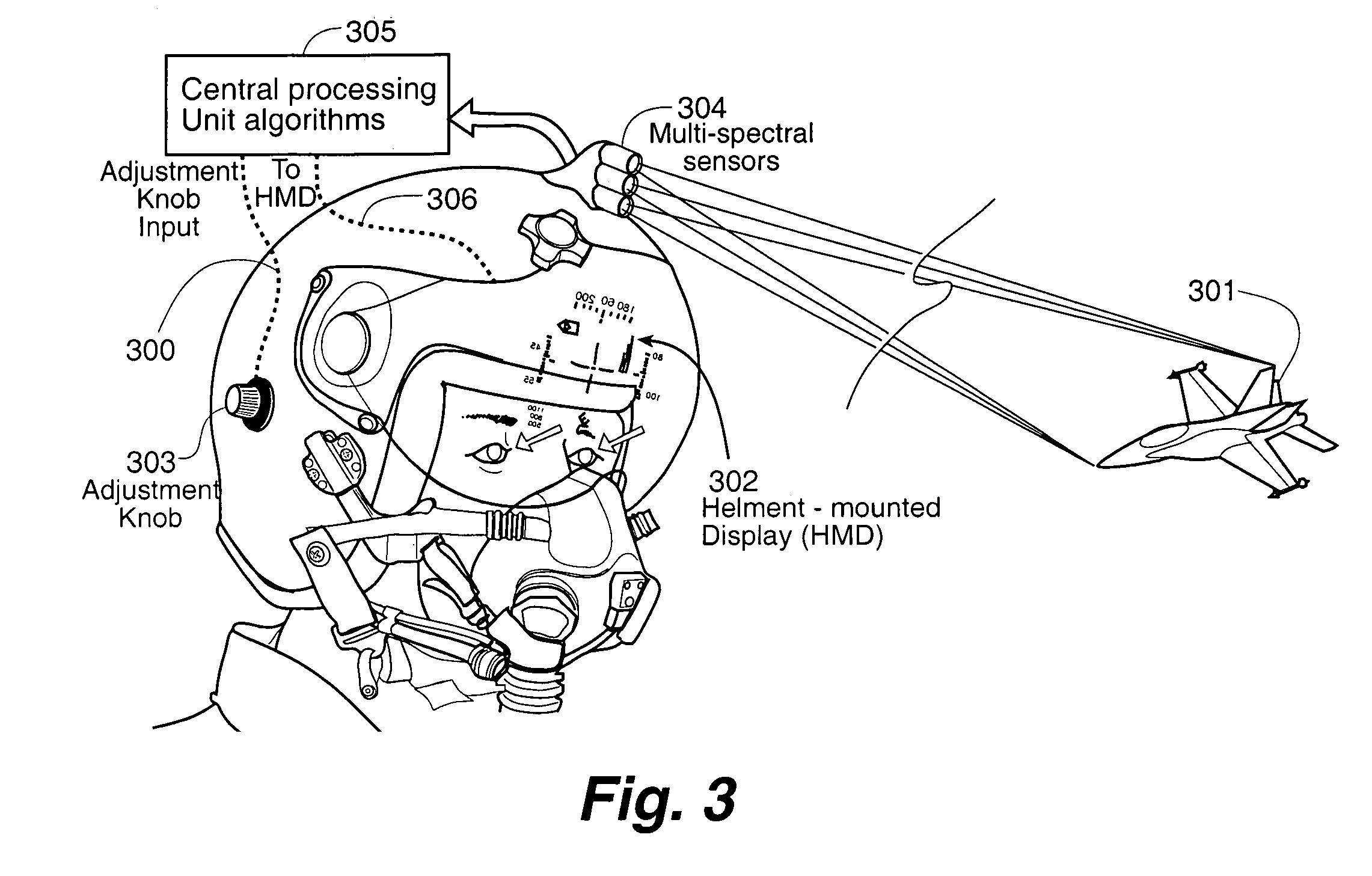
Figure 3
Abstract
Description
RIGHTS OF THE GOVERNMENT
[0001] The invention described herein may be manufactured and used by or for the Government of the United States for all governmental purposes without the payment of any royalty.BACKGROUND OF THE INVENTION
[0002] Often in real war-time scenarios, an operator of an air or ground based vehicle uses imaging equipment in order to assess threat and make strategic decisions. A significant problem in this field is often the quality of such visual images and more specifically the problem of helping to distinguish objects that may appear in a visual image when the vehicle operator has to make a decision about the content of the picture in a short amount of time.
[0003] The present invention solves the problem of distinguishing objects that may appear in a visual image of poor quality and where an operator has to make a decision about the content of such image in a short amount of time. To better understand the decision-making process of interest, a simple military example ...
Examples
Embodiment Construction
[0037]The present invention solves the problem of distinguishing objects that may appear in a visual image of poor quality and where an operator has to make a decision about the content of such image in a short amount of time. There are two preferred arrangements suggested in the present invention to implement the device.
Ground-Based Image Enhancement System
[0038]In the ground-based image enhancement device of the present invention, the operator is in a stationary position situated across from a ground-based system and a visual image of poor quality is portrayed to him as in FIG. 1. FIG. 1 shows a drawing of a binocular-type digital imaging device. In this preferred arrangement of the invention, the operator 101 adjusts a knob 103, on binoculars 100 which controls (through a central processing unit as indicated) how the darkness level of certain pixels in the picture (within each primary color) may be manipulated. The operator continues to adjust the modified picture by turning the ...