
Methods for removing catalyst residue from a depolymerization process stream
a depolymerization and catalyst technology, applied in the preparation of carboxylic acid esters, chemistry apparatus and processes, organic chemistry, etc., to achieve the effect of reducing the level of residual acid formed during polymerization, reducing purification costs, and less catalys
Patent Information
- Authority / Receiving Office
- US · United States
- Patent Type
- Patents(United States)
- Current Assignee / Owner
- Publication Date
- 2010-06-08
- Estimated Expiration
- Not applicable · inactive patent
Smart Images
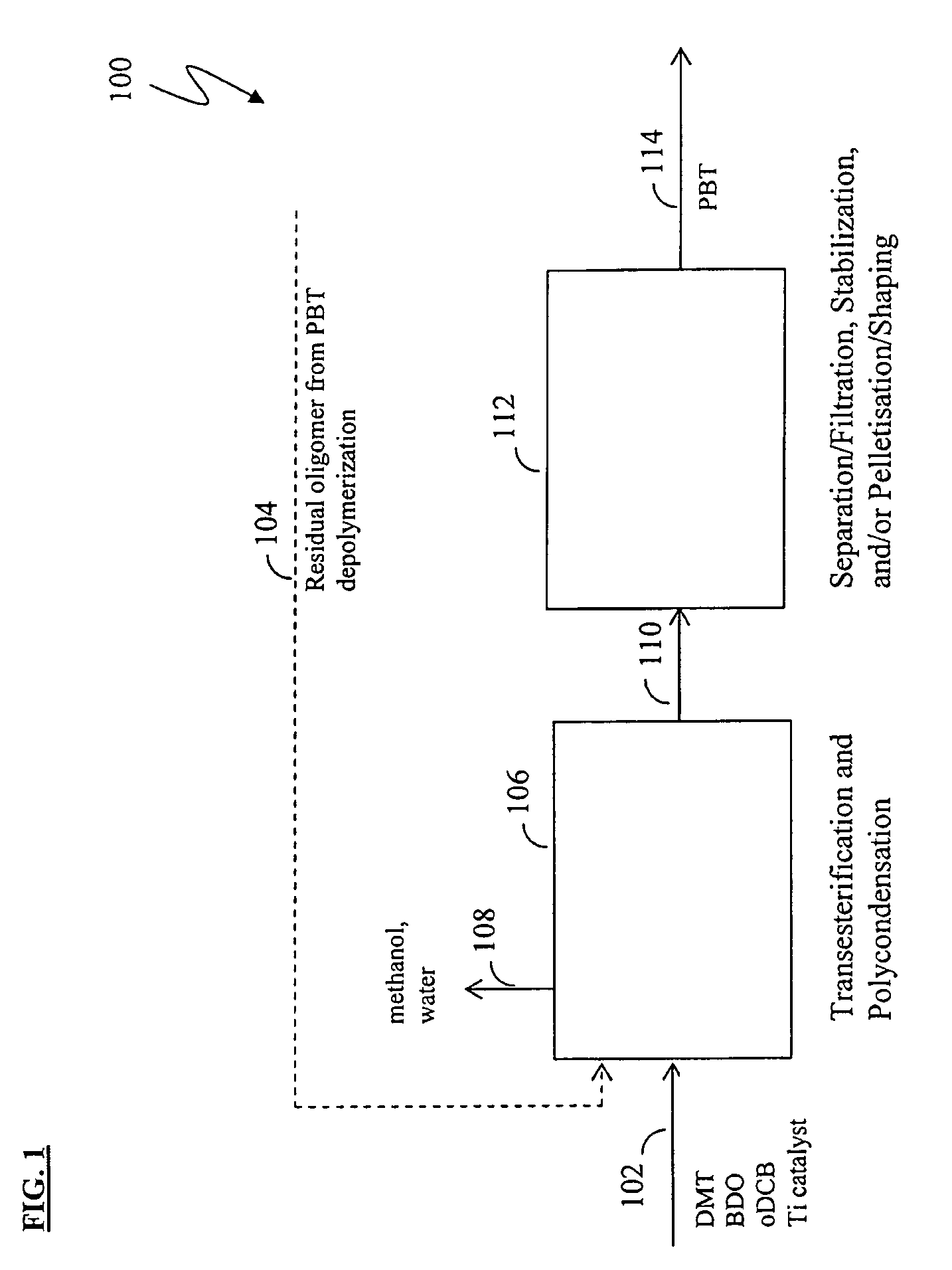
Figure 1 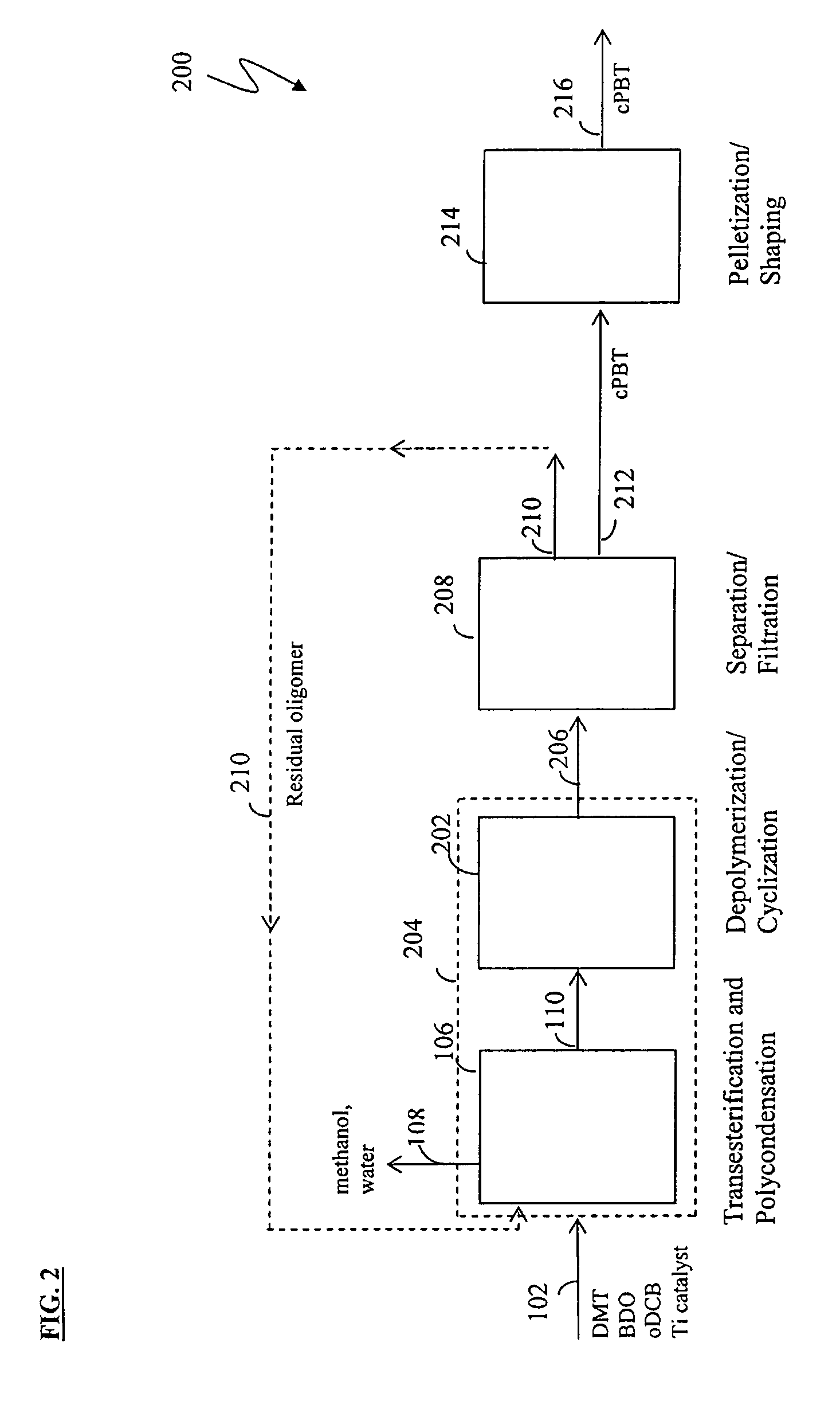
Figure 2 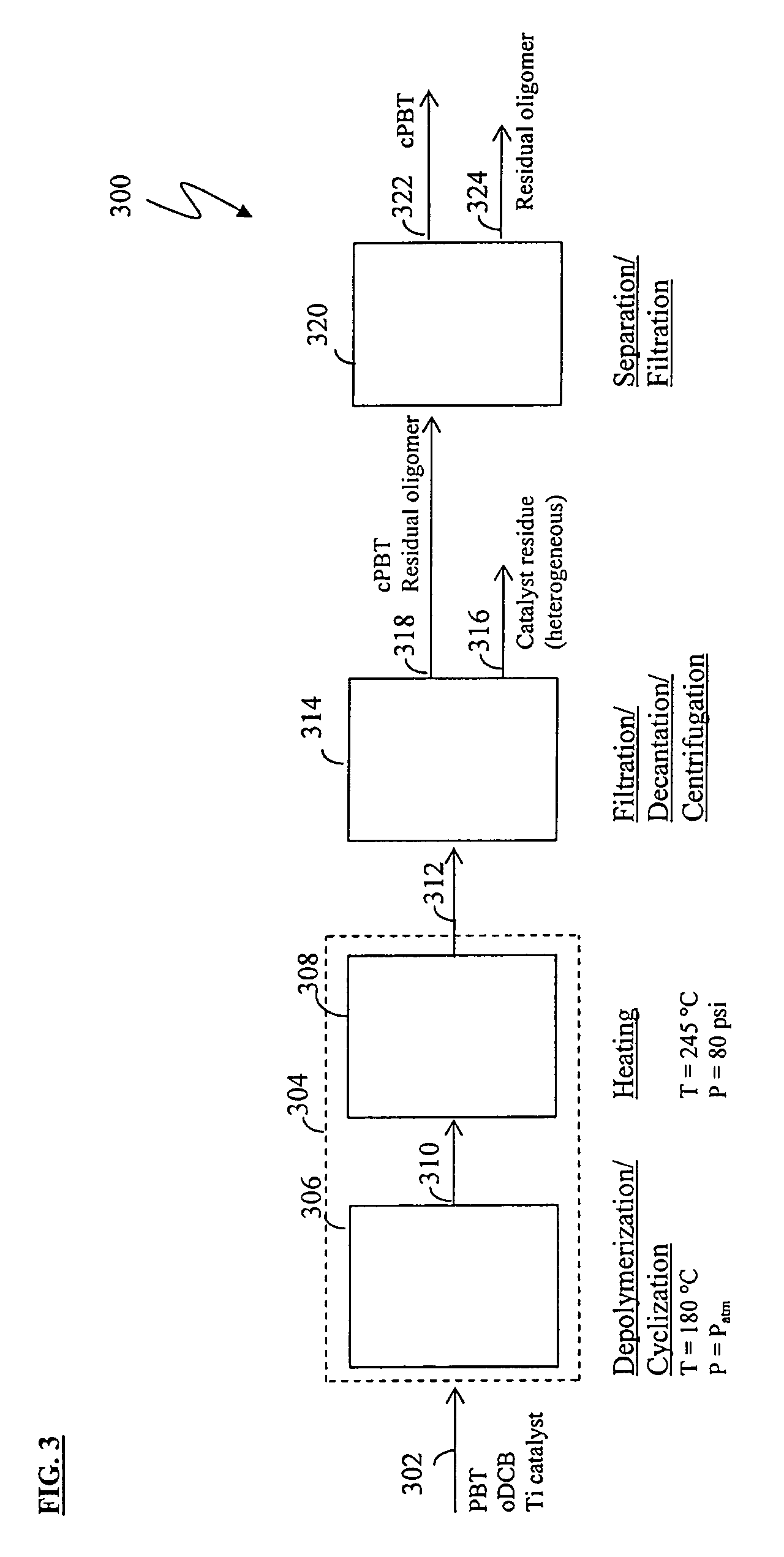
Figure 3
Abstract
Description
RELATED APPLICATIONS
[0001] This application claims benefit of U.S. Provisional Patent Application No. 60 / 665,648, filed on Mar. 25, 2005, the text of which is incorporated herein by reference in its entirety. This application is also related to commonly-owned U.S. patent application Ser. No. 11 / 388,768, filed on Mar. 24, 2006, and U.S. patent application Ser. No. 11 / 389,516, filed on Mar. 24, 2006, both of which are incorporated herein by reference in their entirety.FIELD OF THE INVENTION
[0002] This invention relates generally to methods for preparing macrocyclic polyester oligomers. More particularly, in certain embodiments, the invention relates to methods and systems for selective removal of catalyst residue from a depolymerization stream.BACKGROUND OF THE INVENTION
[0003] Polybutylene terephthalate (PBT) is a widely-used, high performance engineering resin that can be processed to make parts for automotive, electrical, and industrial applications. A commercial process for manufactur...
Examples
experimental examples
[0171]Experiments were conducted to demonstrate the solution polymerization of low-acid PBT and subsequent depolymerization / cyclization to form cPBT. More particularly, Example 1 illustrates a method of producing low-acid PBT via polymerization in organic solvent (“solution polymerization”); Example 2 illustrates a method of forming cPBT via depolymerization of the low-acid PBT; and Example 3 illustrates methods for preparing, purifying, isolating, and repolymerizing cPBT produced from low-acid PBT.
[0172]Experiments were also conducted to demonstrate the removal of titanium catalyst residue from a reaction mixture following PBT depolymerization. Example 4 illustrates a method of removing titanium residue from a solution of isolated filter cake; Example 5 illustrates a method of removing titanium residue from a depolymerization reaction mixture; and Example 6 illustrates a method for characterizing titanium precipitation and settling behavior in depolymerization reaction mixtures.
[01...
example 1
Low Acid PBT by Solution Polymerization
[0176]Ten experiments were conducted with charges of BDO (approximately 0.250 mmol), DMT (approximately 0.98 to 1.02 molar equivalents of BDO), and anhydrous oDCB (enough to result in a solution containing about 30% reactant solids). Each charge was added to a 250 ml three-necked round-bottom flask equipped with a mechanical stirrer, a short path distillation head with a receiver flask, and an inert gas inlet. The weights of the charges for the ten experiments are listed in Table 2.
[0177]
TABLE 2Summary of Solution Polymerization Data of Example 1AdjustedCatalystBDODMToDCBTPTMonomerLevelReaction(g)(g)(g)(mg)(% vs. BDO)(mol % Ti)114.3030.5889.8061.60.070.136216.8236.0578.41233.3−0.570.440316.1634.6586.2425.30.030.050415.3433.0057.607.7−0.7310.161515.5032.7555.0824.7−2.0370.053625.3254.1567.2212.60.3690.016718.2239.39107.5015.8−1.0480.028821.8446.3787.9017.21.1960.025918.9940.02116.6014.61.2170.0251022.8548.6274.6411.40.8940.016
The reactants were ...
example 2
Cyclic Poly(Butylene Terephthalate) (“cPBT”) Formation from Depolymerization of Low Acid PBT
[0179]A charge of about 7 mmol PBT and anhydrous oDCB were added to a flame-dried three-necked 250 ml round-bottom flask equipped with a mechanical stirrer, a short path distillation head and condenser, and an inert gas inlet (the charge amounts are listed in Table 4 below). The flask was then submerged into a 220° C. oil bath. After the PBT dissolved and several milliliters of solvent had distilled overhead (to ensure dryness of the reaction), an organo titanate catalyst solution of freshly prepared Ti(BD:HG) (4:1) in oDCB at a concentration of 0.220 mmol / g was added to the flask using a syringe. The reaction was then maintained under a positive pressure of dry nitrogen, and the solution was periodically sampled to determine the extent of cPBT formation using the High Pressure Liquid Chromatography (“HPLC”) procedure described in Appendix D. The cPBT rates of formation for the reactions are ...