
Modified electronic program guide
Patent Information
- Authority / Receiving Office
- US · United States
- Current Assignee / Owner
- Publication Date
- 2013-01-01
Smart Images
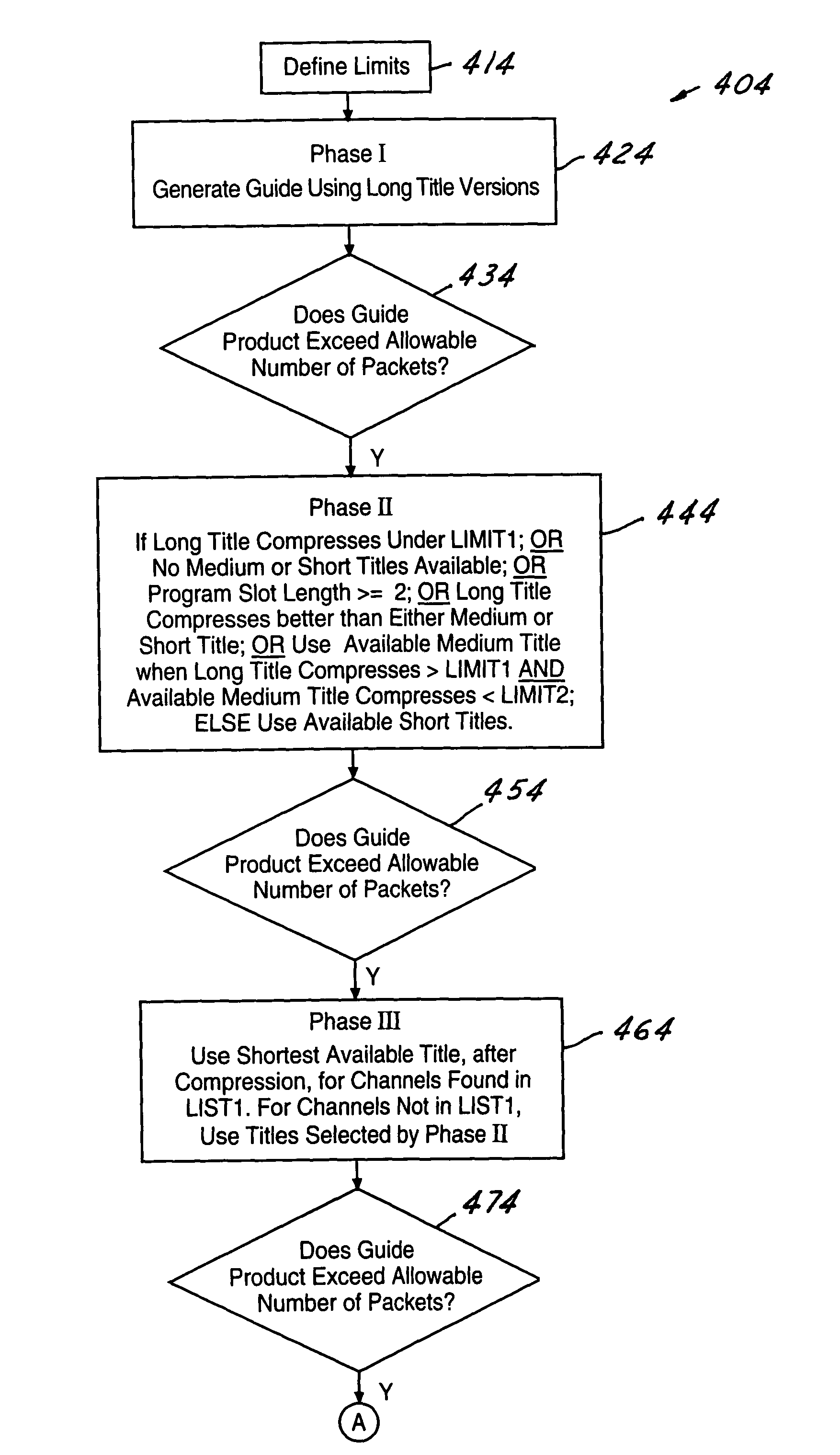
Figure 1 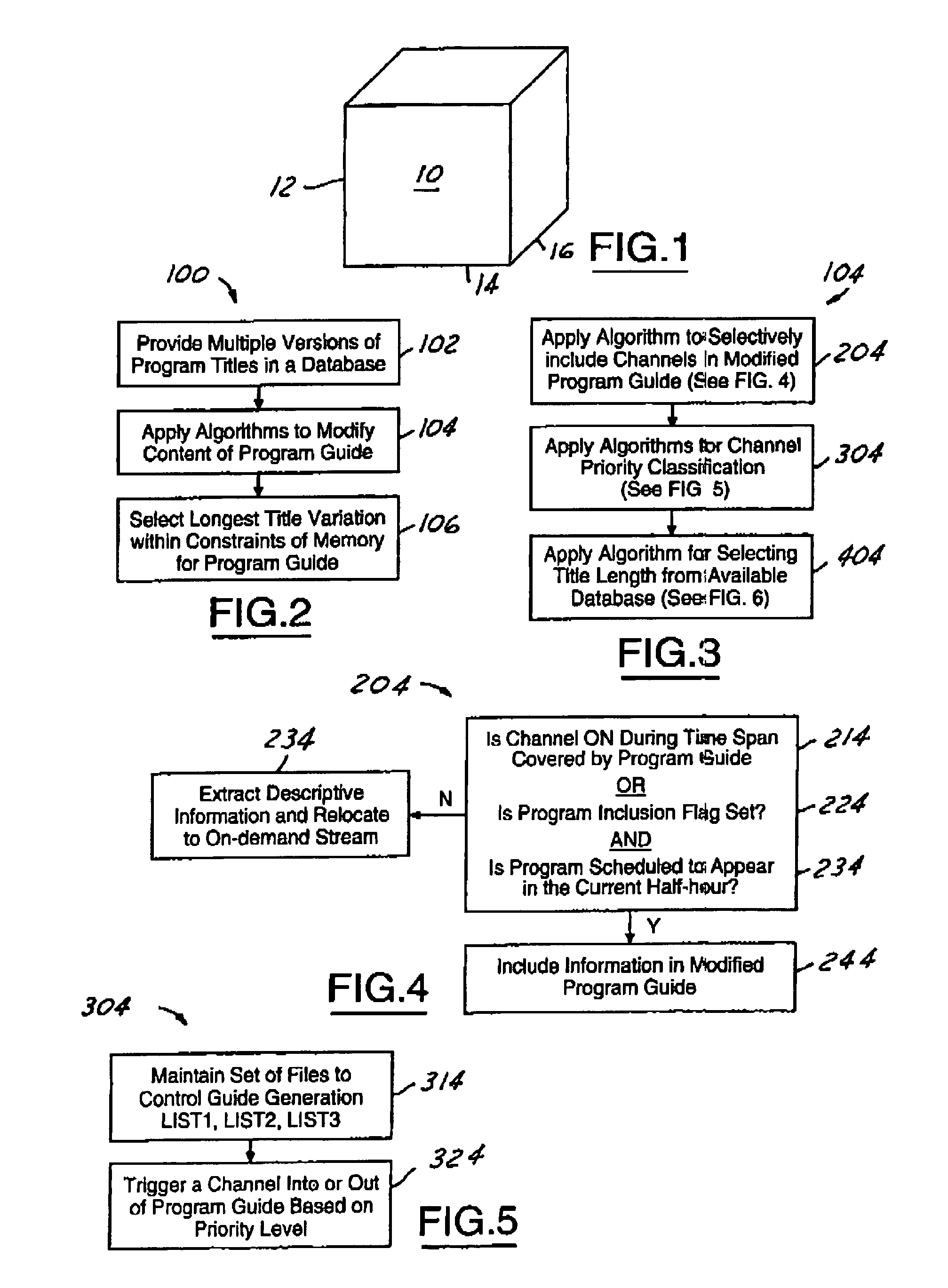
Figure 2 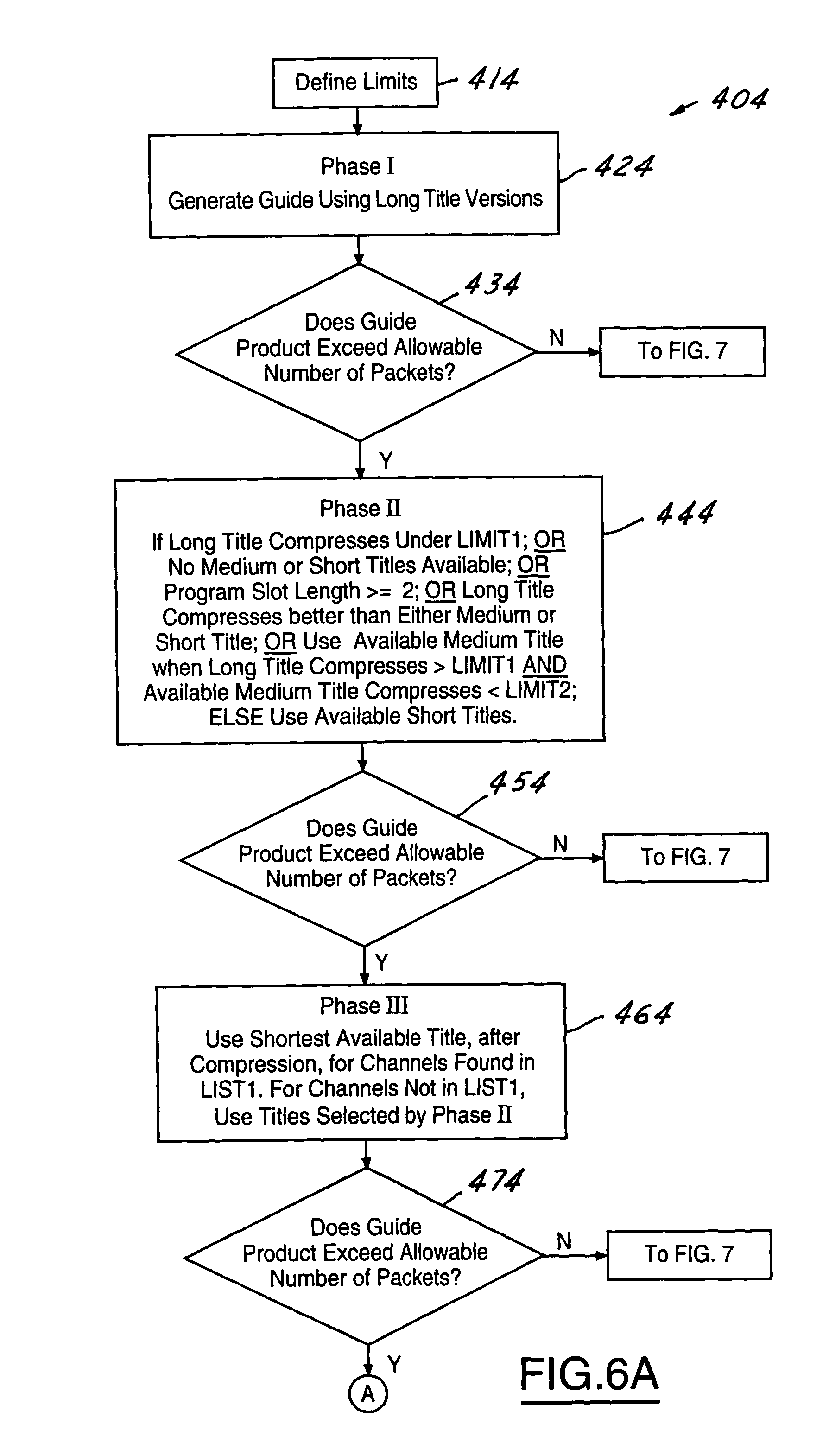
Figure 3
Abstract
Description
TECHNICAL FIELD
[0001] The present invention relates generally to an electronic program guide and more particularly to a method and system for modifying the content of the program guide using a fixed amount of memory.BACKGROUND OF THE INVENTION
[0002] Electronic program guide data for television is delivered to integrated receiver / decoders (IRDS), or set-top boxes (STBs), by way of a satellite network or a cable television system. The program guide typically contains scheduling information for programming services that are provided by the satellite or cable provider. Limitations of the electronic program guide stem from the amount of bandwidth available to carry the scheduling information and the amount of memory required to store the scheduling information at the integrated receiver / decoder.
[0003] Integrated receiver / decoders typically have a fixed amount of memory. Random access memory (RAM) is relatively expensive, and there is a need to keep the cost of the receiver / decoder low to ke...
Examples
Embodiment Construction
[0021]The present invention is described herein in accordance with the visual of a program guide 10 provided in FIG. 1. In the prior art, the program guide was managed as a two-dimensional space providing channel numbers and program times. The present invention can be visualized in three dimensions as shown in FIG. 1. The program guide 10 has a channel dimension 12, a time dimension 14, and a descriptive information dimension 16. The channel dimension 12 includes channel numbers, the channel's frequency, satellite identification, and service information such as program identifiers and service types. The time dimension 14 represents the amount of descriptive scheduling the guide contains. The descriptive information dimension 16 represents the detail (richness) of the scheduling information provided for the time covered by the program guide.
[0022]The present invention provides algorithms and a method for their application that allows a broadcaster to vary the time and the descriptive...