
Secondary data channels in RFID systems
a technology of second data channels and rfid systems, applied in the field of data communication, can solve the problems of system performance requirements, system downtime, system upgrade problems, etc., and achieve the effect of increasing data throughput, no time, and maintaining throughpu
Patent Information
- Authority / Receiving Office
- US · United States
- Patent Type
- Patents(United States)
- Current Assignee / Owner
- Publication Date
- 2013-04-30
Smart Images
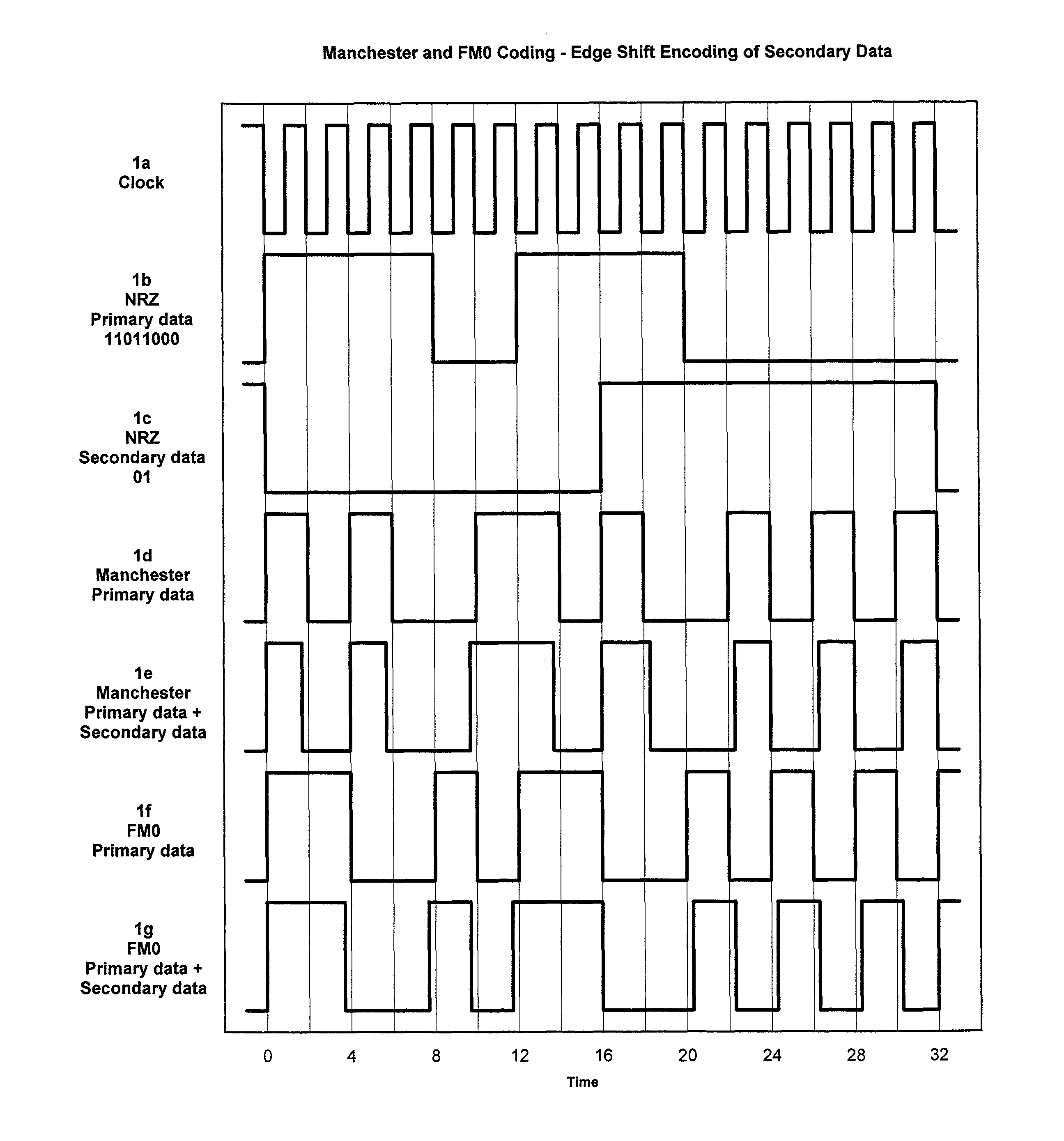
Figure 1 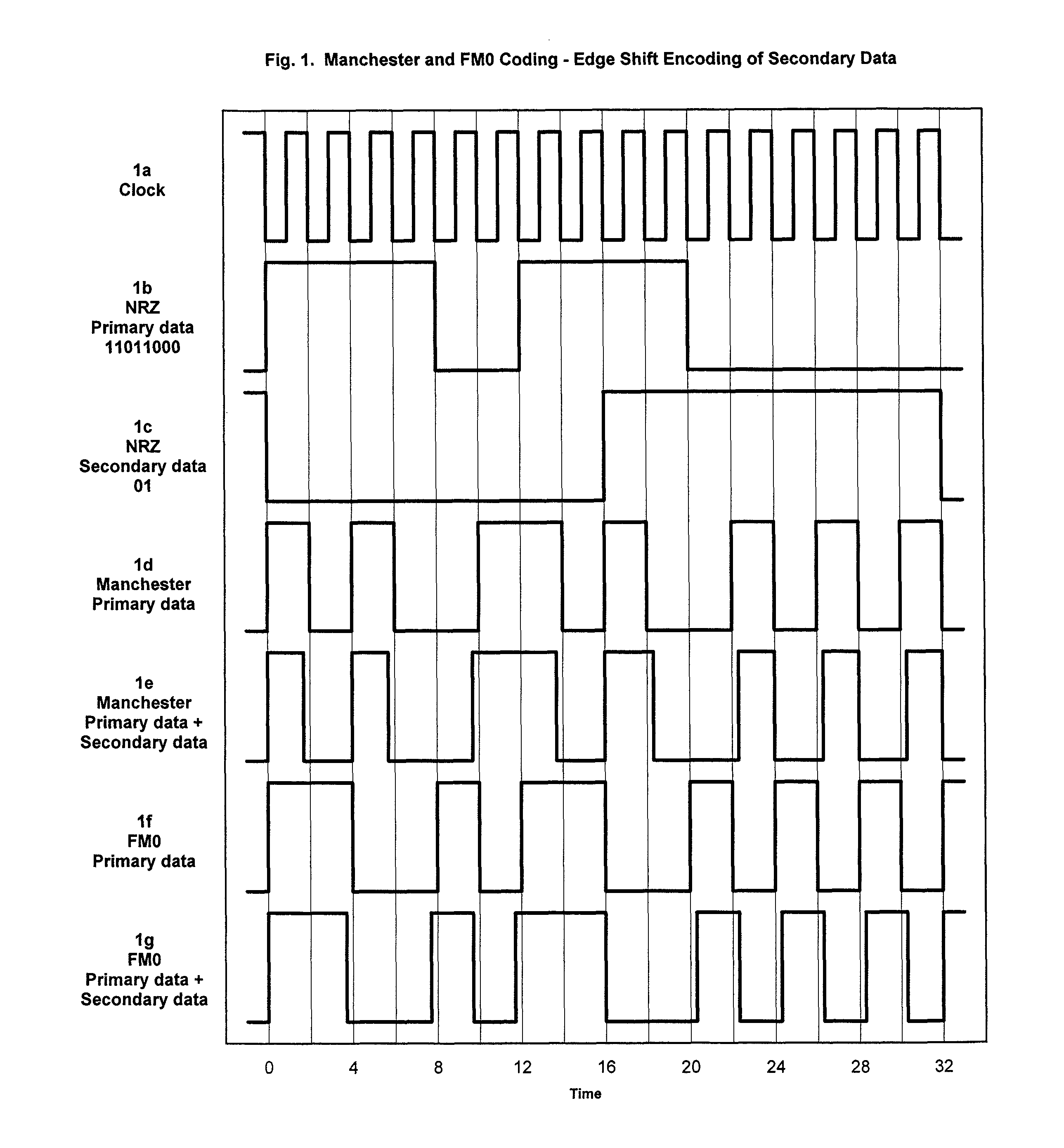
Figure 2 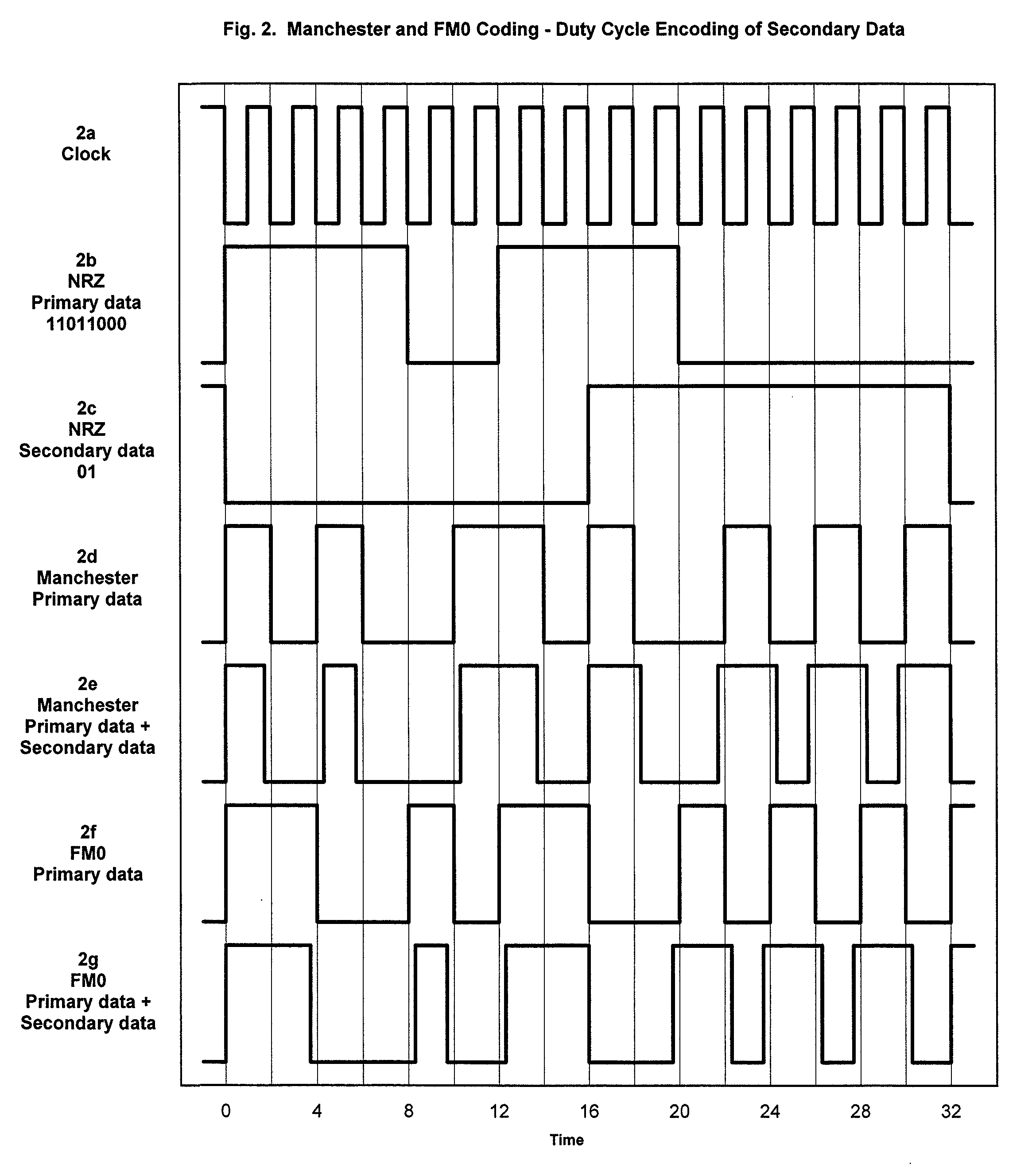
Figure 3
Abstract
Description
BACKGROUND OF THE INVENTION
[0001] 1. Field of Invention
[0002] This invention relates to the field of data communication and, in particular, the field of RFID data communication.
[0003] 2. Description of Related Art
[0004] RFID is an acronym for radio frequency identification. RFID is a term used for a variety of communication systems using radio frequencies from about 100 kHz to over 6 GHz. RFID systems are characterized by relatively simple devices (often referred to as tags, transponders, tokens etc.) deployed in large numbers that communicate digital information with relatively fewer and more complex devices (often called readers, interrogators, scanners, etc.). Tags are affixed to objects or places to be identified, monitored and tracked. Readers obtain digital information from tags and often send digital information to tags for storage and control. Readers interface to external data systems such as host computers. Data transfer between tags and readers can be one-way (read only tags)...
Examples
Embodiment Construction
[0045]An illustrative example of an application of an embodiment of the present invention is shown in FIG. 5. Many RFID applications, including electronic collection of tolls on toll roads, may use short range communications to conduct transactions between tags passing readers at stationary locations. The path 102 taken by tags passing readers is shown in FIG. 5.
[0046]Legacy, or unimproved, readers 104 are placed along the path 102 of the tags. Legacy, or unimproved, tags 108 conduct transactions with legacy readers 104 using the unimproved or legacy messaging protocol labeled A1.
[0047]An improved reader 106 implementing the present invention is located along the path of the tags. The improved reader includes a decoder A2R to decode secondary data transmitted by improved tag 110. As a legacy tag 108 passes improved reader 106, transactions can take place using the legacy protocol A1. Since the legacy tag 108 does not have the capability to encode secondary data, the improved reader ...