
Non-thermal plasma ignition arc suppression
a plasma ignition and suppression technology, applied in the field of non-thermal plasma ignition arc suppression, can solve problems such as reducing the quality of ignition, and achieve the effects of reducing or eliminating arcing, reducing co2 emissions, and improving fuel economy
Patent Information
- Authority / Receiving Office
- US · United States
- Patent Type
- Patents(United States)
- Current Assignee / Owner
- Publication Date
- 2014-05-20
Smart Images
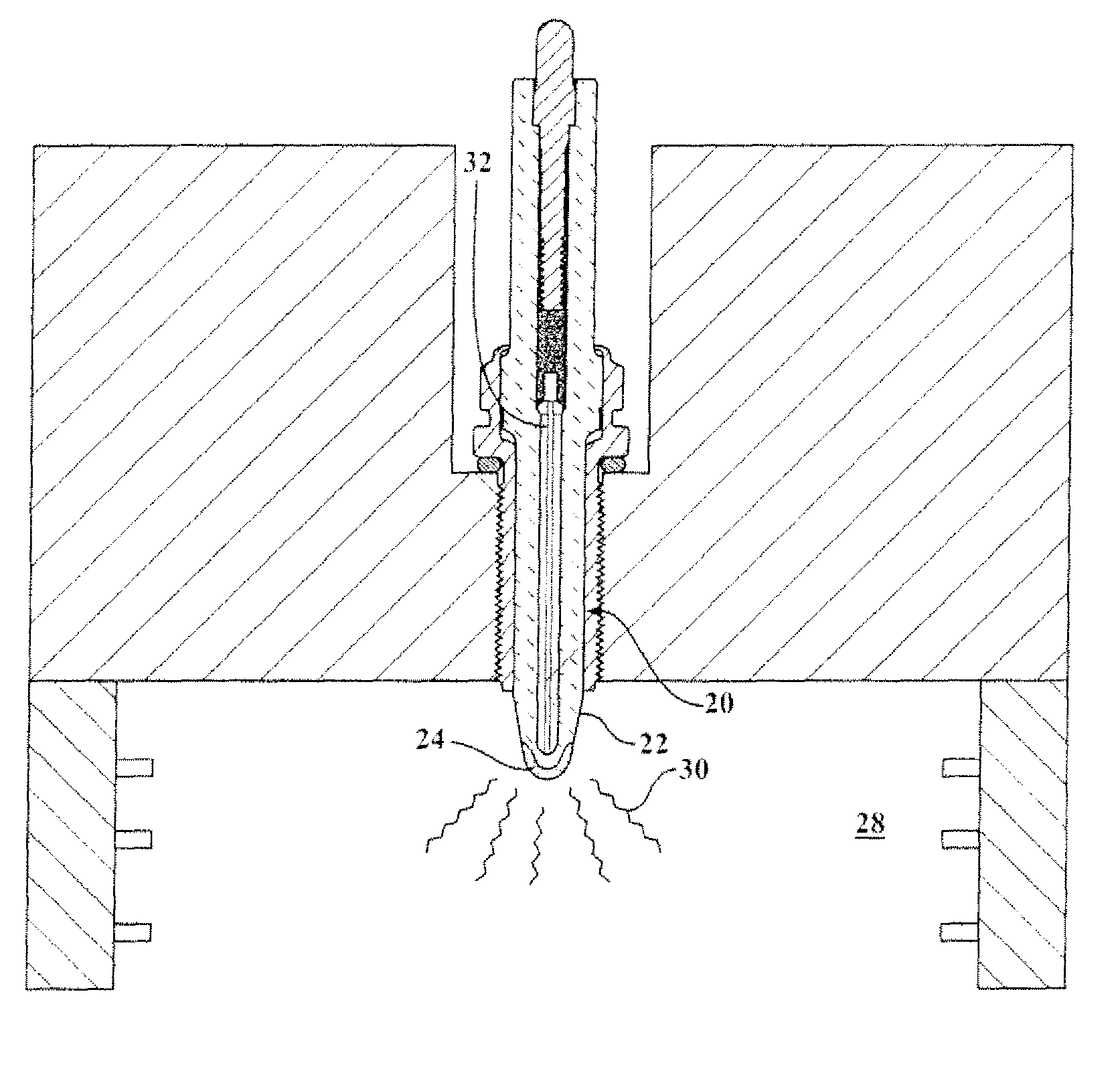
Figure 1 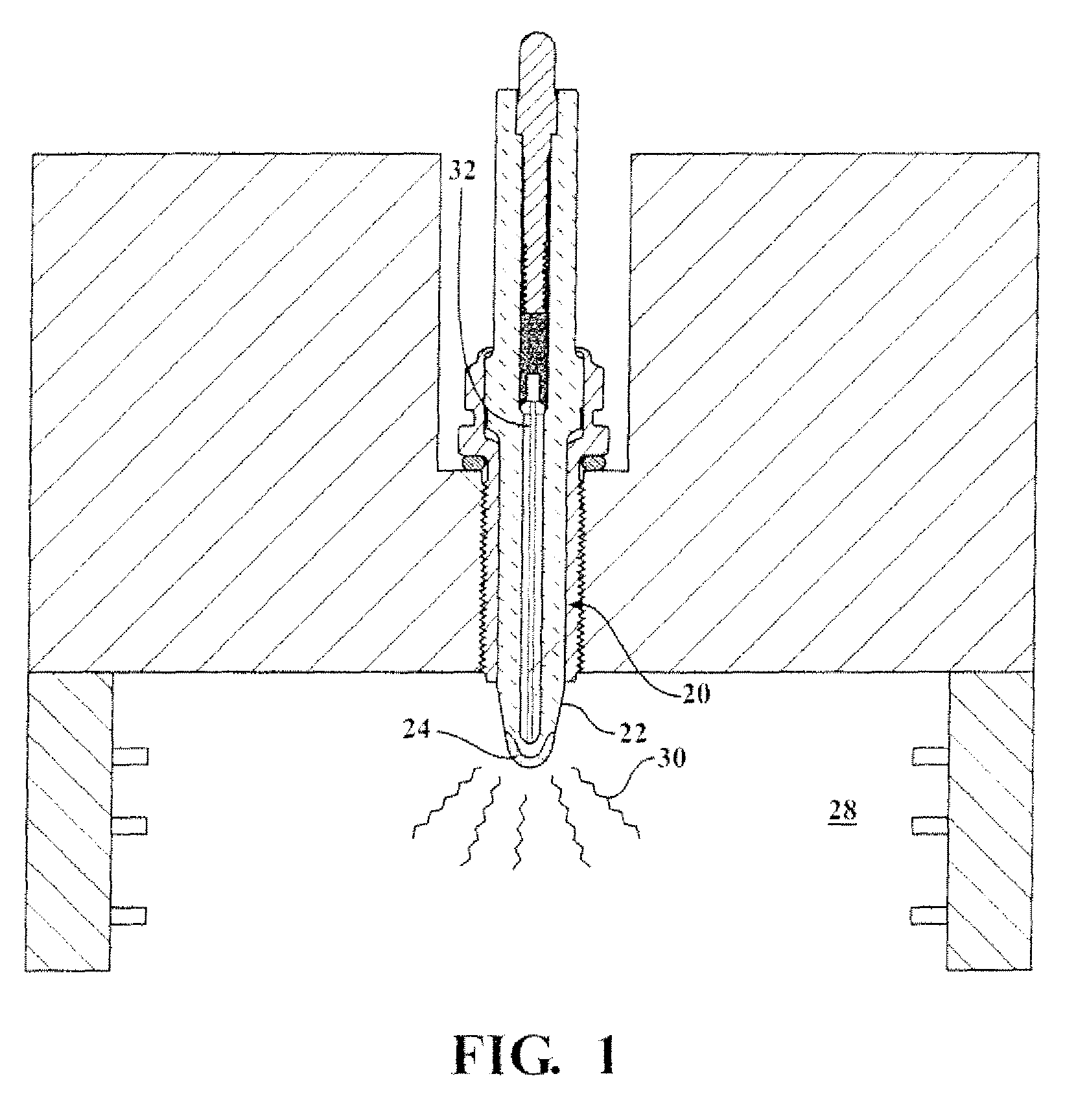
Figure 2 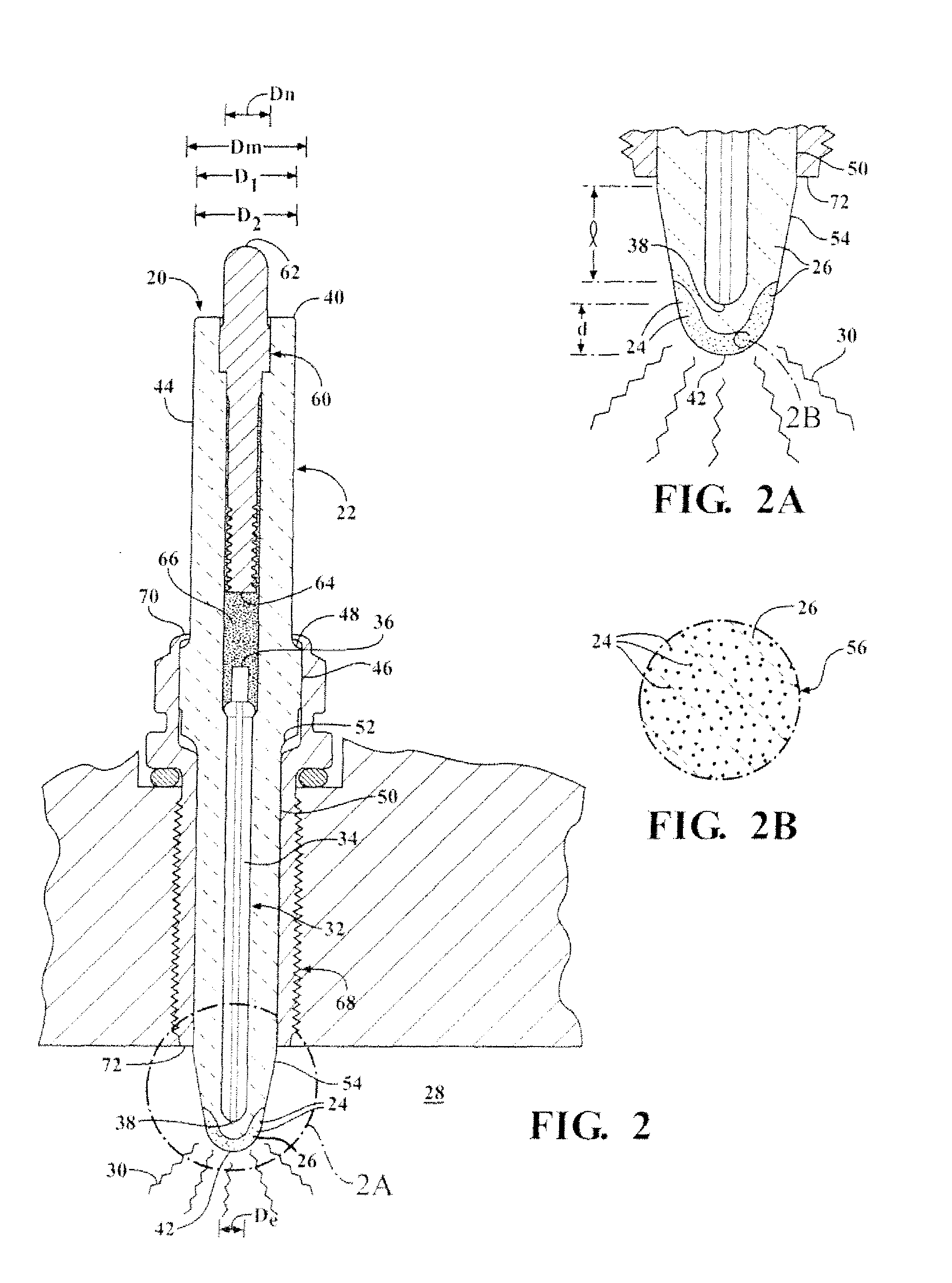
Figure 3
Abstract
Description
CROSS REFERENCE TO RELATED APPLICATION
[0001] This application claims the benefit of U.S. provisional application Ser. No. 61 / 407,633, filed Oct. 28, 2010, and U.S. provisional application Ser. No. 61 / 407,643, filed Oct. 28, 2010, which are incorporated herein by reference in their entirety.BACKGROUND OF THE INVENTION
[0002] 1. Field of the Invention
[0003] This invention relates generally to a corona discharge igniter for emitting a non-thermal plasma to ignite a mixture of fuel and air of a combustion chamber, and methods of manufacturing the same.
[0004] 2. Description of the Prior Art
[0005] An example of a corona discharge ignition system is disclosed in U.S. Pat. No. 6,883,507 to Freen. In the corona discharge ignition system, an electrode of an igniter is charged to a high radio frequency (“RF”) voltage potential, creating a strong RF electric field in the combustion chamber. The electric field causes a portion of the fuel-air mixture in the combustion chamber to ionize and begin diele...
Examples
Embodiment Construction
[0019]One aspect of the invention provides an igniter 20 for a corona ignition system, as shown in FIGS. 1-3. The igniter 20 includes an insulator 22 with a plurality of electrically conducting elements 24 disposed in a matrix 26 of electrically insulating material, such as metal particles embedded in the matrix 26, or holes in the matrix 26. As shown in FIG. 1, the igniter 20 is disposed in a combustion chamber 28 of an internal combustion engine and receives a voltage from a power source (not shown). An electrode 32 of the igniter 20 is charged to a high RF voltage potential, creating a strong RF electric field in the combustion chamber. The electric field is controlled so the mixture of fuel and air in the combustion chamber maintains dielectric properties. The electrode 32 emits a non-thermal plasma including multiple streams of ions forming a corona 30 to ionize a portion of the fuel and air in the combustion chamber 28.
[0020]The electrode 32 of the igniter 20 includes an elect...