
Plant material drying methods
a plant material and drying method technology, applied in the field of drying plant materials, can solve the problems of loss of volatiles and flavors, change in color and texture, decrease in nutritional value, etc., and achieve the effects of reducing both the weight and volume of plant materials, preserving a high amount of heat labile constituents, and rapid and efficient drying
Patent Information
- Authority / Receiving Office
- US · United States
- Patent Type
- Patents(United States)
- Current Assignee / Owner
- Publication Date
- 2017-12-12
Smart Images
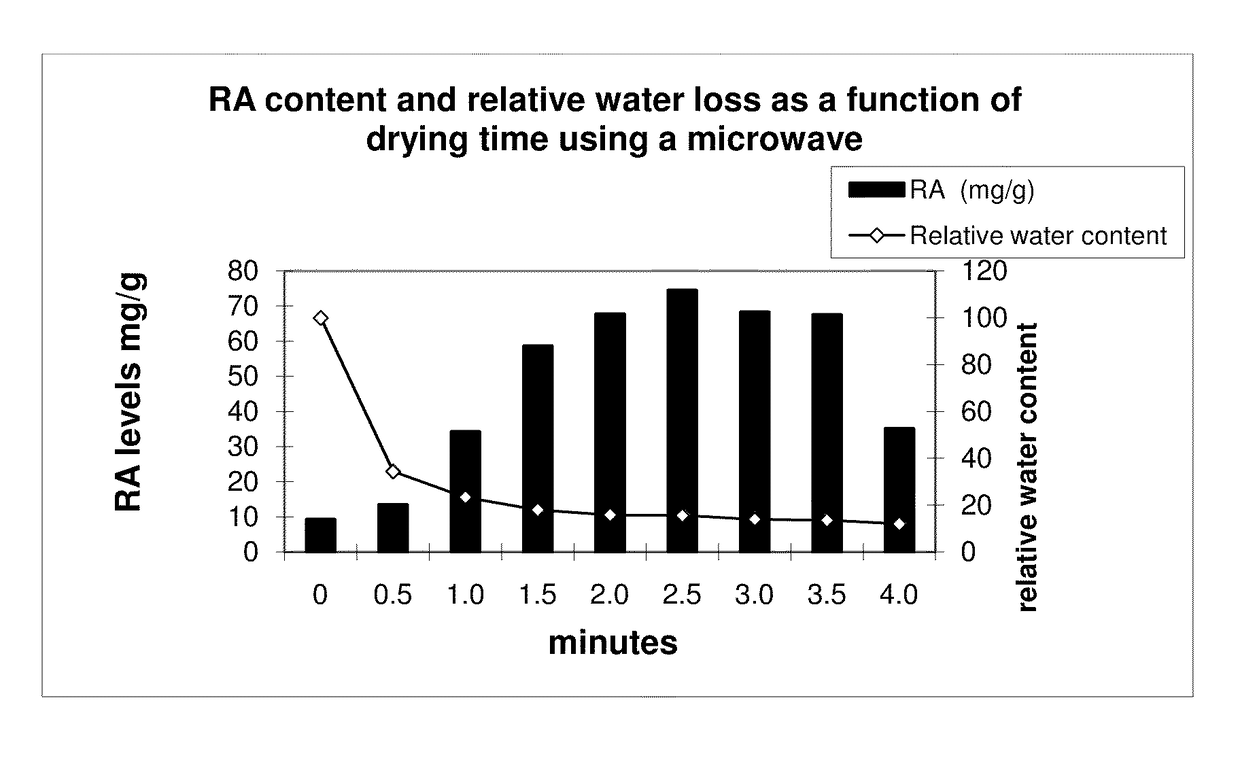
Figure 1 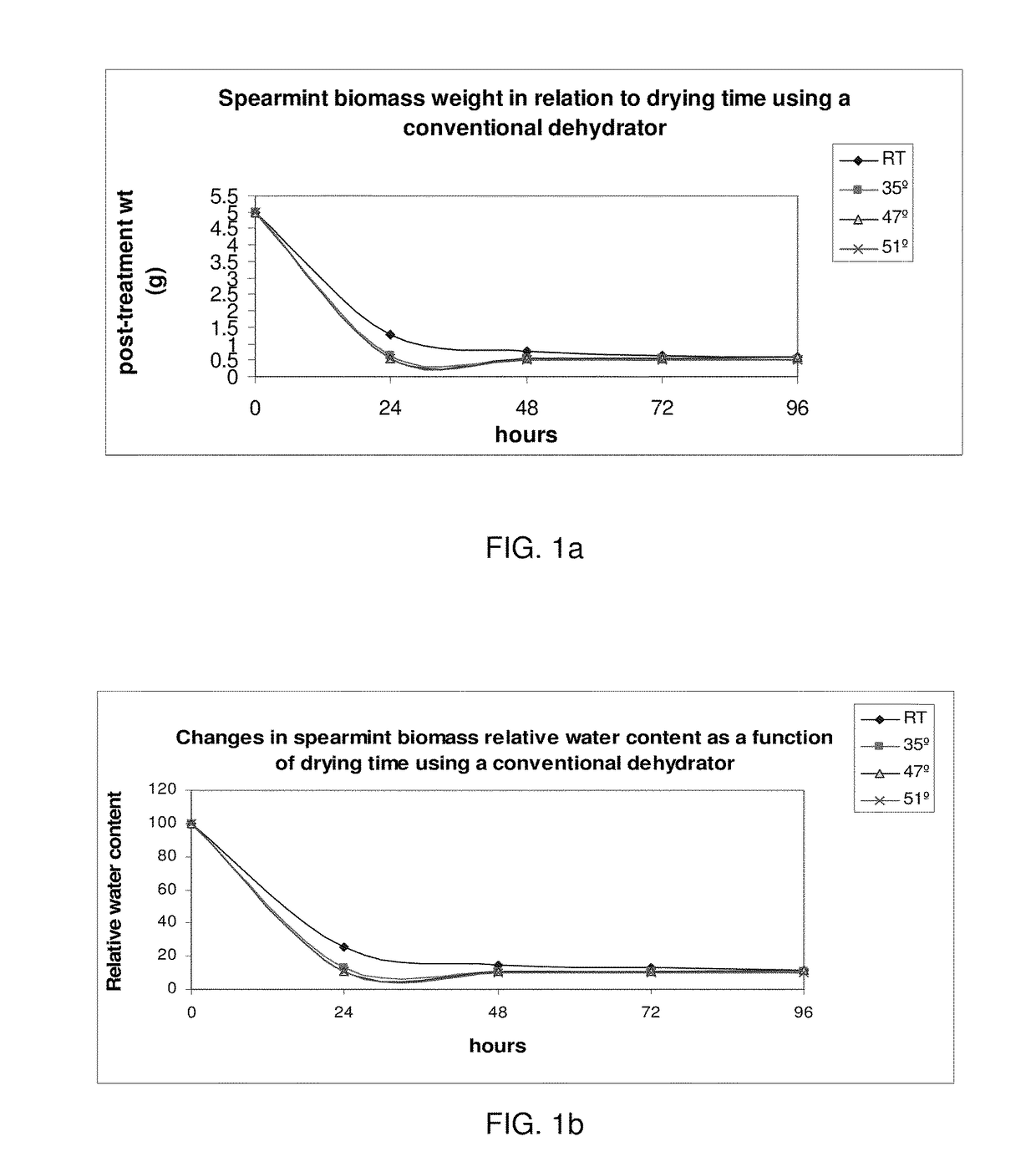
Figure 2 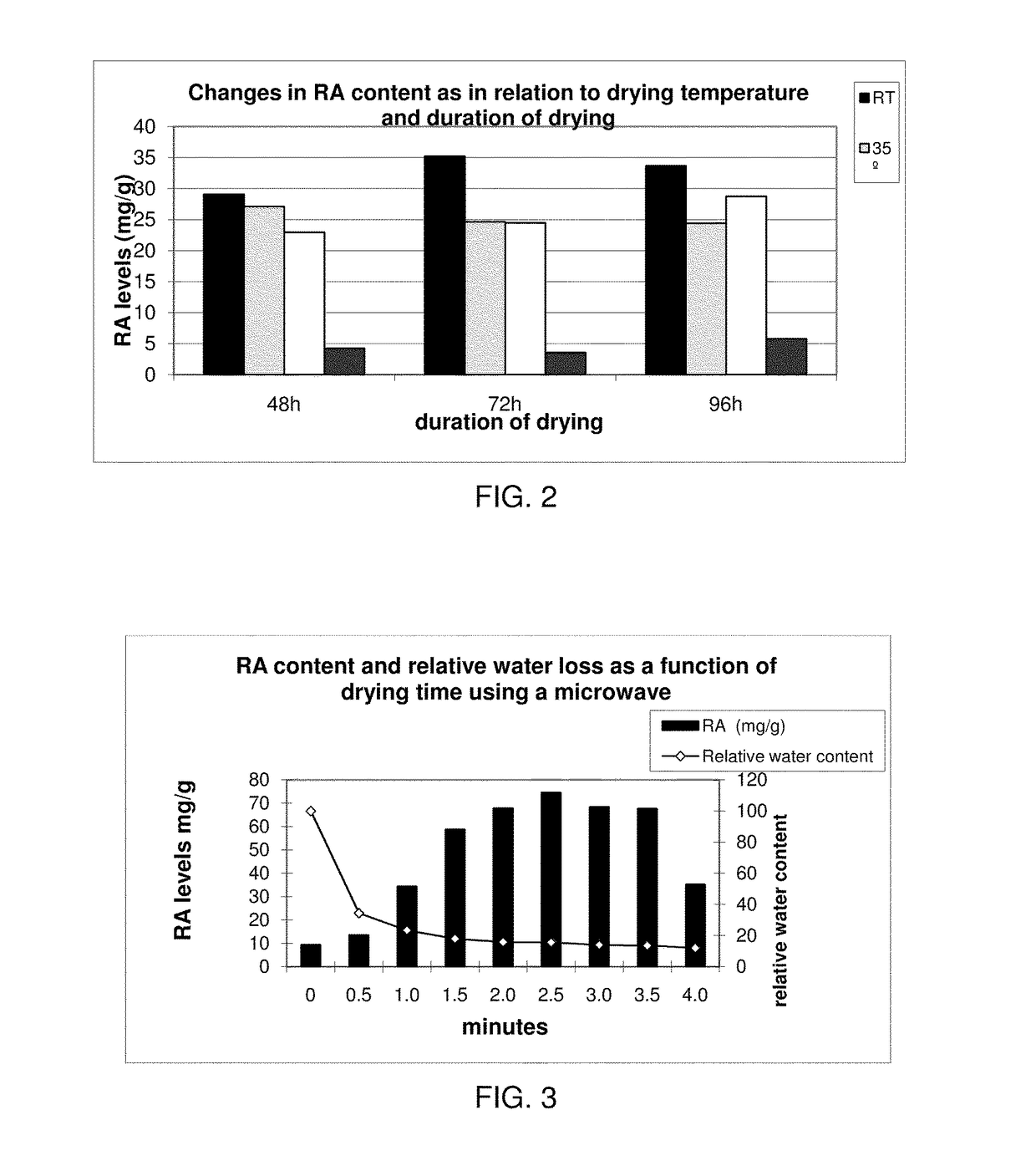
Figure 3
Abstract
Description
[0001] This application claims priority to U.S. Patent Application Ser. No. 61 / 333,403, filed May 11, 2010.BACKGROUND OF THE INVENTION
[0002] The invention relates generally to drying of plant material and, more specifically, to a novel, non-obvious process for drying of plant material to maintain a high content of a labile bio-active molecule.
[0003] Rosmarinic acid (RA) is an ester of caffeic acid and 3,4-dihydroxyphenylacetic acid. It is also a secondary metabolite of various plant species including those of Lamiaceae. Spearmint (Mentha spicata L.) is particularly known as a major source of carvone-rich essential oil for perfumery and flavoring industries and is grown worldwide. It is a fast growing perennial that can biosynthesize significant amounts of RA and other phenolics when selected to do so (Fletcher R S, McAuley C and Kott L S. 2005a. Novel Mentha Spicata clones with enhanced rosmarinic acid and antioxidant activity. Proc. WOCMAP III, Vol. 6: Traditional Medicine and Nutrace...
Examples
example 1
Materials and Methods
[0018]Plant Material and Sample Collection.
[0019]A proprietary spearmint line capable of rapid regrowth and accumulation of high RA levels was chosen for this study. Clones of this line were established at a greenhouse during winter months (November-January) under supplemental illumination. Samples for this study were taken by clipping the top 4-6 cm of the plants that were comprised of young new leaves with smaller stems. The initial fresh weight of each replicate of spearmint tissue sample used for different drying methods was 5±0.05 g.
[0020]Drying Methods:
[0021]Drying experiments were carried out using three different drying processes: conventional dehydrator, conventional microwave and freeze-dryer.
[0022](a) Conventional dehydrator: Leaf tissue was dried using the standard vegetable dehydrator (Open Country—Sportsman Kitchen) in three replicates for each treatment. Pre-weighed leaf tissue was spread as a thin layer on the trays of the dehydrator. Three diffe...
example 2
[0089]Approximately 2.5 acres each of the 2 proprietary rosmarinic acid (RA) hyper-accumulator spearmint clonal lines (KI-MsEM0110 and KI-MsEM0042) were grown at two field locations. A pilot scale microwave dryer was assembled and transported to the fields for drying of the spearmint plant material shortly after harvesting. The microwave dryer system included two 75 kilowatt transmitters with wave guides two oven units which included variable speed top and bottom conveyor belts to hold the spearmint leaf and stem tissue as it passed through the ovens (AMTek, Cedar Rapids, Iowa).
[0090]Spearmint leaf and stem tissue was harvested in the field using a windrower (John Deere 3430) and manually lifted into a wagon for transportation to the microwave dryer system, situated in a farm building. Belt load, energy level and belt speed were varied until leaf and stem tissue reached a moisture level <10% and arcing occurrence was minimized.
[0091]Composite samples of leaf and stem tissue were als...