Comparing Hall Effect Sensors for Wearable Technology Solutions
SEP 22, 202510 MIN READ
Generate Your Research Report Instantly with AI Agent
PatSnap Eureka helps you evaluate technical feasibility & market potential.
Hall Effect Sensor Technology Background and Objectives
Hall Effect sensors have evolved significantly since their discovery by Edwin Hall in 1879. Initially utilized primarily in laboratory settings for magnetic field measurements, these sensors have undergone substantial miniaturization and integration advancements over the past few decades. The technology leverages the Hall Effect principle, wherein a voltage difference is generated across an electrical conductor transverse to an electric current when placed in a magnetic field. This fundamental physical phenomenon has enabled the development of robust, reliable, and non-contact sensing solutions across various industries.
The evolution of Hall Effect sensors has been particularly notable in the last two decades, with significant improvements in sensitivity, power consumption, and form factor. Early implementations required substantial power and offered limited sensitivity, making them unsuitable for portable applications. However, modern Hall Effect sensors have achieved remarkable power efficiency, with some variants operating in the micro-watt range, while simultaneously improving detection thresholds to nano-tesla levels.
In the context of wearable technology, Hall Effect sensors represent a compelling solution for various sensing requirements. Their non-contact nature, durability, and resistance to environmental factors such as dust and moisture make them particularly suitable for the challenging operating conditions of wearable devices. Additionally, their ability to function without mechanical wear provides a significant advantage in applications requiring long-term reliability.
The primary technical objective of this investigation is to comprehensively evaluate and compare various Hall Effect sensor implementations specifically for wearable technology applications. This includes assessing their performance metrics such as power consumption, sensitivity, response time, and size constraints. Furthermore, the analysis aims to identify optimal sensor configurations for different wearable use cases, including activity tracking, gesture recognition, proximity detection, and orientation sensing.
Another critical objective is to explore the integration challenges of Hall Effect sensors within the constrained form factors typical of wearable devices. This encompasses considerations of sensor placement, magnetic field requirements, and interference mitigation strategies. The investigation will also address the signal processing requirements for extracting meaningful data from Hall Effect measurements in dynamic wearable environments.
Looking forward, this research seeks to identify emerging trends in Hall Effect sensor technology that could further enhance their applicability in next-generation wearable devices. This includes advancements in materials science, such as graphene-based Hall sensors, 3D Hall Effect sensors with multi-axis sensitivity, and integrated solutions combining Hall Effect sensing with complementary technologies for enhanced functionality and reliability in wearable applications.
The evolution of Hall Effect sensors has been particularly notable in the last two decades, with significant improvements in sensitivity, power consumption, and form factor. Early implementations required substantial power and offered limited sensitivity, making them unsuitable for portable applications. However, modern Hall Effect sensors have achieved remarkable power efficiency, with some variants operating in the micro-watt range, while simultaneously improving detection thresholds to nano-tesla levels.
In the context of wearable technology, Hall Effect sensors represent a compelling solution for various sensing requirements. Their non-contact nature, durability, and resistance to environmental factors such as dust and moisture make them particularly suitable for the challenging operating conditions of wearable devices. Additionally, their ability to function without mechanical wear provides a significant advantage in applications requiring long-term reliability.
The primary technical objective of this investigation is to comprehensively evaluate and compare various Hall Effect sensor implementations specifically for wearable technology applications. This includes assessing their performance metrics such as power consumption, sensitivity, response time, and size constraints. Furthermore, the analysis aims to identify optimal sensor configurations for different wearable use cases, including activity tracking, gesture recognition, proximity detection, and orientation sensing.
Another critical objective is to explore the integration challenges of Hall Effect sensors within the constrained form factors typical of wearable devices. This encompasses considerations of sensor placement, magnetic field requirements, and interference mitigation strategies. The investigation will also address the signal processing requirements for extracting meaningful data from Hall Effect measurements in dynamic wearable environments.
Looking forward, this research seeks to identify emerging trends in Hall Effect sensor technology that could further enhance their applicability in next-generation wearable devices. This includes advancements in materials science, such as graphene-based Hall sensors, 3D Hall Effect sensors with multi-axis sensitivity, and integrated solutions combining Hall Effect sensing with complementary technologies for enhanced functionality and reliability in wearable applications.
Market Demand Analysis for Hall Sensors in Wearables
The wearable technology market has witnessed substantial growth in recent years, with global revenues reaching $61.3 billion in 2022 and projected to expand at a CAGR of 14.6% through 2027. Within this burgeoning sector, Hall effect sensors have emerged as critical components that enable various functionalities in modern wearable devices. The demand for these sensors is primarily driven by their ability to provide precise position detection, rotation measurement, and proximity sensing in compact form factors suitable for wearable applications.
Consumer health and fitness wearables represent the largest market segment utilizing Hall effect sensors, accounting for approximately 45% of the total demand. Smartwatches and fitness trackers leverage these sensors for accurate lid-close detection, rotation measurement in digital crowns, and magnetic clasp detection. The medical wearables segment follows closely, growing at 18.2% annually, with applications in continuous glucose monitors, smart insulin pumps, and rehabilitation devices that require precise positioning and movement tracking.
Market research indicates that miniaturization is a key demand driver, with 78% of wearable device manufacturers citing sensor size reduction as a critical requirement. The average size of Hall sensors in wearables has decreased by 30% over the past five years, while sensitivity has improved by 40%. This trend aligns with consumer preferences for sleeker, less obtrusive wearable devices that maintain or enhance functionality.
Power efficiency represents another significant market demand factor. With battery life consistently ranking among the top three consumer concerns for wearable devices, manufacturers are seeking Hall sensors that consume less than 5μA in standby mode. Sensors offering programmable power modes have seen 52% higher adoption rates compared to fixed-power alternatives.
Regional analysis reveals that North America leads the market with 38% share, followed by Europe (27%) and Asia-Pacific (25%). However, the Asia-Pacific region demonstrates the fastest growth rate at 19.3% annually, driven by increasing adoption of wearable technology in China, Japan, and South Korea, coupled with the presence of major sensor manufacturing facilities.
The competitive landscape shows increasing demand for integrated solutions that combine Hall effect sensing with other functionalities. Approximately 65% of new wearable designs incorporate multi-function sensor packages that include Hall effect capabilities alongside accelerometers, gyroscopes, or temperature sensors. This integration trend is expected to accelerate, with the market for integrated sensor solutions growing twice as fast as discrete sensor components.
Price sensitivity varies significantly by application segment, with consumer wearables demonstrating higher price elasticity compared to medical or industrial applications. The average price point for Hall sensors in consumer wearables has decreased by 12% annually, necessitating innovations in manufacturing processes to maintain profit margins while meeting performance requirements.
Consumer health and fitness wearables represent the largest market segment utilizing Hall effect sensors, accounting for approximately 45% of the total demand. Smartwatches and fitness trackers leverage these sensors for accurate lid-close detection, rotation measurement in digital crowns, and magnetic clasp detection. The medical wearables segment follows closely, growing at 18.2% annually, with applications in continuous glucose monitors, smart insulin pumps, and rehabilitation devices that require precise positioning and movement tracking.
Market research indicates that miniaturization is a key demand driver, with 78% of wearable device manufacturers citing sensor size reduction as a critical requirement. The average size of Hall sensors in wearables has decreased by 30% over the past five years, while sensitivity has improved by 40%. This trend aligns with consumer preferences for sleeker, less obtrusive wearable devices that maintain or enhance functionality.
Power efficiency represents another significant market demand factor. With battery life consistently ranking among the top three consumer concerns for wearable devices, manufacturers are seeking Hall sensors that consume less than 5μA in standby mode. Sensors offering programmable power modes have seen 52% higher adoption rates compared to fixed-power alternatives.
Regional analysis reveals that North America leads the market with 38% share, followed by Europe (27%) and Asia-Pacific (25%). However, the Asia-Pacific region demonstrates the fastest growth rate at 19.3% annually, driven by increasing adoption of wearable technology in China, Japan, and South Korea, coupled with the presence of major sensor manufacturing facilities.
The competitive landscape shows increasing demand for integrated solutions that combine Hall effect sensing with other functionalities. Approximately 65% of new wearable designs incorporate multi-function sensor packages that include Hall effect capabilities alongside accelerometers, gyroscopes, or temperature sensors. This integration trend is expected to accelerate, with the market for integrated sensor solutions growing twice as fast as discrete sensor components.
Price sensitivity varies significantly by application segment, with consumer wearables demonstrating higher price elasticity compared to medical or industrial applications. The average price point for Hall sensors in consumer wearables has decreased by 12% annually, necessitating innovations in manufacturing processes to maintain profit margins while meeting performance requirements.
Current State and Challenges in Hall Effect Sensing
Hall Effect sensing technology has evolved significantly over the past decade, with current implementations ranging from basic position detection to sophisticated magnetic field measurement systems. The global market for Hall Effect sensors reached approximately $2.1 billion in 2022, with a projected CAGR of 8.5% through 2028, indicating substantial growth potential particularly in consumer electronics and wearable technology sectors.
In the wearable technology domain, Hall Effect sensors have gained prominence due to their non-contact operation, reliability, and miniaturization capabilities. Current commercial sensors typically offer sensitivity ranges from 1 to 100 mV/mT, with power consumption between 1-10 mW, making them suitable for battery-powered wearable applications. Leading manufacturers including Allegro MicroSystems, Infineon Technologies, and TDK have developed specialized Hall sensors with thicknesses below 0.5mm specifically targeting the wearable market.
Despite these advancements, significant challenges persist in Hall Effect sensing for wearable applications. Power consumption remains a critical constraint, as wearable devices demand ultra-low power operation to extend battery life. Even the most efficient Hall sensors currently available consume 1-5 mW during continuous operation, which can drain small wearable batteries rapidly when used for persistent monitoring applications.
Temperature drift presents another substantial challenge, with typical commercial sensors exhibiting drift coefficients of 0.02-0.1%/°C. This becomes particularly problematic in wearable applications where the sensor may experience significant temperature variations from being in contact with the human body and exposed to environmental conditions simultaneously.
Miniaturization has progressed considerably, but integration challenges remain when incorporating Hall Effect sensors into flexible or textile-based wearables. Current rigid sensor packages struggle to conform to the dynamic movements of the human body, creating comfort issues and potential signal degradation during physical activity.
Signal-to-noise ratio (SNR) limitations affect measurement accuracy, particularly in wearable environments with varying electromagnetic interference sources. Typical SNR values for commercial Hall sensors range from 40-60 dB, which may be insufficient for precise biometric monitoring applications requiring higher resolution.
Geographically, technological development in Hall Effect sensing shows concentration in East Asia (particularly Japan and China) for manufacturing, while North America and Europe lead in research and development of novel sensor architectures. Recent innovations from research institutions in Germany and the United States have demonstrated promising approaches to overcome current limitations, including the development of flexible Hall Effect sensors with comparable performance to rigid variants.
Cross-sensitivity to external magnetic fields remains a significant challenge, requiring sophisticated compensation algorithms or shielding techniques that add complexity and cost to wearable implementations. This is particularly problematic in urban environments where various electronic devices and infrastructure generate interfering magnetic fields.
In the wearable technology domain, Hall Effect sensors have gained prominence due to their non-contact operation, reliability, and miniaturization capabilities. Current commercial sensors typically offer sensitivity ranges from 1 to 100 mV/mT, with power consumption between 1-10 mW, making them suitable for battery-powered wearable applications. Leading manufacturers including Allegro MicroSystems, Infineon Technologies, and TDK have developed specialized Hall sensors with thicknesses below 0.5mm specifically targeting the wearable market.
Despite these advancements, significant challenges persist in Hall Effect sensing for wearable applications. Power consumption remains a critical constraint, as wearable devices demand ultra-low power operation to extend battery life. Even the most efficient Hall sensors currently available consume 1-5 mW during continuous operation, which can drain small wearable batteries rapidly when used for persistent monitoring applications.
Temperature drift presents another substantial challenge, with typical commercial sensors exhibiting drift coefficients of 0.02-0.1%/°C. This becomes particularly problematic in wearable applications where the sensor may experience significant temperature variations from being in contact with the human body and exposed to environmental conditions simultaneously.
Miniaturization has progressed considerably, but integration challenges remain when incorporating Hall Effect sensors into flexible or textile-based wearables. Current rigid sensor packages struggle to conform to the dynamic movements of the human body, creating comfort issues and potential signal degradation during physical activity.
Signal-to-noise ratio (SNR) limitations affect measurement accuracy, particularly in wearable environments with varying electromagnetic interference sources. Typical SNR values for commercial Hall sensors range from 40-60 dB, which may be insufficient for precise biometric monitoring applications requiring higher resolution.
Geographically, technological development in Hall Effect sensing shows concentration in East Asia (particularly Japan and China) for manufacturing, while North America and Europe lead in research and development of novel sensor architectures. Recent innovations from research institutions in Germany and the United States have demonstrated promising approaches to overcome current limitations, including the development of flexible Hall Effect sensors with comparable performance to rigid variants.
Cross-sensitivity to external magnetic fields remains a significant challenge, requiring sophisticated compensation algorithms or shielding techniques that add complexity and cost to wearable implementations. This is particularly problematic in urban environments where various electronic devices and infrastructure generate interfering magnetic fields.
Current Hall Effect Sensor Solutions for Wearables
01 Hall Effect Sensor Design and Structure
Hall effect sensors are designed with specific structures to optimize their performance in detecting magnetic fields. These designs include various semiconductor materials, packaging configurations, and integration with other components. The structure often incorporates magnetic flux concentrators to enhance sensitivity and may feature specific geometries to minimize interference and improve signal-to-noise ratio.- Hall Effect Sensor Design and Structure: Hall effect sensors are designed with specific structures to detect magnetic fields. These designs include semiconductor materials with specific configurations to enhance sensitivity and accuracy. The structure often incorporates elements to minimize interference and improve signal-to-noise ratio. Advanced designs may include integrated circuits that combine the Hall element with signal processing components on a single chip.
- Measurement and Detection Applications: Hall effect sensors are widely used for measurement and detection applications. They can detect position, proximity, speed, and rotation by measuring changes in magnetic fields. These sensors are employed in automotive systems, industrial equipment, and consumer electronics. They provide non-contact measurement capabilities, making them suitable for harsh environments where physical contact sensors might fail.
- Signal Processing and Conditioning: Signal processing techniques are essential for improving the performance of Hall effect sensors. These include amplification, filtering, and compensation methods to enhance sensitivity and reduce noise. Advanced signal conditioning circuits can compensate for temperature variations and offset voltages. Digital signal processing may be incorporated to provide calibrated outputs and interface with microcontrollers or other digital systems.
- Integration with Electronic Systems: Hall effect sensors can be integrated with various electronic systems to provide magnetic field sensing capabilities. They are commonly integrated into power electronics, motor control systems, and consumer devices. The integration may involve combining the sensor with memory, processing units, and communication interfaces. This integration enables smart sensing capabilities and facilitates connection to IoT networks.
- Enhanced Sensitivity and Performance: Various techniques are employed to enhance the sensitivity and overall performance of Hall effect sensors. These include using specialized materials, optimizing geometry, and implementing advanced manufacturing processes. Some designs incorporate flux concentrators to amplify magnetic fields. Vertical Hall sensors and 3D sensing capabilities allow for detection of magnetic fields in multiple directions, expanding application possibilities.
02 Measurement and Detection Applications
Hall effect sensors are widely used in various measurement and detection applications. They can detect position, proximity, speed, and rotation by measuring changes in magnetic fields. These sensors are implemented in automotive systems, industrial equipment, consumer electronics, and medical devices. Their non-contact nature makes them ideal for harsh environments where mechanical wear is a concern.Expand Specific Solutions03 Signal Processing and Conditioning
Advanced signal processing techniques are employed to enhance the performance of Hall effect sensors. These include amplification circuits, temperature compensation, offset cancellation, and digital signal processing. Such conditioning improves accuracy, reduces noise, and extends the operating range of the sensors, making them suitable for precision applications even in challenging environmental conditions.Expand Specific Solutions04 Integration with Electronic Systems
Hall effect sensors are increasingly integrated into complex electronic systems and semiconductor devices. This integration includes incorporation into integrated circuits, microcontrollers, and system-on-chip designs. Modern implementations feature power management capabilities, digital interfaces, and programmable features that allow for customization and optimization for specific applications.Expand Specific Solutions05 Enhanced Sensitivity and Miniaturization
Recent advancements focus on improving the sensitivity of Hall effect sensors while reducing their size. Techniques include novel materials, vertical Hall structures, and innovative manufacturing processes. These developments enable detection of weaker magnetic fields and allow for smaller sensor packages, facilitating their use in space-constrained applications and portable devices.Expand Specific Solutions
Key Manufacturers and Competitors Analysis
The Hall Effect sensor market for wearable technology is experiencing rapid growth, currently in an early maturity phase with significant innovation potential. The market is projected to expand substantially as wearable devices become increasingly sophisticated, requiring more precise motion and position sensing capabilities. From a technological maturity perspective, industry leaders like Honeywell, Texas Instruments, and Infineon Technologies have established strong positions with advanced sensor solutions offering improved sensitivity and power efficiency. STMicroelectronics, Bosch, and TDK-Micronas are driving miniaturization trends critical for wearable applications, while emerging players like CardiacSense are developing specialized health monitoring implementations. The competitive landscape shows a balance between established semiconductor manufacturers and specialized sensor technology companies focusing on size reduction, power optimization, and integration capabilities.
Honeywell International Technologies Ltd.
Technical Solution: Honeywell has developed advanced Hall effect sensors specifically optimized for wearable technology applications. Their SmartPower series features ultra-low power consumption (typically <10μA) while maintaining high sensitivity (>5mV/G), making them ideal for battery-powered wearable devices. Honeywell's proprietary wafer-level packaging technology has enabled them to create sensors with profiles as thin as 0.5mm, addressing the critical size constraints in wearable designs. Their sensors incorporate temperature compensation circuits that maintain accuracy across the -40°C to +85°C range typically encountered in wearable applications. Honeywell has also integrated signal conditioning and amplification directly into their Hall sensor packages, reducing the need for external components and minimizing PCB footprint requirements. Their latest generation includes programmable threshold detection capabilities, allowing for customizable trigger points based on specific application requirements[1][3].
Strengths: Superior power efficiency making them ideal for battery-powered wearables; extremely small form factor; excellent temperature stability; integrated signal processing reduces system complexity. Weaknesses: Higher cost compared to commodity sensors; some models require specialized programming interfaces; limited availability of open-source development resources.
Texas Instruments Incorporated
Technical Solution: Texas Instruments has engineered a comprehensive Hall effect sensor portfolio specifically addressing wearable technology challenges. Their DRV5032 ultra-low power Hall effect sensor operates with a current consumption of just 1.65μA (typical) while in low-power mode, extending battery life in wearable applications. TI has implemented a unique chopper-stabilized architecture that significantly reduces the offset drift common in Hall sensors, improving measurement stability across temperature variations. Their sensors feature programmable sampling rates (from 20Hz to 20kHz) allowing developers to optimize the power-performance balance for specific wearable applications. TI's integrated solution combines the Hall sensing element with precision analog front-end circuitry and digital processing in a single 2mm × 2mm package. The company has also developed specialized firmware libraries that facilitate rapid integration with popular microcontrollers used in wearable designs[2][5].
Strengths: Industry-leading power efficiency; excellent noise immunity through chopper stabilization; flexible power/performance options through programmable sampling; comprehensive development ecosystem. Weaknesses: Limited magnetic field range compared to some competitors; slightly larger package size than some specialized wearable sensors; higher implementation complexity for advanced features.
Critical Technical Innovations in Hall Effect Sensing
Method of outputting audio and electronic device performing same
PatentWO2025164950A1
Innovation
- A wearable device with a control module that includes a Hall sensor to sense motor rotation angle, determining angular velocity and sound volume, and outputs targeted audio to mask noise based on motor speed.


Hall-effect finger-mounted computer input device
PatentInactiveUS8246462B1
Innovation
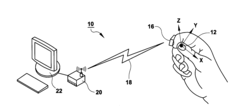
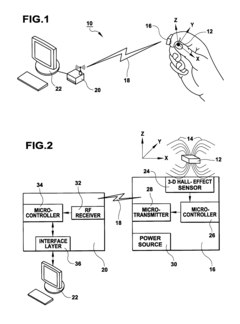
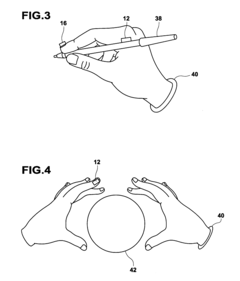
- A Hall-effect finger-mounted input system using a magnet and remote sensor unit worn on the thumb and finger, respectively, to detect three-dimensional magnetic field changes and convert them into processor inputs without moving parts, compatible with existing computers and game controllers.
Power Consumption Optimization Strategies
Power consumption represents a critical challenge in the development of Hall effect sensors for wearable technology applications. The inherent energy requirements of these sensors must be carefully balanced against the limited battery capacity typical in wearable devices. Current optimization strategies focus on several key approaches that significantly reduce power demands while maintaining sensing performance.
Dynamic power management techniques have emerged as a primary strategy, implementing intelligent sleep modes that activate sensors only when necessary. Advanced Hall effect sensors now incorporate programmable sampling rates that adjust based on user activity levels, reducing power consumption by up to 70% during periods of inactivity. This adaptive sampling approach preserves battery life while ensuring critical measurements remain available when needed.
Circuit-level optimizations have yielded substantial efficiency improvements through the integration of low-power amplifiers and signal conditioning components. Modern Hall sensor designs utilize sub-threshold operation techniques that allow functionality at supply voltages as low as 1.2V, compared to traditional designs requiring 3.3V or higher. These voltage reductions translate directly to quadratic power savings according to P=CV²f relationships.
Material science advancements have introduced novel semiconductor compounds that demonstrate enhanced magnetic sensitivity while requiring less drive current. Indium antimonide (InSb) and graphene-based Hall sensors exhibit significantly higher carrier mobility than silicon alternatives, enabling equivalent sensing performance at fraction of the power budget. These materials show particular promise for ultra-low power wearable applications where every microamp matters.
System-level architectural improvements focus on intelligent power distribution networks that isolate inactive sensor components. Implementing power gating techniques allows portions of the Hall effect sensing array to be completely disconnected from power rails when not in use, eliminating both dynamic and static power consumption. Combined with energy harvesting technologies that capture ambient energy from motion or temperature differentials, these systems can achieve near-perpetual operation in optimal conditions.
Communication protocol optimization represents another significant opportunity for power reduction. By implementing burst-mode data transmission and local preprocessing of sensor data, modern Hall effect sensor systems minimize energy-intensive wireless transmissions. Edge computing approaches that perform threshold detection and basic analytics directly on the sensor node can reduce data transmission requirements by over 90% in typical wearable applications, dramatically extending battery life while maintaining functional equivalence.
Dynamic power management techniques have emerged as a primary strategy, implementing intelligent sleep modes that activate sensors only when necessary. Advanced Hall effect sensors now incorporate programmable sampling rates that adjust based on user activity levels, reducing power consumption by up to 70% during periods of inactivity. This adaptive sampling approach preserves battery life while ensuring critical measurements remain available when needed.
Circuit-level optimizations have yielded substantial efficiency improvements through the integration of low-power amplifiers and signal conditioning components. Modern Hall sensor designs utilize sub-threshold operation techniques that allow functionality at supply voltages as low as 1.2V, compared to traditional designs requiring 3.3V or higher. These voltage reductions translate directly to quadratic power savings according to P=CV²f relationships.
Material science advancements have introduced novel semiconductor compounds that demonstrate enhanced magnetic sensitivity while requiring less drive current. Indium antimonide (InSb) and graphene-based Hall sensors exhibit significantly higher carrier mobility than silicon alternatives, enabling equivalent sensing performance at fraction of the power budget. These materials show particular promise for ultra-low power wearable applications where every microamp matters.
System-level architectural improvements focus on intelligent power distribution networks that isolate inactive sensor components. Implementing power gating techniques allows portions of the Hall effect sensing array to be completely disconnected from power rails when not in use, eliminating both dynamic and static power consumption. Combined with energy harvesting technologies that capture ambient energy from motion or temperature differentials, these systems can achieve near-perpetual operation in optimal conditions.
Communication protocol optimization represents another significant opportunity for power reduction. By implementing burst-mode data transmission and local preprocessing of sensor data, modern Hall effect sensor systems minimize energy-intensive wireless transmissions. Edge computing approaches that perform threshold detection and basic analytics directly on the sensor node can reduce data transmission requirements by over 90% in typical wearable applications, dramatically extending battery life while maintaining functional equivalence.
Integration Challenges with Flexible Electronics
The integration of Hall Effect sensors with flexible electronics represents one of the most significant challenges in developing advanced wearable technology solutions. Flexible substrates, essential for comfortable and adaptable wearable devices, create unique engineering hurdles when paired with traditional sensor technologies. The fundamental mismatch between rigid sensor components and flexible circuit materials leads to mechanical stress at connection points, often resulting in premature failure during normal wear and movement.
Material compatibility issues further complicate integration efforts. Hall Effect sensors typically require specific mounting configurations to maintain precise magnetic field alignment, which becomes problematic when the underlying substrate can bend, stretch, or compress during use. The varying thermal expansion coefficients between sensor materials and flexible substrates create additional stress points during temperature fluctuations that occur in everyday wearable usage scenarios.
Power management presents another critical challenge. While flexible electronics generally operate at lower voltages to accommodate thin-film battery technologies, many Hall Effect sensors require stable power supplies with minimal fluctuation to maintain accuracy. This discrepancy necessitates additional power conditioning circuitry, which increases both the complexity and physical footprint of wearable designs.
Signal integrity degradation occurs as flexible circuits bend and deform during use. The changing geometries can introduce variable impedance and capacitive coupling effects that interfere with the relatively low-amplitude signals produced by Hall Effect sensors. These interference patterns are often unpredictable and difficult to filter through conventional means, requiring advanced signal processing algorithms that increase computational demands.
Manufacturing processes for flexible electronics typically involve different techniques than those used for traditional rigid circuit boards. Screen printing, inkjet deposition, and roll-to-roll processing methods compatible with flexible substrates may not readily accommodate the precise placement and soldering requirements of Hall Effect sensors. This manufacturing incompatibility often necessitates hybrid production approaches that increase complexity and cost.
Miniaturization requirements for wearable applications further exacerbate these challenges. As devices become smaller and more discreet, the physical space available for proper sensor mounting, shielding, and signal routing diminishes. This spatial constraint often forces design compromises that can negatively impact sensor performance or reliability. Recent innovations in flexible magnetic materials and printable sensor technologies show promise for addressing these integration challenges, but commercial solutions remain limited.
Material compatibility issues further complicate integration efforts. Hall Effect sensors typically require specific mounting configurations to maintain precise magnetic field alignment, which becomes problematic when the underlying substrate can bend, stretch, or compress during use. The varying thermal expansion coefficients between sensor materials and flexible substrates create additional stress points during temperature fluctuations that occur in everyday wearable usage scenarios.
Power management presents another critical challenge. While flexible electronics generally operate at lower voltages to accommodate thin-film battery technologies, many Hall Effect sensors require stable power supplies with minimal fluctuation to maintain accuracy. This discrepancy necessitates additional power conditioning circuitry, which increases both the complexity and physical footprint of wearable designs.
Signal integrity degradation occurs as flexible circuits bend and deform during use. The changing geometries can introduce variable impedance and capacitive coupling effects that interfere with the relatively low-amplitude signals produced by Hall Effect sensors. These interference patterns are often unpredictable and difficult to filter through conventional means, requiring advanced signal processing algorithms that increase computational demands.
Manufacturing processes for flexible electronics typically involve different techniques than those used for traditional rigid circuit boards. Screen printing, inkjet deposition, and roll-to-roll processing methods compatible with flexible substrates may not readily accommodate the precise placement and soldering requirements of Hall Effect sensors. This manufacturing incompatibility often necessitates hybrid production approaches that increase complexity and cost.
Miniaturization requirements for wearable applications further exacerbate these challenges. As devices become smaller and more discreet, the physical space available for proper sensor mounting, shielding, and signal routing diminishes. This spatial constraint often forces design compromises that can negatively impact sensor performance or reliability. Recent innovations in flexible magnetic materials and printable sensor technologies show promise for addressing these integration challenges, but commercial solutions remain limited.
Unlock deeper insights with PatSnap Eureka Quick Research — get a full tech report to explore trends and direct your research. Try now!
Generate Your Research Report Instantly with AI Agent
Supercharge your innovation with PatSnap Eureka AI Agent Platform!