Comparing Hall Effect Sensors vs LVDTs for Position Sensing
SEP 22, 202510 MIN READ
Generate Your Research Report Instantly with AI Agent
PatSnap Eureka helps you evaluate technical feasibility & market potential.
Position Sensing Technology Evolution and Objectives
Position sensing technology has evolved significantly over the past several decades, transforming from rudimentary mechanical systems to sophisticated electronic solutions. The journey began with simple potentiometers and mechanical linkages in the early 20th century, which provided basic position feedback but suffered from wear and reliability issues. The mid-20th century saw the emergence of more robust solutions including Linear Variable Differential Transformers (LVDTs), which represented a significant advancement in accuracy and durability for industrial applications.
The 1970s marked a pivotal moment with the commercialization of Hall Effect sensors, leveraging magnetic field detection principles discovered by Edwin Hall in 1879. This technology offered a solid-state alternative with no moving parts, addressing many limitations of mechanical systems. The subsequent decades witnessed continuous refinement of both technologies, with LVDTs becoming more compact and Hall Effect sensors achieving greater precision and temperature stability.
The digital revolution of the 1990s and early 2000s brought integrated signal processing capabilities to both sensing technologies, enabling direct digital outputs and enhanced diagnostic features. This period also saw the development of specialized variants such as non-contact Hall Effect sensors and hermetically sealed LVDTs for harsh environments, expanding their application domains considerably.
Recent technological advancements have focused on miniaturization, power efficiency, and integration with IoT systems. Modern Hall Effect sensors now incorporate advanced temperature compensation algorithms and can be manufactured using semiconductor processes that allow for extremely compact form factors. Similarly, LVDTs have benefited from improvements in core materials and winding techniques, resulting in enhanced linearity and resolution.
The primary objective in comparing Hall Effect sensors and LVDTs is to establish a comprehensive understanding of their respective strengths, limitations, and optimal application scenarios. This includes evaluating their performance metrics such as accuracy, resolution, repeatability, and response time across various operating conditions. Additionally, factors such as cost-effectiveness, longevity, maintenance requirements, and integration complexity must be considered to provide a holistic assessment.
Another critical objective is to identify emerging trends and potential technological convergence points that might influence future developments in position sensing. This includes exploring how advancements in materials science, signal processing algorithms, and manufacturing techniques might address current limitations or create entirely new capabilities for both technologies.
The ultimate goal is to develop a strategic framework for technology selection that aligns with specific application requirements, considering not only current performance parameters but also future scalability and adaptability to evolving industrial needs. This framework should serve as a valuable decision-making tool for engineering teams facing position sensing challenges across diverse sectors including automotive, aerospace, industrial automation, and medical devices.
The 1970s marked a pivotal moment with the commercialization of Hall Effect sensors, leveraging magnetic field detection principles discovered by Edwin Hall in 1879. This technology offered a solid-state alternative with no moving parts, addressing many limitations of mechanical systems. The subsequent decades witnessed continuous refinement of both technologies, with LVDTs becoming more compact and Hall Effect sensors achieving greater precision and temperature stability.
The digital revolution of the 1990s and early 2000s brought integrated signal processing capabilities to both sensing technologies, enabling direct digital outputs and enhanced diagnostic features. This period also saw the development of specialized variants such as non-contact Hall Effect sensors and hermetically sealed LVDTs for harsh environments, expanding their application domains considerably.
Recent technological advancements have focused on miniaturization, power efficiency, and integration with IoT systems. Modern Hall Effect sensors now incorporate advanced temperature compensation algorithms and can be manufactured using semiconductor processes that allow for extremely compact form factors. Similarly, LVDTs have benefited from improvements in core materials and winding techniques, resulting in enhanced linearity and resolution.
The primary objective in comparing Hall Effect sensors and LVDTs is to establish a comprehensive understanding of their respective strengths, limitations, and optimal application scenarios. This includes evaluating their performance metrics such as accuracy, resolution, repeatability, and response time across various operating conditions. Additionally, factors such as cost-effectiveness, longevity, maintenance requirements, and integration complexity must be considered to provide a holistic assessment.
Another critical objective is to identify emerging trends and potential technological convergence points that might influence future developments in position sensing. This includes exploring how advancements in materials science, signal processing algorithms, and manufacturing techniques might address current limitations or create entirely new capabilities for both technologies.
The ultimate goal is to develop a strategic framework for technology selection that aligns with specific application requirements, considering not only current performance parameters but also future scalability and adaptability to evolving industrial needs. This framework should serve as a valuable decision-making tool for engineering teams facing position sensing challenges across diverse sectors including automotive, aerospace, industrial automation, and medical devices.
Market Applications and Demand Analysis
The position sensing market has witnessed substantial growth in recent years, driven by increasing automation across multiple industries. The global position sensor market was valued at approximately $5.9 billion in 2021 and is projected to reach $12.8 billion by 2028, growing at a CAGR of 9.2%. Within this market, Hall Effect sensors and LVDTs (Linear Variable Differential Transformers) represent two distinct technological approaches with different application profiles and market penetration.
Industrial automation remains the largest application segment for both technologies, accounting for roughly 35% of the total position sensing market. In this sector, LVDTs have traditionally dominated due to their high precision and reliability in harsh environments. However, Hall Effect sensors have been gaining market share due to their cost advantages and improving performance characteristics, particularly in applications where extreme precision is not critical.
The automotive industry represents another significant market for position sensing technologies, constituting approximately 28% of the total market. Here, Hall Effect sensors have established dominance due to their compact size, durability, and cost-effectiveness. They are widely used in throttle position sensing, gear selection, pedal position, and steering angle measurement. LVDTs maintain a smaller but stable presence in specialized automotive applications requiring higher precision.
Aerospace and defense applications account for about 15% of the position sensing market, where LVDTs maintain a strong position due to their superior accuracy, reliability, and performance in extreme conditions. The high-stakes nature of these applications justifies the premium cost of LVDT technology, though Hall Effect sensors are increasingly being considered for non-critical systems.
Healthcare equipment represents a growing application segment (approximately 10% of the market) where both technologies find specialized uses. LVDTs are preferred in high-precision medical devices and equipment, while Hall Effect sensors are increasingly adopted in portable medical devices where size and power consumption are critical factors.
Regional analysis reveals that North America and Europe currently lead in LVDT adoption, particularly in industrial and aerospace applications, while Asia-Pacific shows stronger growth in Hall Effect sensor implementation, driven by automotive manufacturing and industrial automation expansion in countries like China, Japan, and South Korea.
Market demand is increasingly influenced by factors beyond pure technical performance. Energy efficiency considerations favor Hall Effect sensors due to their lower power consumption. Meanwhile, the trend toward miniaturization in many industries benefits Hall Effect technology, which can be implemented in significantly smaller form factors than traditional LVDTs.
Industrial automation remains the largest application segment for both technologies, accounting for roughly 35% of the total position sensing market. In this sector, LVDTs have traditionally dominated due to their high precision and reliability in harsh environments. However, Hall Effect sensors have been gaining market share due to their cost advantages and improving performance characteristics, particularly in applications where extreme precision is not critical.
The automotive industry represents another significant market for position sensing technologies, constituting approximately 28% of the total market. Here, Hall Effect sensors have established dominance due to their compact size, durability, and cost-effectiveness. They are widely used in throttle position sensing, gear selection, pedal position, and steering angle measurement. LVDTs maintain a smaller but stable presence in specialized automotive applications requiring higher precision.
Aerospace and defense applications account for about 15% of the position sensing market, where LVDTs maintain a strong position due to their superior accuracy, reliability, and performance in extreme conditions. The high-stakes nature of these applications justifies the premium cost of LVDT technology, though Hall Effect sensors are increasingly being considered for non-critical systems.
Healthcare equipment represents a growing application segment (approximately 10% of the market) where both technologies find specialized uses. LVDTs are preferred in high-precision medical devices and equipment, while Hall Effect sensors are increasingly adopted in portable medical devices where size and power consumption are critical factors.
Regional analysis reveals that North America and Europe currently lead in LVDT adoption, particularly in industrial and aerospace applications, while Asia-Pacific shows stronger growth in Hall Effect sensor implementation, driven by automotive manufacturing and industrial automation expansion in countries like China, Japan, and South Korea.
Market demand is increasingly influenced by factors beyond pure technical performance. Energy efficiency considerations favor Hall Effect sensors due to their lower power consumption. Meanwhile, the trend toward miniaturization in many industries benefits Hall Effect technology, which can be implemented in significantly smaller form factors than traditional LVDTs.
Technical Comparison and Limitations
Hall Effect sensors and LVDTs (Linear Variable Differential Transformers) represent two distinct technological approaches to position sensing, each with unique operational principles and performance characteristics. Hall Effect sensors operate based on the Hall Effect principle, where a voltage difference is generated across an electrical conductor transverse to an electric current when placed in a magnetic field. This voltage is proportional to the strength of the magnetic field, allowing for precise position measurement. In contrast, LVDTs function on electromagnetic induction principles, utilizing a primary coil and two secondary coils to detect the position of a ferromagnetic core.
From a technical perspective, Hall Effect sensors offer significant advantages in terms of size and weight. These sensors are compact semiconductor devices that can be integrated into miniaturized systems where space constraints are critical. Their solid-state construction eliminates moving parts, resulting in enhanced durability and reliability under harsh environmental conditions, including vibration and shock. Additionally, Hall Effect sensors provide digital output signals that integrate seamlessly with modern control systems without requiring complex signal conditioning.
LVDTs, however, excel in applications demanding extreme precision and repeatability. They can achieve measurement resolutions in the micrometer range with exceptional linearity across their full measurement range. The non-contact operation of LVDTs ensures virtually infinite mechanical life and eliminates issues related to friction and wear. Furthermore, LVDTs demonstrate remarkable stability over wide temperature ranges and can operate reliably in environments with electromagnetic interference.
Regarding limitations, Hall Effect sensors exhibit temperature sensitivity that can affect measurement accuracy without proper compensation. Their measurement range is typically more limited compared to LVDTs, and they may require periodic recalibration to maintain accuracy over time. The presence of external magnetic fields can also introduce measurement errors unless adequate shielding is implemented.
LVDTs face challenges related to their physical dimensions, as their design necessitates a larger form factor that may be prohibitive in space-constrained applications. The requirement for signal conditioning electronics adds complexity and cost to LVDT implementations. Additionally, LVDTs typically consume more power than Hall Effect sensors, which can be problematic in battery-powered or energy-efficient systems.
Response time represents another significant differentiator, with Hall Effect sensors offering faster response to position changes compared to LVDTs. This makes Hall Effect sensors preferable for high-speed dynamic applications where rapid position feedback is essential. Conversely, LVDTs provide superior performance in applications requiring absolute position measurement with high precision and long-term stability.
From a technical perspective, Hall Effect sensors offer significant advantages in terms of size and weight. These sensors are compact semiconductor devices that can be integrated into miniaturized systems where space constraints are critical. Their solid-state construction eliminates moving parts, resulting in enhanced durability and reliability under harsh environmental conditions, including vibration and shock. Additionally, Hall Effect sensors provide digital output signals that integrate seamlessly with modern control systems without requiring complex signal conditioning.
LVDTs, however, excel in applications demanding extreme precision and repeatability. They can achieve measurement resolutions in the micrometer range with exceptional linearity across their full measurement range. The non-contact operation of LVDTs ensures virtually infinite mechanical life and eliminates issues related to friction and wear. Furthermore, LVDTs demonstrate remarkable stability over wide temperature ranges and can operate reliably in environments with electromagnetic interference.
Regarding limitations, Hall Effect sensors exhibit temperature sensitivity that can affect measurement accuracy without proper compensation. Their measurement range is typically more limited compared to LVDTs, and they may require periodic recalibration to maintain accuracy over time. The presence of external magnetic fields can also introduce measurement errors unless adequate shielding is implemented.
LVDTs face challenges related to their physical dimensions, as their design necessitates a larger form factor that may be prohibitive in space-constrained applications. The requirement for signal conditioning electronics adds complexity and cost to LVDT implementations. Additionally, LVDTs typically consume more power than Hall Effect sensors, which can be problematic in battery-powered or energy-efficient systems.
Response time represents another significant differentiator, with Hall Effect sensors offering faster response to position changes compared to LVDTs. This makes Hall Effect sensors preferable for high-speed dynamic applications where rapid position feedback is essential. Conversely, LVDTs provide superior performance in applications requiring absolute position measurement with high precision and long-term stability.
Current Implementation Approaches
01 Hall Effect Sensors for Position Sensing
Hall effect sensors are widely used for position sensing applications due to their ability to detect magnetic fields without physical contact. These sensors operate based on the Hall effect principle, where a voltage is generated perpendicular to the current flow when a magnetic field is applied. They offer advantages such as high reliability, durability, and the ability to operate in harsh environments. Hall effect sensors can be integrated into various systems for precise position detection and measurement.- Hall Effect Sensors for Position Sensing: Hall effect sensors are widely used for position sensing applications due to their ability to detect magnetic fields without physical contact. These sensors operate based on the Hall effect principle, where a voltage is generated perpendicular to the current flow when a magnetic field is applied. They offer advantages such as high reliability, durability, and the ability to operate in harsh environments. Hall effect sensors can be integrated into various systems for precise position measurement and control.
- LVDTs for Linear Position Measurement: Linear Variable Differential Transformers (LVDTs) are electromagnetic position sensors used for measuring linear displacement. They consist of a primary winding and two secondary windings, with a movable ferromagnetic core. As the core moves, it changes the magnetic coupling between the windings, producing an output voltage proportional to the displacement. LVDTs offer high accuracy, excellent repeatability, and are suitable for applications requiring precise linear position measurement in industrial and automotive systems.
- Integrated Position Sensing Systems: Integrated position sensing systems combine multiple sensor technologies, such as Hall effect sensors and LVDTs, with signal processing electronics to provide comprehensive position measurement solutions. These systems often include microcontrollers, amplifiers, and filtering circuits to enhance accuracy and reliability. They can be designed for specific applications, such as automotive control systems, industrial automation, or aerospace equipment, offering improved performance through sensor fusion and advanced signal processing techniques.
- Non-Contact Position Sensing Technologies: Non-contact position sensing technologies utilize principles such as magnetism, optics, or capacitance to measure position without physical contact between the sensor and target. These technologies offer advantages including reduced wear, longer operational life, and the ability to operate in contaminated environments. They can be implemented using various sensor types including Hall effect sensors, optical encoders, or capacitive sensors, and are particularly valuable in applications where mechanical wear or environmental factors would limit the effectiveness of contact-based sensors.
- Position Sensor Signal Conditioning and Processing: Signal conditioning and processing are essential aspects of position sensing systems that enhance sensor performance. These techniques include amplification, filtering, analog-to-digital conversion, and digital signal processing to improve accuracy, reduce noise, and increase resolution. Advanced algorithms can compensate for temperature drift, hysteresis, and other non-linearities. Modern position sensing systems often incorporate dedicated integrated circuits or microcontrollers to perform these functions, enabling high-precision position measurement even in challenging environments.
02 LVDT Technology for Linear Position Measurement
Linear Variable Differential Transformers (LVDTs) are electromagnetic position sensors used for measuring linear displacement. They consist of a primary winding and two secondary windings, with a movable ferromagnetic core. As the core moves, it changes the magnetic coupling between the primary and secondary windings, resulting in a differential output voltage proportional to the displacement. LVDTs provide high accuracy, resolution, and repeatability in position sensing applications, making them suitable for industrial automation, aerospace, and automotive systems.Expand Specific Solutions03 Comparative Analysis of Hall Effect Sensors and LVDTs
Hall effect sensors and LVDTs each have distinct advantages for position sensing applications. Hall effect sensors offer non-contact operation, compact size, and digital output capabilities, making them suitable for rotary position sensing and applications with space constraints. LVDTs excel in high-precision linear measurements, offering excellent linearity, resolution, and immunity to electromagnetic interference. The selection between these technologies depends on factors such as measurement range, required accuracy, environmental conditions, and cost considerations.Expand Specific Solutions04 Integration of Position Sensors in Control Systems
Position sensors, including Hall effect sensors and LVDTs, are crucial components in modern control systems. They provide real-time feedback on the position of mechanical components, enabling precise control and automation. These sensors can be integrated with microcontrollers, PLCs, and other control hardware to create closed-loop control systems. Applications include motor position control, valve positioning, robotics, and industrial automation where accurate position feedback is essential for system performance and safety.Expand Specific Solutions05 Advanced Materials and Manufacturing for Position Sensors
Innovations in materials and manufacturing techniques have significantly improved the performance of position sensing technologies. Advanced magnetic materials enhance the sensitivity and stability of Hall effect sensors, while specialized core materials improve the linearity and temperature stability of LVDTs. Miniaturization through MEMS technology and integrated circuit design has enabled smaller, more efficient sensors. Manufacturing improvements have also led to better repeatability, reduced costs, and enhanced durability, expanding the application range of these position sensing technologies.Expand Specific Solutions
Key Manufacturers and Market Landscape
The position sensing technology market is currently in a growth phase, with Hall Effect sensors and LVDTs competing in various industrial applications. The global position sensing market is expanding rapidly, projected to reach significant scale due to increasing automation across industries. Technologically, Hall Effect sensors have gained prominence for their compact size and digital output capabilities, with Honeywell International and Parker-Hannifin leading innovations in this space. Meanwhile, LVDT technology maintains strong presence in high-precision applications, where Woodward and Moog have established expertise. Companies like Thales and General Electric are integrating both technologies into comprehensive sensing solutions, while emerging players like Shanghai Flexiv Robotics are developing novel applications in robotics. The competitive landscape shows established industrial giants focusing on reliability while newer entrants emphasize miniaturization and digital integration.
Honeywell International Technologies Ltd.
Technical Solution: Honeywell has developed advanced Hall Effect sensor solutions that utilize magnetoresistive technology for high-precision position sensing. Their SmartLine position transmitters incorporate Hall Effect sensors with integrated temperature compensation and digital signal processing to achieve accuracy levels of ±0.05% of span[1]. Honeywell's Hall Effect sensors feature non-contact operation with no moving parts, enabling long operational life exceeding 50 million cycles and resistance to harsh environments including vibration, dust, and moisture[3]. Their sensors include built-in diagnostics and self-calibration capabilities, with response times under 1ms for dynamic applications. Honeywell has also pioneered miniaturized Hall Effect sensors with dimensions as small as 2.5mm × 3.0mm for space-constrained applications while maintaining high resolution of up to 14-bit[5].
Strengths: Lower cost implementation, compact size, excellent durability with no moving parts, and faster response times. Weaknesses: Generally lower precision than LVDTs in extreme environments, more susceptible to electromagnetic interference, and potential drift over time requiring periodic recalibration.
Parker-Hannifin Corp.
Technical Solution: Parker-Hannifin has developed specialized LVDT (Linear Variable Differential Transformer) position sensing systems for hydraulic and pneumatic applications requiring extreme reliability. Their LVDT technology achieves linearity better than ±0.1% over full stroke ranges from ±0.05 inches to ±20 inches[1]. Parker's LVDTs feature hermetically sealed construction with stainless steel housings rated to IP68, enabling operation in harsh environments with temperatures from -65°F to +400°F and pressures up to 10,000 psi[3]. Their proprietary signal conditioning electronics provide digital outputs with resolution to 16-bit and update rates up to 1kHz. Parker has also developed specialized LVDT variants with radiation resistance up to 10^8 rads for nuclear applications, and explosion-proof models certified for hazardous locations per ATEX and IECEx standards[6]. Their latest generation incorporates digital calibration that compensates for temperature effects, maintaining accuracy across the full operating range.
Strengths: Exceptional reliability and durability in harsh environments, inherently immune to electromagnetic interference, no electronic components in the sensor element, and excellent long-term stability without recalibration. Weaknesses: Higher cost than Hall Effect alternatives, larger physical size, typically slower response time, and requires more complex signal conditioning electronics.
Core Patents and Technical Innovations
Displacement measurement device
PatentWO2007134287A1
Innovation
- A displacement measurement device using a stationary electromagnetic field sensor that detects disruptions in the magnetic field caused by a movable member, such as an armature, to provide position feedback without the need for the sensor to move relative to the magnet, utilizing a magnetic field source and Hall-effect sensors to monitor changes in magnetic flux.


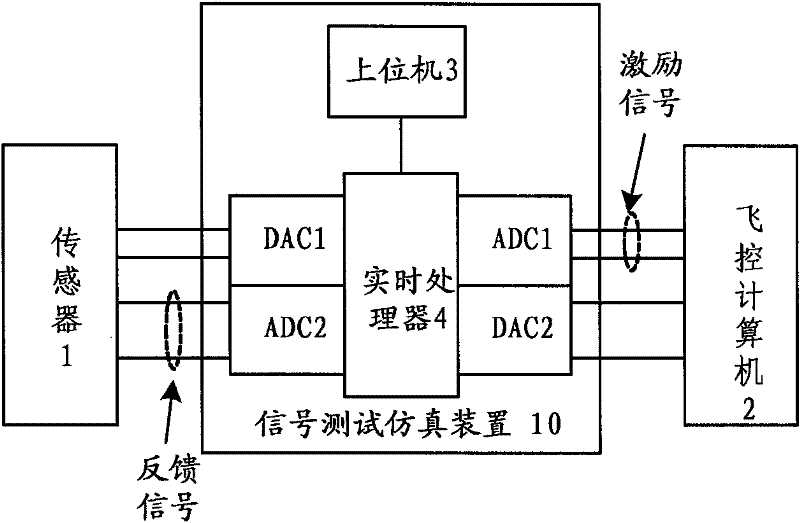
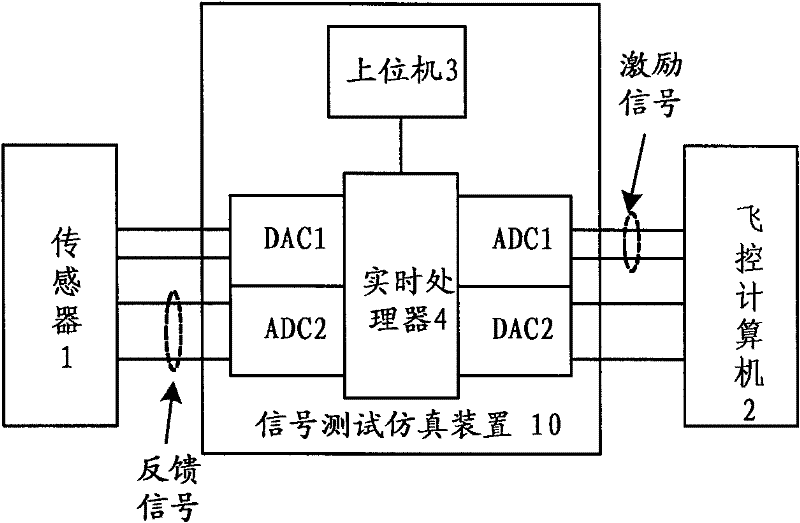
Signal test simulation device for testing sensor
PatentActiveCN102338628A
Innovation
- A signal test simulation device is designed, including a host computer, a real-time processor, an analog-to-digital converter, and a digital-to-analog converter. Through these components, the excitation signal of the flight control computer and the feedback signal of the sensor are processed and converted to reduce the complexity of the test. characteristics, reduce the introduction of error signals, and realize the data playback function.
Environmental Impact and Durability Factors
When evaluating position sensing technologies for industrial applications, environmental factors and durability considerations play crucial roles in determining the most suitable solution. Hall Effect sensors and LVDTs (Linear Variable Differential Transformers) exhibit distinct characteristics when exposed to various environmental conditions, directly impacting their performance reliability and operational lifespan.
Hall Effect sensors demonstrate excellent resistance to dust and moisture when properly encapsulated, making them suitable for harsh industrial environments. Their solid-state construction eliminates moving parts, significantly reducing mechanical wear concerns. However, these sensors exhibit temperature sensitivity that can affect measurement accuracy, typically showing drift of 0.1% to 0.5% per degree Celsius without proper compensation. Additionally, strong external magnetic fields can interfere with their operation, potentially causing measurement errors or complete malfunction in environments with high electromagnetic interference.
LVDTs, conversely, excel in extreme temperature environments, maintaining stable operation from -200°C to +500°C depending on construction materials. This temperature stability makes them particularly valuable in aerospace, nuclear, and deep-sea applications where temperature fluctuations are significant. Their hermetically sealed design provides exceptional protection against moisture, pressure variations, and corrosive substances, contributing to their typical operational lifespan of 25+ years under proper conditions.
Vibration resistance represents another critical environmental factor. Hall Effect sensors generally offer superior vibration tolerance due to their solid-state nature, whereas LVDTs may experience performance degradation under high-frequency vibrations that affect their core movement. However, specially designed LVDTs with enhanced core stabilization can mitigate this limitation in high-vibration environments.
Radiation exposure presents different challenges for each technology. Hall Effect sensors utilize semiconductor materials that can degrade when exposed to radiation, potentially leading to measurement drift or complete failure. LVDTs, constructed primarily of metal components, demonstrate superior radiation resistance, making them preferred choices for nuclear applications and space environments where radiation exposure is unavoidable.
Long-term reliability analysis reveals that LVDTs typically maintain calibration accuracy over extended periods without requiring recalibration, while Hall Effect sensors may require more frequent calibration to maintain measurement precision. However, Hall Effect sensors generally offer lower maintenance requirements due to their simpler construction and lack of moving components that could wear over time.
When considering environmental impact from a sustainability perspective, Hall Effect sensors typically contain semiconductor materials that require special disposal considerations, while LVDTs primarily consist of recyclable metals with lower end-of-life environmental impact. This factor becomes increasingly important as industries emphasize sustainable manufacturing and responsible product lifecycle management.
Hall Effect sensors demonstrate excellent resistance to dust and moisture when properly encapsulated, making them suitable for harsh industrial environments. Their solid-state construction eliminates moving parts, significantly reducing mechanical wear concerns. However, these sensors exhibit temperature sensitivity that can affect measurement accuracy, typically showing drift of 0.1% to 0.5% per degree Celsius without proper compensation. Additionally, strong external magnetic fields can interfere with their operation, potentially causing measurement errors or complete malfunction in environments with high electromagnetic interference.
LVDTs, conversely, excel in extreme temperature environments, maintaining stable operation from -200°C to +500°C depending on construction materials. This temperature stability makes them particularly valuable in aerospace, nuclear, and deep-sea applications where temperature fluctuations are significant. Their hermetically sealed design provides exceptional protection against moisture, pressure variations, and corrosive substances, contributing to their typical operational lifespan of 25+ years under proper conditions.
Vibration resistance represents another critical environmental factor. Hall Effect sensors generally offer superior vibration tolerance due to their solid-state nature, whereas LVDTs may experience performance degradation under high-frequency vibrations that affect their core movement. However, specially designed LVDTs with enhanced core stabilization can mitigate this limitation in high-vibration environments.
Radiation exposure presents different challenges for each technology. Hall Effect sensors utilize semiconductor materials that can degrade when exposed to radiation, potentially leading to measurement drift or complete failure. LVDTs, constructed primarily of metal components, demonstrate superior radiation resistance, making them preferred choices for nuclear applications and space environments where radiation exposure is unavoidable.
Long-term reliability analysis reveals that LVDTs typically maintain calibration accuracy over extended periods without requiring recalibration, while Hall Effect sensors may require more frequent calibration to maintain measurement precision. However, Hall Effect sensors generally offer lower maintenance requirements due to their simpler construction and lack of moving components that could wear over time.
When considering environmental impact from a sustainability perspective, Hall Effect sensors typically contain semiconductor materials that require special disposal considerations, while LVDTs primarily consist of recyclable metals with lower end-of-life environmental impact. This factor becomes increasingly important as industries emphasize sustainable manufacturing and responsible product lifecycle management.
Cost-Performance Analysis
When evaluating position sensing technologies for industrial applications, cost-performance analysis becomes a critical factor in decision-making processes. Hall Effect sensors and LVDTs (Linear Variable Differential Transformers) represent two distinct approaches with significantly different cost structures and performance characteristics that must be carefully weighed against application requirements.
Initial acquisition costs favor Hall Effect sensors, which typically range from $5-50 per unit compared to LVDTs at $100-500+ per unit. This substantial price difference stems from the simpler construction of Hall Effect sensors, which utilize semiconductor materials and require less precision manufacturing compared to the complex winding structures of LVDTs. For high-volume applications or cost-sensitive projects, this initial cost advantage can be decisive.
However, total cost of ownership calculations reveal a more nuanced picture. LVDTs demonstrate exceptional longevity, often operating reliably for 10+ years in harsh environments with minimal maintenance requirements. Their contactless operation eliminates wear-related degradation, reducing replacement frequency and associated downtime costs. Hall Effect sensors, while initially cheaper, may require more frequent replacement in demanding applications, potentially offsetting their initial cost advantage in long-term deployments.
Performance metrics reveal distinct advantages for each technology. LVDTs deliver superior resolution (typically 0.1-0.25% of full scale), excellent linearity (±0.25-0.5%), and remarkable stability across temperature variations. These characteristics make them ideal for precision applications where measurement accuracy is paramount. Hall Effect sensors offer moderate resolution (typically 0.5-1.0% of full scale) and linearity (±1-2%), which proves sufficient for many industrial applications but falls short in ultra-precision scenarios.
Environmental resilience presents another important cost-performance consideration. LVDTs maintain exceptional accuracy in extreme temperatures (-200°C to +500°C), high vibration environments, and radiation exposure scenarios. This robustness eliminates the need for additional protective measures or frequent recalibration, reducing operational costs in harsh environments. Hall Effect sensors operate effectively in more moderate conditions (-40°C to +150°C) but may require additional protection and more frequent maintenance in extreme settings.
Integration complexity also impacts overall costs. Hall Effect sensors offer simpler electronic interfaces, lower power consumption (typically 5-20mA compared to LVDT's 25-100mA), and more compact form factors. These advantages translate to lower implementation costs and greater design flexibility. LVDTs require more sophisticated signal conditioning circuitry and power supplies, increasing system complexity and integration costs despite their superior measurement performance.
Initial acquisition costs favor Hall Effect sensors, which typically range from $5-50 per unit compared to LVDTs at $100-500+ per unit. This substantial price difference stems from the simpler construction of Hall Effect sensors, which utilize semiconductor materials and require less precision manufacturing compared to the complex winding structures of LVDTs. For high-volume applications or cost-sensitive projects, this initial cost advantage can be decisive.
However, total cost of ownership calculations reveal a more nuanced picture. LVDTs demonstrate exceptional longevity, often operating reliably for 10+ years in harsh environments with minimal maintenance requirements. Their contactless operation eliminates wear-related degradation, reducing replacement frequency and associated downtime costs. Hall Effect sensors, while initially cheaper, may require more frequent replacement in demanding applications, potentially offsetting their initial cost advantage in long-term deployments.
Performance metrics reveal distinct advantages for each technology. LVDTs deliver superior resolution (typically 0.1-0.25% of full scale), excellent linearity (±0.25-0.5%), and remarkable stability across temperature variations. These characteristics make them ideal for precision applications where measurement accuracy is paramount. Hall Effect sensors offer moderate resolution (typically 0.5-1.0% of full scale) and linearity (±1-2%), which proves sufficient for many industrial applications but falls short in ultra-precision scenarios.
Environmental resilience presents another important cost-performance consideration. LVDTs maintain exceptional accuracy in extreme temperatures (-200°C to +500°C), high vibration environments, and radiation exposure scenarios. This robustness eliminates the need for additional protective measures or frequent recalibration, reducing operational costs in harsh environments. Hall Effect sensors operate effectively in more moderate conditions (-40°C to +150°C) but may require additional protection and more frequent maintenance in extreme settings.
Integration complexity also impacts overall costs. Hall Effect sensors offer simpler electronic interfaces, lower power consumption (typically 5-20mA compared to LVDT's 25-100mA), and more compact form factors. These advantages translate to lower implementation costs and greater design flexibility. LVDTs require more sophisticated signal conditioning circuitry and power supplies, increasing system complexity and integration costs despite their superior measurement performance.
Unlock deeper insights with PatSnap Eureka Quick Research — get a full tech report to explore trends and direct your research. Try now!
Generate Your Research Report Instantly with AI Agent
Supercharge your innovation with PatSnap Eureka AI Agent Platform!