

Comparing Signal Conditioning Techniques for Hall Effect Sensors
SEP 22, 20259 MIN READ
Generate Your Research Report Instantly with AI Agent
PatSnap Eureka helps you evaluate technical feasibility & market potential.
Hall Effect Sensor Technology Background and Objectives
Hall Effect sensors, discovered by Edwin Hall in 1879, have evolved from simple magnetic field detection devices to sophisticated components integral to modern electronics and automotive systems. These sensors operate on the principle of the Hall Effect, where a voltage difference is generated across an electrical conductor transverse to an electric current when exposed to a magnetic field. This fundamental principle has remained unchanged, but the application and signal processing techniques have undergone significant transformation over the decades.
The evolution of Hall Effect sensor technology can be traced through several key phases. Initially, these sensors were primarily used in laboratory settings for magnetic field measurements. The 1950s and 1960s saw the integration of Hall Effect principles into solid-state electronics, enabling more compact and reliable sensing solutions. By the 1980s and 1990s, advancements in semiconductor manufacturing facilitated mass production of Hall Effect sensors with improved sensitivity and reliability, expanding their application across various industries.
Today's Hall Effect sensors are characterized by their versatility, durability, and non-contact operation, making them ideal for harsh environments where traditional sensors might fail. They are widely deployed in automotive applications (position sensing, speed detection), industrial automation (proximity detection, current sensing), consumer electronics (smartphones, gaming devices), and medical equipment (fluid flow measurement, position tracking).
Despite their widespread adoption, Hall Effect sensors face several technical challenges that impact their performance. Signal conditioning—the process of converting raw sensor output into a usable signal—remains a critical area for improvement. Raw Hall Effect signals are typically weak (in the millivolt range) and susceptible to noise, temperature variations, and magnetic interference. Effective signal conditioning techniques are essential to enhance signal quality, improve accuracy, and extend the functional range of these sensors.
The technical objectives in Hall Effect sensor development currently focus on several key areas: enhancing signal-to-noise ratio through advanced filtering techniques; compensating for temperature drift to ensure consistent performance across varying environmental conditions; implementing digital signal processing for improved accuracy and reliability; miniaturizing sensor packages while maintaining or improving performance; and reducing power consumption for battery-operated and energy-efficient applications.
As industries continue to demand more precise, reliable, and efficient sensing solutions, the evolution of Hall Effect sensor technology is expected to accelerate, with particular emphasis on integrated signal conditioning approaches that can address the inherent limitations of these sensors while capitalizing on their fundamental advantages.
The evolution of Hall Effect sensor technology can be traced through several key phases. Initially, these sensors were primarily used in laboratory settings for magnetic field measurements. The 1950s and 1960s saw the integration of Hall Effect principles into solid-state electronics, enabling more compact and reliable sensing solutions. By the 1980s and 1990s, advancements in semiconductor manufacturing facilitated mass production of Hall Effect sensors with improved sensitivity and reliability, expanding their application across various industries.
Today's Hall Effect sensors are characterized by their versatility, durability, and non-contact operation, making them ideal for harsh environments where traditional sensors might fail. They are widely deployed in automotive applications (position sensing, speed detection), industrial automation (proximity detection, current sensing), consumer electronics (smartphones, gaming devices), and medical equipment (fluid flow measurement, position tracking).
Despite their widespread adoption, Hall Effect sensors face several technical challenges that impact their performance. Signal conditioning—the process of converting raw sensor output into a usable signal—remains a critical area for improvement. Raw Hall Effect signals are typically weak (in the millivolt range) and susceptible to noise, temperature variations, and magnetic interference. Effective signal conditioning techniques are essential to enhance signal quality, improve accuracy, and extend the functional range of these sensors.
The technical objectives in Hall Effect sensor development currently focus on several key areas: enhancing signal-to-noise ratio through advanced filtering techniques; compensating for temperature drift to ensure consistent performance across varying environmental conditions; implementing digital signal processing for improved accuracy and reliability; miniaturizing sensor packages while maintaining or improving performance; and reducing power consumption for battery-operated and energy-efficient applications.
As industries continue to demand more precise, reliable, and efficient sensing solutions, the evolution of Hall Effect sensor technology is expected to accelerate, with particular emphasis on integrated signal conditioning approaches that can address the inherent limitations of these sensors while capitalizing on their fundamental advantages.
Market Applications and Demand Analysis
Hall Effect sensors have witnessed significant market growth across multiple industries due to their reliability, durability, and versatility in position and motion sensing applications. The global Hall Effect sensors market was valued at approximately 1.8 billion USD in 2021 and is projected to reach 2.7 billion USD by 2026, growing at a CAGR of 8.3% during the forecast period.
The automotive sector represents the largest application segment, accounting for nearly 40% of the total market share. Modern vehicles incorporate numerous Hall Effect sensors for applications including throttle position sensing, wheel speed detection, crankshaft position monitoring, and power steering systems. The increasing production of electric and hybrid vehicles has further accelerated demand, as these vehicles require additional position and current sensing capabilities.
Industrial automation constitutes the second-largest market segment, where Hall Effect sensors are extensively utilized in robotics, conveyor systems, and manufacturing equipment. The ongoing industrial transformation toward Industry 4.0 has intensified the need for precise position sensing and feedback systems, driving adoption rates upward.
Consumer electronics applications have also expanded significantly, with Hall Effect sensors being integrated into smartphones, tablets, laptops, and gaming devices for lid closure detection, screen rotation, and power management functions. This segment is experiencing rapid growth due to the miniaturization of sensors and improved signal conditioning techniques that enable lower power consumption.
The healthcare sector represents an emerging application area with substantial growth potential. Medical devices increasingly incorporate Hall Effect sensors for precise positioning in equipment such as infusion pumps, respiratory devices, and surgical robots. The demand for non-contact sensing solutions in sterile environments has particularly accelerated adoption in this sector.
Geographically, Asia-Pacific dominates the market with approximately 45% share, driven by the strong presence of automotive and consumer electronics manufacturing. North America and Europe follow with significant contributions, particularly in industrial automation and aerospace applications.
Market analysis indicates a growing demand for Hall Effect sensors with enhanced signal conditioning capabilities. End-users increasingly require sensors with improved accuracy, reduced temperature drift, extended operating ranges, and digital output options. This trend is driving manufacturers to develop advanced signal conditioning techniques that can address noise immunity challenges while maintaining competitive pricing.
The automotive sector represents the largest application segment, accounting for nearly 40% of the total market share. Modern vehicles incorporate numerous Hall Effect sensors for applications including throttle position sensing, wheel speed detection, crankshaft position monitoring, and power steering systems. The increasing production of electric and hybrid vehicles has further accelerated demand, as these vehicles require additional position and current sensing capabilities.
Industrial automation constitutes the second-largest market segment, where Hall Effect sensors are extensively utilized in robotics, conveyor systems, and manufacturing equipment. The ongoing industrial transformation toward Industry 4.0 has intensified the need for precise position sensing and feedback systems, driving adoption rates upward.
Consumer electronics applications have also expanded significantly, with Hall Effect sensors being integrated into smartphones, tablets, laptops, and gaming devices for lid closure detection, screen rotation, and power management functions. This segment is experiencing rapid growth due to the miniaturization of sensors and improved signal conditioning techniques that enable lower power consumption.
The healthcare sector represents an emerging application area with substantial growth potential. Medical devices increasingly incorporate Hall Effect sensors for precise positioning in equipment such as infusion pumps, respiratory devices, and surgical robots. The demand for non-contact sensing solutions in sterile environments has particularly accelerated adoption in this sector.
Geographically, Asia-Pacific dominates the market with approximately 45% share, driven by the strong presence of automotive and consumer electronics manufacturing. North America and Europe follow with significant contributions, particularly in industrial automation and aerospace applications.
Market analysis indicates a growing demand for Hall Effect sensors with enhanced signal conditioning capabilities. End-users increasingly require sensors with improved accuracy, reduced temperature drift, extended operating ranges, and digital output options. This trend is driving manufacturers to develop advanced signal conditioning techniques that can address noise immunity challenges while maintaining competitive pricing.
Current Signal Conditioning Challenges
Hall Effect sensors face several significant signal conditioning challenges that limit their performance in various applications. The primary issue is the inherently low output signal amplitude, typically ranging from 1 to 100 millivolts, which makes these signals highly susceptible to noise interference. This vulnerability necessitates sophisticated amplification techniques that must maintain signal integrity while providing sufficient gain.
Temperature drift presents another substantial challenge, as Hall sensors exhibit significant temperature-dependent behavior. The Hall coefficient varies with temperature, causing output fluctuations that can reach up to ±1000 ppm/°C in some devices. This drift introduces measurement errors that require compensation through hardware or software techniques to maintain accuracy across operating temperature ranges.
Offset voltage issues further complicate signal conditioning. Even in the absence of a magnetic field, Hall sensors produce a non-zero output voltage due to manufacturing imperfections and material inconsistencies. These offsets can be comparable to or even exceed the actual signal magnitude, necessitating careful calibration and compensation strategies.
Nonlinearity in the sensor response curve represents another critical challenge. While Hall Effect sensors theoretically exhibit a linear relationship between magnetic field strength and output voltage, practical devices often deviate from this ideal behavior, especially at the extremes of their operating range. This nonlinearity must be addressed through linearization techniques to ensure measurement accuracy.
Power supply rejection ratio (PSRR) concerns are particularly relevant in battery-powered or noisy environments. Fluctuations in supply voltage can directly affect sensor output, requiring robust power conditioning and reference voltage generation to maintain measurement stability.
Bandwidth limitations also constrain applications requiring high-speed measurements. Traditional signal conditioning circuits may introduce phase shifts or amplitude attenuation at higher frequencies, necessitating careful frequency compensation techniques for dynamic magnetic field measurements.
EMI/RFI susceptibility presents a significant challenge in industrial environments. The long signal paths from sensors to processing units can act as antennas for electromagnetic interference, requiring proper shielding, filtering, and differential signaling techniques to maintain signal integrity.
Integration challenges arise when implementing Hall sensor systems in space-constrained applications. Modern devices increasingly demand miniaturized solutions that combine sensing elements with signal conditioning circuitry, creating thermal management and cross-talk issues that must be addressed through careful system design and component selection.
Temperature drift presents another substantial challenge, as Hall sensors exhibit significant temperature-dependent behavior. The Hall coefficient varies with temperature, causing output fluctuations that can reach up to ±1000 ppm/°C in some devices. This drift introduces measurement errors that require compensation through hardware or software techniques to maintain accuracy across operating temperature ranges.
Offset voltage issues further complicate signal conditioning. Even in the absence of a magnetic field, Hall sensors produce a non-zero output voltage due to manufacturing imperfections and material inconsistencies. These offsets can be comparable to or even exceed the actual signal magnitude, necessitating careful calibration and compensation strategies.
Nonlinearity in the sensor response curve represents another critical challenge. While Hall Effect sensors theoretically exhibit a linear relationship between magnetic field strength and output voltage, practical devices often deviate from this ideal behavior, especially at the extremes of their operating range. This nonlinearity must be addressed through linearization techniques to ensure measurement accuracy.
Power supply rejection ratio (PSRR) concerns are particularly relevant in battery-powered or noisy environments. Fluctuations in supply voltage can directly affect sensor output, requiring robust power conditioning and reference voltage generation to maintain measurement stability.
Bandwidth limitations also constrain applications requiring high-speed measurements. Traditional signal conditioning circuits may introduce phase shifts or amplitude attenuation at higher frequencies, necessitating careful frequency compensation techniques for dynamic magnetic field measurements.
EMI/RFI susceptibility presents a significant challenge in industrial environments. The long signal paths from sensors to processing units can act as antennas for electromagnetic interference, requiring proper shielding, filtering, and differential signaling techniques to maintain signal integrity.
Integration challenges arise when implementing Hall sensor systems in space-constrained applications. Modern devices increasingly demand miniaturized solutions that combine sensing elements with signal conditioning circuitry, creating thermal management and cross-talk issues that must be addressed through careful system design and component selection.
Comparative Analysis of Signal Conditioning Methods
01 Signal amplification and conditioning circuits for Hall sensors
Hall effect sensors require signal conditioning circuits to amplify the weak Hall voltage and filter noise. These circuits typically include operational amplifiers, differential amplifiers, and filtering components to process the raw Hall sensor output into a usable signal. Advanced designs incorporate temperature compensation and calibration features to maintain accuracy across varying environmental conditions.- Signal amplification and conditioning circuits for Hall effect sensors: Various circuit designs for amplifying and conditioning the output signals from Hall effect sensors to improve sensitivity and accuracy. These circuits typically include operational amplifiers, differential amplifiers, and filtering components to process the relatively weak Hall voltage signals into usable outputs. Signal conditioning helps eliminate noise, compensate for temperature drift, and provide appropriate signal levels for downstream processing.
- Temperature compensation techniques for Hall sensors: Methods and circuits designed to compensate for temperature-induced drift in Hall effect sensor outputs. These techniques include the use of temperature sensors, reference circuits, and specialized compensation algorithms to maintain measurement accuracy across a wide temperature range. Temperature compensation is critical for maintaining consistent sensor performance in varying environmental conditions.
- Integrated Hall sensor systems with on-chip signal processing: Advanced Hall effect sensor designs that incorporate signal conditioning circuitry directly on the same chip as the sensing element. These integrated solutions typically include amplifiers, analog-to-digital converters, and digital signal processing capabilities. Integration reduces system size, improves noise immunity, and enables more sophisticated signal processing algorithms to be implemented close to the sensing element.
- Noise reduction and filtering techniques for Hall sensor signals: Specialized filtering and noise reduction methods for improving the signal-to-noise ratio of Hall effect sensor outputs. These include analog and digital filtering techniques, chopper stabilization, and various modulation schemes to separate the desired signal from electromagnetic interference and other noise sources. Effective noise reduction is essential for achieving high measurement resolution and reliability in industrial environments.
- Calibration and offset compensation for Hall sensors: Methods and circuits for calibrating Hall effect sensors and compensating for offset errors in their output signals. These techniques include auto-zeroing circuits, digital calibration procedures, and feedback systems that dynamically adjust sensor parameters. Proper calibration ensures measurement accuracy and consistency across different sensor units and operating conditions.
02 Integrated Hall sensor solutions with on-chip signal processing
Modern Hall effect sensors integrate signal conditioning circuitry directly on the same chip as the sensing element. These integrated solutions combine the Hall element with amplifiers, comparators, and digital processing capabilities to provide calibrated outputs. Such designs reduce external component requirements, improve noise immunity, and enable advanced features like programmable thresholds and digital interfaces.Expand Specific Solutions03 Noise reduction and interference rejection techniques
Hall sensor signal conditioning incorporates specialized techniques to minimize noise and reject electromagnetic interference. These include chopper stabilization, spinning current methods, and differential sensing architectures. Advanced filtering techniques and shielding strategies are employed to improve signal-to-noise ratio and ensure reliable operation in electrically noisy environments.Expand Specific Solutions04 Current and position sensing applications with specialized conditioning
Hall effect sensors for current and position sensing applications require specialized signal conditioning tailored to their specific use cases. For current sensing, conditioning circuits provide galvanic isolation while maintaining linearity across wide measurement ranges. Position sensing applications employ conditioning circuits that generate digital outputs with precise switching thresholds or analog outputs proportional to position.Expand Specific Solutions05 Power management and energy-efficient signal conditioning
Energy-efficient signal conditioning for Hall effect sensors focuses on minimizing power consumption while maintaining performance. These designs incorporate low-power operational modes, sleep functionality, and optimized sampling techniques. Advanced power management circuits enable battery-powered applications and energy harvesting scenarios where power availability is limited.Expand Specific Solutions
Key Industry Players and Manufacturers
The Hall Effect sensor signal conditioning market is currently in a growth phase, with increasing demand driven by automotive, industrial, and consumer electronics applications. The market size is estimated to exceed $2 billion globally, expanding at a CAGR of 6-8%. Technologically, the field is maturing with established players like Texas Instruments, Infineon Technologies, and STMicroelectronics leading innovation in integrated signal conditioning solutions. Honeywell and Sensata Technologies offer specialized sensor packages with advanced conditioning capabilities, while emerging players like Novosense and Awinic are gaining traction with cost-effective alternatives. Recent developments focus on improving signal-to-noise ratios, temperature compensation techniques, and digital interface integration, with companies like Bosch and TDK-Micronas pushing boundaries in automotive-grade solutions that combine high accuracy with robust environmental performance.
Texas Instruments Incorporated
Technical Solution: Texas Instruments has developed comprehensive signal conditioning solutions for Hall Effect sensors, focusing on their DRV5x series. Their approach integrates chopper stabilization techniques to minimize offset errors and temperature drift, which is critical for accurate magnetic field measurements. TI's signal conditioning circuits incorporate programmable gain amplifiers (PGAs) that allow dynamic adjustment of sensitivity based on the application requirements. Their solutions also feature integrated analog-to-digital converters (ADCs) with resolution up to 16-bit for high precision measurements. TI has implemented advanced filtering techniques including low-pass and band-pass filters to reduce noise and improve signal quality. Additionally, their signal conditioning ICs incorporate temperature compensation algorithms that automatically adjust sensor output based on ambient temperature changes, maintaining measurement accuracy across wide temperature ranges (-40°C to +125°C). TI's integrated approach combines these conditioning elements with power management features to optimize energy consumption in battery-powered applications.
Strengths: Excellent noise immunity through chopper stabilization, comprehensive temperature compensation, and integrated power management for low-power applications. Weaknesses: Higher cost compared to discrete solutions, and some implementations may have higher complexity requiring more design expertise for optimal performance.
Honeywell International Technologies Ltd.
Technical Solution: Honeywell has pioneered advanced signal conditioning techniques for Hall Effect sensors with their Smart Position Sensor technology. Their approach focuses on digital signal processing (DSP) methods that provide superior accuracy and reliability. Honeywell's signal conditioning architecture employs a multi-stage approach: first utilizing precision instrumentation amplifiers to boost the raw Hall sensor output, followed by specialized filtering circuits to remove electromagnetic interference (EMI) and power supply noise. Their proprietary algorithms implement dynamic offset cancellation that continuously monitors and adjusts for drift, ensuring long-term stability. Honeywell's conditioning circuits incorporate ratiometric output scaling that automatically compensates for supply voltage variations, maintaining consistent measurements regardless of power fluctuations. For industrial applications, they've developed robust protection circuits including input clamping, reverse polarity protection, and EMI/RFI filtering stages that allow their sensors to operate reliably in harsh environments. Their integrated temperature compensation uses a combination of hardware and software techniques to achieve ±0.5% accuracy across the full operating temperature range.
Strengths: Exceptional stability and accuracy in harsh industrial environments, superior EMI/RFI immunity, and advanced digital processing capabilities for complex applications. Weaknesses: Higher power consumption compared to simpler analog solutions, and proprietary nature of some signal processing algorithms limits customization options.
Technical Deep Dive: Core Patents and Innovations
Hall effect sensors with tunable sensitivity and/or resistance
PatentActiveUS11047930B2
Innovation
- A Hall effect sensor design with a tunable Hall plate thickness, achieved through adjustable implants in the separation layer and bias voltage applied to the separation layer, allowing for customizable current sensitivity and resistance, enabling high voltage and current sensitivity in the same device.
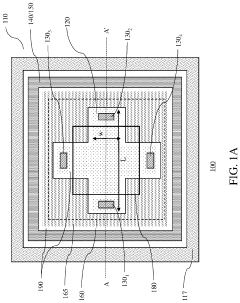
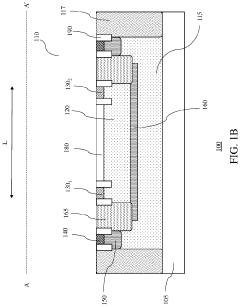
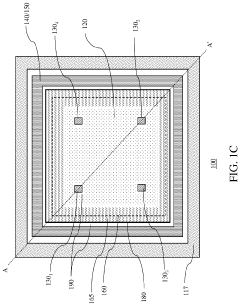
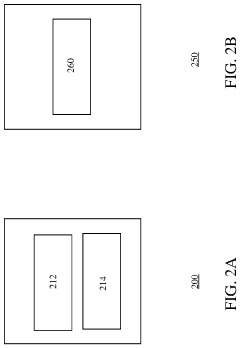
Hall effect sensor
PatentActiveUS20160011281A1
Innovation
- A Hall effect sensor device comprising multiple Hall effect elements arranged in series, forming two pairs that measure the same magnetic field component, with semiconductor switches allowing sequential measurement of different field components by reversing current direction, and integrated into a semiconductor body for efficient magnetic field determination.


Performance Metrics and Benchmarking
Evaluating the performance of signal conditioning techniques for Hall Effect sensors requires systematic benchmarking across multiple parameters to determine optimal solutions for various applications. The primary metrics for assessment include signal-to-noise ratio (SNR), which quantifies the clarity of sensor output relative to background noise. Higher SNR values indicate superior signal quality, with premium conditioning circuits achieving ratios exceeding 80dB compared to basic implementations that typically range between 40-60dB.
Response time represents another critical metric, measuring the delay between physical stimulus and conditioned output signal. Advanced chopper stabilization techniques demonstrate response times as low as 5-10 microseconds, while traditional analog filtering methods may exhibit delays of 50-100 microseconds, significantly impacting applications requiring real-time feedback.
Temperature stability constitutes a fundamental performance indicator, as Hall Effect sensors inherently exhibit temperature-dependent characteristics. Modern temperature compensation techniques can reduce drift to below 50ppm/°C, whereas uncompensated circuits may experience drift exceeding 300ppm/°C across industrial temperature ranges (-40°C to 85°C).
Power consumption efficiency varies substantially between conditioning approaches, with implications for battery-powered and energy-sensitive applications. Digital signal processing implementations typically consume 15-30mW, while specialized low-power analog front-ends can operate below 5mW without compromising performance metrics.
Resolution and dynamic range capabilities directly influence measurement precision, with state-of-the-art conditioning techniques enabling 16-bit effective resolution compared to 10-12 bits for conventional approaches. This translates to detection capabilities spanning from millitesla to several tesla, essential for applications ranging from precise position sensing to high-field scientific instrumentation.
Standardized benchmarking methodologies have emerged to facilitate objective comparison between conditioning techniques. The IEEE-P1451.4 framework provides guidelines for sensor characterization, while industry-specific standards like AEC-Q100 for automotive applications establish minimum performance thresholds. These frameworks enable systematic evaluation across operating conditions, ensuring reliability in demanding environments.
Cost-performance analysis reveals significant variation between implementation approaches. While discrete component solutions offer entry-level conditioning at $0.50-$2.00 per channel, integrated specialized front-ends may range from $3-$10 per channel but deliver superior metrics across multiple parameters simultaneously. This cost-benefit relationship must be evaluated within the context of specific application requirements and production volumes.
Response time represents another critical metric, measuring the delay between physical stimulus and conditioned output signal. Advanced chopper stabilization techniques demonstrate response times as low as 5-10 microseconds, while traditional analog filtering methods may exhibit delays of 50-100 microseconds, significantly impacting applications requiring real-time feedback.
Temperature stability constitutes a fundamental performance indicator, as Hall Effect sensors inherently exhibit temperature-dependent characteristics. Modern temperature compensation techniques can reduce drift to below 50ppm/°C, whereas uncompensated circuits may experience drift exceeding 300ppm/°C across industrial temperature ranges (-40°C to 85°C).
Power consumption efficiency varies substantially between conditioning approaches, with implications for battery-powered and energy-sensitive applications. Digital signal processing implementations typically consume 15-30mW, while specialized low-power analog front-ends can operate below 5mW without compromising performance metrics.
Resolution and dynamic range capabilities directly influence measurement precision, with state-of-the-art conditioning techniques enabling 16-bit effective resolution compared to 10-12 bits for conventional approaches. This translates to detection capabilities spanning from millitesla to several tesla, essential for applications ranging from precise position sensing to high-field scientific instrumentation.
Standardized benchmarking methodologies have emerged to facilitate objective comparison between conditioning techniques. The IEEE-P1451.4 framework provides guidelines for sensor characterization, while industry-specific standards like AEC-Q100 for automotive applications establish minimum performance thresholds. These frameworks enable systematic evaluation across operating conditions, ensuring reliability in demanding environments.
Cost-performance analysis reveals significant variation between implementation approaches. While discrete component solutions offer entry-level conditioning at $0.50-$2.00 per channel, integrated specialized front-ends may range from $3-$10 per channel but deliver superior metrics across multiple parameters simultaneously. This cost-benefit relationship must be evaluated within the context of specific application requirements and production volumes.
Implementation Cost-Benefit Analysis
When evaluating signal conditioning techniques for Hall Effect sensors, a comprehensive cost-benefit analysis reveals significant variations in implementation expenses and performance returns. The initial hardware costs differ substantially across techniques, with analog filtering requiring relatively inexpensive passive components (typically $0.50-$2.00 per circuit) while digital signal processing implementations demand more expensive microcontrollers or DSPs ($5-$20 per unit). However, this analysis must extend beyond component costs to include development expenses, which can range from $5,000 for simple analog solutions to over $50,000 for sophisticated digital implementations requiring specialized firmware development.
Manufacturing complexity represents another critical cost factor. Analog conditioning circuits generally require more PCB space and potentially more assembly steps, increasing per-unit production costs by approximately 15-25% compared to integrated digital solutions. Conversely, digital implementations often benefit from economies of scale, with per-unit costs decreasing significantly at higher production volumes.
Power consumption metrics reveal that analog conditioning typically consumes 5-20mW, while digital processing may require 50-200mW depending on the complexity of algorithms and sampling rates. This difference becomes particularly significant in battery-powered applications, where power efficiency directly impacts operational costs and maintenance intervals.
Reliability calculations demonstrate that analog solutions generally exhibit mean time between failures (MTBF) of 100,000-150,000 hours, while digital implementations range from 80,000-120,000 hours due to increased complexity. This translates to potential maintenance cost differences of 10-30% over a five-year operational period.
Performance benefits must be weighed against these costs. Digital signal conditioning provides superior noise rejection (typically 20-30dB improvement over analog methods), enhanced temperature compensation capabilities, and programmable filtering that can adapt to changing environmental conditions. These advantages translate to measurable improvements in sensor accuracy (15-25% better) and resolution (up to 4x higher), which may justify the higher implementation costs in precision applications.
Return on investment calculations indicate that for high-volume consumer applications (>100,000 units), integrated digital solutions typically achieve cost parity with analog implementations within 12-18 months, while offering superior performance. For specialized industrial applications requiring extreme precision, the performance benefits of advanced digital conditioning techniques generally justify the 30-50% higher implementation costs through improved system reliability and reduced calibration requirements.
Manufacturing complexity represents another critical cost factor. Analog conditioning circuits generally require more PCB space and potentially more assembly steps, increasing per-unit production costs by approximately 15-25% compared to integrated digital solutions. Conversely, digital implementations often benefit from economies of scale, with per-unit costs decreasing significantly at higher production volumes.
Power consumption metrics reveal that analog conditioning typically consumes 5-20mW, while digital processing may require 50-200mW depending on the complexity of algorithms and sampling rates. This difference becomes particularly significant in battery-powered applications, where power efficiency directly impacts operational costs and maintenance intervals.
Reliability calculations demonstrate that analog solutions generally exhibit mean time between failures (MTBF) of 100,000-150,000 hours, while digital implementations range from 80,000-120,000 hours due to increased complexity. This translates to potential maintenance cost differences of 10-30% over a five-year operational period.
Performance benefits must be weighed against these costs. Digital signal conditioning provides superior noise rejection (typically 20-30dB improvement over analog methods), enhanced temperature compensation capabilities, and programmable filtering that can adapt to changing environmental conditions. These advantages translate to measurable improvements in sensor accuracy (15-25% better) and resolution (up to 4x higher), which may justify the higher implementation costs in precision applications.
Return on investment calculations indicate that for high-volume consumer applications (>100,000 units), integrated digital solutions typically achieve cost parity with analog implementations within 12-18 months, while offering superior performance. For specialized industrial applications requiring extreme precision, the performance benefits of advanced digital conditioning techniques generally justify the 30-50% higher implementation costs through improved system reliability and reduced calibration requirements.
Unlock deeper insights with PatSnap Eureka Quick Research — get a full tech report to explore trends and direct your research. Try now!
Generate Your Research Report Instantly with AI Agent
Supercharge your innovation with PatSnap Eureka AI Agent Platform!