

Conductive Adhesives for High-frequency Applications: A Study
OCT 10, 20259 MIN READ
Generate Your Research Report Instantly with AI Agent
PatSnap Eureka helps you evaluate technical feasibility & market potential.
High-frequency Conductive Adhesives Background and Objectives
Conductive adhesives have emerged as a critical technology in the electronics industry, particularly for high-frequency applications where traditional soldering methods face significant limitations. The evolution of these materials can be traced back to the 1950s, when the first electrically conductive adhesives (ECAs) were developed primarily for military applications. Over subsequent decades, these materials have undergone substantial refinement, transitioning from simple conductive pastes to sophisticated formulations engineered specifically for high-frequency performance.
The technological trajectory of conductive adhesives has been largely driven by the miniaturization of electronic components and the increasing operating frequencies of modern devices. As electronic systems have pushed into higher frequency ranges—from megahertz to gigahertz and now approaching terahertz—the demands on interconnection materials have grown exponentially. This progression necessitates adhesives that not only provide electrical conductivity but also maintain signal integrity at high frequencies.
Current market trends indicate a significant shift toward lead-free and environmentally friendly electronic assembly solutions, positioning conductive adhesives as an attractive alternative to traditional soldering techniques. The global push for sustainable manufacturing processes has accelerated research into bio-based and recyclable conductive adhesive formulations, representing a notable trend in the technology's evolution.
The primary technical objectives for high-frequency conductive adhesives center on achieving optimal electrical performance while addressing several critical parameters. These include minimizing insertion loss, reducing signal reflection, maintaining consistent impedance, and ensuring reliable performance across broad frequency ranges. Additionally, these materials must demonstrate long-term reliability under various environmental conditions, including temperature cycling, humidity exposure, and mechanical stress.
Another crucial objective is the development of adhesives with processing characteristics compatible with modern manufacturing methods. This includes formulations with appropriate viscosity for fine-pitch applications, controlled curing profiles for temperature-sensitive components, and compatibility with automated dispensing equipment.
From a materials science perspective, researchers are focusing on novel filler systems beyond traditional silver particles, exploring carbon nanotubes, graphene, and metallic nanowires to enhance high-frequency performance. Polymer matrix innovations are equally important, with efforts directed toward developing resins that offer both excellent dielectric properties and strong adhesion to various substrate materials.
The convergence of 5G technology, Internet of Things (IoT) devices, and autonomous systems has created unprecedented demand for high-frequency capable interconnection solutions, establishing clear technological targets for the next generation of conductive adhesives. These developments position conductive adhesives as a critical enabling technology for the future of high-frequency electronics.
The technological trajectory of conductive adhesives has been largely driven by the miniaturization of electronic components and the increasing operating frequencies of modern devices. As electronic systems have pushed into higher frequency ranges—from megahertz to gigahertz and now approaching terahertz—the demands on interconnection materials have grown exponentially. This progression necessitates adhesives that not only provide electrical conductivity but also maintain signal integrity at high frequencies.
Current market trends indicate a significant shift toward lead-free and environmentally friendly electronic assembly solutions, positioning conductive adhesives as an attractive alternative to traditional soldering techniques. The global push for sustainable manufacturing processes has accelerated research into bio-based and recyclable conductive adhesive formulations, representing a notable trend in the technology's evolution.
The primary technical objectives for high-frequency conductive adhesives center on achieving optimal electrical performance while addressing several critical parameters. These include minimizing insertion loss, reducing signal reflection, maintaining consistent impedance, and ensuring reliable performance across broad frequency ranges. Additionally, these materials must demonstrate long-term reliability under various environmental conditions, including temperature cycling, humidity exposure, and mechanical stress.
Another crucial objective is the development of adhesives with processing characteristics compatible with modern manufacturing methods. This includes formulations with appropriate viscosity for fine-pitch applications, controlled curing profiles for temperature-sensitive components, and compatibility with automated dispensing equipment.
From a materials science perspective, researchers are focusing on novel filler systems beyond traditional silver particles, exploring carbon nanotubes, graphene, and metallic nanowires to enhance high-frequency performance. Polymer matrix innovations are equally important, with efforts directed toward developing resins that offer both excellent dielectric properties and strong adhesion to various substrate materials.
The convergence of 5G technology, Internet of Things (IoT) devices, and autonomous systems has created unprecedented demand for high-frequency capable interconnection solutions, establishing clear technological targets for the next generation of conductive adhesives. These developments position conductive adhesives as a critical enabling technology for the future of high-frequency electronics.
Market Analysis for High-frequency Electronic Applications
The high-frequency electronics market has experienced substantial growth over the past decade, primarily driven by the rapid expansion of telecommunications, automotive electronics, aerospace, and defense sectors. The global market for high-frequency electronic components was valued at approximately 12.3 billion USD in 2022 and is projected to reach 18.7 billion USD by 2027, representing a compound annual growth rate (CAGR) of 8.7%. This growth trajectory is largely attributed to the increasing deployment of 5G infrastructure, the proliferation of Internet of Things (IoT) devices, and advancements in radar and satellite communication systems.
Within this broader market, conductive adhesives for high-frequency applications constitute a specialized but rapidly growing segment. Currently estimated at 1.8 billion USD, this segment is expected to grow at a CAGR of 11.2% through 2028, outpacing the overall high-frequency electronics market. This accelerated growth reflects the critical role that conductive adhesives play in enabling miniaturization, improving thermal management, and enhancing signal integrity in high-frequency electronic assemblies.
The demand for conductive adhesives is particularly strong in the telecommunications sector, which accounts for approximately 42% of the total market share. The ongoing global rollout of 5G networks has significantly increased the need for high-performance conductive materials capable of operating reliably at frequencies above 24 GHz. Additionally, the automotive industry represents the fastest-growing application segment, with a projected CAGR of 13.5% through 2028, driven by the increasing integration of advanced driver-assistance systems (ADAS) and vehicle-to-everything (V2X) communication technologies.
Regionally, Asia-Pacific dominates the market with a 45% share, followed by North America (28%) and Europe (21%). China, in particular, has emerged as both the largest consumer and producer of conductive adhesives for high-frequency applications, supported by its robust electronics manufacturing ecosystem and substantial investments in 5G infrastructure.
Customer requirements in this market are increasingly focused on performance parameters such as low signal loss, minimal insertion loss, consistent impedance matching, and reliability under extreme environmental conditions. Additionally, there is growing demand for environmentally friendly formulations that comply with global regulations such as RoHS and REACH. This trend is driving innovation in lead-free and halogen-free conductive adhesive technologies.
The competitive landscape features both specialized material suppliers and diversified chemical companies. Key market players include Henkel AG & Co. KGaA, 3M Company, Dow Inc., and Hitachi Chemical Co., Ltd., collectively accounting for approximately 65% of the global market share. Recent market dynamics indicate increasing consolidation through mergers and acquisitions, as companies seek to expand their technological capabilities and geographic presence.
Within this broader market, conductive adhesives for high-frequency applications constitute a specialized but rapidly growing segment. Currently estimated at 1.8 billion USD, this segment is expected to grow at a CAGR of 11.2% through 2028, outpacing the overall high-frequency electronics market. This accelerated growth reflects the critical role that conductive adhesives play in enabling miniaturization, improving thermal management, and enhancing signal integrity in high-frequency electronic assemblies.
The demand for conductive adhesives is particularly strong in the telecommunications sector, which accounts for approximately 42% of the total market share. The ongoing global rollout of 5G networks has significantly increased the need for high-performance conductive materials capable of operating reliably at frequencies above 24 GHz. Additionally, the automotive industry represents the fastest-growing application segment, with a projected CAGR of 13.5% through 2028, driven by the increasing integration of advanced driver-assistance systems (ADAS) and vehicle-to-everything (V2X) communication technologies.
Regionally, Asia-Pacific dominates the market with a 45% share, followed by North America (28%) and Europe (21%). China, in particular, has emerged as both the largest consumer and producer of conductive adhesives for high-frequency applications, supported by its robust electronics manufacturing ecosystem and substantial investments in 5G infrastructure.
Customer requirements in this market are increasingly focused on performance parameters such as low signal loss, minimal insertion loss, consistent impedance matching, and reliability under extreme environmental conditions. Additionally, there is growing demand for environmentally friendly formulations that comply with global regulations such as RoHS and REACH. This trend is driving innovation in lead-free and halogen-free conductive adhesive technologies.
The competitive landscape features both specialized material suppliers and diversified chemical companies. Key market players include Henkel AG & Co. KGaA, 3M Company, Dow Inc., and Hitachi Chemical Co., Ltd., collectively accounting for approximately 65% of the global market share. Recent market dynamics indicate increasing consolidation through mergers and acquisitions, as companies seek to expand their technological capabilities and geographic presence.
Current Status and Technical Challenges in Conductive Adhesives
Conductive adhesives have emerged as a critical component in high-frequency electronic applications, offering alternatives to traditional soldering methods. Currently, the global market for conductive adhesives is experiencing significant growth, with an estimated value of $3.4 billion in 2022 and projected to reach $4.9 billion by 2027, representing a CAGR of 7.6%. This growth is primarily driven by the increasing demand for miniaturized electronic devices and the shift towards lead-free assembly processes.
The technological landscape of conductive adhesives is dominated by two main categories: isotropic conductive adhesives (ICAs) and anisotropic conductive adhesives (ACAs). ICAs conduct electricity in all directions and are widely used in die attach applications, while ACAs conduct primarily in one direction and find applications in fine-pitch interconnections. Silver-filled epoxies currently represent the largest market share due to their excellent conductivity and reliability.
Despite significant advancements, several technical challenges persist in the development and application of conductive adhesives for high-frequency applications. The foremost challenge is achieving consistent electrical conductivity while maintaining mechanical stability. High-frequency applications require extremely low resistivity (ideally <10^-4 Ω·cm) and minimal signal loss, which current formulations struggle to deliver consistently across temperature and humidity variations.
Another significant challenge is the trade-off between conductivity and adhesion strength. Increasing conductive filler content improves electrical performance but often compromises mechanical properties. This balance becomes particularly critical in high-frequency applications where both signal integrity and structural reliability are paramount.
Thermal management presents another substantial hurdle. High-frequency operations generate considerable heat, requiring adhesives with excellent thermal conductivity (>3 W/m·K) while maintaining electrical isolation where needed. Current materials often exhibit thermal conductivity in the 1-2 W/m·K range, which is insufficient for next-generation high-frequency devices.
Environmental stability remains a persistent concern, with many conductive adhesives showing degradation in performance when exposed to high humidity, temperature cycling, and oxidative environments. This is particularly problematic for outdoor or automotive applications where harsh conditions are common.
Manufacturing challenges also exist, including inconsistent dispersion of conductive fillers, difficulties in achieving uniform bond line thickness, and curing process optimization. These factors significantly impact the reproducibility and reliability of high-frequency electronic assemblies using conductive adhesives.
Regulatory constraints further complicate the landscape, with increasing restrictions on certain materials traditionally used in conductive adhesives, such as some silver compounds and organic solvents, driving the need for environmentally friendly alternatives that maintain performance standards.
The technological landscape of conductive adhesives is dominated by two main categories: isotropic conductive adhesives (ICAs) and anisotropic conductive adhesives (ACAs). ICAs conduct electricity in all directions and are widely used in die attach applications, while ACAs conduct primarily in one direction and find applications in fine-pitch interconnections. Silver-filled epoxies currently represent the largest market share due to their excellent conductivity and reliability.
Despite significant advancements, several technical challenges persist in the development and application of conductive adhesives for high-frequency applications. The foremost challenge is achieving consistent electrical conductivity while maintaining mechanical stability. High-frequency applications require extremely low resistivity (ideally <10^-4 Ω·cm) and minimal signal loss, which current formulations struggle to deliver consistently across temperature and humidity variations.
Another significant challenge is the trade-off between conductivity and adhesion strength. Increasing conductive filler content improves electrical performance but often compromises mechanical properties. This balance becomes particularly critical in high-frequency applications where both signal integrity and structural reliability are paramount.
Thermal management presents another substantial hurdle. High-frequency operations generate considerable heat, requiring adhesives with excellent thermal conductivity (>3 W/m·K) while maintaining electrical isolation where needed. Current materials often exhibit thermal conductivity in the 1-2 W/m·K range, which is insufficient for next-generation high-frequency devices.
Environmental stability remains a persistent concern, with many conductive adhesives showing degradation in performance when exposed to high humidity, temperature cycling, and oxidative environments. This is particularly problematic for outdoor or automotive applications where harsh conditions are common.
Manufacturing challenges also exist, including inconsistent dispersion of conductive fillers, difficulties in achieving uniform bond line thickness, and curing process optimization. These factors significantly impact the reproducibility and reliability of high-frequency electronic assemblies using conductive adhesives.
Regulatory constraints further complicate the landscape, with increasing restrictions on certain materials traditionally used in conductive adhesives, such as some silver compounds and organic solvents, driving the need for environmentally friendly alternatives that maintain performance standards.
Existing Conductive Adhesive Solutions for High-frequency Use
01 Metal-filled conductive adhesives
Metal-filled conductive adhesives incorporate metallic particles such as silver, gold, copper, or nickel to create electrical conductivity. These adhesives typically consist of a polymer matrix loaded with metal fillers that form conductive pathways when cured. The concentration and distribution of metal particles directly affect the conductivity level. These adhesives are widely used in electronics assembly, providing both mechanical bonding and electrical connectivity between components.- Metal-filled conductive adhesives: Metal-filled conductive adhesives incorporate metallic particles such as silver, gold, copper, or nickel to create electrical conductivity. These adhesives typically consist of a polymer matrix loaded with metal fillers that form conductive pathways when cured. The concentration and distribution of metal particles significantly affect the conductivity, with higher metal loading generally providing better electrical performance. These adhesives are widely used in electronics assembly, particularly for applications requiring both mechanical bonding and electrical connectivity.
- Carbon-based conductive adhesives: Carbon-based conductive adhesives utilize carbon materials such as graphite, carbon black, carbon nanotubes, or graphene as conductive fillers. These materials offer advantages including lower cost compared to precious metals, lighter weight, and resistance to oxidation. Carbon nanotubes and graphene particularly enhance conductivity at lower loading levels due to their high aspect ratio and excellent electrical properties. These adhesives are suitable for applications where moderate conductivity is acceptable and cost considerations are important.
- Anisotropic conductive adhesives: Anisotropic conductive adhesives (ACAs) provide electrical conductivity in one direction while maintaining insulation in others. These specialized adhesives contain conductive particles dispersed in an insulating adhesive matrix. When compressed between electrical contacts, the particles form conductive paths in the z-direction while remaining electrically isolated in the x and y directions. This technology is particularly valuable for high-density interconnections in display technologies, flexible electronics, and fine-pitch applications where preventing short circuits between adjacent connections is critical.
- Thermally conductive adhesives: Thermally conductive adhesives are designed to provide both heat dissipation and bonding functionality. These adhesives incorporate thermally conductive fillers such as aluminum oxide, boron nitride, or aluminum nitride within a polymer matrix. They are essential in electronic assemblies where heat management is critical, serving to bond components while efficiently transferring heat away from sensitive electronics. The thermal conductivity can be tailored by adjusting filler type, particle size, and loading level, allowing for customization based on specific application requirements.
- Environmentally friendly conductive adhesives: Environmentally friendly conductive adhesives address concerns about toxicity and environmental impact by eliminating or reducing hazardous materials like lead and other heavy metals. These formulations often use bio-based polymers, water-based systems, or low-VOC (volatile organic compound) compositions. Recent innovations focus on sustainable conductive fillers derived from renewable resources or using environmentally benign processing methods. These adhesives meet increasingly stringent environmental regulations while maintaining the electrical and mechanical performance required for modern electronic applications.
02 Carbon-based conductive adhesives
Carbon-based conductive adhesives utilize carbon materials such as graphite, carbon black, carbon nanotubes, or graphene as conductive fillers. These materials offer advantages including lower cost compared to precious metals, lighter weight, and resistance to oxidation. Carbon-based conductive adhesives are particularly useful in applications requiring moderate conductivity, EMI/RFI shielding, or static dissipation properties. The unique structure of carbon nanomaterials can create effective conductive networks at lower loading levels.Expand Specific Solutions03 Anisotropic conductive adhesives
Anisotropic conductive adhesives (ACAs) provide electrical conductivity in one direction while maintaining insulation in others. These specialized adhesives contain conductive particles suspended in an insulating adhesive matrix. When compressed between electrical contacts, the particles form conductive pathways only in the direction of compression. ACAs are particularly valuable in fine-pitch electronics assembly, display technologies, and flexible circuit connections where directional conductivity is required without causing shorts between adjacent connections.Expand Specific Solutions04 Thermally conductive adhesives
Thermally conductive adhesives are formulated to transfer heat efficiently while providing bonding strength. These adhesives incorporate thermally conductive fillers such as ceramic particles, metal oxides, or boron nitride within an adhesive matrix. They are essential in electronic device assembly where heat dissipation is critical for component reliability and performance. Applications include bonding heat sinks, attaching thermal interface materials, and securing components that generate significant heat during operation.Expand Specific Solutions05 Environmentally friendly conductive adhesives
Environmentally friendly conductive adhesives are developed to reduce or eliminate hazardous materials while maintaining electrical performance. These formulations often replace lead-based solders or adhesives containing volatile organic compounds with more sustainable alternatives. Bio-based polymers, water-based systems, and lead-free conductive fillers are incorporated to create adhesives that meet environmental regulations while providing reliable electrical connections. These adhesives address growing concerns about electronic waste and workplace safety.Expand Specific Solutions
Key Industry Players and Competitive Landscape
The conductive adhesives market for high-frequency applications is currently in a growth phase, with increasing demand driven by 5G deployment, IoT expansion, and miniaturization trends in electronics. The global market is projected to reach significant scale as high-frequency applications become more prevalent across telecommunications, automotive, and consumer electronics sectors. Leading players include established chemical giants like Henkel AG, 3M, and Sumitomo Electric, who leverage their extensive R&D capabilities to develop advanced formulations. Specialized manufacturers such as Namics Corp. and Tatsuta Electric Wire & Cable are gaining market share through focused innovation in niche applications. The technology is approaching maturity for current applications, but continuous development is required to meet emerging challenges in higher frequency bands, with companies like Nordson, Kyocera, and Renesas Electronics contributing significant advancements in material science and application techniques.
Henkel AG & Co. KGaA
Technical Solution: Henkel has developed advanced isotropic conductive adhesives (ICAs) specifically engineered for high-frequency applications. Their LOCTITE ABLESTIK ABP 8068T series utilizes silver-filled epoxy technology with optimized particle size distribution to achieve superior electrical conductivity (resistivity <1×10^-4 Ω·cm) while maintaining stable performance at frequencies up to 77 GHz. The formulation incorporates proprietary surface treatment of silver particles to prevent oxidation and ensure long-term reliability. Henkel's solution features controlled rheology for precision dispensing and compatibility with various substrate materials including FR4, ceramic, and flexible circuits. Their adhesives undergo specialized curing processes (150°C for 30 minutes) that minimize thermal stress on sensitive components while achieving excellent adhesion strength (>40 MPa). Recent innovations include the integration of nano-sized conductive particles to further enhance high-frequency signal transmission with reduced signal loss (<0.2 dB/cm at 40 GHz).
Strengths: Superior electrical performance at high frequencies with minimal signal degradation; excellent thermal stability (up to 200°C); compatible with lead-free assembly processes; environmentally friendly formulation with low VOC emissions. Weaknesses: Higher cost compared to traditional soldering methods; requires precise process control during application and curing; limited reworkability after curing; potential for silver migration under high humidity conditions.
3M Innovative Properties Co.
Technical Solution: 3M has pioneered anisotropic conductive adhesives (ACAs) specifically designed for high-frequency applications. Their technology utilizes precisely controlled conductive particle distribution within a polymer matrix, achieving directional conductivity while maintaining excellent insulation properties in lateral directions. The 3M™ XYZ-Axis Electrically Conductive Adhesive Films incorporate gold-coated nickel particles (5-10 μm diameter) suspended in a proprietary thermosetting epoxy resin, enabling stable electrical connections at frequencies exceeding 40 GHz with insertion loss below 0.3 dB. The adhesive system features controlled flow characteristics during bonding, with a unique two-stage curing mechanism that allows for precise alignment before final curing. 3M's solution offers exceptional thermal cycling resistance (-55°C to +150°C for 1000 cycles) while maintaining consistent electrical performance. Their latest generation incorporates nano-scale fillers that enhance the dielectric properties, resulting in improved signal integrity at millimeter-wave frequencies with minimal electromagnetic interference.
Strengths: Excellent high-frequency performance with minimal signal distortion; fine-pitch capability (down to 40 μm); eliminates the need for flux cleaning; provides both electrical and mechanical connections in a single process. Weaknesses: Requires specialized bonding equipment with precise temperature and pressure control; higher initial investment compared to conventional soldering; limited shelf life (typically 6-12 months); potential for increased contact resistance over time in harsh environments.
Critical Patents and Technical Literature Analysis
Electroconductive adhesive
PatentWO2020175056A1
Innovation
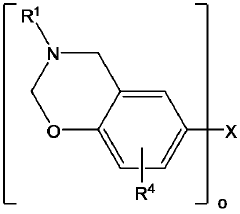
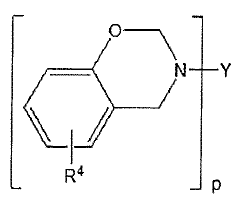
- A conductive adhesive with high fluidity and conductivity is developed, comprising conductive particles, a solvent, thermosetting resin, and silica particles with an average size of 1 to 50 nm, allowing for jet dispensing and simultaneous grounding and fixing of components.
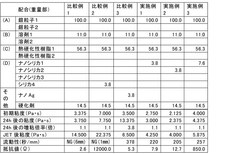
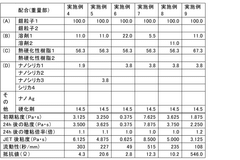
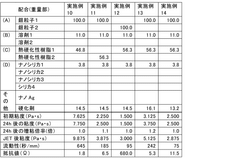
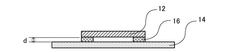
conductive adhesive
PatentActiveJP2013541611A
Innovation
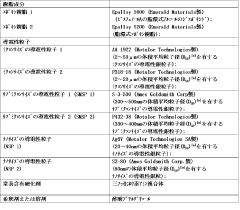
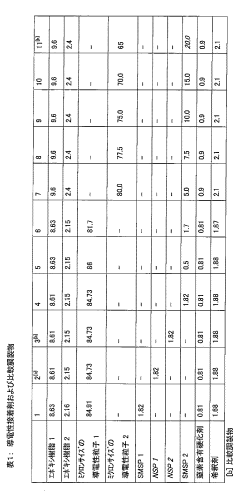
- A conductive adhesive formulation using micron-sized and submicron-sized conductive particles, combined with specific resin components, that can be cured at low temperatures and low viscosities, forming stable electrical connections with low contact resistance.
Environmental and Sustainability Considerations
The environmental impact of conductive adhesives in high-frequency applications has become increasingly significant as electronics manufacturing faces stricter regulations and growing sustainability concerns. Traditional soldering methods using lead-based materials have been largely phased out due to RoHS (Restriction of Hazardous Substances) and WEEE (Waste Electrical and Electronic Equipment) directives, creating an opportunity for conductive adhesives to emerge as environmentally preferable alternatives.
Conductive adhesives, particularly those based on silver, offer several environmental advantages over conventional soldering techniques. They typically cure at lower temperatures, resulting in reduced energy consumption during manufacturing processes. This lower thermal requirement not only decreases the carbon footprint of production but also minimizes thermal stress on sensitive electronic components, potentially extending product lifespans and reducing electronic waste.
The absence of lead and other heavy metals in most conductive adhesive formulations represents a significant environmental benefit. However, the sustainability profile is complex when considering the entire lifecycle. Silver mining and processing, essential for many high-performance conductive adhesives, can have substantial environmental impacts including habitat disruption, water pollution, and high energy consumption. This creates a sustainability paradox that researchers are actively working to address.
Recent innovations focus on developing bio-based conductive adhesives utilizing renewable resources. Research into cellulose nanofibers, lignin derivatives, and other plant-based materials as potential components in conductive adhesive formulations shows promising results. These bio-derived alternatives aim to reduce dependence on petroleum-based polymers while maintaining the electrical performance required for high-frequency applications.
End-of-life considerations present another critical environmental dimension. The recyclability of electronic components bonded with conductive adhesives varies significantly depending on the specific formulation. Some adhesives can complicate disassembly and material recovery processes, potentially hindering circular economy initiatives. Research into designing conductive adhesives with improved recyclability and biodegradability is gaining momentum, with particular attention to adhesives that can be triggered to decompose under specific conditions.
Regulatory frameworks worldwide are evolving to address these environmental concerns. The European Union's Circular Economy Action Plan and similar initiatives in other regions are driving manufacturers to consider the entire lifecycle environmental impact of electronic components, including connection technologies like conductive adhesives. This regulatory pressure is accelerating innovation in environmentally benign formulations that maintain the high-frequency performance characteristics required by modern electronic applications.
Conductive adhesives, particularly those based on silver, offer several environmental advantages over conventional soldering techniques. They typically cure at lower temperatures, resulting in reduced energy consumption during manufacturing processes. This lower thermal requirement not only decreases the carbon footprint of production but also minimizes thermal stress on sensitive electronic components, potentially extending product lifespans and reducing electronic waste.
The absence of lead and other heavy metals in most conductive adhesive formulations represents a significant environmental benefit. However, the sustainability profile is complex when considering the entire lifecycle. Silver mining and processing, essential for many high-performance conductive adhesives, can have substantial environmental impacts including habitat disruption, water pollution, and high energy consumption. This creates a sustainability paradox that researchers are actively working to address.
Recent innovations focus on developing bio-based conductive adhesives utilizing renewable resources. Research into cellulose nanofibers, lignin derivatives, and other plant-based materials as potential components in conductive adhesive formulations shows promising results. These bio-derived alternatives aim to reduce dependence on petroleum-based polymers while maintaining the electrical performance required for high-frequency applications.
End-of-life considerations present another critical environmental dimension. The recyclability of electronic components bonded with conductive adhesives varies significantly depending on the specific formulation. Some adhesives can complicate disassembly and material recovery processes, potentially hindering circular economy initiatives. Research into designing conductive adhesives with improved recyclability and biodegradability is gaining momentum, with particular attention to adhesives that can be triggered to decompose under specific conditions.
Regulatory frameworks worldwide are evolving to address these environmental concerns. The European Union's Circular Economy Action Plan and similar initiatives in other regions are driving manufacturers to consider the entire lifecycle environmental impact of electronic components, including connection technologies like conductive adhesives. This regulatory pressure is accelerating innovation in environmentally benign formulations that maintain the high-frequency performance characteristics required by modern electronic applications.
Reliability Testing and Performance Standards
Reliability testing for conductive adhesives in high-frequency applications follows rigorous protocols to ensure consistent performance under various environmental conditions. Standard testing methodologies include thermal cycling (-55°C to +125°C), humidity resistance (85°C/85% RH), and mechanical stress evaluations. These tests aim to simulate accelerated aging and real-world operational stresses that adhesives encounter in electronic assemblies.
The IPC-6012 and IPC-A-610 standards provide baseline requirements for reliability assessment, while specialized standards like ASTM D5656 focus on measuring shear properties of adhesives. For high-frequency applications specifically, IEC 61189-2-721 addresses testing methods for materials used in electronic interconnection structures. These standards establish minimum performance thresholds for electrical conductivity retention, bond strength, and signal integrity preservation.
Performance metrics critical for high-frequency applications include insertion loss measurements below 0.5 dB/inch at frequencies up to 40 GHz, return loss exceeding 15 dB, and stable volume resistivity (typically <10^-4 Ω·cm) after environmental exposure. Adhesives must maintain these properties while demonstrating less than 10% degradation in bond strength after reliability testing.
Advanced reliability assessment techniques incorporate radio frequency (RF) performance monitoring during environmental stress testing. Vector Network Analyzer (VNA) measurements track changes in S-parameters throughout thermal cycling, providing real-time data on how environmental stresses affect signal transmission characteristics. This approach offers more comprehensive insights than traditional post-stress testing alone.
Emerging standards are beginning to address specific requirements for 5G and millimeter-wave applications, where conductive adhesives must maintain stable electrical properties at frequencies exceeding 28 GHz. The IEEE P2851 working group is developing specialized test methods for materials used in these ultra-high-frequency applications, focusing on phase stability and minimal signal distortion.
Qualification procedures typically require 1000+ hours of testing under combined stresses to validate long-term reliability. Leading manufacturers have established proprietary testing protocols that exceed industry standards, particularly for automotive and aerospace applications where operational lifetimes of 10-15 years are expected under extreme conditions.
The IPC-6012 and IPC-A-610 standards provide baseline requirements for reliability assessment, while specialized standards like ASTM D5656 focus on measuring shear properties of adhesives. For high-frequency applications specifically, IEC 61189-2-721 addresses testing methods for materials used in electronic interconnection structures. These standards establish minimum performance thresholds for electrical conductivity retention, bond strength, and signal integrity preservation.
Performance metrics critical for high-frequency applications include insertion loss measurements below 0.5 dB/inch at frequencies up to 40 GHz, return loss exceeding 15 dB, and stable volume resistivity (typically <10^-4 Ω·cm) after environmental exposure. Adhesives must maintain these properties while demonstrating less than 10% degradation in bond strength after reliability testing.
Advanced reliability assessment techniques incorporate radio frequency (RF) performance monitoring during environmental stress testing. Vector Network Analyzer (VNA) measurements track changes in S-parameters throughout thermal cycling, providing real-time data on how environmental stresses affect signal transmission characteristics. This approach offers more comprehensive insights than traditional post-stress testing alone.
Emerging standards are beginning to address specific requirements for 5G and millimeter-wave applications, where conductive adhesives must maintain stable electrical properties at frequencies exceeding 28 GHz. The IEEE P2851 working group is developing specialized test methods for materials used in these ultra-high-frequency applications, focusing on phase stability and minimal signal distortion.
Qualification procedures typically require 1000+ hours of testing under combined stresses to validate long-term reliability. Leading manufacturers have established proprietary testing protocols that exceed industry standards, particularly for automotive and aerospace applications where operational lifetimes of 10-15 years are expected under extreme conditions.
Unlock deeper insights with PatSnap Eureka Quick Research — get a full tech report to explore trends and direct your research. Try now!
Generate Your Research Report Instantly with AI Agent
Supercharge your innovation with PatSnap Eureka AI Agent Platform!