

Evaluating Electrochemical Cell Performance in Smart Grid Applications
AUG 28, 202510 MIN READ
Generate Your Research Report Instantly with AI Agent
PatSnap Eureka helps you evaluate technical feasibility & market potential.
Electrochemical Cell Technology Background and Objectives
Electrochemical cell technology has evolved significantly over the past century, from simple galvanic cells to sophisticated energy storage systems capable of supporting complex grid operations. The fundamental principle remains unchanged - converting chemical energy into electrical energy through redox reactions - but applications have expanded dramatically with technological advancements. Early developments focused primarily on portable power sources, while recent innovations target grid-scale energy storage solutions to address the intermittency challenges of renewable energy sources.
The evolution trajectory shows three distinct phases: initial discovery and basic applications (pre-1970s), intermediate development focusing on portable electronics (1970s-2000s), and the current advanced phase targeting grid integration (2000s-present). Each phase has been characterized by improvements in energy density, cycle life, safety features, and cost reduction, with the most recent developments emphasizing scalability and grid compatibility.
Smart grid applications represent the frontier of electrochemical cell deployment, requiring cells that can respond rapidly to fluctuating demand, provide frequency regulation, and support peak shaving operations. The integration of electrochemical cells into smart grids necessitates performance metrics beyond traditional battery specifications, including response time, ramp rate, and long-duration stability under partial state-of-charge conditions.
The primary objective of current research is to develop electrochemical cells specifically optimized for grid applications, with performance characteristics aligned with smart grid requirements. This includes enhancing cycle life under grid-specific duty cycles, improving round-trip efficiency, reducing capacity degradation during idle periods, and developing advanced management systems that can communicate with grid operators through standardized protocols.
Secondary objectives include cost reduction to achieve price parity with conventional peaking power plants, improving safety features for urban deployment, and developing environmentally sustainable manufacturing processes and materials. The target cost threshold for widespread adoption is generally considered to be below $150/kWh for the complete storage system, with a cycle life exceeding 5,000 full cycles.
Recent technological breakthroughs in electrode materials, electrolyte formulations, and cell architecture have accelerated progress toward these objectives. Notably, the development of high-surface-area electrode materials, solid-state electrolytes, and advanced thermal management systems has addressed several key limitations of previous generations of electrochemical cells.
The convergence of materials science, electrochemistry, and grid engineering disciplines has created a fertile environment for innovation in this field. International research collaborations and public-private partnerships have emerged as critical drivers of progress, with significant investments from both government agencies and private industry supporting fundamental research and demonstration projects.
The evolution trajectory shows three distinct phases: initial discovery and basic applications (pre-1970s), intermediate development focusing on portable electronics (1970s-2000s), and the current advanced phase targeting grid integration (2000s-present). Each phase has been characterized by improvements in energy density, cycle life, safety features, and cost reduction, with the most recent developments emphasizing scalability and grid compatibility.
Smart grid applications represent the frontier of electrochemical cell deployment, requiring cells that can respond rapidly to fluctuating demand, provide frequency regulation, and support peak shaving operations. The integration of electrochemical cells into smart grids necessitates performance metrics beyond traditional battery specifications, including response time, ramp rate, and long-duration stability under partial state-of-charge conditions.
The primary objective of current research is to develop electrochemical cells specifically optimized for grid applications, with performance characteristics aligned with smart grid requirements. This includes enhancing cycle life under grid-specific duty cycles, improving round-trip efficiency, reducing capacity degradation during idle periods, and developing advanced management systems that can communicate with grid operators through standardized protocols.
Secondary objectives include cost reduction to achieve price parity with conventional peaking power plants, improving safety features for urban deployment, and developing environmentally sustainable manufacturing processes and materials. The target cost threshold for widespread adoption is generally considered to be below $150/kWh for the complete storage system, with a cycle life exceeding 5,000 full cycles.
Recent technological breakthroughs in electrode materials, electrolyte formulations, and cell architecture have accelerated progress toward these objectives. Notably, the development of high-surface-area electrode materials, solid-state electrolytes, and advanced thermal management systems has addressed several key limitations of previous generations of electrochemical cells.
The convergence of materials science, electrochemistry, and grid engineering disciplines has created a fertile environment for innovation in this field. International research collaborations and public-private partnerships have emerged as critical drivers of progress, with significant investments from both government agencies and private industry supporting fundamental research and demonstration projects.
Smart Grid Market Demand Analysis
The smart grid market is experiencing unprecedented growth driven by the global shift towards sustainable energy solutions and grid modernization. Current market valuations indicate that the global smart grid sector reached approximately 43.1 billion USD in 2022 and is projected to expand at a compound annual growth rate (CAGR) of 17.2% through 2030. This robust growth trajectory is primarily fueled by increasing energy demands, aging grid infrastructure, and the integration of renewable energy sources that require advanced management systems.
Electrochemical cell technologies, particularly advanced battery storage systems, represent a critical component within the smart grid ecosystem. Market analysis reveals that grid-scale energy storage demand is growing at over 20% annually, with lithium-ion batteries currently dominating the market share at roughly 70%. However, emerging technologies such as flow batteries and solid-state batteries are gaining traction due to their enhanced safety profiles and longer cycle lives.
Utility companies worldwide are increasingly investing in electrochemical storage solutions to address grid stability challenges posed by intermittent renewable energy sources. A recent industry survey indicated that 78% of utility executives consider energy storage as a "high priority" investment area for grid modernization efforts. This demand is particularly pronounced in regions with high renewable energy penetration, such as California, Germany, and Australia, where grid operators face significant challenges in balancing supply and demand.
Consumer-side applications are also driving market growth, with residential and commercial energy storage systems experiencing 25% year-over-year growth. This trend is supported by declining battery costs, which have decreased by approximately 85% over the past decade, making electrochemical storage increasingly economically viable for smaller-scale applications.
Regulatory frameworks and government incentives are significantly influencing market dynamics. Countries with favorable policies for energy storage deployment, such as investment tax credits, capacity payments, and mandated storage targets, are witnessing accelerated market growth. For instance, China's 14th Five-Year Plan includes specific targets for energy storage deployment, while the European Union's Green Deal provides substantial funding for grid modernization projects incorporating storage technologies.
Industry forecasts suggest that the electrochemical cell segment within smart grid applications will reach a market value of 29 billion USD by 2027, with particular growth in grid-scale applications and behind-the-meter installations. The demand for longer-duration storage solutions (4+ hours) is expected to grow significantly as utilities seek to address longer periods of renewable energy intermittency and peak demand management.
Electrochemical cell technologies, particularly advanced battery storage systems, represent a critical component within the smart grid ecosystem. Market analysis reveals that grid-scale energy storage demand is growing at over 20% annually, with lithium-ion batteries currently dominating the market share at roughly 70%. However, emerging technologies such as flow batteries and solid-state batteries are gaining traction due to their enhanced safety profiles and longer cycle lives.
Utility companies worldwide are increasingly investing in electrochemical storage solutions to address grid stability challenges posed by intermittent renewable energy sources. A recent industry survey indicated that 78% of utility executives consider energy storage as a "high priority" investment area for grid modernization efforts. This demand is particularly pronounced in regions with high renewable energy penetration, such as California, Germany, and Australia, where grid operators face significant challenges in balancing supply and demand.
Consumer-side applications are also driving market growth, with residential and commercial energy storage systems experiencing 25% year-over-year growth. This trend is supported by declining battery costs, which have decreased by approximately 85% over the past decade, making electrochemical storage increasingly economically viable for smaller-scale applications.
Regulatory frameworks and government incentives are significantly influencing market dynamics. Countries with favorable policies for energy storage deployment, such as investment tax credits, capacity payments, and mandated storage targets, are witnessing accelerated market growth. For instance, China's 14th Five-Year Plan includes specific targets for energy storage deployment, while the European Union's Green Deal provides substantial funding for grid modernization projects incorporating storage technologies.
Industry forecasts suggest that the electrochemical cell segment within smart grid applications will reach a market value of 29 billion USD by 2027, with particular growth in grid-scale applications and behind-the-meter installations. The demand for longer-duration storage solutions (4+ hours) is expected to grow significantly as utilities seek to address longer periods of renewable energy intermittency and peak demand management.
Current State and Challenges of Electrochemical Cells
Electrochemical cells have evolved significantly over the past decades, with current technologies spanning from traditional lead-acid batteries to advanced lithium-ion, flow batteries, and emerging solid-state technologies. In smart grid applications, these cells serve critical functions including grid stabilization, renewable energy integration, and peak shaving. However, despite substantial progress, several technical challenges persist that limit their widespread adoption and optimal performance.
The energy density of current electrochemical storage systems remains insufficient for large-scale grid applications, with even advanced lithium-ion batteries typically achieving only 250-300 Wh/kg. This limitation necessitates substantial physical footprints for grid-scale installations, creating logistical and economic barriers. Additionally, cycle life degradation continues to be a significant concern, with most commercial systems experiencing capacity fade of 20-30% after 1,000-2,000 cycles under optimal conditions.
Cost factors present another major challenge, with current lithium-ion systems averaging $137-300/kWh at utility scale. While this represents a dramatic 89% reduction since 2010, it remains above the $100/kWh threshold widely considered necessary for mass adoption in grid applications. The economic viability is further complicated by supply chain vulnerabilities, particularly for critical materials like lithium, cobalt, and rare earth elements.
Safety concerns persist across electrochemical cell technologies. Thermal runaway risks in lithium-ion systems require sophisticated battery management systems, while flow batteries face challenges with electrolyte stability and containment. These safety considerations significantly impact installation requirements, operational protocols, and ultimately, deployment costs.
Integration challenges with existing grid infrastructure represent another substantial hurdle. Current battery management systems often lack standardized communication protocols for seamless integration with diverse grid management systems. This interoperability gap limits the ability to optimize cell performance across varying grid conditions and demand profiles.
Geographically, technological development shows distinct patterns. Asia, particularly China, Japan, and South Korea, dominates manufacturing capacity for lithium-ion technologies, while North America leads in flow battery research. Europe has established leadership in grid integration technologies and regulatory frameworks. This distribution creates both competitive dynamics and opportunities for international collaboration.
Environmental considerations increasingly constrain technology adoption, with concerns about resource extraction, manufacturing emissions, and end-of-life management. Current recycling rates for lithium-ion batteries remain below 5% globally, creating significant sustainability challenges as deployment scales.
These multifaceted challenges necessitate coordinated research efforts across chemistry, materials science, electrical engineering, and systems integration to advance electrochemical cell performance for smart grid applications.
The energy density of current electrochemical storage systems remains insufficient for large-scale grid applications, with even advanced lithium-ion batteries typically achieving only 250-300 Wh/kg. This limitation necessitates substantial physical footprints for grid-scale installations, creating logistical and economic barriers. Additionally, cycle life degradation continues to be a significant concern, with most commercial systems experiencing capacity fade of 20-30% after 1,000-2,000 cycles under optimal conditions.
Cost factors present another major challenge, with current lithium-ion systems averaging $137-300/kWh at utility scale. While this represents a dramatic 89% reduction since 2010, it remains above the $100/kWh threshold widely considered necessary for mass adoption in grid applications. The economic viability is further complicated by supply chain vulnerabilities, particularly for critical materials like lithium, cobalt, and rare earth elements.
Safety concerns persist across electrochemical cell technologies. Thermal runaway risks in lithium-ion systems require sophisticated battery management systems, while flow batteries face challenges with electrolyte stability and containment. These safety considerations significantly impact installation requirements, operational protocols, and ultimately, deployment costs.
Integration challenges with existing grid infrastructure represent another substantial hurdle. Current battery management systems often lack standardized communication protocols for seamless integration with diverse grid management systems. This interoperability gap limits the ability to optimize cell performance across varying grid conditions and demand profiles.
Geographically, technological development shows distinct patterns. Asia, particularly China, Japan, and South Korea, dominates manufacturing capacity for lithium-ion technologies, while North America leads in flow battery research. Europe has established leadership in grid integration technologies and regulatory frameworks. This distribution creates both competitive dynamics and opportunities for international collaboration.
Environmental considerations increasingly constrain technology adoption, with concerns about resource extraction, manufacturing emissions, and end-of-life management. Current recycling rates for lithium-ion batteries remain below 5% globally, creating significant sustainability challenges as deployment scales.
These multifaceted challenges necessitate coordinated research efforts across chemistry, materials science, electrical engineering, and systems integration to advance electrochemical cell performance for smart grid applications.
Current Performance Evaluation Methodologies
01 Electrode materials and compositions
The choice of electrode materials significantly impacts electrochemical cell performance. Advanced materials such as modified carbon structures, metal oxides, and composite electrodes can enhance conductivity, stability, and energy density. Optimizing electrode composition by incorporating specific additives or using novel synthesis methods can improve charge transfer kinetics and cycling stability, leading to better overall cell performance.- Electrode materials and compositions: The choice of electrode materials significantly impacts electrochemical cell performance. Advanced materials such as composite electrodes, novel alloys, and nanostructured materials can enhance conductivity, stability, and energy density. These materials can reduce internal resistance, improve charge transfer kinetics, and extend cycle life. Optimization of electrode composition, including active materials, conductive additives, and binders, is crucial for maximizing electrochemical performance.
- Electrolyte formulations and properties: Electrolyte composition plays a vital role in determining cell performance by affecting ionic conductivity, electrochemical stability, and interfacial properties. Advanced electrolyte formulations can include additives that form stable solid-electrolyte interfaces, suppress dendrite formation, and enhance thermal stability. Innovations in electrolyte design focus on improving ion transport, widening the electrochemical window, and enhancing compatibility with electrode materials to achieve higher energy density and longer cycle life.
- Cell design and architecture: The physical design and architecture of electrochemical cells significantly impact their performance metrics. Innovations in cell geometry, component arrangement, and packaging can optimize current distribution, thermal management, and mechanical stability. Advanced designs may incorporate features such as improved separators, optimized electrode spacing, and enhanced current collectors to reduce internal resistance and improve energy efficiency. Novel cell architectures can also address specific application requirements like high power density or extended cycle life.
- Performance monitoring and management systems: Sophisticated monitoring and management systems are essential for optimizing electrochemical cell performance. These systems can include sensors for real-time measurement of voltage, current, temperature, and pressure, along with algorithms for state estimation and predictive analytics. Advanced battery management systems can implement adaptive control strategies to optimize charging protocols, balance cell voltages, and manage thermal conditions. These technologies enable early detection of performance degradation and can extend cell lifetime through preventive measures.
- Novel manufacturing techniques and quality control: Manufacturing processes and quality control methods significantly influence electrochemical cell performance. Advanced fabrication techniques such as precision coating, controlled atmosphere processing, and novel assembly methods can improve component uniformity and reduce defects. Quality control innovations include non-destructive testing, in-line monitoring, and statistical process control to ensure consistency in cell performance. These approaches can minimize variability between cells, enhance reliability, and improve overall energy storage system performance.
02 Electrolyte formulations and improvements
Electrolyte composition plays a crucial role in determining electrochemical cell performance. Advanced electrolyte formulations with optimized salt concentrations, solvent mixtures, and additives can enhance ionic conductivity and electrochemical stability. Novel electrolytes, including solid-state and gel polymer systems, can improve safety while maintaining or enhancing performance metrics such as power density and operational temperature range.Expand Specific Solutions03 Cell design and architecture optimization
The physical design and architecture of electrochemical cells significantly impact their performance. Innovations in cell geometry, component arrangement, and packaging can improve energy density, thermal management, and mechanical stability. Advanced designs may incorporate features such as structured electrodes, optimized separator configurations, and innovative current collector designs to enhance electron transport and reduce internal resistance.Expand Specific Solutions04 Performance monitoring and diagnostic systems
Systems for monitoring and diagnosing electrochemical cell performance enable real-time assessment and optimization. Advanced sensing technologies, coupled with sophisticated algorithms, can detect degradation mechanisms, predict failure modes, and optimize operating conditions. These systems may incorporate impedance spectroscopy, thermal monitoring, and voltage analysis to provide comprehensive performance data and extend cell lifetime.Expand Specific Solutions05 Novel manufacturing techniques and processes
Manufacturing processes significantly influence electrochemical cell performance. Advanced fabrication techniques, including precision coating methods, controlled atmosphere processing, and novel assembly approaches, can improve component quality and cell-to-cell consistency. Innovations in manufacturing may involve automated production lines, quality control systems, and process optimization to enhance performance metrics while reducing costs and environmental impact.Expand Specific Solutions
Key Industry Players and Competitive Landscape
The electrochemical cell performance evaluation market for smart grid applications is in a growth phase, with an estimated global market size of several billion dollars annually. The competitive landscape features diverse players across multiple sectors. State Grid Corp. of China and Électricité de France lead utility implementation, while technology development is driven by research institutions like California Institute of Technology, Nanyang Technological University, and Fraunhofer-Gesellschaft. Commercial innovation comes from specialized battery manufacturers including VARTA Microbattery, BroadBit Batteries, and Sakti3, alongside larger corporations like QUALCOMM and Robert Bosch GmbH. The technology maturity varies significantly across applications, with grid-scale solutions still evolving while smaller-scale implementations have reached commercial viability.
State Grid Corp. of China
Technical Solution: State Grid Corporation of China has developed advanced Battery Energy Storage Systems (BESS) specifically designed for smart grid integration. Their technology incorporates multi-level power conversion systems with sophisticated Battery Management Systems (BMS) that optimize cell performance through real-time monitoring and adaptive control algorithms. The company has implemented large-scale electrochemical storage projects exceeding 100MW capacity, utilizing various cell chemistries including advanced lithium-ion, flow batteries, and sodium-sulfur technologies. Their proprietary grid-stabilization algorithms enable frequency regulation response times under 100ms, while their thermal management systems maintain optimal operating conditions to extend battery lifecycle by up to 20% compared to conventional systems. State Grid's integrated approach connects cell-level performance metrics directly to grid-level operational parameters, creating a comprehensive energy management ecosystem.
Strengths: Unparalleled scale of deployment providing extensive real-world performance data; sophisticated integration with existing grid infrastructure; advanced predictive analytics for battery health monitoring. Weaknesses: Higher implementation costs compared to some competitors; technology primarily optimized for large-scale utility applications rather than distributed microgrids.
Robert Bosch GmbH
Technical Solution: Robert Bosch has developed a comprehensive electrochemical cell evaluation platform specifically for smart grid applications. Their system integrates advanced impedance spectroscopy techniques with machine learning algorithms to predict cell degradation patterns under variable grid demand scenarios. Bosch's technology employs a multi-parameter monitoring approach that simultaneously tracks electrochemical impedance, thermal behavior, and voltage characteristics during charge-discharge cycles that simulate actual grid conditions. Their proprietary Battery Management System (BMS) incorporates adaptive control mechanisms that optimize cell performance based on grid demand forecasts, extending operational lifetimes by up to 30% compared to conventional systems. The company has also pioneered second-life battery applications for grid storage, with specialized evaluation protocols that assess remaining capacity and performance reliability of cells previously used in automotive applications.
Strengths: Exceptional systems integration expertise combining hardware and software solutions; strong background in automotive battery systems transferable to stationary applications; established global manufacturing and quality control infrastructure. Weaknesses: Higher cost structure compared to some specialized competitors; technology sometimes prioritizes reliability over cutting-edge performance metrics.
Critical Patents and Technical Literature Review
Method of assessing a performance of an electrochemical cell, and apparatus thereof
PatentWO2017204750A1
Innovation
- A method involving the collection of full-cell and half-cell thermodynamic data to determine relationships between the state of charge of the cathode, anode, and the electrochemical cell, allowing for the assessment of the utilization rate and composition range of active chemical elements like lithium, thereby optimizing the performance of the cell.


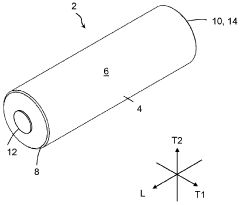
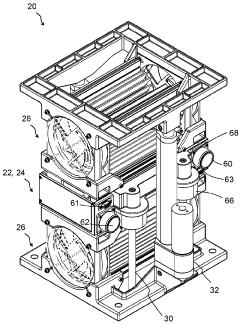
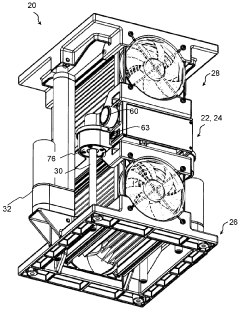
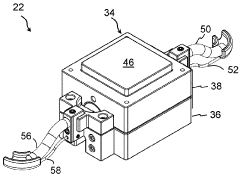
Apparatus, system and method for testing an electrochemical cell under a controlled temperature condition
PatentWO2024000070A1
Innovation
- An apparatus and system utilizing a pair of Peltier modules with a cell-contacting member and heat sink members to maintain a substantially isothermal state or controlled temperature condition, featuring a concave cylindrical cell-contacting surface and adjustable linear actuators for precise temperature control, along with temperature and heat flux sensors for feedback-based power control.
Grid Integration Standards and Compatibility
The integration of electrochemical cells into smart grid infrastructure necessitates adherence to established standards and protocols to ensure seamless compatibility and operation. IEEE 1547, a foundational standard for interconnecting distributed energy resources with electric power systems, provides critical guidelines for electrochemical storage systems. This standard addresses voltage regulation, power quality requirements, and response to abnormal grid conditions, all essential for electrochemical cell integration.
IEC 61850, another pivotal standard, focuses on communication protocols for power utility automation. For electrochemical cell applications, this standard enables standardized data exchange between storage systems and grid management systems, facilitating real-time monitoring and control. The implementation of these communication protocols significantly enhances the interoperability of diverse electrochemical technologies within the smart grid ecosystem.
Grid codes and regulatory frameworks vary considerably across regions, presenting challenges for universal deployment of electrochemical storage solutions. In the European Union, the Network Code on Requirements for Grid Connection of Generators (RfG) establishes specific requirements for energy storage systems, including electrochemical cells. Similarly, FERC Order 841 in the United States mandates that regional transmission organizations remove barriers to participation of electric storage resources in capacity, energy, and ancillary services markets.
Compatibility with existing grid infrastructure remains a significant consideration. Electrochemical cells must interface with legacy systems while accommodating future smart grid developments. This requires flexible power electronics interfaces capable of adapting to various grid configurations and operational parameters. Advanced inverter technologies with grid-forming capabilities are increasingly essential for electrochemical storage systems to provide grid stability services.
Safety standards such as UL 1741 and IEC 62619 specifically address the integration of battery systems into grid applications. These standards establish testing procedures and safety requirements for electrochemical cells, ensuring they operate within safe parameters during normal and abnormal grid conditions. Compliance with these standards is mandatory for grid-connected installations in most jurisdictions.
Interoperability testing frameworks are emerging to validate the compatibility of electrochemical storage systems with smart grid components. These frameworks evaluate communication protocols, control algorithms, and response characteristics under various grid scenarios. The Smart Grid Interoperability Panel (SGIP) has developed test procedures specifically for energy storage systems to verify their compliance with interoperability standards.
IEC 61850, another pivotal standard, focuses on communication protocols for power utility automation. For electrochemical cell applications, this standard enables standardized data exchange between storage systems and grid management systems, facilitating real-time monitoring and control. The implementation of these communication protocols significantly enhances the interoperability of diverse electrochemical technologies within the smart grid ecosystem.
Grid codes and regulatory frameworks vary considerably across regions, presenting challenges for universal deployment of electrochemical storage solutions. In the European Union, the Network Code on Requirements for Grid Connection of Generators (RfG) establishes specific requirements for energy storage systems, including electrochemical cells. Similarly, FERC Order 841 in the United States mandates that regional transmission organizations remove barriers to participation of electric storage resources in capacity, energy, and ancillary services markets.
Compatibility with existing grid infrastructure remains a significant consideration. Electrochemical cells must interface with legacy systems while accommodating future smart grid developments. This requires flexible power electronics interfaces capable of adapting to various grid configurations and operational parameters. Advanced inverter technologies with grid-forming capabilities are increasingly essential for electrochemical storage systems to provide grid stability services.
Safety standards such as UL 1741 and IEC 62619 specifically address the integration of battery systems into grid applications. These standards establish testing procedures and safety requirements for electrochemical cells, ensuring they operate within safe parameters during normal and abnormal grid conditions. Compliance with these standards is mandatory for grid-connected installations in most jurisdictions.
Interoperability testing frameworks are emerging to validate the compatibility of electrochemical storage systems with smart grid components. These frameworks evaluate communication protocols, control algorithms, and response characteristics under various grid scenarios. The Smart Grid Interoperability Panel (SGIP) has developed test procedures specifically for energy storage systems to verify their compliance with interoperability standards.
Environmental Impact and Sustainability Considerations
The integration of electrochemical cell technologies within smart grid applications necessitates careful consideration of environmental impacts and sustainability factors. Lifecycle assessment (LCA) studies indicate that while electrochemical cells offer significant operational environmental benefits through grid stabilization and renewable energy integration, their manufacturing processes involve substantial resource extraction and energy consumption. Primary materials such as lithium, cobalt, and rare earth elements used in advanced electrochemical cells present significant environmental challenges during extraction, with documented impacts including habitat destruction, water pollution, and carbon emissions.
Manufacturing processes for electrochemical cells typically consume between 350-650 kWh of energy per kWh of storage capacity produced, representing a significant carbon footprint before deployment. However, this initial environmental investment can be offset through operational benefits when cells are optimally integrated into smart grid applications, particularly when supporting renewable energy penetration and reducing reliance on fossil fuel peaker plants.
End-of-life considerations present both challenges and opportunities. Current recycling rates for electrochemical cells vary significantly by technology type and region, ranging from below 5% for some chemistries to over 90% for lead-acid systems. Emerging recycling technologies show promise for recovering critical materials from lithium-ion and flow batteries, potentially reducing the environmental burden of raw material extraction by 35-60% for next-generation systems.
Water usage represents another critical environmental consideration, with manufacturing processes requiring 7-15 cubic meters of water per MWh of storage capacity. Smart grid applications utilizing electrochemical cells can implement water conservation strategies including closed-loop cooling systems and dry cooling technologies, reducing operational water requirements by up to 80% compared to conventional power generation.
Carbon footprint analysis reveals that electrochemical cells in smart grid applications can achieve carbon payback periods ranging from 1-3 years depending on grid composition and application. Systems supporting high renewable penetration achieve faster environmental returns. Recent innovations in "green cell" manufacturing, utilizing renewable energy and sustainable materials, demonstrate potential for reducing embedded carbon by 40-70% compared to conventional manufacturing processes.
Regulatory frameworks increasingly incorporate environmental performance metrics for grid-scale energy storage, with several jurisdictions implementing extended producer responsibility requirements and environmental performance standards. These regulations are driving industry innovation toward more sustainable electrochemical cell technologies specifically designed for smart grid integration, with reduced environmental impacts across their entire lifecycle.
Manufacturing processes for electrochemical cells typically consume between 350-650 kWh of energy per kWh of storage capacity produced, representing a significant carbon footprint before deployment. However, this initial environmental investment can be offset through operational benefits when cells are optimally integrated into smart grid applications, particularly when supporting renewable energy penetration and reducing reliance on fossil fuel peaker plants.
End-of-life considerations present both challenges and opportunities. Current recycling rates for electrochemical cells vary significantly by technology type and region, ranging from below 5% for some chemistries to over 90% for lead-acid systems. Emerging recycling technologies show promise for recovering critical materials from lithium-ion and flow batteries, potentially reducing the environmental burden of raw material extraction by 35-60% for next-generation systems.
Water usage represents another critical environmental consideration, with manufacturing processes requiring 7-15 cubic meters of water per MWh of storage capacity. Smart grid applications utilizing electrochemical cells can implement water conservation strategies including closed-loop cooling systems and dry cooling technologies, reducing operational water requirements by up to 80% compared to conventional power generation.
Carbon footprint analysis reveals that electrochemical cells in smart grid applications can achieve carbon payback periods ranging from 1-3 years depending on grid composition and application. Systems supporting high renewable penetration achieve faster environmental returns. Recent innovations in "green cell" manufacturing, utilizing renewable energy and sustainable materials, demonstrate potential for reducing embedded carbon by 40-70% compared to conventional manufacturing processes.
Regulatory frameworks increasingly incorporate environmental performance metrics for grid-scale energy storage, with several jurisdictions implementing extended producer responsibility requirements and environmental performance standards. These regulations are driving industry innovation toward more sustainable electrochemical cell technologies specifically designed for smart grid integration, with reduced environmental impacts across their entire lifecycle.
Unlock deeper insights with PatSnap Eureka Quick Research — get a full tech report to explore trends and direct your research. Try now!
Generate Your Research Report Instantly with AI Agent
Supercharge your innovation with PatSnap Eureka AI Agent Platform!