Fluoroantimonic Acid in Experimental Chemistry: New Frontiers
JUN 23, 20259 MIN READ
Generate Your Research Report Instantly with AI Agent
Patsnap Eureka helps you evaluate technical feasibility & market potential.
Fluoroantimonic Acid: Background and Research Objectives
Fluoroantimonic acid, often referred to as the world's strongest superacid, has been a subject of intense scientific interest since its discovery in the 1960s. This compound, formed by mixing hydrogen fluoride (HF) and antimony pentafluoride (SbF5), exhibits extraordinary acidity that surpasses even that of pure sulfuric acid. Its unique properties have opened up new avenues for research in experimental chemistry, pushing the boundaries of what was previously thought possible in acid-catalyzed reactions.
The historical development of fluoroantimonic acid is closely tied to the broader field of superacid chemistry. Early work by James Bryant Conant in the 1920s laid the groundwork for understanding strong acids, but it wasn't until George A. Olah's pioneering research in the 1960s that superacids like fluoroantimonic acid gained significant attention. Olah's work, which eventually earned him the Nobel Prize in Chemistry in 1994, demonstrated the potential of superacids in generating and stabilizing carbocations, leading to new synthetic pathways in organic chemistry.
As research into fluoroantimonic acid progressed, its extreme acidity became a focal point for chemists worldwide. With a Hammett acidity function (H0) estimated to be as low as -28, fluoroantimonic acid is capable of protonating even extremely weak bases. This property has made it an invaluable tool in studying reaction mechanisms, particularly those involving carbocations and other highly reactive intermediates.
The objectives of current research into fluoroantimonic acid are multifaceted. Primarily, scientists aim to fully understand its behavior at a molecular level, including its interaction with various substrates and its role in facilitating novel chemical transformations. There is also significant interest in exploring its potential applications beyond traditional organic synthesis, such as in materials science and nanotechnology.
One key research goal is to harness the extreme acidity of fluoroantimonic acid to enable reactions that are otherwise thermodynamically or kinetically unfavorable. This includes the activation of typically unreactive compounds, such as alkanes, and the development of new methodologies for the functionalization of aromatic systems. Additionally, researchers are investigating the use of fluoroantimonic acid in the preparation of novel materials with unique properties, potentially leading to advancements in fields such as catalysis and energy storage.
Another important objective is to develop safer and more controlled methods for handling and utilizing fluoroantimonic acid. Due to its extreme reactivity and corrosive nature, working with this superacid presents significant challenges. Efforts are underway to create stabilized forms or supported versions of the acid that maintain its reactivity while mitigating its hazardous properties.
As we look to the future, the study of fluoroantimonic acid continues to evolve, with researchers exploring its potential in emerging areas such as green chemistry and sustainable synthesis. The ongoing investigation of this remarkable compound promises to yield new insights and applications, further expanding the frontiers of experimental chemistry.
The historical development of fluoroantimonic acid is closely tied to the broader field of superacid chemistry. Early work by James Bryant Conant in the 1920s laid the groundwork for understanding strong acids, but it wasn't until George A. Olah's pioneering research in the 1960s that superacids like fluoroantimonic acid gained significant attention. Olah's work, which eventually earned him the Nobel Prize in Chemistry in 1994, demonstrated the potential of superacids in generating and stabilizing carbocations, leading to new synthetic pathways in organic chemistry.
As research into fluoroantimonic acid progressed, its extreme acidity became a focal point for chemists worldwide. With a Hammett acidity function (H0) estimated to be as low as -28, fluoroantimonic acid is capable of protonating even extremely weak bases. This property has made it an invaluable tool in studying reaction mechanisms, particularly those involving carbocations and other highly reactive intermediates.
The objectives of current research into fluoroantimonic acid are multifaceted. Primarily, scientists aim to fully understand its behavior at a molecular level, including its interaction with various substrates and its role in facilitating novel chemical transformations. There is also significant interest in exploring its potential applications beyond traditional organic synthesis, such as in materials science and nanotechnology.
One key research goal is to harness the extreme acidity of fluoroantimonic acid to enable reactions that are otherwise thermodynamically or kinetically unfavorable. This includes the activation of typically unreactive compounds, such as alkanes, and the development of new methodologies for the functionalization of aromatic systems. Additionally, researchers are investigating the use of fluoroantimonic acid in the preparation of novel materials with unique properties, potentially leading to advancements in fields such as catalysis and energy storage.
Another important objective is to develop safer and more controlled methods for handling and utilizing fluoroantimonic acid. Due to its extreme reactivity and corrosive nature, working with this superacid presents significant challenges. Efforts are underway to create stabilized forms or supported versions of the acid that maintain its reactivity while mitigating its hazardous properties.
As we look to the future, the study of fluoroantimonic acid continues to evolve, with researchers exploring its potential in emerging areas such as green chemistry and sustainable synthesis. The ongoing investigation of this remarkable compound promises to yield new insights and applications, further expanding the frontiers of experimental chemistry.
Market Analysis for Superacid Applications
The market for superacid applications, particularly those involving fluoroantimonic acid, has shown significant growth potential in recent years. This powerful superacid, known for its extreme acidity and unique chemical properties, has found increasing use in various industrial and research applications. The global superacid market, which includes fluoroantimonic acid, is driven by the growing demand for catalysts in petrochemical industries and the expanding field of materials science.
In the petrochemical sector, fluoroantimonic acid has emerged as a crucial component in catalytic processes, particularly in the production of high-octane gasoline and other fuel additives. This application has seen steady growth due to the ongoing need for more efficient and cleaner fuel technologies. The automotive industry's shift towards higher performance and lower emission standards has further bolstered this demand.
The electronics industry represents another significant market for fluoroantimonic acid applications. Its use in the etching of silicon wafers and the production of advanced semiconductor materials has become increasingly important as the demand for smaller, more powerful electronic devices continues to rise. The global semiconductor market's expansion directly correlates with the increased demand for superacids like fluoroantimonic acid in manufacturing processes.
In the field of materials science, fluoroantimonic acid has opened new avenues for research and development. Its ability to protonate even weak bases has made it invaluable in the synthesis of novel compounds and materials with unique properties. This has led to growing interest from both academic institutions and industrial research laboratories, contributing to the market's expansion.
The pharmaceutical industry has also begun exploring the potential of fluoroantimonic acid in drug synthesis and development. While still in early stages, this application could represent a significant market opportunity in the future, particularly for the production of complex organic compounds that are challenging to synthesize through conventional methods.
Despite its growth potential, the market for fluoroantimonic acid faces challenges related to handling and safety concerns. The extreme corrosiveness and reactivity of the acid require specialized equipment and stringent safety protocols, which can limit its widespread adoption. However, ongoing research into safer handling methods and the development of more stable formulations are expected to address these concerns and further expand the market.
Geographically, North America and Europe currently lead in the adoption of fluoroantimonic acid applications, primarily due to their advanced chemical and pharmaceutical industries. However, the Asia-Pacific region is expected to show the fastest growth in the coming years, driven by rapid industrialization and increasing investments in research and development.
In the petrochemical sector, fluoroantimonic acid has emerged as a crucial component in catalytic processes, particularly in the production of high-octane gasoline and other fuel additives. This application has seen steady growth due to the ongoing need for more efficient and cleaner fuel technologies. The automotive industry's shift towards higher performance and lower emission standards has further bolstered this demand.
The electronics industry represents another significant market for fluoroantimonic acid applications. Its use in the etching of silicon wafers and the production of advanced semiconductor materials has become increasingly important as the demand for smaller, more powerful electronic devices continues to rise. The global semiconductor market's expansion directly correlates with the increased demand for superacids like fluoroantimonic acid in manufacturing processes.
In the field of materials science, fluoroantimonic acid has opened new avenues for research and development. Its ability to protonate even weak bases has made it invaluable in the synthesis of novel compounds and materials with unique properties. This has led to growing interest from both academic institutions and industrial research laboratories, contributing to the market's expansion.
The pharmaceutical industry has also begun exploring the potential of fluoroantimonic acid in drug synthesis and development. While still in early stages, this application could represent a significant market opportunity in the future, particularly for the production of complex organic compounds that are challenging to synthesize through conventional methods.
Despite its growth potential, the market for fluoroantimonic acid faces challenges related to handling and safety concerns. The extreme corrosiveness and reactivity of the acid require specialized equipment and stringent safety protocols, which can limit its widespread adoption. However, ongoing research into safer handling methods and the development of more stable formulations are expected to address these concerns and further expand the market.
Geographically, North America and Europe currently lead in the adoption of fluoroantimonic acid applications, primarily due to their advanced chemical and pharmaceutical industries. However, the Asia-Pacific region is expected to show the fastest growth in the coming years, driven by rapid industrialization and increasing investments in research and development.
Current Challenges in Fluoroantimonic Acid Research
Fluoroantimonic acid, known as the world's strongest superacid, presents significant challenges in experimental chemistry due to its extreme reactivity and corrosive nature. One of the primary obstacles researchers face is the safe handling and storage of this highly volatile compound. Its ability to react violently with water and most organic substances necessitates specialized containment systems and rigorous safety protocols, which can be both costly and complex to implement.
The synthesis and purification of fluoroantimonic acid pose additional challenges. The process requires precise control of reaction conditions and the use of highly pure precursors, as even trace impurities can significantly affect the acid's properties and reactivity. Researchers must develop innovative techniques to maintain the purity of the acid throughout its preparation and subsequent use, which often involves working in completely moisture-free environments.
Another critical challenge lies in the characterization of fluoroantimonic acid and its reactions. Traditional analytical methods are often inadequate due to the acid's extreme reactivity, necessitating the development of new spectroscopic and computational approaches. Real-time monitoring of reactions involving fluoroantimonic acid is particularly challenging, limiting our understanding of reaction mechanisms and kinetics in superacidic media.
The application of fluoroantimonic acid in organic synthesis, while promising, is hindered by its indiscriminate reactivity. Controlling selectivity in reactions and preventing unwanted side reactions or decomposition of desired products are ongoing challenges. Researchers are exploring the use of specialized additives and reaction conditions to modulate the acid's reactivity and improve synthetic outcomes.
Environmental and safety concerns also present significant hurdles in fluoroantimonic acid research. The acid's extreme corrosiveness and potential for generating toxic fumes necessitate advanced waste management and neutralization procedures. Developing eco-friendly alternatives or finding ways to recycle and reuse the acid are important areas of ongoing research, aimed at reducing the environmental impact of superacid chemistry.
Scaling up processes involving fluoroantimonic acid from laboratory to industrial scale remains a formidable challenge. The acid's reactivity and safety requirements make traditional scale-up methods impractical, necessitating the development of novel reactor designs and process engineering solutions. This challenge is particularly relevant for potential industrial applications in petrochemistry and materials science.
Lastly, the limited understanding of the fundamental chemistry of fluoroantimonic acid at the molecular level poses a significant challenge. Researchers are working to elucidate the precise structure and behavior of the acid in various solvents and under different conditions, which is crucial for predicting and controlling its reactivity in complex chemical systems.
The synthesis and purification of fluoroantimonic acid pose additional challenges. The process requires precise control of reaction conditions and the use of highly pure precursors, as even trace impurities can significantly affect the acid's properties and reactivity. Researchers must develop innovative techniques to maintain the purity of the acid throughout its preparation and subsequent use, which often involves working in completely moisture-free environments.
Another critical challenge lies in the characterization of fluoroantimonic acid and its reactions. Traditional analytical methods are often inadequate due to the acid's extreme reactivity, necessitating the development of new spectroscopic and computational approaches. Real-time monitoring of reactions involving fluoroantimonic acid is particularly challenging, limiting our understanding of reaction mechanisms and kinetics in superacidic media.
The application of fluoroantimonic acid in organic synthesis, while promising, is hindered by its indiscriminate reactivity. Controlling selectivity in reactions and preventing unwanted side reactions or decomposition of desired products are ongoing challenges. Researchers are exploring the use of specialized additives and reaction conditions to modulate the acid's reactivity and improve synthetic outcomes.
Environmental and safety concerns also present significant hurdles in fluoroantimonic acid research. The acid's extreme corrosiveness and potential for generating toxic fumes necessitate advanced waste management and neutralization procedures. Developing eco-friendly alternatives or finding ways to recycle and reuse the acid are important areas of ongoing research, aimed at reducing the environmental impact of superacid chemistry.
Scaling up processes involving fluoroantimonic acid from laboratory to industrial scale remains a formidable challenge. The acid's reactivity and safety requirements make traditional scale-up methods impractical, necessitating the development of novel reactor designs and process engineering solutions. This challenge is particularly relevant for potential industrial applications in petrochemistry and materials science.
Lastly, the limited understanding of the fundamental chemistry of fluoroantimonic acid at the molecular level poses a significant challenge. Researchers are working to elucidate the precise structure and behavior of the acid in various solvents and under different conditions, which is crucial for predicting and controlling its reactivity in complex chemical systems.
Existing Methodologies for Fluoroantimonic Acid Synthesis
01 Synthesis and preparation methods
Various methods for synthesizing and preparing fluoroantimonic acid are described. These methods may involve the reaction of antimony pentafluoride with hydrogen fluoride or other fluorine-containing compounds. The synthesis process often requires careful control of reaction conditions and handling of highly reactive materials.- Synthesis and production methods: Various methods for synthesizing and producing fluoroantimonic acid are described. These include techniques for optimizing reaction conditions, purification processes, and handling procedures for this highly reactive superacid. The methods aim to improve yield, purity, and safety in the production of fluoroantimonic acid.
- Applications in catalysis: Fluoroantimonic acid is utilized as a powerful catalyst in various chemical reactions. Its superacidic properties make it effective for promoting reactions such as isomerization, alkylation, and polymerization. The use of fluoroantimonic acid as a catalyst can lead to improved reaction rates and yields in certain industrial processes.
- Material compatibility and storage: Due to its highly corrosive nature, special considerations are required for the storage and handling of fluoroantimonic acid. Research focuses on developing compatible materials for containers and equipment, as well as optimizing storage conditions to maintain the acid's stability and prevent degradation or unwanted reactions.
- Safety and environmental considerations: Given the extreme reactivity and potential hazards associated with fluoroantimonic acid, research is conducted on safety protocols, protective equipment, and environmental impact mitigation. This includes developing methods for neutralization, waste treatment, and emergency response procedures to ensure safe handling and disposal of the acid.
- Analytical applications: Fluoroantimonic acid finds use in various analytical techniques due to its unique properties. It is employed in spectroscopic studies, as a reagent for chemical analysis, and in the characterization of other superacids. Research in this area focuses on developing new analytical methods and improving existing ones using fluoroantimonic acid.
02 Applications in catalysis
Fluoroantimonic acid is utilized as a powerful catalyst in various chemical reactions. Its super-acidic properties make it effective for promoting reactions such as isomerization, alkylation, and polymerization. The acid's catalytic activity is particularly useful in the petrochemical industry and in the synthesis of specialty chemicals.Expand Specific Solutions03 Material compatibility and handling
Due to its highly corrosive nature, special considerations are required for the handling and storage of fluoroantimonic acid. Materials resistant to its corrosive effects, such as certain fluoropolymers or specially treated metals, are used for containment and processing equipment. Safety protocols and specialized handling techniques are essential when working with this super-acid.Expand Specific Solutions04 Analytical and characterization techniques
Various analytical methods are employed to characterize fluoroantimonic acid and its reactions. These may include spectroscopic techniques, such as NMR and IR spectroscopy, as well as electrochemical methods. The characterization of fluoroantimonic acid and its complexes is crucial for understanding its properties and reactivity.Expand Specific Solutions05 Environmental and safety considerations
The use of fluoroantimonic acid requires strict environmental and safety measures due to its extreme reactivity and potential hazards. Proper disposal methods, containment strategies, and emergency response procedures are essential. Research into safer alternatives or modified forms of the acid with reduced environmental impact is ongoing.Expand Specific Solutions
Key Players in Superacid Chemistry
The field of Fluoroantimonic Acid in Experimental Chemistry is in a nascent stage, with significant potential for growth. The market size is relatively small but expanding as researchers explore new applications. Technologically, it's still in the early development phase, with major players like DuPont de Nemours, Inc., 3M Innovative Properties Co., and Honeywell International Technologies Ltd. leading the way. Academic institutions such as Hunan University and Massachusetts Institute of Technology are also contributing to advancements. The competitive landscape is characterized by a mix of established chemical companies and research institutions, with a focus on developing novel applications and improving safety protocols for this highly reactive superacid.
DuPont de Nemours, Inc.
Technical Solution: DuPont has developed advanced handling and containment systems for fluoroantimonic acid, utilizing specialized materials resistant to extreme corrosion. Their approach involves using perfluorinated polymers and custom-designed reactors with multiple containment layers. This allows for safer and more controlled use of fluoroantimonic acid in various chemical processes, including catalysis and organic synthesis. DuPont's technology also incorporates advanced monitoring systems to detect any potential leaks or degradation of containment materials.
Strengths: Exceptional corrosion resistance, enhanced safety features, and precise control over reactions. Weaknesses: High cost of specialized materials and equipment, limited scalability for large-volume applications.
3M Innovative Properties Co.
Technical Solution: 3M has pioneered a novel approach to handling fluoroantimonic acid using advanced fluoropolymer composites. Their technology involves a multi-layer containment system that combines highly fluorinated polymers with inorganic nanoparticles, creating a barrier nearly impervious to the acid's corrosive effects. This innovation allows for safer storage and transport of fluoroantimonic acid, as well as its use in more diverse experimental settings. 3M's system also incorporates smart sensors that can detect minute changes in the acid's environment, providing real-time monitoring and early warning of potential containment failures.
Strengths: Exceptional chemical resistance, improved safety, and potential for broader experimental applications. Weaknesses: Complex manufacturing process, higher costs compared to traditional containment methods.
Breakthrough Innovations in Superacid Chemistry
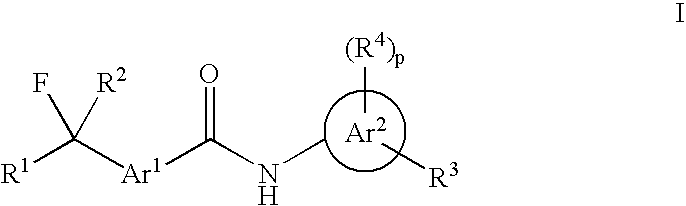
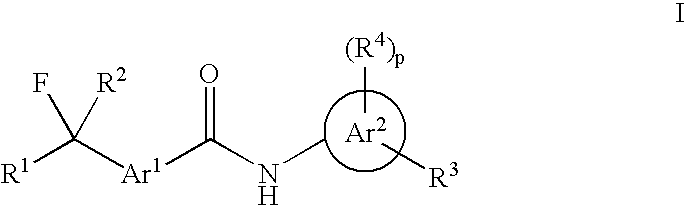
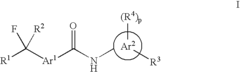
Fluorinated Arylamide Derivatives
PatentInactiveUS20090012075A1
Innovation
- Development of novel fluoroalkylarylamide derivatives that act as potent histone deacetylase inhibitors, capable of inducing terminal differentiation and apoptosis in neoplastic cells, and suitable for treating various diseases including cancer, autoimmune, and neurodegenerative conditions.

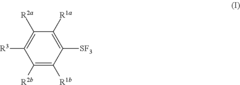
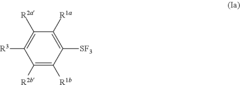
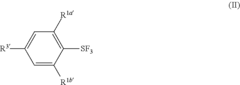
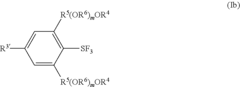
Substituted Phenylsulfur Trifluoride and Other Like Fluorinating Agents
PatentActiveUS20140235898A1
Innovation
- The development of novel substituted phenylsulfur trifluorides with high thermal stability and reactivity, which selectively introduce fluorine atoms into target compounds, including those with oxygen or sulfur-containing groups, offering improved safety and handling characteristics.
Safety and Environmental Considerations
The use of fluoroantimonic acid in experimental chemistry presents significant safety and environmental challenges that must be carefully addressed. This superacid, composed of a mixture of hydrogen fluoride and antimony pentafluoride, is one of the strongest known acids and requires extreme caution in handling and storage.
From a safety perspective, fluoroantimonic acid poses severe risks to human health. It is highly corrosive and can cause severe burns upon contact with skin or eyes. Inhalation of its vapors can lead to serious respiratory damage. Researchers must employ robust personal protective equipment, including chemical-resistant suits, gloves, and full-face respirators with appropriate filters.
Specialized containment systems are essential when working with fluoroantimonic acid. It reacts violently with water and many common materials, necessitating the use of fluoropolymer-based containers and equipment. Laboratories must be equipped with dedicated fume hoods, emergency showers, and eyewash stations specifically designed for superacid handling.
Environmental considerations are equally critical. Fluoroantimonic acid can have devastating effects on ecosystems if released. Its components, particularly fluoride and antimony, can persist in the environment and bioaccumulate in living organisms. Proper disposal protocols must be strictly followed, often involving neutralization processes and specialized waste management facilities.
Regulatory compliance is a key aspect of working with fluoroantimonic acid. Researchers must adhere to stringent guidelines set by environmental protection agencies and occupational safety organizations. This includes detailed documentation of usage, storage, and disposal practices, as well as regular safety audits and personnel training.
Emergency response planning is crucial when dealing with this superacid. Laboratories must have well-defined protocols for spill containment, evacuation procedures, and medical interventions. Collaboration with local emergency services is essential to ensure rapid and effective response in case of accidents.
As research into new applications of fluoroantimonic acid progresses, there is an increasing focus on developing safer alternatives or modified versions with reduced environmental impact. This includes exploring ionic liquid formulations or encapsulation techniques that maintain the acid's unique properties while mitigating its hazards.
From a safety perspective, fluoroantimonic acid poses severe risks to human health. It is highly corrosive and can cause severe burns upon contact with skin or eyes. Inhalation of its vapors can lead to serious respiratory damage. Researchers must employ robust personal protective equipment, including chemical-resistant suits, gloves, and full-face respirators with appropriate filters.
Specialized containment systems are essential when working with fluoroantimonic acid. It reacts violently with water and many common materials, necessitating the use of fluoropolymer-based containers and equipment. Laboratories must be equipped with dedicated fume hoods, emergency showers, and eyewash stations specifically designed for superacid handling.
Environmental considerations are equally critical. Fluoroantimonic acid can have devastating effects on ecosystems if released. Its components, particularly fluoride and antimony, can persist in the environment and bioaccumulate in living organisms. Proper disposal protocols must be strictly followed, often involving neutralization processes and specialized waste management facilities.
Regulatory compliance is a key aspect of working with fluoroantimonic acid. Researchers must adhere to stringent guidelines set by environmental protection agencies and occupational safety organizations. This includes detailed documentation of usage, storage, and disposal practices, as well as regular safety audits and personnel training.
Emergency response planning is crucial when dealing with this superacid. Laboratories must have well-defined protocols for spill containment, evacuation procedures, and medical interventions. Collaboration with local emergency services is essential to ensure rapid and effective response in case of accidents.
As research into new applications of fluoroantimonic acid progresses, there is an increasing focus on developing safer alternatives or modified versions with reduced environmental impact. This includes exploring ionic liquid formulations or encapsulation techniques that maintain the acid's unique properties while mitigating its hazards.
Potential Industrial Applications of Fluoroantimonic Acid
Fluoroantimonic acid, known as the world's strongest superacid, holds immense potential for various industrial applications due to its exceptional protonating ability and extreme acidity. One of the most promising areas for its utilization is in the petrochemical industry, particularly in the processes of isomerization and alkylation of hydrocarbons. The acid's ability to catalyze these reactions at lower temperatures and pressures than conventional catalysts could lead to significant energy savings and improved efficiency in fuel production.
In the field of materials science, fluoroantimonic acid shows potential as an etching agent for advanced semiconductor manufacturing. Its extreme acidity allows for precise and controlled etching of silicon and other materials used in microelectronics, potentially enabling the production of smaller and more efficient electronic components. This application could revolutionize the semiconductor industry by facilitating the development of next-generation microchips and nanoelectronics.
The pharmaceutical industry may also benefit from the unique properties of fluoroantimonic acid. Its strong protonating ability could be harnessed for the synthesis of complex organic compounds, including pharmaceutical intermediates and active pharmaceutical ingredients (APIs). By enabling new reaction pathways or improving existing ones, fluoroantimonic acid could potentially streamline drug discovery and manufacturing processes.
In the realm of energy storage, fluoroantimonic acid presents opportunities for the development of advanced battery technologies. Its extreme acidity and unique chemical properties could be exploited to create novel electrolytes or electrode materials, potentially leading to batteries with higher energy density, faster charging capabilities, and improved longevity. This application could have far-reaching implications for electric vehicles, renewable energy storage, and portable electronics.
The chemical industry may find fluoroantimonic acid valuable in the production of specialty chemicals and advanced materials. Its strong acidic properties could be utilized in the synthesis of high-performance polymers, specialty coatings, and advanced composites. Additionally, the acid's ability to catalyze certain reactions under milder conditions could lead to more environmentally friendly and cost-effective production processes for various industrial chemicals.
While the potential industrial applications of fluoroantimonic acid are vast and promising, it is crucial to note that its extreme reactivity and corrosiveness present significant challenges for large-scale implementation. Extensive research and development efforts are required to address safety concerns, develop suitable containment materials, and optimize handling procedures before these applications can be fully realized in industrial settings.
In the field of materials science, fluoroantimonic acid shows potential as an etching agent for advanced semiconductor manufacturing. Its extreme acidity allows for precise and controlled etching of silicon and other materials used in microelectronics, potentially enabling the production of smaller and more efficient electronic components. This application could revolutionize the semiconductor industry by facilitating the development of next-generation microchips and nanoelectronics.
The pharmaceutical industry may also benefit from the unique properties of fluoroantimonic acid. Its strong protonating ability could be harnessed for the synthesis of complex organic compounds, including pharmaceutical intermediates and active pharmaceutical ingredients (APIs). By enabling new reaction pathways or improving existing ones, fluoroantimonic acid could potentially streamline drug discovery and manufacturing processes.
In the realm of energy storage, fluoroantimonic acid presents opportunities for the development of advanced battery technologies. Its extreme acidity and unique chemical properties could be exploited to create novel electrolytes or electrode materials, potentially leading to batteries with higher energy density, faster charging capabilities, and improved longevity. This application could have far-reaching implications for electric vehicles, renewable energy storage, and portable electronics.
The chemical industry may find fluoroantimonic acid valuable in the production of specialty chemicals and advanced materials. Its strong acidic properties could be utilized in the synthesis of high-performance polymers, specialty coatings, and advanced composites. Additionally, the acid's ability to catalyze certain reactions under milder conditions could lead to more environmentally friendly and cost-effective production processes for various industrial chemicals.
While the potential industrial applications of fluoroantimonic acid are vast and promising, it is crucial to note that its extreme reactivity and corrosiveness present significant challenges for large-scale implementation. Extensive research and development efforts are required to address safety concerns, develop suitable containment materials, and optimize handling procedures before these applications can be fully realized in industrial settings.
Unlock deeper insights with Patsnap Eureka Quick Research — get a full tech report to explore trends and direct your research. Try now!
Generate Your Research Report Instantly with AI Agent
Supercharge your innovation with Patsnap Eureka AI Agent Platform!