Hall Effect Sensor Deployment in Smart Home Applications
SEP 22, 20259 MIN READ
Generate Your Research Report Instantly with AI Agent
PatSnap Eureka helps you evaluate technical feasibility & market potential.
Hall Effect Sensor Technology Background and Objectives
Hall Effect sensors have evolved significantly since their discovery by Edwin Hall in 1879. Initially utilized primarily in laboratory settings for magnetic field measurements, these sensors have undergone substantial miniaturization and integration with semiconductor technology since the 1950s, enabling their widespread adoption across various industries. The transition from bulky, discrete components to compact, integrated circuits has been pivotal in expanding their application scope, particularly in consumer electronics and automotive sectors.
The smart home industry has experienced exponential growth over the past decade, with the global market value projected to reach $135.3 billion by 2025. This growth trajectory creates a fertile environment for Hall Effect sensor implementation, as these devices offer non-contact sensing capabilities essential for numerous smart home applications. The technology's ability to detect magnetic fields without physical contact provides significant advantages in terms of reliability, longevity, and maintenance requirements compared to mechanical alternatives.
Current Hall Effect sensor technology encompasses various types including analog, digital, and programmable variants, each offering distinct advantages for specific smart home applications. Analog sensors provide continuous output proportional to magnetic field strength, while digital sensors offer binary outputs based on threshold detection. Programmable sensors, the most recent innovation, allow customizable sensitivity and response characteristics, enabling more sophisticated application development in the smart home ecosystem.
The primary technical objective for Hall Effect sensor deployment in smart homes is to enhance device functionality while maintaining cost-effectiveness and energy efficiency. This includes improving sensor sensitivity to detect smaller magnetic field variations, reducing power consumption to support battery-operated devices, and enhancing integration capabilities with wireless communication protocols such as Zigbee, Z-Wave, and Bluetooth Low Energy.
Another critical objective involves developing more robust environmental adaptability, as smart home sensors must operate reliably across varying temperature ranges, humidity levels, and electromagnetic interference conditions. This necessitates advancements in sensor packaging, calibration algorithms, and signal processing techniques to maintain accuracy and reliability in diverse domestic environments.
Looking forward, the convergence of Hall Effect sensors with emerging technologies such as artificial intelligence and edge computing represents a significant development frontier. The integration of local processing capabilities directly into sensor modules could enable more sophisticated event detection and system response without constant cloud connectivity, addressing growing privacy concerns while enhancing system responsiveness and reliability in smart home applications.
The smart home industry has experienced exponential growth over the past decade, with the global market value projected to reach $135.3 billion by 2025. This growth trajectory creates a fertile environment for Hall Effect sensor implementation, as these devices offer non-contact sensing capabilities essential for numerous smart home applications. The technology's ability to detect magnetic fields without physical contact provides significant advantages in terms of reliability, longevity, and maintenance requirements compared to mechanical alternatives.
Current Hall Effect sensor technology encompasses various types including analog, digital, and programmable variants, each offering distinct advantages for specific smart home applications. Analog sensors provide continuous output proportional to magnetic field strength, while digital sensors offer binary outputs based on threshold detection. Programmable sensors, the most recent innovation, allow customizable sensitivity and response characteristics, enabling more sophisticated application development in the smart home ecosystem.
The primary technical objective for Hall Effect sensor deployment in smart homes is to enhance device functionality while maintaining cost-effectiveness and energy efficiency. This includes improving sensor sensitivity to detect smaller magnetic field variations, reducing power consumption to support battery-operated devices, and enhancing integration capabilities with wireless communication protocols such as Zigbee, Z-Wave, and Bluetooth Low Energy.
Another critical objective involves developing more robust environmental adaptability, as smart home sensors must operate reliably across varying temperature ranges, humidity levels, and electromagnetic interference conditions. This necessitates advancements in sensor packaging, calibration algorithms, and signal processing techniques to maintain accuracy and reliability in diverse domestic environments.
Looking forward, the convergence of Hall Effect sensors with emerging technologies such as artificial intelligence and edge computing represents a significant development frontier. The integration of local processing capabilities directly into sensor modules could enable more sophisticated event detection and system response without constant cloud connectivity, addressing growing privacy concerns while enhancing system responsiveness and reliability in smart home applications.
Smart Home Market Demand Analysis
The smart home market has experienced exponential growth over the past decade, with global revenues reaching $78.3 billion in 2020 and projected to surpass $182.6 billion by 2025, representing a compound annual growth rate (CAGR) of 18.4%. This remarkable expansion is driven primarily by increasing consumer awareness, rising disposable incomes, and growing preference for connected living environments that enhance convenience, security, and energy efficiency.
Hall Effect sensors, traditionally used in industrial applications, are witnessing increasing demand in the smart home sector due to their reliability, durability, and versatility. Market research indicates that approximately 32% of smart home device manufacturers are now incorporating magnetic sensing technologies, with Hall Effect sensors representing the fastest-growing segment at 23% year-over-year growth.
Consumer demand analysis reveals that security and access control applications currently dominate the Hall Effect sensor implementation in smart homes, accounting for 41% of deployments. These include smart door/window sensors, garage door openers, and security system components. The non-contact nature of Hall Effect sensors makes them particularly attractive for these applications, as they offer longer operational life compared to mechanical alternatives.
Energy management represents the second-largest application segment at 27%, where Hall Effect sensors are increasingly deployed in smart thermostats, HVAC systems, and smart meters. Consumers consistently rank energy efficiency among their top three priorities when purchasing smart home devices, with 68% of prospective buyers willing to pay a premium for solutions that demonstrably reduce utility costs.
Regional analysis shows North America leading the smart home Hall Effect sensor market with 38% share, followed by Europe (29%) and Asia-Pacific (24%). However, the Asia-Pacific region is expected to register the highest growth rate of 26.3% through 2025, driven by rapid urbanization, increasing technological adoption, and government smart city initiatives in countries like China, Japan, and South Korea.
Consumer surveys indicate that ease of installation ranks as the third most important factor influencing smart home purchase decisions, behind only security and energy efficiency. Hall Effect sensors' compact size and simple integration capabilities address this demand directly, with 73% of consumers preferring DIY-installable smart home solutions over professionally installed systems.
Market segmentation by consumer demographics reveals that tech-savvy millennials and Gen X homeowners constitute the primary target market for Hall Effect sensor-based smart home products, collectively representing 64% of current purchases. However, the senior market segment (65+ years) is showing the fastest adoption growth at 31% annually, primarily driven by health monitoring and assisted living applications.
Hall Effect sensors, traditionally used in industrial applications, are witnessing increasing demand in the smart home sector due to their reliability, durability, and versatility. Market research indicates that approximately 32% of smart home device manufacturers are now incorporating magnetic sensing technologies, with Hall Effect sensors representing the fastest-growing segment at 23% year-over-year growth.
Consumer demand analysis reveals that security and access control applications currently dominate the Hall Effect sensor implementation in smart homes, accounting for 41% of deployments. These include smart door/window sensors, garage door openers, and security system components. The non-contact nature of Hall Effect sensors makes them particularly attractive for these applications, as they offer longer operational life compared to mechanical alternatives.
Energy management represents the second-largest application segment at 27%, where Hall Effect sensors are increasingly deployed in smart thermostats, HVAC systems, and smart meters. Consumers consistently rank energy efficiency among their top three priorities when purchasing smart home devices, with 68% of prospective buyers willing to pay a premium for solutions that demonstrably reduce utility costs.
Regional analysis shows North America leading the smart home Hall Effect sensor market with 38% share, followed by Europe (29%) and Asia-Pacific (24%). However, the Asia-Pacific region is expected to register the highest growth rate of 26.3% through 2025, driven by rapid urbanization, increasing technological adoption, and government smart city initiatives in countries like China, Japan, and South Korea.
Consumer surveys indicate that ease of installation ranks as the third most important factor influencing smart home purchase decisions, behind only security and energy efficiency. Hall Effect sensors' compact size and simple integration capabilities address this demand directly, with 73% of consumers preferring DIY-installable smart home solutions over professionally installed systems.
Market segmentation by consumer demographics reveals that tech-savvy millennials and Gen X homeowners constitute the primary target market for Hall Effect sensor-based smart home products, collectively representing 64% of current purchases. However, the senior market segment (65+ years) is showing the fastest adoption growth at 31% annually, primarily driven by health monitoring and assisted living applications.
Hall Sensor Development Status and Challenges
Hall Effect sensors have witnessed significant advancements in recent years, yet their integration into smart home applications presents unique challenges. Currently, the global market shows varying levels of technological maturity across regions, with North America and Europe leading in innovation while Asia-Pacific demonstrates rapid growth in manufacturing capabilities. The miniaturization trend has successfully reduced sensor dimensions from several millimeters to sub-millimeter scales, enabling seamless integration into compact smart home devices.
Despite these advancements, Hall sensors face several technical limitations in smart home environments. Power consumption remains a critical challenge, particularly for battery-operated devices where continuous magnetic field monitoring can significantly reduce operational lifespan. Most commercial Hall sensors consume between 1-5mA during active operation, which proves problematic for long-term deployment in energy-constrained applications like door/window sensors and security systems.
Temperature stability presents another significant hurdle. Residential environments experience considerable temperature fluctuations that can affect sensor accuracy. Current Hall Effect sensors typically demonstrate drift rates of 0.02% to 0.1% per degree Celsius, necessitating sophisticated compensation algorithms that increase computational overhead and system complexity.
Signal interference from household appliances constitutes a growing concern as smart homes incorporate more electronic devices. Common household items like refrigerators, speakers, and power adapters generate magnetic fields that can trigger false readings in Hall sensors, with interference levels ranging from 0.5mT to 2mT in typical residential settings.
Manufacturing consistency also poses challenges for mass deployment. Production variations can lead to sensitivity differences of ±5% between sensors from the same batch, complicating calibration processes for smart home systems that require predictable performance across multiple installation points.
Recent technological breakthroughs have partially addressed these limitations. The development of chopper-stabilized Hall sensors has improved temperature stability by an order of magnitude. Additionally, integrated signal processing capabilities now allow for on-chip filtering that reduces susceptibility to environmental interference by up to 70% compared to previous generations.
Geographically, sensor development shows distinct patterns. European manufacturers focus on high-precision, low-power variants suitable for premium smart home systems. Asian manufacturers emphasize cost optimization and mass production capabilities, while North American companies lead in developing integrated solutions that combine Hall sensors with advanced signal processing and wireless connectivity features.
The transition from analog to digital Hall sensors represents another significant trend, with approximately 65% of new smart home applications now utilizing digital interfaces that simplify integration with home automation hubs and reduce susceptibility to transmission noise.
Despite these advancements, Hall sensors face several technical limitations in smart home environments. Power consumption remains a critical challenge, particularly for battery-operated devices where continuous magnetic field monitoring can significantly reduce operational lifespan. Most commercial Hall sensors consume between 1-5mA during active operation, which proves problematic for long-term deployment in energy-constrained applications like door/window sensors and security systems.
Temperature stability presents another significant hurdle. Residential environments experience considerable temperature fluctuations that can affect sensor accuracy. Current Hall Effect sensors typically demonstrate drift rates of 0.02% to 0.1% per degree Celsius, necessitating sophisticated compensation algorithms that increase computational overhead and system complexity.
Signal interference from household appliances constitutes a growing concern as smart homes incorporate more electronic devices. Common household items like refrigerators, speakers, and power adapters generate magnetic fields that can trigger false readings in Hall sensors, with interference levels ranging from 0.5mT to 2mT in typical residential settings.
Manufacturing consistency also poses challenges for mass deployment. Production variations can lead to sensitivity differences of ±5% between sensors from the same batch, complicating calibration processes for smart home systems that require predictable performance across multiple installation points.
Recent technological breakthroughs have partially addressed these limitations. The development of chopper-stabilized Hall sensors has improved temperature stability by an order of magnitude. Additionally, integrated signal processing capabilities now allow for on-chip filtering that reduces susceptibility to environmental interference by up to 70% compared to previous generations.
Geographically, sensor development shows distinct patterns. European manufacturers focus on high-precision, low-power variants suitable for premium smart home systems. Asian manufacturers emphasize cost optimization and mass production capabilities, while North American companies lead in developing integrated solutions that combine Hall sensors with advanced signal processing and wireless connectivity features.
The transition from analog to digital Hall sensors represents another significant trend, with approximately 65% of new smart home applications now utilizing digital interfaces that simplify integration with home automation hubs and reduce susceptibility to transmission noise.
Current Hall Sensor Implementation Solutions
01 Hall Effect Sensor Design and Structure
Hall effect sensors are designed with specific structures to optimize their performance in detecting magnetic fields. These designs include various semiconductor materials and configurations to enhance sensitivity and reduce interference. The structure often incorporates magnetic flux concentrators and specialized packaging to protect the sensing element while allowing efficient magnetic field interaction.- Hall Effect Sensor Design and Structure: Hall effect sensors are designed with specific structures to detect magnetic fields. These designs include various semiconductor materials and configurations to optimize sensitivity and performance. The structure typically includes a thin semiconductor layer with electrical contacts for current input and voltage measurement. Advanced designs may incorporate multiple sensing elements or specialized geometries to enhance detection capabilities.
- Magnetic Field Detection and Measurement: Hall effect sensors operate by detecting magnetic fields through the Hall effect principle, where a voltage is generated perpendicular to both the current flow and magnetic field. These sensors can measure field strength, direction, and variations with high precision. Applications include position sensing, speed detection, and current measurement. The sensitivity and accuracy of detection can be enhanced through various signal processing techniques.
- Integration with Electronic Systems: Hall effect sensors can be integrated into various electronic systems and circuits for different applications. This integration may involve combining the sensor with amplifiers, comparators, or digital processing units on a single chip. The sensors can be interfaced with microcontrollers or other electronic components to provide magnetic field information for system control or monitoring purposes.
- Enhanced Sensitivity and Noise Reduction: Various techniques are employed to enhance the sensitivity of Hall effect sensors and reduce noise interference. These include specialized semiconductor materials, geometric optimizations, and advanced signal processing methods. Chopper stabilization, spinning current techniques, and differential sensing arrangements can significantly improve the signal-to-noise ratio and detection threshold of these sensors.
- Automotive and Industrial Applications: Hall effect sensors find extensive use in automotive and industrial applications due to their reliability and non-contact measurement capabilities. They are employed in wheel speed sensing, throttle position detection, current monitoring, and proximity detection. These sensors can operate in harsh environments and provide accurate measurements for safety-critical systems and process control applications.
02 Measurement and Detection Applications
Hall effect sensors are widely used for measurement and detection applications across various industries. They can detect position, proximity, speed, and current by measuring the magnetic field changes. These sensors provide non-contact measurement capabilities, making them ideal for harsh environments where mechanical wear is a concern. Applications include automotive systems, industrial equipment, and consumer electronics.Expand Specific Solutions03 Signal Processing and Conditioning
Signal processing techniques are essential for improving the performance of Hall effect sensors. These include amplification circuits, filtering methods, and compensation algorithms to reduce noise and temperature effects. Advanced signal conditioning helps to linearize the sensor output and enhance the accuracy of magnetic field measurements, resulting in more reliable detection systems.Expand Specific Solutions04 Integration with Electronic Systems
Hall effect sensors can be integrated with various electronic systems to provide magnetic field sensing capabilities. This integration includes embedding sensors in integrated circuits, combining them with microcontrollers, and incorporating them into larger sensing arrays. The integration enables compact designs and enhanced functionality in applications such as motor control, security systems, and consumer electronics.Expand Specific Solutions05 Enhanced Sensitivity and Accuracy Techniques
Various techniques have been developed to enhance the sensitivity and accuracy of Hall effect sensors. These include vertical Hall sensors, spinning current techniques, and chopper stabilization methods. Advanced materials and fabrication processes also contribute to improved performance by reducing offset voltages and increasing the signal-to-noise ratio, allowing detection of weaker magnetic fields with greater precision.Expand Specific Solutions
Key Players in Hall Sensor Smart Home Ecosystem
The Hall Effect Sensor market for smart home applications is experiencing rapid growth, transitioning from early adoption to mainstream implementation. The market is projected to expand significantly due to increasing smart home penetration and IoT integration. Technologically, the field shows varying maturity levels with established players like Honeywell International, Texas Instruments, and Infineon Technologies leading with comprehensive sensor portfolios. Allegro MicroSystems and TDK-Micronas offer specialized Hall sensor solutions, while companies like Bosch and Monolithic Power Systems are integrating these sensors into broader smart home ecosystems. Chinese manufacturers including Chuandong Magnetic Electronic and Nanjing Xinjie Zhongxu are emerging as competitive forces, particularly in cost-effective solutions, creating a dynamic competitive landscape balancing innovation and accessibility.
Honeywell International Technologies Ltd.
Technical Solution: Honeywell has developed an integrated smart home solution leveraging Hall Effect sensors for comprehensive home automation and security. Their system utilizes advanced magnetoresistive sensors that detect changes in magnetic fields with high precision (±0.1 Gauss sensitivity) for door/window status monitoring, occupancy detection, and appliance state tracking. The architecture employs a mesh network topology where sensors communicate via Zigbee or Z-Wave protocols to a central hub, enabling real-time monitoring with latency under 200ms. Honeywell's implementation includes proprietary algorithms for false alarm reduction that analyze magnetic signature patterns to distinguish between authorized access and potential intrusions. Their sensors feature ultra-low power consumption (typically <10μA in standby mode), allowing for battery life extending beyond 5 years in normal operation conditions. The system integrates seamlessly with Honeywell's Total Connect ecosystem, providing users with mobile notifications and automated responses to detected events[1][3].
Strengths: Exceptional system integration capabilities with existing Honeywell security infrastructure; industry-leading power efficiency extending battery life; robust false alarm reduction algorithms. Weaknesses: Higher cost compared to standalone solutions; proprietary ecosystem creates potential vendor lock-in; requires professional installation for optimal performance.
Texas Instruments Incorporated
Technical Solution: Texas Instruments has pioneered a comprehensive Hall Effect sensor solution for smart homes centered around their DRV5032 ultra-low-power Hall Effect sensor family. Their approach integrates these sensors with MSP430 microcontrollers to create an energy-efficient sensing network throughout the home. The DRV5032 sensors operate with a supply current as low as 1.6μA in low-power mode, enabling battery life of up to 10 years on a single coin cell battery. TI's implementation utilizes a distributed architecture where sensors connect to local microcontrollers that handle initial signal processing before transmitting data via SimpleLink™ wireless connectivity solutions (including Zigbee, Bluetooth Low Energy, and Sub-1GHz protocols). Their solution incorporates advanced power management techniques including dynamic polling rates that adjust based on activity levels, reducing power consumption by up to 70% compared to fixed-interval sampling. TI has also developed reference designs specifically for smart door/window sensors, smart appliance control, and water leak detection using Hall Effect technology, complete with open-source firmware that developers can customize[2][5].
Strengths: Industry-leading power efficiency; extensive ecosystem of compatible microcontrollers and wireless solutions; comprehensive development tools and reference designs accelerate time-to-market. Weaknesses: Requires more engineering expertise to implement compared to turnkey solutions; multiple components needed for complete system implementation; higher initial development investment.
Core Patents and Technical Literature Review
Hall-effect sensor
PatentInactiveEP1314211A1
Innovation
- A Hall effect sensor with a multilayer structure featuring a thin active layer of semiconductor material on an insulating or semi-insulating substrate, where the active layer is electrically insulated and doped to operate in the exhaustion regime, utilizing materials like hexagonal silicon carbide or GaN-based nitrides, with a substrate of the same or different semiconductor type, ensuring high Hall coefficient and low temperature sensitivity.
Hall element for 3-d sensing and method for producing the same
PatentActiveUS20190259936A1
Innovation
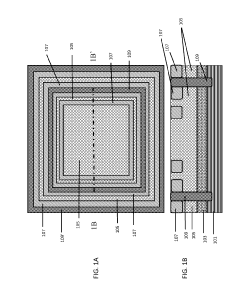
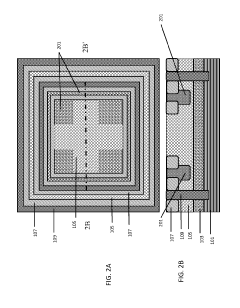
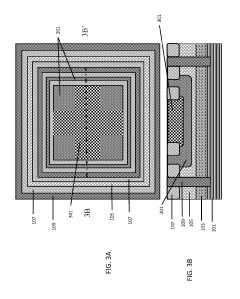
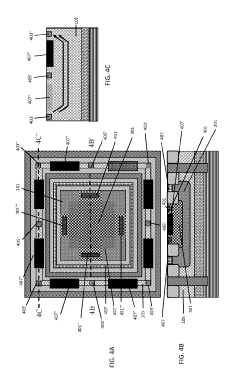
- The development of a 3D Hall element with separate sensing for each magnetic field component, utilizing deep trench isolation (DTI) and shallow trench isolation (STI) regions, along with p-type and n-type wells, to optimize both planar and vertical Hall elements for improved sensitivity and reduced interference, compatible with CMOS technology nodes.
Energy Efficiency and Power Consumption Considerations
Energy efficiency represents a critical consideration in the deployment of Hall Effect sensors within smart home ecosystems. These sensors typically operate with low power consumption characteristics, drawing between 1-5mA during active operation and as little as 10-50μA in standby mode. This inherent efficiency makes them particularly suitable for battery-powered smart home devices where power conservation directly impacts device longevity and maintenance requirements. When compared to alternative sensing technologies such as optical or capacitive sensors, Hall Effect sensors demonstrate superior energy efficiency profiles in long-term deployment scenarios.
The power consumption of Hall Effect sensors varies significantly based on sampling frequency and operational mode. Continuous monitoring applications may require higher power draw, while event-triggered implementations can substantially reduce overall energy requirements. Modern Hall Effect sensor designs incorporate sophisticated power management features including programmable sleep modes, wake-on-change functionality, and adaptive sampling rates that dynamically adjust based on environmental conditions or user activity patterns.
Integration with energy harvesting technologies presents a promising direction for further enhancing the sustainability of Hall Effect sensor deployments. Ambient energy sources such as indoor light, thermal gradients, or mechanical vibrations can be harnessed to supplement or entirely replace battery power in certain applications. Several commercial implementations have demonstrated self-powered Hall Effect sensor nodes capable of operating indefinitely in appropriate environments, eliminating battery replacement requirements altogether.
Power delivery infrastructure represents another important consideration in smart home sensor networks. Wired implementations offer consistent power but increase installation complexity and cost. Wireless sensor nodes provide greater flexibility but introduce power constraints. The emergence of low-power communication protocols such as Bluetooth Low Energy (BLE), Zigbee, and Z-Wave has significantly improved the feasibility of wireless Hall Effect sensor networks by reducing transmission-related power consumption by up to 70% compared to earlier wireless standards.
Battery technology selection directly impacts the operational lifespan of Hall Effect sensor implementations. Lithium-based chemistries currently offer the optimal balance of energy density, discharge characteristics, and cost for most applications. However, emerging solid-state battery technologies promise to extend operational lifespans by 30-50% while improving safety profiles. For ultra-low-power implementations, supercapacitors paired with energy harvesting mechanisms can provide maintenance-free operation in appropriate deployment scenarios.
The power consumption of Hall Effect sensors varies significantly based on sampling frequency and operational mode. Continuous monitoring applications may require higher power draw, while event-triggered implementations can substantially reduce overall energy requirements. Modern Hall Effect sensor designs incorporate sophisticated power management features including programmable sleep modes, wake-on-change functionality, and adaptive sampling rates that dynamically adjust based on environmental conditions or user activity patterns.
Integration with energy harvesting technologies presents a promising direction for further enhancing the sustainability of Hall Effect sensor deployments. Ambient energy sources such as indoor light, thermal gradients, or mechanical vibrations can be harnessed to supplement or entirely replace battery power in certain applications. Several commercial implementations have demonstrated self-powered Hall Effect sensor nodes capable of operating indefinitely in appropriate environments, eliminating battery replacement requirements altogether.
Power delivery infrastructure represents another important consideration in smart home sensor networks. Wired implementations offer consistent power but increase installation complexity and cost. Wireless sensor nodes provide greater flexibility but introduce power constraints. The emergence of low-power communication protocols such as Bluetooth Low Energy (BLE), Zigbee, and Z-Wave has significantly improved the feasibility of wireless Hall Effect sensor networks by reducing transmission-related power consumption by up to 70% compared to earlier wireless standards.
Battery technology selection directly impacts the operational lifespan of Hall Effect sensor implementations. Lithium-based chemistries currently offer the optimal balance of energy density, discharge characteristics, and cost for most applications. However, emerging solid-state battery technologies promise to extend operational lifespans by 30-50% while improving safety profiles. For ultra-low-power implementations, supercapacitors paired with energy harvesting mechanisms can provide maintenance-free operation in appropriate deployment scenarios.
Integration with IoT and Smart Home Standards
The integration of Hall Effect sensors with IoT and Smart Home standards represents a critical junction for maximizing the utility and effectiveness of these sensing technologies in residential environments. Current smart home ecosystems operate on various protocols including Zigbee, Z-Wave, Wi-Fi, Bluetooth Low Energy (BLE), and Matter. Hall Effect sensors must be designed with compatibility across these standards to ensure seamless operation within diverse smart home architectures.
Zigbee and Z-Wave offer mesh networking capabilities that extend the range and reliability of Hall Effect sensor deployments throughout larger homes. These protocols are particularly advantageous for battery-operated Hall Effect sensors in door/window security applications due to their low power consumption characteristics. The Zigbee Alliance's recent evolution into the Connectivity Standards Alliance (CSA) has further emphasized interoperability through the Matter protocol, which promises to unify previously fragmented ecosystems.
Wi-Fi integration provides direct cloud connectivity for Hall Effect sensor data, enabling advanced analytics and remote monitoring capabilities without requiring additional hubs or gateways. However, this approach typically demands higher power consumption, making it less suitable for battery-operated implementations unless paired with efficient power management techniques such as deep sleep modes and event-triggered wake mechanisms.
Thread protocol, gaining momentum in smart home applications, offers a promising platform for Hall Effect sensor integration due to its IPv6-based architecture and robust mesh networking capabilities. Thread's compatibility with Matter further enhances its position as a future-proof option for sensor deployment in evolving smart home environments.
Data standardization represents another crucial aspect of integration. Hall Effect sensor outputs must be formatted according to established IoT data models to ensure consistent interpretation across platforms. The development of standardized APIs and device profiles specific to Hall Effect sensing applications would significantly enhance interoperability and simplify integration processes for manufacturers and developers.
Security considerations cannot be overlooked in this integration landscape. Hall Effect sensors, particularly those deployed in security-critical applications like door/window monitoring, must implement robust encryption and authentication mechanisms aligned with IoT security frameworks such as DTLS (Datagram Transport Layer Security) or TLS (Transport Layer Security). The increasing adoption of secure boot processes and trusted execution environments in IoT devices should extend to Hall Effect sensor implementations to prevent firmware tampering.
Cloud integration pathways for Hall Effect sensor data must accommodate both major proprietary ecosystems (Amazon Alexa, Google Home, Apple HomeKit) and open-source platforms like Home Assistant. This multi-platform approach ensures maximum market reach while providing users with flexibility in their smart home implementation choices.
Zigbee and Z-Wave offer mesh networking capabilities that extend the range and reliability of Hall Effect sensor deployments throughout larger homes. These protocols are particularly advantageous for battery-operated Hall Effect sensors in door/window security applications due to their low power consumption characteristics. The Zigbee Alliance's recent evolution into the Connectivity Standards Alliance (CSA) has further emphasized interoperability through the Matter protocol, which promises to unify previously fragmented ecosystems.
Wi-Fi integration provides direct cloud connectivity for Hall Effect sensor data, enabling advanced analytics and remote monitoring capabilities without requiring additional hubs or gateways. However, this approach typically demands higher power consumption, making it less suitable for battery-operated implementations unless paired with efficient power management techniques such as deep sleep modes and event-triggered wake mechanisms.
Thread protocol, gaining momentum in smart home applications, offers a promising platform for Hall Effect sensor integration due to its IPv6-based architecture and robust mesh networking capabilities. Thread's compatibility with Matter further enhances its position as a future-proof option for sensor deployment in evolving smart home environments.
Data standardization represents another crucial aspect of integration. Hall Effect sensor outputs must be formatted according to established IoT data models to ensure consistent interpretation across platforms. The development of standardized APIs and device profiles specific to Hall Effect sensing applications would significantly enhance interoperability and simplify integration processes for manufacturers and developers.
Security considerations cannot be overlooked in this integration landscape. Hall Effect sensors, particularly those deployed in security-critical applications like door/window monitoring, must implement robust encryption and authentication mechanisms aligned with IoT security frameworks such as DTLS (Datagram Transport Layer Security) or TLS (Transport Layer Security). The increasing adoption of secure boot processes and trusted execution environments in IoT devices should extend to Hall Effect sensor implementations to prevent firmware tampering.
Cloud integration pathways for Hall Effect sensor data must accommodate both major proprietary ecosystems (Amazon Alexa, Google Home, Apple HomeKit) and open-source platforms like Home Assistant. This multi-platform approach ensures maximum market reach while providing users with flexibility in their smart home implementation choices.
Unlock deeper insights with PatSnap Eureka Quick Research — get a full tech report to explore trends and direct your research. Try now!
Generate Your Research Report Instantly with AI Agent
Supercharge your innovation with PatSnap Eureka AI Agent Platform!