

High-Throughput Screening Methods For Novel Electrocaloric Compounds For Electrocaloric Cooling
SEP 1, 202510 MIN READ
Generate Your Research Report Instantly with AI Agent
PatSnap Eureka helps you evaluate technical feasibility & market potential.
Electrocaloric Cooling Background and Objectives
Electrocaloric cooling represents a promising alternative to conventional vapor-compression refrigeration systems, offering potential advantages in energy efficiency, environmental friendliness, and device miniaturization. The electrocaloric effect (ECE) refers to the reversible temperature change in a material when subjected to an applied electric field. This phenomenon was first discovered in the 1930s but remained largely unexplored until the early 2000s when significant advancements in materials science renewed interest in its practical applications.
The evolution of electrocaloric technology has been marked by several key milestones. Initial research focused primarily on ferroelectric ceramics such as lead zirconate titanate (PZT). A breakthrough came in 2006 when a giant electrocaloric effect was observed in thin films of PZT, demonstrating temperature changes of several degrees Kelvin. This discovery catalyzed intensive research efforts worldwide, expanding the material palette to include relaxor ferroelectrics, polymer-based materials, and various composite systems.
Recent technological trends indicate a shift toward lead-free materials due to environmental regulations and health concerns. Additionally, there is growing interest in multilayer structures and device architectures that can maximize cooling capacity while minimizing required electric fields. The integration of electrocaloric materials with microelectronic systems represents another emerging trend, particularly for thermal management in high-performance computing and telecommunications.
The primary objective of high-throughput screening methods for novel electrocaloric compounds is to accelerate the discovery and optimization of materials with enhanced electrocaloric properties. Specifically, these methods aim to identify compounds that exhibit large temperature changes (ΔT > 10K) under moderate electric fields (<100 MV/m), possess high energy efficiency (electrocaloric strength >0.5 K·cm/kV), and maintain stable performance over extended operational cycles (>10^6 cycles).
Additional technical goals include developing materials with broad operating temperature ranges, particularly near room temperature (15-40°C) for consumer applications, reducing hysteresis losses during field cycling, and ensuring compatibility with existing manufacturing processes. The screening methodologies must also prioritize materials with minimal environmental impact and those composed of earth-abundant elements to ensure commercial viability.
From a broader perspective, the ultimate objective is to establish electrocaloric cooling as a competitive alternative to conventional refrigeration technologies, potentially reducing global energy consumption related to cooling and refrigeration by 15-30% while eliminating the use of greenhouse gases as refrigerants. This aligns with international efforts to combat climate change and transition toward more sustainable energy systems.
The evolution of electrocaloric technology has been marked by several key milestones. Initial research focused primarily on ferroelectric ceramics such as lead zirconate titanate (PZT). A breakthrough came in 2006 when a giant electrocaloric effect was observed in thin films of PZT, demonstrating temperature changes of several degrees Kelvin. This discovery catalyzed intensive research efforts worldwide, expanding the material palette to include relaxor ferroelectrics, polymer-based materials, and various composite systems.
Recent technological trends indicate a shift toward lead-free materials due to environmental regulations and health concerns. Additionally, there is growing interest in multilayer structures and device architectures that can maximize cooling capacity while minimizing required electric fields. The integration of electrocaloric materials with microelectronic systems represents another emerging trend, particularly for thermal management in high-performance computing and telecommunications.
The primary objective of high-throughput screening methods for novel electrocaloric compounds is to accelerate the discovery and optimization of materials with enhanced electrocaloric properties. Specifically, these methods aim to identify compounds that exhibit large temperature changes (ΔT > 10K) under moderate electric fields (<100 MV/m), possess high energy efficiency (electrocaloric strength >0.5 K·cm/kV), and maintain stable performance over extended operational cycles (>10^6 cycles).
Additional technical goals include developing materials with broad operating temperature ranges, particularly near room temperature (15-40°C) for consumer applications, reducing hysteresis losses during field cycling, and ensuring compatibility with existing manufacturing processes. The screening methodologies must also prioritize materials with minimal environmental impact and those composed of earth-abundant elements to ensure commercial viability.
From a broader perspective, the ultimate objective is to establish electrocaloric cooling as a competitive alternative to conventional refrigeration technologies, potentially reducing global energy consumption related to cooling and refrigeration by 15-30% while eliminating the use of greenhouse gases as refrigerants. This aligns with international efforts to combat climate change and transition toward more sustainable energy systems.
Market Analysis for Electrocaloric Cooling Technologies
The global market for cooling technologies is experiencing significant transformation, driven by increasing energy efficiency demands and environmental regulations limiting traditional refrigerants. Electrocaloric cooling represents an emerging alternative with substantial market potential, currently valued at approximately $1.2 billion and projected to grow at a CAGR of 8.5% through 2030.
The primary market drivers for electrocaloric cooling technologies include stringent environmental regulations, particularly the phasing out of hydrofluorocarbons (HFCs) under the Kigali Amendment to the Montreal Protocol. This regulatory pressure creates an urgent need for alternative cooling technologies with minimal environmental impact. Additionally, rising energy costs worldwide are pushing industries toward more efficient cooling solutions, with electrocaloric systems potentially offering 20-30% greater efficiency than conventional vapor-compression systems.
Consumer electronics represents the most promising initial market segment, with thermal management for high-performance computing devices, smartphones, and wearable technology creating immediate demand. The miniaturization capabilities of electrocaloric cooling make it particularly suitable for these applications. Market research indicates that electronics cooling alone could represent a $300 million opportunity by 2025.
Commercial refrigeration presents another substantial market opportunity, valued at $24 billion globally, where electrocaloric technologies could capture a growing share as efficiency and reliability improve. Early adopters are likely to include premium appliance manufacturers seeking differentiation through energy efficiency and noise reduction benefits.
Automotive cooling systems represent a third significant market segment, particularly with the growth of electric vehicles requiring sophisticated battery thermal management systems. This segment is projected to grow at 12% annually, creating substantial opportunities for novel cooling technologies.
Geographically, North America and Europe currently lead in research and development investment, while Asia-Pacific markets show the highest potential growth rate due to rapid industrialization and increasing middle-class consumer demand for cooling technologies. China, Japan, and South Korea are emerging as key manufacturing hubs for advanced cooling technologies.
Market barriers include high initial production costs, with current electrocaloric systems estimated at 3-5 times the cost of conventional cooling technologies. Technical challenges in scaling production and material optimization also limit immediate market penetration. Additionally, industry inertia and established supply chains for conventional cooling technologies create significant market entry barriers for novel approaches.
The primary market drivers for electrocaloric cooling technologies include stringent environmental regulations, particularly the phasing out of hydrofluorocarbons (HFCs) under the Kigali Amendment to the Montreal Protocol. This regulatory pressure creates an urgent need for alternative cooling technologies with minimal environmental impact. Additionally, rising energy costs worldwide are pushing industries toward more efficient cooling solutions, with electrocaloric systems potentially offering 20-30% greater efficiency than conventional vapor-compression systems.
Consumer electronics represents the most promising initial market segment, with thermal management for high-performance computing devices, smartphones, and wearable technology creating immediate demand. The miniaturization capabilities of electrocaloric cooling make it particularly suitable for these applications. Market research indicates that electronics cooling alone could represent a $300 million opportunity by 2025.
Commercial refrigeration presents another substantial market opportunity, valued at $24 billion globally, where electrocaloric technologies could capture a growing share as efficiency and reliability improve. Early adopters are likely to include premium appliance manufacturers seeking differentiation through energy efficiency and noise reduction benefits.
Automotive cooling systems represent a third significant market segment, particularly with the growth of electric vehicles requiring sophisticated battery thermal management systems. This segment is projected to grow at 12% annually, creating substantial opportunities for novel cooling technologies.
Geographically, North America and Europe currently lead in research and development investment, while Asia-Pacific markets show the highest potential growth rate due to rapid industrialization and increasing middle-class consumer demand for cooling technologies. China, Japan, and South Korea are emerging as key manufacturing hubs for advanced cooling technologies.
Market barriers include high initial production costs, with current electrocaloric systems estimated at 3-5 times the cost of conventional cooling technologies. Technical challenges in scaling production and material optimization also limit immediate market penetration. Additionally, industry inertia and established supply chains for conventional cooling technologies create significant market entry barriers for novel approaches.
Current Challenges in Electrocaloric Materials Discovery
The discovery of novel electrocaloric materials faces significant challenges despite the promising potential of electrocaloric cooling technology. Traditional material discovery approaches rely heavily on time-consuming synthesis and characterization methods, creating a bottleneck in the development pipeline. The conventional trial-and-error methodology has proven inadequate for efficiently exploring the vast chemical and structural space of potential electrocaloric compounds.
One primary challenge is the limited understanding of structure-property relationships in electrocaloric materials. While certain material families like lead zirconate titanate (PZT) and barium titanate (BaTiO3) have demonstrated notable electrocaloric effects, the fundamental mechanisms governing these properties remain incompletely understood. This knowledge gap hinders the development of predictive models necessary for high-throughput screening.
The multidimensional parameter space presents another significant obstacle. Electrocaloric performance depends on numerous factors including composition, crystal structure, domain configuration, defect chemistry, and processing conditions. Systematically exploring this complex parameter space requires sophisticated experimental design and data analysis capabilities that exceed traditional research methodologies.
Material synthesis complexity further complicates high-throughput approaches. Many promising electrocaloric materials require precise control over stoichiometry, phase purity, and microstructure. These demanding synthesis requirements often conflict with the rapid, parallel processing needed for high-throughput screening, creating a fundamental tension between speed and material quality.
Characterization bottlenecks also impede progress. Direct measurement of electrocaloric effects requires specialized equipment and time-intensive protocols. Indirect measurement methods, while faster, may not accurately capture the true electrocaloric performance, leading to potential false positives or missed opportunities in the screening process.
Computational screening approaches face their own challenges. Density functional theory (DFT) calculations, while powerful for predicting certain material properties, struggle with accurately modeling phase transitions and temperature-dependent phenomena critical to electrocaloric performance. The computational expense of these simulations further limits their application in truly high-throughput workflows.
Data integration across multiple characterization techniques and computational predictions represents another hurdle. Developing unified frameworks that can meaningfully combine experimental and theoretical data remains challenging, particularly when dealing with inconsistent data formats, varying levels of uncertainty, and different physical scales of investigation.
Finally, validation protocols for rapidly identified candidate materials are often inadequate. The gap between initial screening results and verified performance in prototype cooling devices remains substantial, requiring additional development steps that can negate the time advantages gained through high-throughput approaches.
One primary challenge is the limited understanding of structure-property relationships in electrocaloric materials. While certain material families like lead zirconate titanate (PZT) and barium titanate (BaTiO3) have demonstrated notable electrocaloric effects, the fundamental mechanisms governing these properties remain incompletely understood. This knowledge gap hinders the development of predictive models necessary for high-throughput screening.
The multidimensional parameter space presents another significant obstacle. Electrocaloric performance depends on numerous factors including composition, crystal structure, domain configuration, defect chemistry, and processing conditions. Systematically exploring this complex parameter space requires sophisticated experimental design and data analysis capabilities that exceed traditional research methodologies.
Material synthesis complexity further complicates high-throughput approaches. Many promising electrocaloric materials require precise control over stoichiometry, phase purity, and microstructure. These demanding synthesis requirements often conflict with the rapid, parallel processing needed for high-throughput screening, creating a fundamental tension between speed and material quality.
Characterization bottlenecks also impede progress. Direct measurement of electrocaloric effects requires specialized equipment and time-intensive protocols. Indirect measurement methods, while faster, may not accurately capture the true electrocaloric performance, leading to potential false positives or missed opportunities in the screening process.
Computational screening approaches face their own challenges. Density functional theory (DFT) calculations, while powerful for predicting certain material properties, struggle with accurately modeling phase transitions and temperature-dependent phenomena critical to electrocaloric performance. The computational expense of these simulations further limits their application in truly high-throughput workflows.
Data integration across multiple characterization techniques and computational predictions represents another hurdle. Developing unified frameworks that can meaningfully combine experimental and theoretical data remains challenging, particularly when dealing with inconsistent data formats, varying levels of uncertainty, and different physical scales of investigation.
Finally, validation protocols for rapidly identified candidate materials are often inadequate. The gap between initial screening results and verified performance in prototype cooling devices remains substantial, requiring additional development steps that can negate the time advantages gained through high-throughput approaches.
Current High-Throughput Screening Approaches for Electrocaloric Materials
01 High-throughput screening methods for electrocaloric materials
Various high-throughput screening methodologies have been developed to efficiently identify and characterize electrocaloric compounds. These methods involve automated testing of multiple material compositions simultaneously, allowing researchers to rapidly evaluate the electrocaloric properties of numerous candidates. Advanced computational algorithms and data analysis techniques are employed to process the large datasets generated during screening, enabling the identification of promising electrocaloric materials with enhanced cooling capabilities.- High-throughput screening methods for electrocaloric materials: Various high-throughput screening methodologies have been developed to efficiently identify and characterize electrocaloric compounds. These methods involve automated testing of multiple material compositions simultaneously, allowing researchers to rapidly evaluate the electrocaloric properties of numerous compounds. The screening processes typically include sample preparation, property measurement, and data analysis steps that are optimized for processing large numbers of candidates, significantly accelerating the discovery of novel electrocaloric materials with enhanced performance characteristics.
- Computational modeling and simulation for electrocaloric material discovery: Computational approaches play a crucial role in high-throughput screening of electrocaloric compounds. These methods employ machine learning algorithms, molecular dynamics simulations, and density functional theory calculations to predict the electrocaloric properties of materials before experimental synthesis. By establishing structure-property relationships and identifying promising chemical compositions, computational screening significantly reduces the experimental search space and accelerates the discovery of novel electrocaloric materials with optimal properties for cooling applications.
- Microfluidic and lab-on-chip platforms for electrocaloric material screening: Microfluidic and lab-on-chip technologies enable miniaturized high-throughput screening of electrocaloric compounds. These platforms integrate sample preparation, property measurement, and analysis into compact devices that require minimal material quantities. By leveraging microfluidic channels, automated fluid handling, and integrated sensors, researchers can rapidly evaluate multiple electrocaloric material compositions under various conditions simultaneously, significantly increasing screening efficiency while reducing material consumption and experimental costs.
- Combinatorial synthesis approaches for electrocaloric materials: Combinatorial synthesis methods enable the systematic exploration of complex electrocaloric material compositions. These approaches involve the creation of material libraries with systematically varied compositions, dopants, and processing conditions. Techniques such as gradient deposition, parallel synthesis, and automated sample preparation allow researchers to generate large arrays of distinct material compositions that can be simultaneously characterized for their electrocaloric properties, facilitating the discovery of composition-property relationships and identification of optimal formulations.
- Advanced characterization techniques for electrocaloric screening: Specialized characterization techniques are essential for high-throughput screening of electrocaloric materials. These include rapid thermal analysis methods, dielectric spectroscopy arrays, and automated electrical property measurement systems that can evaluate multiple samples in parallel. Advanced imaging and spectroscopic techniques provide structural and compositional information, while custom-designed measurement platforms enable direct assessment of electrocaloric temperature changes under applied electric fields. These techniques collectively enable comprehensive evaluation of candidate materials in an accelerated timeframe.
02 Combinatorial approaches for electrocaloric compound discovery
Combinatorial chemistry and materials science approaches are utilized for the systematic discovery of novel electrocaloric compounds. These methods involve creating libraries of material compositions with varying elemental ratios and structures, then testing them in parallel for electrocaloric properties. By systematically exploring the compositional space, researchers can identify unexpected combinations that exhibit superior electrocaloric effects, potentially leading to breakthroughs in cooling technology applications.Expand Specific Solutions03 Microfluidic and lab-on-chip platforms for electrocaloric screening
Microfluidic devices and lab-on-chip platforms have been developed specifically for high-throughput screening of electrocaloric materials. These miniaturized systems allow for precise control of experimental conditions while requiring minimal amounts of sample material. The integration of sensors and measurement capabilities directly into these platforms enables real-time monitoring of electrocaloric responses, significantly accelerating the discovery and optimization of new compounds with enhanced cooling properties.Expand Specific Solutions04 Machine learning and AI for electrocaloric materials discovery
Artificial intelligence and machine learning algorithms are increasingly being applied to accelerate the discovery of novel electrocaloric compounds. These computational approaches can analyze patterns in existing materials data, predict promising new compositions, and optimize screening protocols. By leveraging large materials databases and establishing structure-property relationships, AI-assisted methods can significantly reduce the experimental effort required to identify electrocaloric materials with enhanced performance characteristics.Expand Specific Solutions05 Characterization techniques for electrocaloric properties in high-throughput screening
Specialized characterization techniques have been developed to rapidly assess the electrocaloric properties of multiple compounds during high-throughput screening. These include advanced thermal imaging methods, miniaturized calorimetry, and electrical property measurement systems capable of handling arrays of samples. Such techniques enable researchers to quickly evaluate key parameters such as temperature change, polarization response, and cycling stability, which are critical for identifying promising electrocaloric materials for cooling applications.Expand Specific Solutions
Leading Research Groups and Companies in Electrocaloric Field
# Electrocaloric Cooling Technology Competitive Landscape
The high-throughput screening for novel electrocaloric compounds represents an emerging field in cooling technology, currently in its early development stage. The market is relatively small but growing rapidly, with projections indicating significant expansion as energy-efficient cooling solutions gain importance. Technologically, the field remains in transition from research to commercialization, with academic institutions like Jilin University, University of Maryland, and Johns Hopkins University leading fundamental research. Among companies, Nascent Devices stands out as a specialized player developing electrocaloric polymer films, while larger corporations including LG Chem, BASF, and Arkema are leveraging their materials expertise to explore applications. Research institutions like Georgia Tech Research Corp. and government entities such as the U.S. Army are investing in this technology, indicating its strategic importance for both commercial and defense applications.
The high-throughput screening for novel electrocaloric compounds represents an emerging field in cooling technology, currently in its early development stage. The market is relatively small but growing rapidly, with projections indicating significant expansion as energy-efficient cooling solutions gain importance. Technologically, the field remains in transition from research to commercialization, with academic institutions like Jilin University, University of Maryland, and Johns Hopkins University leading fundamental research. Among companies, Nascent Devices stands out as a specialized player developing electrocaloric polymer films, while larger corporations including LG Chem, BASF, and Arkema are leveraging their materials expertise to explore applications. Research institutions like Georgia Tech Research Corp. and government entities such as the U.S. Army are investing in this technology, indicating its strategic importance for both commercial and defense applications.
Jilin University
Technical Solution: Jilin University has established a comprehensive high-throughput screening platform for electrocaloric materials that combines computational prediction with rapid experimental validation. Their computational approach utilizes first-principles calculations and phase-field modeling to predict the electrocaloric response of various material systems, with particular emphasis on understanding the relationship between crystal structure, phase transitions, and electrocaloric performance. On the experimental side, Jilin researchers have developed a combinatorial synthesis approach using modified sol-gel methods to create compositional gradients across ceramic sample arrays. These arrays are then characterized using an automated direct electrocaloric measurement system that combines high-voltage application with precise temperature sensing using miniaturized thermocouples and infrared thermal imaging. The university has made significant advances in exploring novel electrocaloric materials beyond traditional ferroelectrics, including antiferroelectric systems like PbZrO3-based compounds and relaxor ferroelectrics with engineered phase boundaries. Their research has identified several promising lead-free compositions based on (K,Na)NbO3 and Bi0.5Na0.5TiO3 systems with enhanced electrocaloric coefficients. Additionally, Jilin University has pioneered the investigation of defect engineering strategies to enhance electrocaloric performance through controlled introduction of oxygen vacancies and dopants[9][10].
Strengths: Their focus on fundamental understanding of structure-property relationships provides deeper insights for materials design. The exploration of alternative mechanisms beyond conventional ferroelectrics opens new material possibilities. Weaknesses: Some of their most promising materials still face challenges with electrical breakdown at the high fields needed for optimal performance, and long-term stability issues remain to be fully addressed.
University of Maryland
Technical Solution: University of Maryland has developed advanced high-throughput screening methods for electrocaloric materials using combinatorial thin film synthesis techniques. Their approach involves depositing compositionally graded thin film libraries of potential electrocaloric compounds using pulsed laser deposition and magnetron sputtering. These libraries are then rapidly characterized using automated measurement systems that can evaluate hundreds of compositions simultaneously. The university has pioneered infrared imaging techniques to detect temperature changes across sample libraries when electric fields are applied, allowing for rapid identification of promising electrocaloric compounds. Their research has focused particularly on lead-based relaxor ferroelectrics and lead-free alternatives such as BaTiO3-based materials and (Ba,Sr)TiO3 solid solutions, which have shown significant electrocaloric effects. The Maryland team has also developed machine learning algorithms to predict electrocaloric properties based on material composition and structure, accelerating the discovery process substantially[1][3].
Strengths: Their combinatorial approach allows for testing hundreds of compositions simultaneously, dramatically reducing discovery time. The integration of machine learning with experimental techniques creates a powerful predictive capability. Weaknesses: The thin film approach may not always translate directly to bulk material performance needed for commercial cooling applications, and scaling up from laboratory discoveries remains challenging.
Key Technical Innovations in Electrocaloric Compound Characterization
A system and a method of performing automated screening of thermoelectric materials
PatentWO2025165298A1
Innovation
- A system and method utilizing a temperature control stage with a thermally conductive sheet, thermal camera, and electrical probe, guided by a vision algorithm, to automate the measurement of thermoelectric properties across multiple samples on a wafer, enabling fast and accurate determination of properties like Seebeck coefficient and electrical conductivity.


High throughout screening method and apparatus
PatentInactiveUS7354704B2
Innovation
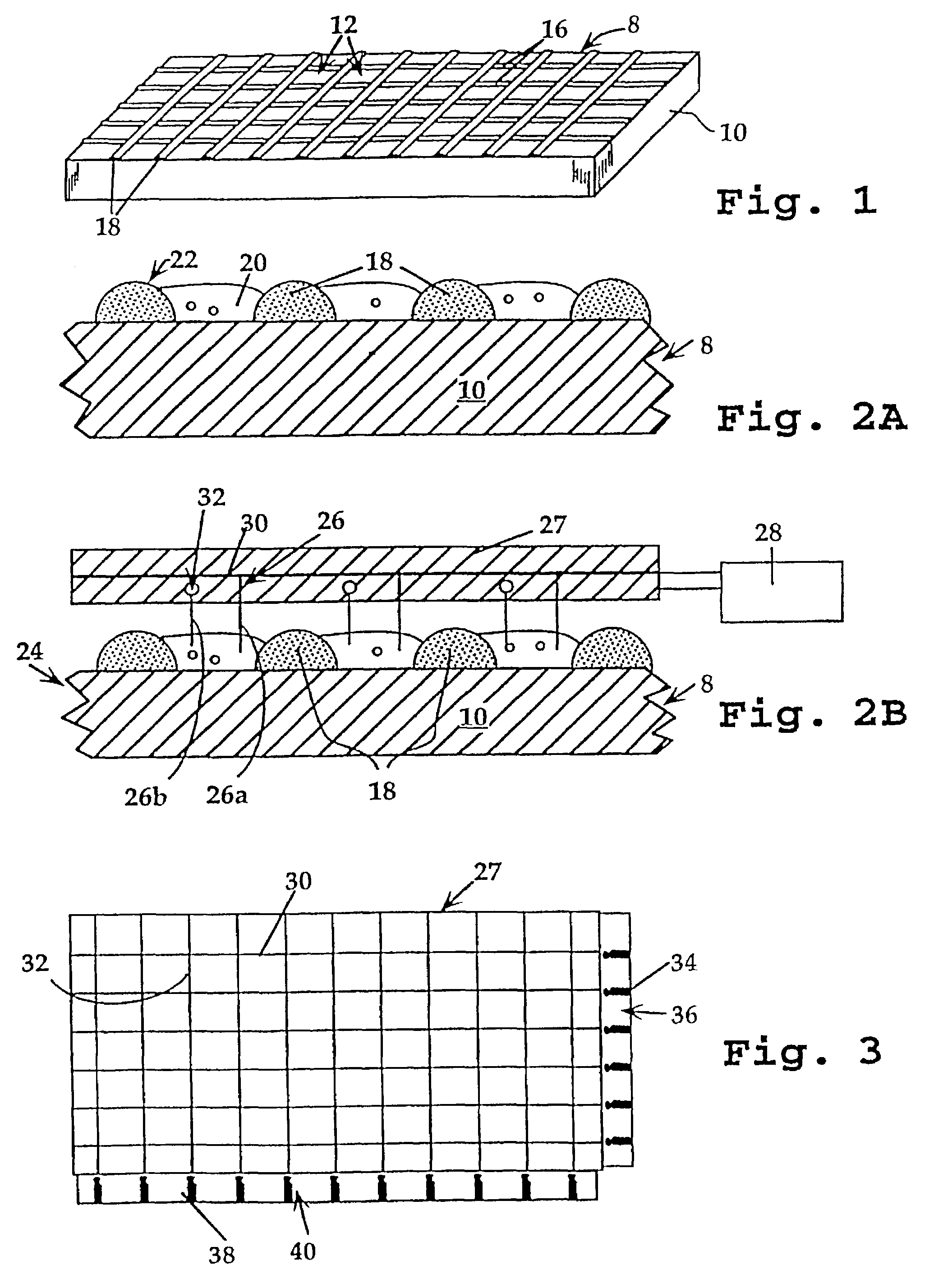
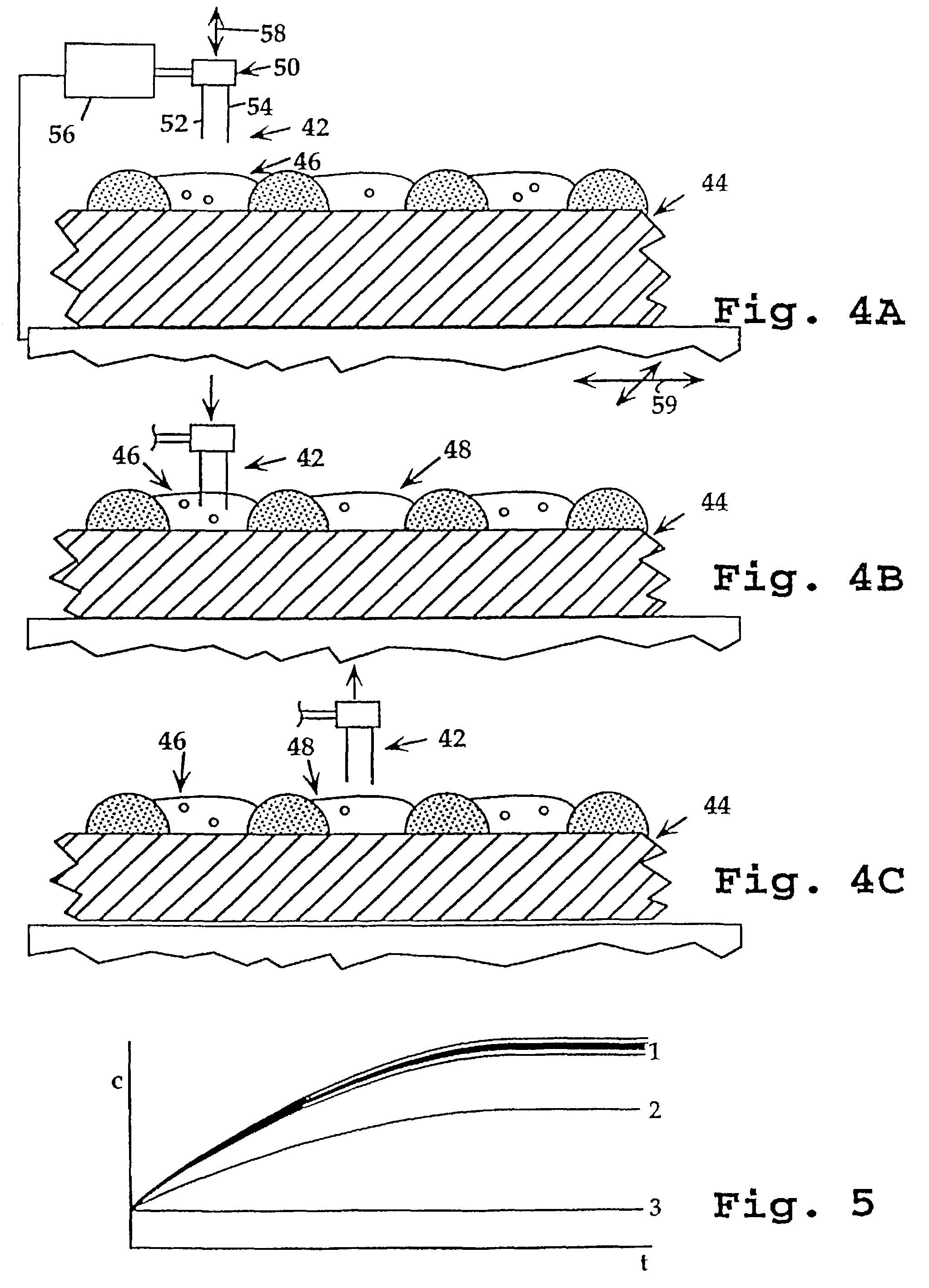
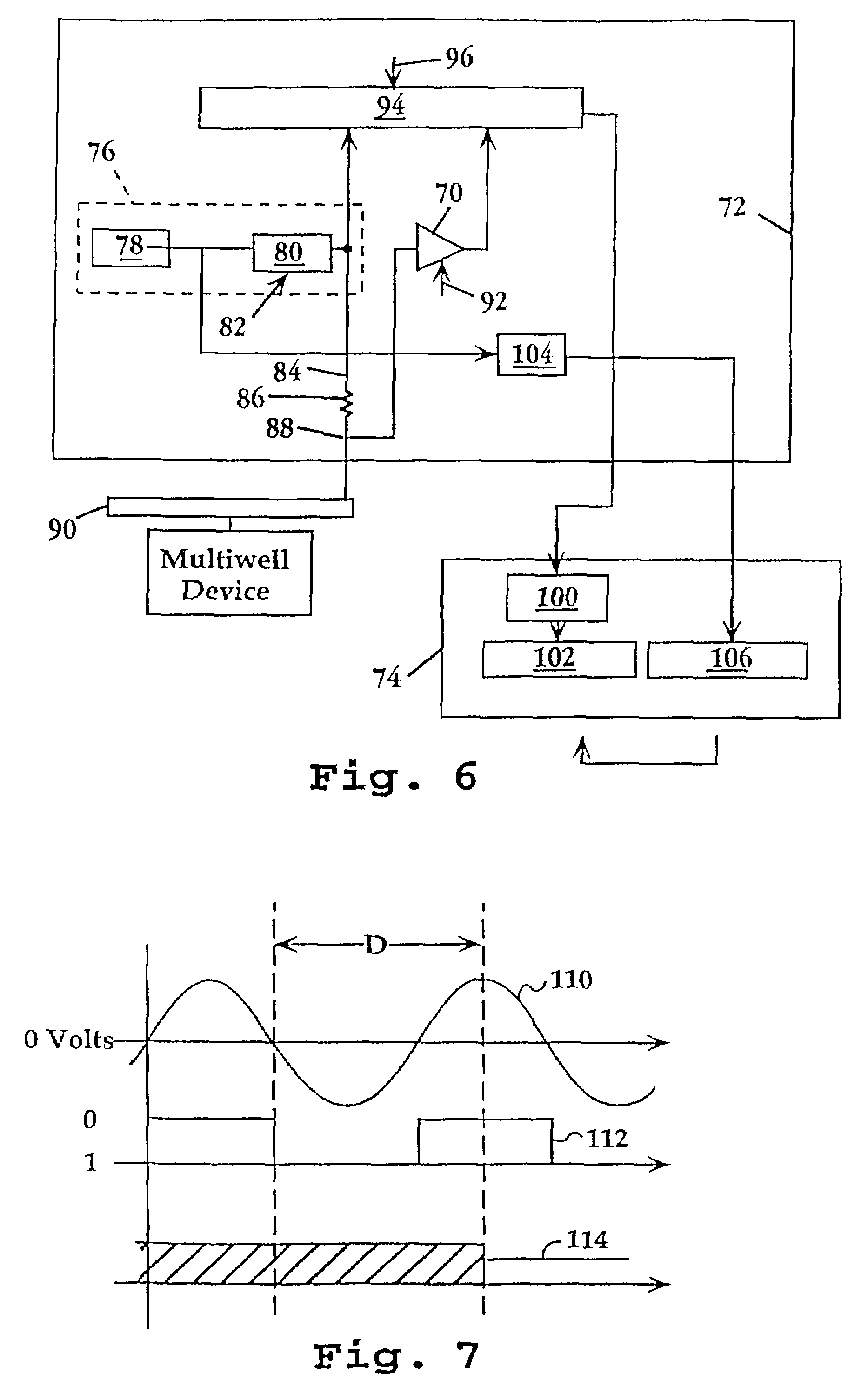
- A multiwell device with a high density of microwells and electrode pairs for measuring conductance using a low-voltage AC signal to monitor cell metabolic activity, allowing for the screening of large numbers of compounds on target cells.
Environmental Impact and Sustainability of Electrocaloric Cooling Systems
The environmental impact of electrocaloric cooling systems represents a critical consideration in their development and deployment. Compared to conventional vapor-compression refrigeration technologies, electrocaloric cooling offers significant environmental advantages due to the absence of harmful refrigerants. Traditional cooling systems typically utilize hydrofluorocarbons (HFCs) and hydrochlorofluorocarbons (HCFCs), which contribute substantially to global warming and ozone depletion when leaked into the atmosphere.
High-throughput screening methods for novel electrocaloric compounds directly influence the environmental footprint of resulting cooling technologies. By enabling the discovery of materials with enhanced electrocaloric properties, these screening approaches can improve system efficiency, thereby reducing energy consumption during operation. Current research indicates that optimized electrocaloric systems could potentially achieve 20-30% greater energy efficiency than conventional cooling technologies, translating to substantial reductions in greenhouse gas emissions associated with electricity generation.
The life cycle assessment (LCA) of electrocaloric cooling systems reveals additional sustainability benefits. The materials commonly screened for electrocaloric properties—including lead-free relaxor ferroelectrics and organic polymers—often have lower environmental impact during extraction and processing compared to the refrigerants and compressor components in traditional systems. However, certain high-performance electrocaloric materials contain rare earth elements or lead, which present their own environmental challenges regarding mining practices and end-of-life disposal.
Manufacturing processes for electrocaloric devices benefit from high-throughput screening by identifying compounds that can be synthesized through less energy-intensive methods. This screening-guided approach to materials selection can reduce the embodied energy in device fabrication by an estimated 15-25%, according to recent industry analyses. Additionally, the solid-state nature of electrocaloric cooling eliminates the risk of refrigerant leakage during operation and maintenance, addressing a major environmental liability of conventional cooling technologies.
End-of-life considerations for electrocaloric cooling systems present both challenges and opportunities. The recyclability of electrocaloric compounds varies significantly based on composition, with some materials being readily recoverable while others require specialized processing. High-throughput screening methodologies are increasingly incorporating recyclability and recoverability metrics to identify compounds that maintain performance while improving end-of-life sustainability profiles.
Regulatory frameworks worldwide are beginning to recognize the environmental advantages of alternative cooling technologies like electrocaloric systems. The Kigali Amendment to the Montreal Protocol specifically targets the phase-down of HFCs, creating policy incentives for the development and adoption of environmentally superior cooling technologies. This regulatory landscape enhances the market potential for electrocaloric cooling systems identified through advanced screening methods.
High-throughput screening methods for novel electrocaloric compounds directly influence the environmental footprint of resulting cooling technologies. By enabling the discovery of materials with enhanced electrocaloric properties, these screening approaches can improve system efficiency, thereby reducing energy consumption during operation. Current research indicates that optimized electrocaloric systems could potentially achieve 20-30% greater energy efficiency than conventional cooling technologies, translating to substantial reductions in greenhouse gas emissions associated with electricity generation.
The life cycle assessment (LCA) of electrocaloric cooling systems reveals additional sustainability benefits. The materials commonly screened for electrocaloric properties—including lead-free relaxor ferroelectrics and organic polymers—often have lower environmental impact during extraction and processing compared to the refrigerants and compressor components in traditional systems. However, certain high-performance electrocaloric materials contain rare earth elements or lead, which present their own environmental challenges regarding mining practices and end-of-life disposal.
Manufacturing processes for electrocaloric devices benefit from high-throughput screening by identifying compounds that can be synthesized through less energy-intensive methods. This screening-guided approach to materials selection can reduce the embodied energy in device fabrication by an estimated 15-25%, according to recent industry analyses. Additionally, the solid-state nature of electrocaloric cooling eliminates the risk of refrigerant leakage during operation and maintenance, addressing a major environmental liability of conventional cooling technologies.
End-of-life considerations for electrocaloric cooling systems present both challenges and opportunities. The recyclability of electrocaloric compounds varies significantly based on composition, with some materials being readily recoverable while others require specialized processing. High-throughput screening methodologies are increasingly incorporating recyclability and recoverability metrics to identify compounds that maintain performance while improving end-of-life sustainability profiles.
Regulatory frameworks worldwide are beginning to recognize the environmental advantages of alternative cooling technologies like electrocaloric systems. The Kigali Amendment to the Montreal Protocol specifically targets the phase-down of HFCs, creating policy incentives for the development and adoption of environmentally superior cooling technologies. This regulatory landscape enhances the market potential for electrocaloric cooling systems identified through advanced screening methods.
Scalability and Manufacturing Considerations for Novel Electrocaloric Compounds
The scalability of novel electrocaloric compounds from laboratory discovery to commercial manufacturing represents a critical challenge in the development of electrocaloric cooling technologies. Current high-throughput screening methods have successfully identified promising materials, but transitioning these discoveries to mass production requires careful consideration of multiple manufacturing factors.
Material synthesis processes for electrocaloric compounds must be adapted for industrial-scale production while maintaining the precise stoichiometry and crystalline structure that enable optimal electrocaloric performance. Traditional ceramic processing techniques such as solid-state reaction methods offer scalability advantages but often struggle to achieve the nanoscale homogeneity required for maximum electrocaloric effect. Solution-based methods like sol-gel processing provide better compositional control but present challenges in scaling to commercial volumes.
Thin film deposition techniques, including physical vapor deposition and chemical vapor deposition, have demonstrated excellent results for producing high-performance electrocaloric materials in laboratory settings. However, these approaches face significant hurdles in scaling to the large surface areas needed for commercial cooling applications. Recent advances in roll-to-roll processing of functional thin films show promise for overcoming these limitations.
Cost considerations significantly impact manufacturing strategy selection. High-performance electrocaloric materials often contain expensive rare earth elements or precious metals. Material substitution strategies and recycling processes must be developed to ensure economic viability at scale. Additionally, process optimization to reduce energy consumption during manufacturing is essential for both cost reduction and environmental sustainability.
Quality control systems for mass-produced electrocaloric compounds require development of standardized testing protocols and in-line monitoring techniques. The electrocaloric effect is highly sensitive to material defects and compositional variations, necessitating robust quality assurance methods throughout the manufacturing process. Advanced characterization techniques such as automated X-ray diffraction and thermal imaging must be adapted for production environments.
Integration challenges between material production and device assembly represent another critical consideration. The interface between electrocaloric materials and heat exchange components significantly impacts overall system performance. Manufacturing processes must account for these integration requirements, potentially through co-fabrication approaches or specialized surface treatments to optimize thermal contact.
Regulatory compliance and environmental considerations also influence manufacturing strategy. Many high-performance electrocaloric compounds contain elements subject to supply chain restrictions or environmental regulations. Sustainable manufacturing approaches that minimize waste generation and energy consumption will be essential for commercial viability in increasingly regulated markets.
Material synthesis processes for electrocaloric compounds must be adapted for industrial-scale production while maintaining the precise stoichiometry and crystalline structure that enable optimal electrocaloric performance. Traditional ceramic processing techniques such as solid-state reaction methods offer scalability advantages but often struggle to achieve the nanoscale homogeneity required for maximum electrocaloric effect. Solution-based methods like sol-gel processing provide better compositional control but present challenges in scaling to commercial volumes.
Thin film deposition techniques, including physical vapor deposition and chemical vapor deposition, have demonstrated excellent results for producing high-performance electrocaloric materials in laboratory settings. However, these approaches face significant hurdles in scaling to the large surface areas needed for commercial cooling applications. Recent advances in roll-to-roll processing of functional thin films show promise for overcoming these limitations.
Cost considerations significantly impact manufacturing strategy selection. High-performance electrocaloric materials often contain expensive rare earth elements or precious metals. Material substitution strategies and recycling processes must be developed to ensure economic viability at scale. Additionally, process optimization to reduce energy consumption during manufacturing is essential for both cost reduction and environmental sustainability.
Quality control systems for mass-produced electrocaloric compounds require development of standardized testing protocols and in-line monitoring techniques. The electrocaloric effect is highly sensitive to material defects and compositional variations, necessitating robust quality assurance methods throughout the manufacturing process. Advanced characterization techniques such as automated X-ray diffraction and thermal imaging must be adapted for production environments.
Integration challenges between material production and device assembly represent another critical consideration. The interface between electrocaloric materials and heat exchange components significantly impacts overall system performance. Manufacturing processes must account for these integration requirements, potentially through co-fabrication approaches or specialized surface treatments to optimize thermal contact.
Regulatory compliance and environmental considerations also influence manufacturing strategy. Many high-performance electrocaloric compounds contain elements subject to supply chain restrictions or environmental regulations. Sustainable manufacturing approaches that minimize waste generation and energy consumption will be essential for commercial viability in increasingly regulated markets.
Unlock deeper insights with PatSnap Eureka Quick Research — get a full tech report to explore trends and direct your research. Try now!
Generate Your Research Report Instantly with AI Agent
Supercharge your innovation with PatSnap Eureka AI Agent Platform!