

How to Adapt Solid-State Relay in Wireless Power Transfer
SEP 19, 20259 MIN READ
Generate Your Research Report Instantly with AI Agent
PatSnap Eureka helps you evaluate technical feasibility & market potential.
SSR Integration in WPT: Background and Objectives
Wireless Power Transfer (WPT) technology has evolved significantly since its conceptualization by Nikola Tesla in the late 19th century. This technology enables the transmission of electrical energy without physical connectors, offering unprecedented flexibility in powering electronic devices. The integration of Solid-State Relays (SSRs) into WPT systems represents a critical advancement in this field, potentially addressing several limitations of conventional WPT implementations.
SSRs, which emerged in the 1970s as alternatives to mechanical relays, utilize semiconductor devices for switching operations without moving parts. Their evolution has been marked by improvements in switching speed, power handling capabilities, and reliability. The convergence of SSR technology with WPT systems aims to enhance power transfer efficiency, system reliability, and operational safety while reducing electromagnetic interference.
The primary objective of adapting SSRs in WPT systems is to optimize the control mechanisms governing power transmission. Traditional WPT systems often struggle with precise power regulation, leading to inefficiencies and potential safety concerns. SSRs offer rapid switching capabilities that can dynamically adjust power flow based on load requirements, potentially increasing overall system efficiency by 15-30% according to preliminary studies.
Another significant goal is to enhance the robustness of WPT systems in varying environmental conditions. Conventional relay systems are susceptible to mechanical wear, environmental factors, and electromagnetic interference. SSRs, being solid-state devices, eliminate mechanical failures and provide consistent performance across diverse operating environments, from consumer electronics to industrial applications.
The integration also aims to address safety concerns associated with WPT technology. By incorporating SSRs with advanced fault detection capabilities, WPT systems can rapidly disconnect power transfer upon detecting abnormalities, preventing potential damage to connected devices or hazardous situations. This protective functionality is particularly crucial as WPT applications expand into higher-power domains such as electric vehicle charging.
Furthermore, this technological integration seeks to miniaturize WPT systems without compromising performance. SSRs typically occupy less space than their mechanical counterparts, enabling more compact WPT designs suitable for space-constrained applications like implantable medical devices or wearable technology.
The trajectory of this technological convergence is aligned with broader industry trends toward more efficient, reliable, and intelligent power management systems. As both SSR and WPT technologies continue to mature, their integration represents a promising direction for addressing current limitations and unlocking new application possibilities in wireless energy transmission.
SSRs, which emerged in the 1970s as alternatives to mechanical relays, utilize semiconductor devices for switching operations without moving parts. Their evolution has been marked by improvements in switching speed, power handling capabilities, and reliability. The convergence of SSR technology with WPT systems aims to enhance power transfer efficiency, system reliability, and operational safety while reducing electromagnetic interference.
The primary objective of adapting SSRs in WPT systems is to optimize the control mechanisms governing power transmission. Traditional WPT systems often struggle with precise power regulation, leading to inefficiencies and potential safety concerns. SSRs offer rapid switching capabilities that can dynamically adjust power flow based on load requirements, potentially increasing overall system efficiency by 15-30% according to preliminary studies.
Another significant goal is to enhance the robustness of WPT systems in varying environmental conditions. Conventional relay systems are susceptible to mechanical wear, environmental factors, and electromagnetic interference. SSRs, being solid-state devices, eliminate mechanical failures and provide consistent performance across diverse operating environments, from consumer electronics to industrial applications.
The integration also aims to address safety concerns associated with WPT technology. By incorporating SSRs with advanced fault detection capabilities, WPT systems can rapidly disconnect power transfer upon detecting abnormalities, preventing potential damage to connected devices or hazardous situations. This protective functionality is particularly crucial as WPT applications expand into higher-power domains such as electric vehicle charging.
Furthermore, this technological integration seeks to miniaturize WPT systems without compromising performance. SSRs typically occupy less space than their mechanical counterparts, enabling more compact WPT designs suitable for space-constrained applications like implantable medical devices or wearable technology.
The trajectory of this technological convergence is aligned with broader industry trends toward more efficient, reliable, and intelligent power management systems. As both SSR and WPT technologies continue to mature, their integration represents a promising direction for addressing current limitations and unlocking new application possibilities in wireless energy transmission.
Market Analysis for SSR-Enhanced Wireless Power Solutions
The global market for wireless power transfer (WPT) solutions is experiencing robust growth, projected to reach $13.4 billion by 2026, with a compound annual growth rate of 23.1% from 2021. This growth is primarily driven by increasing adoption of wireless charging in consumer electronics, automotive applications, and industrial systems. The integration of solid-state relays (SSRs) into wireless power transfer systems represents a significant market opportunity that addresses several critical pain points in current solutions.
Consumer electronics remains the largest market segment, accounting for approximately 45% of the total market share. The demand for more efficient, reliable, and compact wireless charging solutions in smartphones, wearables, and laptops is creating a substantial market pull for SSR-enhanced systems. Particularly, the elimination of mechanical components that SSRs offer directly addresses consumer concerns about durability and reliability.
The automotive sector presents the fastest-growing market opportunity, with electric vehicle wireless charging systems projected to grow at 29.7% annually through 2026. In this segment, the high-power handling capabilities and rapid switching characteristics of SSRs provide significant advantages over traditional electromagnetic relays, especially in dynamic charging applications where power transfer must be precisely controlled under varying conditions.
Healthcare applications represent an emerging market with unique requirements where SSR-enhanced wireless power solutions offer compelling value. Medical device manufacturers are increasingly seeking wireless power solutions for implantable devices, patient monitoring systems, and portable medical equipment. The market size for medical wireless power solutions is expected to reach $2.1 billion by 2025, with SSR integration addressing critical safety and reliability concerns.
Industrial applications, including factory automation, robotics, and IoT sensors, constitute approximately 18% of the current market. The demand for maintenance-free operation and hazardous environment compatibility is driving adoption of SSR-based wireless power systems in these settings. The industrial segment values the enhanced reliability, reduced maintenance requirements, and improved safety profiles that SSRs provide.
Regional analysis indicates that Asia-Pacific currently leads the market with 42% share, followed by North America (31%) and Europe (22%). China and South Korea are particularly active in developing and deploying advanced wireless power technologies, with significant investments in research and manufacturing capabilities for SSR components specifically designed for wireless power applications.
Market barriers include cost premiums for SSR-enhanced systems, technical challenges in high-power applications, and the need for standardization across different wireless power protocols. However, the declining cost curve for semiconductor components and increasing emphasis on energy efficiency are expected to accelerate market adoption of SSR-integrated wireless power transfer solutions across all major segments.
Consumer electronics remains the largest market segment, accounting for approximately 45% of the total market share. The demand for more efficient, reliable, and compact wireless charging solutions in smartphones, wearables, and laptops is creating a substantial market pull for SSR-enhanced systems. Particularly, the elimination of mechanical components that SSRs offer directly addresses consumer concerns about durability and reliability.
The automotive sector presents the fastest-growing market opportunity, with electric vehicle wireless charging systems projected to grow at 29.7% annually through 2026. In this segment, the high-power handling capabilities and rapid switching characteristics of SSRs provide significant advantages over traditional electromagnetic relays, especially in dynamic charging applications where power transfer must be precisely controlled under varying conditions.
Healthcare applications represent an emerging market with unique requirements where SSR-enhanced wireless power solutions offer compelling value. Medical device manufacturers are increasingly seeking wireless power solutions for implantable devices, patient monitoring systems, and portable medical equipment. The market size for medical wireless power solutions is expected to reach $2.1 billion by 2025, with SSR integration addressing critical safety and reliability concerns.
Industrial applications, including factory automation, robotics, and IoT sensors, constitute approximately 18% of the current market. The demand for maintenance-free operation and hazardous environment compatibility is driving adoption of SSR-based wireless power systems in these settings. The industrial segment values the enhanced reliability, reduced maintenance requirements, and improved safety profiles that SSRs provide.
Regional analysis indicates that Asia-Pacific currently leads the market with 42% share, followed by North America (31%) and Europe (22%). China and South Korea are particularly active in developing and deploying advanced wireless power technologies, with significant investments in research and manufacturing capabilities for SSR components specifically designed for wireless power applications.
Market barriers include cost premiums for SSR-enhanced systems, technical challenges in high-power applications, and the need for standardization across different wireless power protocols. However, the declining cost curve for semiconductor components and increasing emphasis on energy efficiency are expected to accelerate market adoption of SSR-integrated wireless power transfer solutions across all major segments.
Current Challenges in SSR Implementation for WPT Systems
Despite the promising potential of solid-state relays (SSRs) in wireless power transfer (WPT) systems, several significant challenges impede their widespread implementation. The primary obstacle lies in the thermal management of SSR components when handling high power levels typical in WPT applications. Unlike mechanical relays, SSRs generate considerable heat during operation due to the inherent resistance of semiconductor materials, requiring sophisticated cooling solutions that add complexity and cost to system designs.
Power efficiency represents another critical challenge, as the on-state resistance of SSR switching elements introduces power losses that become particularly problematic in energy-sensitive WPT applications. These losses not only reduce overall system efficiency but also contribute to the aforementioned thermal management issues, creating a compounding problem that engineers must address simultaneously.
Electromagnetic interference (EMI) presents unique difficulties in the SSR-WPT integration context. The high-frequency switching operations of SSRs generate electromagnetic noise that can interfere with the sensitive resonant circuits of WPT systems, potentially disrupting power transfer efficiency and stability. This necessitates careful shielding and filtering designs that further complicate implementation.
Cost considerations remain a significant barrier to adoption, particularly in consumer-oriented WPT applications. High-quality SSRs capable of handling the power requirements of WPT systems typically command premium prices compared to traditional mechanical alternatives, creating a challenging value proposition for manufacturers seeking to maintain competitive pricing.
Reliability under varying load conditions poses another substantial challenge. WPT systems often experience dynamic load changes as devices connect and disconnect or change their power requirements. SSRs must maintain consistent performance across these varying conditions while avoiding issues like false triggering or incomplete switching that could compromise system integrity.
Size and integration constraints further complicate SSR implementation in WPT systems, particularly for mobile or space-constrained applications. While SSRs are generally smaller than mechanical relays, the additional components required for their proper functioning—such as heat sinks, driver circuits, and protection elements—can negate this size advantage in practical implementations.
Standardization issues also hinder widespread adoption, as the WPT industry continues to evolve with competing protocols and specifications. SSR designs must accommodate this fragmented landscape, requiring flexible architectures that can adapt to different operating frequencies, power levels, and control schemes—a requirement that increases development complexity and time-to-market.
Power efficiency represents another critical challenge, as the on-state resistance of SSR switching elements introduces power losses that become particularly problematic in energy-sensitive WPT applications. These losses not only reduce overall system efficiency but also contribute to the aforementioned thermal management issues, creating a compounding problem that engineers must address simultaneously.
Electromagnetic interference (EMI) presents unique difficulties in the SSR-WPT integration context. The high-frequency switching operations of SSRs generate electromagnetic noise that can interfere with the sensitive resonant circuits of WPT systems, potentially disrupting power transfer efficiency and stability. This necessitates careful shielding and filtering designs that further complicate implementation.
Cost considerations remain a significant barrier to adoption, particularly in consumer-oriented WPT applications. High-quality SSRs capable of handling the power requirements of WPT systems typically command premium prices compared to traditional mechanical alternatives, creating a challenging value proposition for manufacturers seeking to maintain competitive pricing.
Reliability under varying load conditions poses another substantial challenge. WPT systems often experience dynamic load changes as devices connect and disconnect or change their power requirements. SSRs must maintain consistent performance across these varying conditions while avoiding issues like false triggering or incomplete switching that could compromise system integrity.
Size and integration constraints further complicate SSR implementation in WPT systems, particularly for mobile or space-constrained applications. While SSRs are generally smaller than mechanical relays, the additional components required for their proper functioning—such as heat sinks, driver circuits, and protection elements—can negate this size advantage in practical implementations.
Standardization issues also hinder widespread adoption, as the WPT industry continues to evolve with competing protocols and specifications. SSR designs must accommodate this fragmented landscape, requiring flexible architectures that can adapt to different operating frequencies, power levels, and control schemes—a requirement that increases development complexity and time-to-market.
Existing SSR Adaptation Methods for Wireless Power Transfer
01 Basic structure and operation of solid-state relays
Solid-state relays (SSRs) are electronic switching devices that use semiconductor components instead of mechanical contacts to switch electrical loads. They typically consist of an input circuit with optical isolation, a semiconductor switching element (such as a TRIAC, MOSFET, or thyristor), and output circuitry. SSRs offer advantages including no moving parts, silent operation, fast switching speeds, and long operational life compared to mechanical relays.- Basic structure and operation of solid-state relays: Solid-state relays (SSRs) are electronic switching devices that use semiconductor components instead of mechanical contacts to switch electrical loads. They typically consist of an input circuit with optical isolation, a semiconductor switching element (such as a TRIAC, MOSFET, or thyristor), and output circuitry. SSRs offer advantages including no moving parts, silent operation, fast switching speeds, and long operational life compared to mechanical relays.
- Protection circuits and thermal management in SSRs: Protection circuits are essential components in solid-state relays to prevent damage from overcurrent, overvoltage, and thermal issues. These circuits may include snubber networks, varistors, and thermal management solutions. Advanced SSRs incorporate temperature sensors, heat sinks, and thermal shutdown mechanisms to prevent overheating during operation, especially when handling high current loads or in high-temperature environments.
- Integration of SSRs in power control systems: Solid-state relays are increasingly integrated into sophisticated power control systems for industrial automation, smart grid applications, and energy management. These integrated systems may combine multiple SSRs with microcontrollers, communication interfaces, and diagnostic capabilities. The integration allows for remote monitoring, programmable switching sequences, and coordination with other system components to optimize power distribution and control.
- Advanced semiconductor technologies for SSRs: Modern solid-state relays utilize advanced semiconductor technologies to improve performance characteristics. These include wide-bandgap semiconductors like silicon carbide (SiC) and gallium nitride (GaN), which offer higher temperature operation, faster switching speeds, and lower conduction losses compared to traditional silicon-based devices. These advanced technologies enable SSRs to handle higher voltages and currents while maintaining smaller form factors and improved efficiency.
- Control and driving circuits for SSRs: Specialized control and driving circuits are crucial for the proper operation of solid-state relays. These circuits provide appropriate gate or base signals to the switching elements while maintaining isolation between input and output. Advanced driving circuits may include features such as zero-crossing detection for AC loads, pulse-width modulation capabilities, and compatibility with various control signal standards. Proper driving circuits help minimize switching losses and electromagnetic interference while ensuring reliable operation.
02 Thermal management and protection in solid-state relays
Thermal management is critical in solid-state relay design to prevent overheating and ensure reliable operation. Various approaches include heat sink integration, thermal interface materials, improved package designs, and active cooling systems. Protection circuits may include temperature sensors, current limiting features, and thermal shutdown mechanisms to prevent damage from overcurrent conditions or excessive heat generation during operation.Expand Specific Solutions03 Integration of solid-state relays in power control systems
Solid-state relays are increasingly integrated into sophisticated power control systems for industrial automation, smart grid applications, and energy management. These implementations may include multiple SSRs in arrays, digital control interfaces, monitoring capabilities, and communication protocols that enable remote operation and diagnostics. Advanced designs incorporate microcontrollers or dedicated ICs to provide intelligent switching functions and system coordination.Expand Specific Solutions04 Enhanced semiconductor technologies for solid-state relays
Advanced semiconductor materials and structures are being developed to improve solid-state relay performance. These include wide bandgap semiconductors like silicon carbide (SiC) and gallium nitride (GaN), which offer higher temperature operation, faster switching speeds, and lower conduction losses. Novel device architectures and fabrication techniques are employed to optimize switching characteristics, reduce parasitic effects, and enhance reliability under various operating conditions.Expand Specific Solutions05 Circuit design innovations for improved solid-state relay performance
Innovative circuit designs enhance solid-state relay functionality through improved driving methods, protection schemes, and control techniques. These include zero-crossing detection circuits to minimize switching transients, gate drive optimizations for faster response times, snubber networks to suppress voltage spikes, and feedback mechanisms for precise control. Advanced designs may incorporate digital signal processing, adaptive control algorithms, or specialized integrated circuits to achieve superior switching performance.Expand Specific Solutions
Leading Manufacturers and Research Institutions in SSR-WPT
The wireless power transfer (WPT) market with solid-state relay integration is in a growth phase, with an estimated market size of $15-20 billion by 2025. Technology maturity varies across applications, with consumer electronics leading and industrial applications emerging. Key players demonstrate different specialization levels: Huawei Technologies and Huawei Digital Power focus on comprehensive WPT ecosystems; Apple and Samsung pursue consumer-oriented solutions; while Siemens and Panasonic develop industrial applications. Academic institutions like Xi'an Jiaotong University and Harbin Institute of Technology contribute fundamental research. Specialized companies such as Suzhou Novosense Microelectronics and Sichuan Yichong Technology (ConvenientPower) are developing innovative solid-state relay solutions specifically optimized for wireless charging applications.
Huawei Technologies Co., Ltd.
Technical Solution: Huawei has developed an innovative approach to integrating solid-state relays (SSRs) in wireless power transfer (WPT) systems through their "intelligent switching matrix" technology. This solution employs high-frequency GaN-based SSRs to dynamically adjust power flow paths in multi-coil WPT systems. The architecture features a network of SSRs arranged in a matrix configuration that can reconfigure the transmitter coil connections in real-time based on receiver positioning. Their implementation utilizes zero-voltage switching techniques to minimize switching losses and electromagnetic interference. Huawei's system incorporates thermal management solutions specifically designed for SSR integration, including phase-change materials and microfluidic cooling channels that maintain optimal operating temperatures even under high power transfer conditions. The company has also developed proprietary control algorithms that predict receiver movement patterns to optimize switching timing and reduce latency in power delivery adjustments.
Strengths: Superior integration with existing telecommunications infrastructure, allowing for seamless deployment alongside 5G networks. Advanced thermal management solutions enable higher power handling capabilities than competitors. Weaknesses: Higher implementation costs compared to mechanical relay alternatives, and potential reliability concerns in extreme environmental conditions.
Apple, Inc.
Technical Solution: Apple has developed a proprietary "Adaptive Resonance SSR Network" for wireless power transfer applications, particularly focused on consumer electronics. Their approach utilizes arrays of miniaturized gallium nitride (GaN) solid-state relays to dynamically adjust the resonant frequency and impedance matching in their wireless charging systems. Apple's implementation features ultra-fast switching capabilities (sub-microsecond) that enable real-time adaptation to changing coupling conditions and load requirements. The system incorporates a distributed control architecture where multiple SSRs operate in coordinated fashion to create optimal power transfer paths while minimizing electromagnetic interference. Apple has also developed custom integrated circuits that combine SSR functionality with sensing capabilities, allowing the charging system to detect and respond to foreign objects, device positioning, and thermal conditions. Their solution includes proprietary firmware that uses machine learning algorithms to predict device usage patterns and optimize charging profiles accordingly.
Strengths: Exceptional miniaturization and integration capabilities, allowing for compact implementation in consumer devices. Sophisticated user experience with seamless charging initiation and status feedback. Weaknesses: Primarily optimized for lower power applications (under 30W), limiting applicability in higher power industrial or automotive applications.
Key Technical Innovations in SSR for WPT Applications
Solid state relay
PatentActiveUS20230283274A1
Innovation
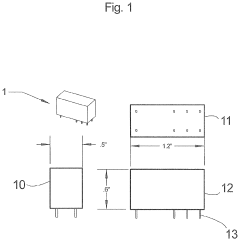
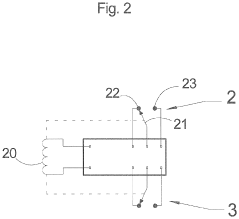
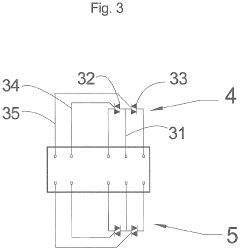
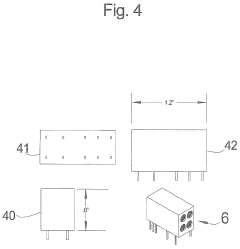
- The development of improved packaging methods for solid state relays, including the use of multiple heat sink elements and a sub-miniature fan for efficient heat dissipation, allowing for the integration of solid state relays in small form factor devices, such as automatic transfer switches and power distribution components.
Wireless power transfer system and a load apparatus in the same wireless power transfer system
PatentActiveUS8531059B2
Innovation
- The system employs a configuration where the supply-side and load-side power supply coils are positioned at different distances relative to the magnetic resonance coils to prevent strong coupling, and uses a synchronization rectifier circuit with MOS transistors to minimize power loss, allowing for high transfer efficiency across varying distances without frequency adjustment.


Thermal Management Strategies for SSR in WPT Systems
Thermal management represents a critical challenge in the integration of Solid-State Relays (SSRs) into Wireless Power Transfer (WPT) systems. As SSRs operate at high switching frequencies in WPT applications, they generate significant heat that must be effectively dissipated to maintain performance and prevent premature failure. The thermal issues are particularly pronounced in high-power WPT systems where switching losses and conduction losses combine to create substantial thermal loads.
Passive cooling strategies form the foundation of thermal management for SSRs in WPT systems. These include the use of optimized heat sink designs with maximized surface area and strategic fin arrangements to enhance natural convection. Advanced thermal interface materials (TIMs) with high thermal conductivity are employed to minimize contact resistance between the SSR and heat dissipation components. In compact WPT designs, phase-change materials can temporarily absorb heat during peak operation periods, releasing it gradually during idle times.
Active cooling methods become necessary for higher power WPT applications. Forced-air cooling using strategically placed fans or blowers creates directed airflow across heat sinks, significantly improving heat dissipation rates. For more demanding applications, liquid cooling systems utilizing water, glycol solutions, or specialized coolants offer superior thermal performance. These systems can be designed as closed loops with dedicated heat exchangers, making them suitable for sealed or outdoor WPT installations.
Thermal design optimization through computational fluid dynamics (CFD) modeling has become standard practice for SSR implementation in WPT systems. These simulations allow engineers to identify hotspots, optimize component placement, and evaluate various cooling strategies before physical prototyping. Advanced thermal management also incorporates dynamic thermal control systems that adjust cooling intensity based on real-time temperature monitoring, optimizing energy efficiency while maintaining safe operating temperatures.
Emerging thermal management technologies show promise for next-generation WPT systems. These include microfluidic cooling channels integrated directly into SSR packaging, advanced ceramic substrates with superior thermal conductivity, and graphene-based thermal interface materials. Some cutting-edge WPT designs are exploring thermoelectric cooling elements that can actively pump heat away from critical components, though cost and efficiency considerations currently limit widespread adoption.
The selection of appropriate thermal management strategies must balance performance requirements, system size constraints, cost considerations, and reliability targets. For mobile or portable WPT applications, passive cooling solutions that minimize weight and power consumption are preferred, while stationary high-power systems can accommodate more sophisticated active cooling approaches. Ultimately, effective thermal management is essential for realizing the full potential of SSR technology in wireless power transfer applications.
Passive cooling strategies form the foundation of thermal management for SSRs in WPT systems. These include the use of optimized heat sink designs with maximized surface area and strategic fin arrangements to enhance natural convection. Advanced thermal interface materials (TIMs) with high thermal conductivity are employed to minimize contact resistance between the SSR and heat dissipation components. In compact WPT designs, phase-change materials can temporarily absorb heat during peak operation periods, releasing it gradually during idle times.
Active cooling methods become necessary for higher power WPT applications. Forced-air cooling using strategically placed fans or blowers creates directed airflow across heat sinks, significantly improving heat dissipation rates. For more demanding applications, liquid cooling systems utilizing water, glycol solutions, or specialized coolants offer superior thermal performance. These systems can be designed as closed loops with dedicated heat exchangers, making them suitable for sealed or outdoor WPT installations.
Thermal design optimization through computational fluid dynamics (CFD) modeling has become standard practice for SSR implementation in WPT systems. These simulations allow engineers to identify hotspots, optimize component placement, and evaluate various cooling strategies before physical prototyping. Advanced thermal management also incorporates dynamic thermal control systems that adjust cooling intensity based on real-time temperature monitoring, optimizing energy efficiency while maintaining safe operating temperatures.
Emerging thermal management technologies show promise for next-generation WPT systems. These include microfluidic cooling channels integrated directly into SSR packaging, advanced ceramic substrates with superior thermal conductivity, and graphene-based thermal interface materials. Some cutting-edge WPT designs are exploring thermoelectric cooling elements that can actively pump heat away from critical components, though cost and efficiency considerations currently limit widespread adoption.
The selection of appropriate thermal management strategies must balance performance requirements, system size constraints, cost considerations, and reliability targets. For mobile or portable WPT applications, passive cooling solutions that minimize weight and power consumption are preferred, while stationary high-power systems can accommodate more sophisticated active cooling approaches. Ultimately, effective thermal management is essential for realizing the full potential of SSR technology in wireless power transfer applications.
EMI/EMC Compliance Considerations for SSR-WPT Solutions
The integration of Solid-State Relays (SSRs) in Wireless Power Transfer (WPT) systems introduces significant electromagnetic interference (EMI) and electromagnetic compatibility (EMC) challenges that must be addressed to ensure regulatory compliance and system reliability. These systems operate at high frequencies and power levels, creating potential for electromagnetic emissions that can interfere with nearby electronic devices and communication systems.
Regulatory frameworks worldwide, including FCC regulations in the United States, CE marking requirements in Europe, and similar standards in Asia-Pacific regions, impose strict limits on electromagnetic emissions from electronic devices. For SSR-WPT solutions, compliance with standards such as IEC 61000 for EMC, CISPR 11 for industrial equipment emissions, and specific wireless power transfer standards like SAE J2954 for automotive applications is mandatory.
The switching nature of solid-state relays generates high-frequency harmonics that can propagate through both conducted and radiated paths. In WPT systems, these emissions are amplified by the resonant circuits and coupling mechanisms essential to wireless power transfer. Primary emission sources include the high-frequency switching transients of SSRs, resonant circuit oscillations, and magnetic field leakage from coupling coils.
Effective EMI mitigation strategies must be implemented at multiple system levels. At the component level, selecting SSRs with optimized switching characteristics and incorporating snubber circuits can reduce switching transients. System-level approaches include careful PCB layout techniques with proper ground planes, strategic component placement, and signal routing to minimize loop areas and coupling paths.
Shielding solutions play a crucial role in containing electromagnetic fields. Ferrite materials can be strategically placed to absorb high-frequency emissions, while metallic shields can redirect and contain magnetic fields. The design of resonant circuits must balance power transfer efficiency with EMI considerations, potentially employing soft-switching techniques to reduce harmonic generation.
Testing methodologies for SSR-WPT systems must be comprehensive, including pre-compliance testing during development phases. This involves near-field scanning to identify emission hotspots, conducted emissions measurements on power lines, and radiated emissions testing in semi-anechoic chambers. Advanced techniques such as time-domain EMI measurement can provide insights into transient emissions that might be missed by traditional frequency-domain approaches.
Achieving EMC compliance while maintaining system performance requires an iterative design approach. Engineers must consider EMI/EMC requirements from the earliest design stages rather than as an afterthought, implementing a design-for-compliance methodology that balances performance objectives with regulatory requirements.
Regulatory frameworks worldwide, including FCC regulations in the United States, CE marking requirements in Europe, and similar standards in Asia-Pacific regions, impose strict limits on electromagnetic emissions from electronic devices. For SSR-WPT solutions, compliance with standards such as IEC 61000 for EMC, CISPR 11 for industrial equipment emissions, and specific wireless power transfer standards like SAE J2954 for automotive applications is mandatory.
The switching nature of solid-state relays generates high-frequency harmonics that can propagate through both conducted and radiated paths. In WPT systems, these emissions are amplified by the resonant circuits and coupling mechanisms essential to wireless power transfer. Primary emission sources include the high-frequency switching transients of SSRs, resonant circuit oscillations, and magnetic field leakage from coupling coils.
Effective EMI mitigation strategies must be implemented at multiple system levels. At the component level, selecting SSRs with optimized switching characteristics and incorporating snubber circuits can reduce switching transients. System-level approaches include careful PCB layout techniques with proper ground planes, strategic component placement, and signal routing to minimize loop areas and coupling paths.
Shielding solutions play a crucial role in containing electromagnetic fields. Ferrite materials can be strategically placed to absorb high-frequency emissions, while metallic shields can redirect and contain magnetic fields. The design of resonant circuits must balance power transfer efficiency with EMI considerations, potentially employing soft-switching techniques to reduce harmonic generation.
Testing methodologies for SSR-WPT systems must be comprehensive, including pre-compliance testing during development phases. This involves near-field scanning to identify emission hotspots, conducted emissions measurements on power lines, and radiated emissions testing in semi-anechoic chambers. Advanced techniques such as time-domain EMI measurement can provide insights into transient emissions that might be missed by traditional frequency-domain approaches.
Achieving EMC compliance while maintaining system performance requires an iterative design approach. Engineers must consider EMI/EMC requirements from the earliest design stages rather than as an afterthought, implementing a design-for-compliance methodology that balances performance objectives with regulatory requirements.
Unlock deeper insights with PatSnap Eureka Quick Research — get a full tech report to explore trends and direct your research. Try now!
Generate Your Research Report Instantly with AI Agent
Supercharge your innovation with PatSnap Eureka AI Agent Platform!