

How to Develop Durable Hall Effect Sensors for Marine Use
SEP 22, 20259 MIN READ
Generate Your Research Report Instantly with AI Agent
PatSnap Eureka helps you evaluate technical feasibility & market potential.
Marine Hall Effect Sensors Background and Objectives
Hall Effect sensors have evolved significantly since their discovery by Edwin Hall in 1879. Initially utilized in laboratory settings for magnetic field measurements, these sensors have progressively transitioned into industrial applications due to their non-contact measurement capabilities. In marine environments specifically, Hall Effect sensors have gained prominence over the past three decades as critical components in navigation systems, engine monitoring, and various control mechanisms aboard vessels.
The marine industry presents unique challenges for sensor technology due to the harsh operating conditions including saltwater exposure, extreme temperature variations, high humidity, and constant vibration. Traditional sensor technologies often fail prematurely in these environments, leading to costly maintenance and potential safety hazards. The evolution of Hall Effect sensors for marine applications has therefore focused on enhancing durability while maintaining measurement accuracy.
Recent technological advancements have introduced improved encapsulation methods, corrosion-resistant materials, and enhanced signal processing capabilities that have significantly extended sensor lifespan in marine applications. The integration of these sensors with digital interfaces and smart diagnostic features represents the current frontier of development, allowing for predictive maintenance and improved system reliability.
The primary objective of developing durable Hall Effect sensors for marine use is to create sensing solutions that can withstand the corrosive marine environment while providing consistent, accurate measurements throughout an extended operational lifetime of at least 10 years without maintenance. This represents a significant improvement over current industry standards of 3-5 years for marine-grade sensors.
Secondary objectives include reducing power consumption to support battery-operated and energy-efficient marine systems, miniaturizing sensor packages to accommodate space constraints in modern marine equipment, and improving electromagnetic interference (EMI) resistance to ensure reliable operation alongside other electronic systems aboard vessels.
From a technical perspective, achieving these objectives requires addressing several key challenges: developing hermetic sealing technologies that prevent moisture ingress while allowing for thermal expansion, creating corrosion-resistant electrical connections that maintain low contact resistance over time, and implementing advanced signal conditioning circuits that can compensate for temperature drift and aging effects.
The successful development of more durable Hall Effect sensors for marine applications would significantly impact multiple sectors including commercial shipping, naval operations, offshore energy production, and recreational boating. The potential for extended maintenance intervals and improved reliability directly translates to reduced operational costs and enhanced safety across these industries.
The marine industry presents unique challenges for sensor technology due to the harsh operating conditions including saltwater exposure, extreme temperature variations, high humidity, and constant vibration. Traditional sensor technologies often fail prematurely in these environments, leading to costly maintenance and potential safety hazards. The evolution of Hall Effect sensors for marine applications has therefore focused on enhancing durability while maintaining measurement accuracy.
Recent technological advancements have introduced improved encapsulation methods, corrosion-resistant materials, and enhanced signal processing capabilities that have significantly extended sensor lifespan in marine applications. The integration of these sensors with digital interfaces and smart diagnostic features represents the current frontier of development, allowing for predictive maintenance and improved system reliability.
The primary objective of developing durable Hall Effect sensors for marine use is to create sensing solutions that can withstand the corrosive marine environment while providing consistent, accurate measurements throughout an extended operational lifetime of at least 10 years without maintenance. This represents a significant improvement over current industry standards of 3-5 years for marine-grade sensors.
Secondary objectives include reducing power consumption to support battery-operated and energy-efficient marine systems, miniaturizing sensor packages to accommodate space constraints in modern marine equipment, and improving electromagnetic interference (EMI) resistance to ensure reliable operation alongside other electronic systems aboard vessels.
From a technical perspective, achieving these objectives requires addressing several key challenges: developing hermetic sealing technologies that prevent moisture ingress while allowing for thermal expansion, creating corrosion-resistant electrical connections that maintain low contact resistance over time, and implementing advanced signal conditioning circuits that can compensate for temperature drift and aging effects.
The successful development of more durable Hall Effect sensors for marine applications would significantly impact multiple sectors including commercial shipping, naval operations, offshore energy production, and recreational boating. The potential for extended maintenance intervals and improved reliability directly translates to reduced operational costs and enhanced safety across these industries.
Market Demand Analysis for Marine Sensing Technologies
The marine sensing technology market is experiencing robust growth driven by increasing maritime activities across commercial shipping, offshore energy exploration, naval operations, and marine research. Current market analysis indicates that the global marine electronics market, which includes sensing technologies, is valued at approximately 5 billion USD with a compound annual growth rate of 4.7% projected through 2028. Within this broader market, marine sensing technologies represent a significant and rapidly expanding segment.
Hall Effect sensors for marine applications address critical needs in vessel positioning, navigation systems, motor control, and various monitoring functions. The demand for these sensors is particularly strong in regions with extensive maritime industries such as East Asia, Europe, and North America. Market research shows that durability in harsh marine environments has emerged as a primary customer requirement, with over 70% of marine equipment manufacturers citing sensor reliability as their top concern.
The offshore energy sector presents a particularly promising market opportunity, with the global offshore wind capacity expected to increase threefold by 2030. This expansion necessitates robust sensing solutions capable of withstanding extreme marine conditions. Similarly, autonomous marine vehicles represent an emerging market segment with projected growth rates exceeding 12% annually, creating substantial demand for reliable sensor technologies.
End-user feedback indicates significant dissatisfaction with current marine sensor offerings, with maintenance and replacement costs representing up to 15% of operational expenses for some vessel operators. This pain point creates a clear market opportunity for more durable Hall Effect sensor solutions specifically engineered for marine environments.
Regional market analysis reveals varying needs across different maritime zones. In tropical regions, resistance to high humidity and salt spray is paramount, while in polar regions, functionality at extreme low temperatures becomes the critical factor. This geographical diversity in requirements necessitates customized sensor solutions tailored to specific marine environments.
The competitive landscape shows increasing customer willingness to pay premium prices for sensors with demonstrated longevity in marine applications. Survey data indicates that marine equipment purchasers would accept a 30-40% price premium for sensors that could reliably function for 5+ years in marine environments without maintenance, compared to standard industrial sensors requiring biennial replacement.
Market forecasts suggest that as vessel electrification and automation trends accelerate, the demand for specialized marine-grade Hall Effect sensors will continue to grow at rates exceeding the broader marine electronics market, potentially reaching 8-10% annual growth through the next decade.
Hall Effect sensors for marine applications address critical needs in vessel positioning, navigation systems, motor control, and various monitoring functions. The demand for these sensors is particularly strong in regions with extensive maritime industries such as East Asia, Europe, and North America. Market research shows that durability in harsh marine environments has emerged as a primary customer requirement, with over 70% of marine equipment manufacturers citing sensor reliability as their top concern.
The offshore energy sector presents a particularly promising market opportunity, with the global offshore wind capacity expected to increase threefold by 2030. This expansion necessitates robust sensing solutions capable of withstanding extreme marine conditions. Similarly, autonomous marine vehicles represent an emerging market segment with projected growth rates exceeding 12% annually, creating substantial demand for reliable sensor technologies.
End-user feedback indicates significant dissatisfaction with current marine sensor offerings, with maintenance and replacement costs representing up to 15% of operational expenses for some vessel operators. This pain point creates a clear market opportunity for more durable Hall Effect sensor solutions specifically engineered for marine environments.
Regional market analysis reveals varying needs across different maritime zones. In tropical regions, resistance to high humidity and salt spray is paramount, while in polar regions, functionality at extreme low temperatures becomes the critical factor. This geographical diversity in requirements necessitates customized sensor solutions tailored to specific marine environments.
The competitive landscape shows increasing customer willingness to pay premium prices for sensors with demonstrated longevity in marine applications. Survey data indicates that marine equipment purchasers would accept a 30-40% price premium for sensors that could reliably function for 5+ years in marine environments without maintenance, compared to standard industrial sensors requiring biennial replacement.
Market forecasts suggest that as vessel electrification and automation trends accelerate, the demand for specialized marine-grade Hall Effect sensors will continue to grow at rates exceeding the broader marine electronics market, potentially reaching 8-10% annual growth through the next decade.
Current Challenges in Marine Hall Effect Sensor Development
The development of Hall effect sensors for marine environments presents significant technical challenges that must be overcome to ensure reliable operation in harsh conditions. Current sensor designs struggle with several critical issues that limit their durability and performance in marine applications.
Corrosion resistance remains one of the most formidable challenges. Marine environments expose sensors to constant salt spray, high humidity, and galvanic corrosion potential. Traditional encapsulation materials such as epoxy resins and silicone compounds demonstrate inadequate long-term protection, with moisture ingress occurring through microscopic pathways over time. Even sensors rated IP68 often fail prematurely when subjected to continuous submersion in saltwater environments.
Temperature cycling poses another significant obstacle. Marine sensors frequently experience extreme temperature variations, from below freezing to over 70°C in engine compartments. These thermal cycles create mechanical stress at material interfaces, leading to delamination between sensor components and eventual water intrusion. Current materials with matching thermal expansion coefficients still exhibit degradation after repeated thermal cycling.
Biofouling represents a unique marine-specific challenge that conventional sensor designs fail to address adequately. Marine organisms readily colonize exposed sensor surfaces, potentially interfering with magnetic field detection and mechanical components. Existing anti-fouling coatings provide only temporary protection and often contain environmentally harmful compounds being phased out by regulations.
Mechanical shock and vibration resilience presents ongoing difficulties in marine sensor design. Vessels experience constant vibration from engines and wave impacts that can reach acceleration forces exceeding 50g. Current mounting systems and internal sensor components frequently develop fatigue failures at connection points and solder joints. Potting compounds used for vibration dampening often become brittle over time, compromising their protective function.
Power management and signal integrity under marine conditions remain problematic. Electrical systems on vessels experience significant voltage fluctuations, electromagnetic interference from motors, and ground loop issues due to galvanic action. Current Hall effect sensor designs struggle to maintain accurate readings under these electrical disturbances, with signal drift occurring as components age in the harsh environment.
Manufacturing consistency presents additional challenges. The specialized materials and processes required for truly marine-durable sensors result in high unit-to-unit variability. Quality control procedures adequate for land-based applications prove insufficient for marine-grade components, where small manufacturing defects can lead to premature failure pathways.
Validation testing methodologies for marine sensors remain inadequate. Accelerated life testing protocols often fail to accurately simulate the complex combination of stressors present in actual marine environments. This results in sensors that pass laboratory qualification but experience unexpected failure modes when deployed in real-world marine applications.
Corrosion resistance remains one of the most formidable challenges. Marine environments expose sensors to constant salt spray, high humidity, and galvanic corrosion potential. Traditional encapsulation materials such as epoxy resins and silicone compounds demonstrate inadequate long-term protection, with moisture ingress occurring through microscopic pathways over time. Even sensors rated IP68 often fail prematurely when subjected to continuous submersion in saltwater environments.
Temperature cycling poses another significant obstacle. Marine sensors frequently experience extreme temperature variations, from below freezing to over 70°C in engine compartments. These thermal cycles create mechanical stress at material interfaces, leading to delamination between sensor components and eventual water intrusion. Current materials with matching thermal expansion coefficients still exhibit degradation after repeated thermal cycling.
Biofouling represents a unique marine-specific challenge that conventional sensor designs fail to address adequately. Marine organisms readily colonize exposed sensor surfaces, potentially interfering with magnetic field detection and mechanical components. Existing anti-fouling coatings provide only temporary protection and often contain environmentally harmful compounds being phased out by regulations.
Mechanical shock and vibration resilience presents ongoing difficulties in marine sensor design. Vessels experience constant vibration from engines and wave impacts that can reach acceleration forces exceeding 50g. Current mounting systems and internal sensor components frequently develop fatigue failures at connection points and solder joints. Potting compounds used for vibration dampening often become brittle over time, compromising their protective function.
Power management and signal integrity under marine conditions remain problematic. Electrical systems on vessels experience significant voltage fluctuations, electromagnetic interference from motors, and ground loop issues due to galvanic action. Current Hall effect sensor designs struggle to maintain accurate readings under these electrical disturbances, with signal drift occurring as components age in the harsh environment.
Manufacturing consistency presents additional challenges. The specialized materials and processes required for truly marine-durable sensors result in high unit-to-unit variability. Quality control procedures adequate for land-based applications prove insufficient for marine-grade components, where small manufacturing defects can lead to premature failure pathways.
Validation testing methodologies for marine sensors remain inadequate. Accelerated life testing protocols often fail to accurately simulate the complex combination of stressors present in actual marine environments. This results in sensors that pass laboratory qualification but experience unexpected failure modes when deployed in real-world marine applications.
Existing Durability Solutions for Marine Hall Effect Sensors
01 Environmental resistance and protective measures
Hall effect sensors can be designed with protective measures to enhance durability against harsh environmental conditions. These include encapsulation techniques, protective coatings, and specialized packaging that shield the sensor from moisture, dust, chemicals, and extreme temperatures. Such protective measures significantly extend the operational lifespan of Hall effect sensors in challenging industrial environments.- Environmental resistance and protective measures: Hall effect sensors can be designed with protective measures to enhance durability against harsh environmental conditions. These include encapsulation with specialized materials, hermetic sealing, and protective coatings that shield the sensor from moisture, dust, chemicals, and temperature extremes. Such protective measures significantly extend the operational lifespan of the sensors in challenging industrial environments.
- Temperature stability and compensation techniques: Advanced Hall effect sensors incorporate temperature compensation mechanisms to maintain measurement accuracy and durability across wide temperature ranges. These techniques include specialized circuit designs, temperature-stable materials, and integrated compensation algorithms that adjust for thermal drift. Such enhancements ensure reliable operation in applications experiencing significant temperature variations.
- Mechanical stress resistance and mounting solutions: Hall effect sensors can be engineered with improved mechanical durability through specialized mounting solutions and stress-resistant designs. These include shock-absorbing mounting structures, flexible substrates, and stress-decoupling mechanisms that protect the sensing element from mechanical deformation. Such features enhance sensor longevity in high-vibration and high-impact applications.
- Enhanced semiconductor materials and fabrication techniques: Durability of Hall effect sensors can be significantly improved through advanced semiconductor materials and fabrication techniques. These include specialized doping profiles, high-purity substrate materials, and precision manufacturing processes that enhance the intrinsic reliability of the sensing element. Such advancements result in sensors with extended operational lifetimes and improved resistance to degradation mechanisms.
- Diagnostic and self-monitoring capabilities: Modern Hall effect sensors incorporate diagnostic and self-monitoring features that contribute to overall system durability. These include built-in testing circuits, fault detection mechanisms, and condition monitoring capabilities that can identify potential failures before they occur. Such features allow for predictive maintenance and help prevent catastrophic sensor failures in critical applications.
02 Temperature compensation and thermal stability
Advanced Hall effect sensors incorporate temperature compensation mechanisms to maintain accuracy and durability across wide temperature ranges. These designs include specialized materials and circuits that adjust for temperature-induced drift, ensuring consistent performance in fluctuating thermal conditions. This thermal stability is crucial for applications in automotive, industrial, and outdoor environments where temperature variations are common.Expand Specific Solutions03 Mechanical stress resistance and mounting techniques
Hall effect sensors can be engineered with enhanced mechanical durability through specialized mounting techniques and stress-resistant designs. These include flexible mounting options, vibration dampening features, and robust housing structures that protect against physical impacts and mechanical stress. Such designs are particularly important in automotive, aerospace, and industrial applications where sensors are subjected to continuous vibration and mechanical forces.Expand Specific Solutions04 Enhanced semiconductor materials and fabrication techniques
The durability of Hall effect sensors can be significantly improved through advanced semiconductor materials and fabrication techniques. These include specialized doping processes, improved substrate materials, and precision manufacturing methods that enhance the intrinsic reliability of the sensing element. Such advancements result in sensors with greater resistance to degradation over time and improved long-term stability in their magnetic sensitivity.Expand Specific Solutions05 Diagnostic and self-monitoring capabilities
Modern Hall effect sensors can incorporate self-diagnostic and monitoring features that contribute to their overall durability. These intelligent sensors can detect potential failures, compensate for drift, and even report their operational status to control systems. Such capabilities allow for predictive maintenance and prevent catastrophic failures, effectively extending the functional lifespan of the sensors in critical applications.Expand Specific Solutions
Leading Manufacturers and Competitors in Marine Sensor Industry
The marine Hall Effect sensor market is in a growth phase, with increasing demand driven by offshore energy exploration and marine automation. The market size is expanding due to rising applications in harsh marine environments, estimated to reach significant value by 2030. Technologically, the field shows varying maturity levels, with established players like Honeywell International, Texas Instruments, and Infineon Technologies leading innovation in durability solutions. Research institutions including Ocean University of China and Tallinn University of Technology are advancing fundamental sensor technologies, while companies like CNOOC Energy Technology and TE Connectivity are developing application-specific solutions. The competitive landscape features collaboration between academic institutions and industrial players to overcome challenges of saltwater corrosion, pressure resistance, and long-term reliability in marine environments.
Honeywell International Technologies Ltd.
Technical Solution: Honeywell has engineered marine-specific Hall effect sensors featuring multi-layer protection systems designed for harsh saltwater environments. Their SS360/SS460 series incorporates a triple-layer protection approach: a primary hermetically sealed semiconductor package, secondary epoxy encapsulation, and an outer marine-grade stainless steel housing providing comprehensive protection against corrosion. The sensors utilize Honeywell's proprietary SMART (Self-calibrating, Magnetoresistive, Anti-aging, Reliable, Temperature-compensated) technology that continuously adjusts for drift factors common in marine applications. Their design includes gold-plated terminals and connectors resistant to galvanic corrosion when exposed to dissimilar metals in marine environments. Honeywell's sensors maintain stable operation under extreme temperature cycling (-40°C to +125°C) and high humidity (up to 100% RH), with documented performance in accelerated salt fog testing exceeding 2,000 hours.
Strengths: Exceptional long-term stability in high-humidity marine environments; superior resistance to thermal cycling stress; comprehensive protection against galvanic corrosion. Weaknesses: Premium pricing structure limits adoption in cost-sensitive applications; requires specialized mounting considerations to maintain environmental sealing integrity; slightly larger footprint compared to standard industrial sensors.
Infineon Technologies AG
Technical Solution: Infineon has developed specialized Hall effect sensors for marine environments featuring hermetically sealed packaging with IP68 rating to prevent water ingress and corrosion. Their TLE4998 series incorporates advanced temperature compensation algorithms that maintain accuracy across -40°C to +150°C, critical for varying marine conditions. The sensors utilize proprietary stress-resistant chip design with piezo-resistant elements that minimize mechanical stress effects from pressure and vibration. Infineon's sensors employ redundant sensing elements with built-in self-diagnostic capabilities that continuously monitor performance parameters and detect potential failures before they occur. Their marine Hall sensors feature specialized coating materials including epoxy-based encapsulation and conformal coatings resistant to salt spray testing per IEC 60068-2-52 standards, demonstrating durability in high-salinity environments.
Strengths: Superior corrosion resistance in saltwater environments; excellent temperature stability across extreme marine conditions; integrated diagnostics for predictive maintenance. Weaknesses: Higher cost compared to standard industrial sensors; larger form factor due to protective encapsulation; may require specialized installation procedures for optimal performance.
Key Innovations in Corrosion-Resistant Sensor Materials
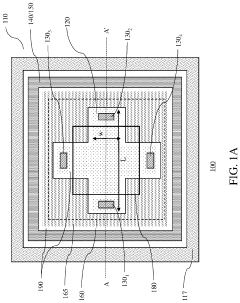
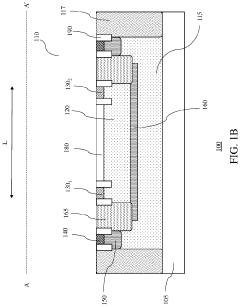
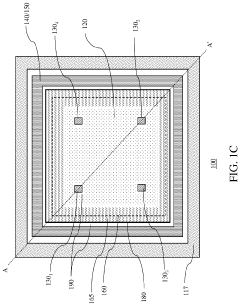
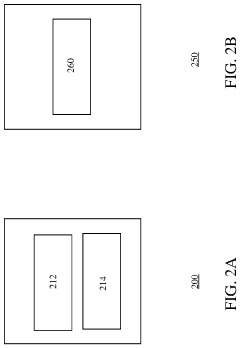
Hall effect sensors with tunable sensitivity and/or resistance
PatentActiveUS11047930B2
Innovation
- A Hall effect sensor design with a tunable Hall plate thickness, achieved through adjustable implants in the separation layer and bias voltage applied to the separation layer, allowing for customizable current sensitivity and resistance, enabling high voltage and current sensitivity in the same device.
Environmental Testing Standards for Marine Electronic Components
Marine electronic components, particularly Hall effect sensors, must undergo rigorous environmental testing to ensure reliability in harsh maritime conditions. The International Electrotechnical Commission (IEC) 60945 standard serves as the primary framework for marine equipment testing, covering electromagnetic compatibility, vibration resistance, and environmental durability. This standard requires electronic components to withstand temperature ranges from -25°C to +55°C during operational testing and -40°C to +70°C for storage conditions.
Salt fog testing, outlined in IEC 60068-2-52, is particularly critical for marine Hall effect sensors. These tests simulate prolonged exposure to saline environments through cyclic salt spray exposure followed by controlled humidity periods. Components must demonstrate continued functionality and minimal corrosion after multiple test cycles, typically lasting 2-4 weeks depending on the intended deployment environment.
Ingress protection standards, defined by IEC 60529, establish the IP rating system essential for marine applications. Hall effect sensors for marine use generally require a minimum rating of IP67 (completely protected against dust and protected against temporary immersion) or IP68 (protected against continuous immersion) depending on installation location. Testing involves submersion at specified depths and durations while monitoring for water ingress and functional integrity.
Vibration and shock resistance testing follows IEC 60068-2-6 and IEC 60068-2-27 protocols respectively. Marine sensors must withstand sinusoidal vibrations across 2-100 Hz frequency ranges and mechanical shocks up to 50g acceleration. These tests simulate vessel engine vibrations, wave impacts, and potential physical impacts during installation or maintenance.
The ASTM B117 standard provides additional corrosion testing methodologies specifically relevant to metallic components in Hall effect sensors. This continuous salt spray test evaluates material degradation over extended periods, typically 500-1000 hours for marine-grade components.
Electromagnetic compatibility testing per IEC 61000 series ensures sensors maintain accuracy in proximity to marine communication equipment, navigation systems, and power generation units. This includes immunity to conducted and radiated electromagnetic interference common aboard vessels.
Accelerated life testing protocols simulate years of environmental exposure in compressed timeframes. These tests incorporate thermal cycling (IEC 60068-2-14), combined with humidity exposure (IEC 60068-2-30) and UV radiation testing (ASTM G154) to predict long-term durability in marine environments where sensors may be expected to function reliably for 5-10 years without replacement.
Salt fog testing, outlined in IEC 60068-2-52, is particularly critical for marine Hall effect sensors. These tests simulate prolonged exposure to saline environments through cyclic salt spray exposure followed by controlled humidity periods. Components must demonstrate continued functionality and minimal corrosion after multiple test cycles, typically lasting 2-4 weeks depending on the intended deployment environment.
Ingress protection standards, defined by IEC 60529, establish the IP rating system essential for marine applications. Hall effect sensors for marine use generally require a minimum rating of IP67 (completely protected against dust and protected against temporary immersion) or IP68 (protected against continuous immersion) depending on installation location. Testing involves submersion at specified depths and durations while monitoring for water ingress and functional integrity.
Vibration and shock resistance testing follows IEC 60068-2-6 and IEC 60068-2-27 protocols respectively. Marine sensors must withstand sinusoidal vibrations across 2-100 Hz frequency ranges and mechanical shocks up to 50g acceleration. These tests simulate vessel engine vibrations, wave impacts, and potential physical impacts during installation or maintenance.
The ASTM B117 standard provides additional corrosion testing methodologies specifically relevant to metallic components in Hall effect sensors. This continuous salt spray test evaluates material degradation over extended periods, typically 500-1000 hours for marine-grade components.
Electromagnetic compatibility testing per IEC 61000 series ensures sensors maintain accuracy in proximity to marine communication equipment, navigation systems, and power generation units. This includes immunity to conducted and radiated electromagnetic interference common aboard vessels.
Accelerated life testing protocols simulate years of environmental exposure in compressed timeframes. These tests incorporate thermal cycling (IEC 60068-2-14), combined with humidity exposure (IEC 60068-2-30) and UV radiation testing (ASTM G154) to predict long-term durability in marine environments where sensors may be expected to function reliably for 5-10 years without replacement.
Cost-Benefit Analysis of Advanced Marine Sensor Technologies
The cost-benefit analysis of implementing Hall Effect sensors in marine environments reveals significant economic considerations that must be evaluated against performance requirements. Initial investment in marine-grade Hall Effect sensors typically ranges from $150 to $500 per unit, substantially higher than standard industrial sensors. This premium reflects the specialized materials and manufacturing processes required for corrosion resistance and pressure tolerance in marine applications.
When analyzing operational costs, marine-grade Hall Effect sensors demonstrate superior longevity, with expected service life of 7-10 years compared to 2-3 years for standard sensors in similar environments. This extended operational lifespan translates to reduced replacement frequency and associated maintenance costs, which can be particularly significant in difficult-to-access marine installations such as underwater propulsion systems or offshore platforms.
Maintenance expenses represent a critical factor in the total cost of ownership. Marine-grade Hall Effect sensors require maintenance intervals approximately 60% longer than conventional alternatives, resulting in fewer service disruptions and lower cumulative labor costs. Field data indicates maintenance costs for standard sensors can accumulate to 3-4 times their initial purchase price over their operational lifetime, while marine-grade sensors typically incur maintenance costs of only 1-2 times their purchase price.
Performance benefits must be quantified against these higher acquisition costs. Enhanced durability translates to improved system reliability, with marine-grade Hall Effect sensors showing failure rates below 0.5% annually compared to 3-7% for standard sensors in marine environments. This reliability differential significantly impacts vessel operational availability and reduces costly unplanned downtime, which can exceed $10,000 per hour for commercial marine operations.
Energy efficiency presents another economic consideration, with newer marine-grade Hall Effect sensors consuming 15-30% less power than previous generations. For vessels with limited power resources, this efficiency can extend operational range or reduce generator fuel consumption, providing ongoing operational savings that compound over the sensor's lifetime.
Return on investment calculations indicate that despite higher initial costs, marine-grade Hall Effect sensors typically achieve break-even within 2.5-3.5 years of deployment, with accelerated returns in harsh environments where standard sensors would require frequent replacement. For critical marine applications where sensor failure could compromise safety or result in regulatory non-compliance, the economic case becomes even more compelling when potential liability costs are factored into the analysis.
When analyzing operational costs, marine-grade Hall Effect sensors demonstrate superior longevity, with expected service life of 7-10 years compared to 2-3 years for standard sensors in similar environments. This extended operational lifespan translates to reduced replacement frequency and associated maintenance costs, which can be particularly significant in difficult-to-access marine installations such as underwater propulsion systems or offshore platforms.
Maintenance expenses represent a critical factor in the total cost of ownership. Marine-grade Hall Effect sensors require maintenance intervals approximately 60% longer than conventional alternatives, resulting in fewer service disruptions and lower cumulative labor costs. Field data indicates maintenance costs for standard sensors can accumulate to 3-4 times their initial purchase price over their operational lifetime, while marine-grade sensors typically incur maintenance costs of only 1-2 times their purchase price.
Performance benefits must be quantified against these higher acquisition costs. Enhanced durability translates to improved system reliability, with marine-grade Hall Effect sensors showing failure rates below 0.5% annually compared to 3-7% for standard sensors in marine environments. This reliability differential significantly impacts vessel operational availability and reduces costly unplanned downtime, which can exceed $10,000 per hour for commercial marine operations.
Energy efficiency presents another economic consideration, with newer marine-grade Hall Effect sensors consuming 15-30% less power than previous generations. For vessels with limited power resources, this efficiency can extend operational range or reduce generator fuel consumption, providing ongoing operational savings that compound over the sensor's lifetime.
Return on investment calculations indicate that despite higher initial costs, marine-grade Hall Effect sensors typically achieve break-even within 2.5-3.5 years of deployment, with accelerated returns in harsh environments where standard sensors would require frequent replacement. For critical marine applications where sensor failure could compromise safety or result in regulatory non-compliance, the economic case becomes even more compelling when potential liability costs are factored into the analysis.
Unlock deeper insights with PatSnap Eureka Quick Research — get a full tech report to explore trends and direct your research. Try now!
Generate Your Research Report Instantly with AI Agent
Supercharge your innovation with PatSnap Eureka AI Agent Platform!