How to Improve Cycle Life of Organic Radical Batteries: Electrolyte, Additives and Cell Design
AUG 21, 20259 MIN READ
Generate Your Research Report Instantly with AI Agent
Patsnap Eureka helps you evaluate technical feasibility & market potential.
ORB Cycle Life Enhancement: Background and Objectives
Organic Radical Batteries (ORBs) have emerged as a promising energy storage technology, offering unique advantages such as high power density, rapid charge-discharge capabilities, and environmental friendliness. The development of ORBs can be traced back to the early 2000s when researchers first explored the potential of organic radical compounds as active materials in battery systems. Since then, significant progress has been made in understanding the fundamental principles and improving the performance of these innovative batteries.
The primary objective in enhancing the cycle life of ORBs is to address the key challenges that limit their long-term stability and performance. These challenges include the dissolution of active materials, capacity fading, and self-discharge issues. By focusing on electrolyte optimization, additive incorporation, and cell design improvements, researchers aim to significantly extend the operational lifespan of ORBs, making them more competitive with conventional battery technologies.
Electrolyte development plays a crucial role in ORB cycle life enhancement. The ideal electrolyte should provide a stable environment for the organic radical compounds while facilitating efficient ion transport. Researchers are exploring various electrolyte compositions, including novel organic solvents and ionic liquids, to minimize side reactions and prevent active material dissolution.
Additives represent another critical area of investigation. By incorporating carefully selected additives into the electrolyte or electrode materials, it is possible to mitigate degradation processes and enhance the overall stability of the battery system. These additives may serve multiple functions, such as forming protective films on electrode surfaces, scavenging harmful reaction products, or improving the conductivity of the electrolyte.
Cell design optimization is equally important in extending the cycle life of ORBs. This involves refining electrode architectures, exploring new separator materials, and developing innovative packaging solutions. By carefully engineering the physical structure of the battery, researchers can minimize stress on active materials, improve electrolyte distribution, and enhance overall cell performance.
The technological evolution in this field is driven by the growing demand for sustainable and high-performance energy storage solutions. As renewable energy sources become more prevalent and electric vehicles gain popularity, the need for advanced battery technologies like ORBs becomes increasingly apparent. The successful enhancement of ORB cycle life could potentially revolutionize various applications, from grid-scale energy storage to portable electronics.
In pursuing these objectives, researchers and engineers face the challenge of balancing performance improvements with practical considerations such as cost-effectiveness and scalability. The ultimate goal is to develop ORBs that not only demonstrate superior cycle life but also meet the economic and manufacturing requirements necessary for widespread commercial adoption.
The primary objective in enhancing the cycle life of ORBs is to address the key challenges that limit their long-term stability and performance. These challenges include the dissolution of active materials, capacity fading, and self-discharge issues. By focusing on electrolyte optimization, additive incorporation, and cell design improvements, researchers aim to significantly extend the operational lifespan of ORBs, making them more competitive with conventional battery technologies.
Electrolyte development plays a crucial role in ORB cycle life enhancement. The ideal electrolyte should provide a stable environment for the organic radical compounds while facilitating efficient ion transport. Researchers are exploring various electrolyte compositions, including novel organic solvents and ionic liquids, to minimize side reactions and prevent active material dissolution.
Additives represent another critical area of investigation. By incorporating carefully selected additives into the electrolyte or electrode materials, it is possible to mitigate degradation processes and enhance the overall stability of the battery system. These additives may serve multiple functions, such as forming protective films on electrode surfaces, scavenging harmful reaction products, or improving the conductivity of the electrolyte.
Cell design optimization is equally important in extending the cycle life of ORBs. This involves refining electrode architectures, exploring new separator materials, and developing innovative packaging solutions. By carefully engineering the physical structure of the battery, researchers can minimize stress on active materials, improve electrolyte distribution, and enhance overall cell performance.
The technological evolution in this field is driven by the growing demand for sustainable and high-performance energy storage solutions. As renewable energy sources become more prevalent and electric vehicles gain popularity, the need for advanced battery technologies like ORBs becomes increasingly apparent. The successful enhancement of ORB cycle life could potentially revolutionize various applications, from grid-scale energy storage to portable electronics.
In pursuing these objectives, researchers and engineers face the challenge of balancing performance improvements with practical considerations such as cost-effectiveness and scalability. The ultimate goal is to develop ORBs that not only demonstrate superior cycle life but also meet the economic and manufacturing requirements necessary for widespread commercial adoption.
Market Analysis for Long-lasting ORBs
The market for long-lasting Organic Radical Batteries (ORBs) is poised for significant growth, driven by the increasing demand for sustainable and high-performance energy storage solutions. As the world shifts towards renewable energy sources and electrification of various sectors, the need for efficient and durable battery technologies has become paramount. ORBs, with their potential for improved cycle life, are attracting attention from both industry players and consumers.
The global energy storage market, which includes ORBs, is experiencing rapid expansion. This growth is fueled by the rising adoption of electric vehicles, grid-scale energy storage systems, and portable electronic devices. The unique characteristics of ORBs, such as their fast charging capabilities, environmental friendliness, and potential for long cycle life, position them as a promising alternative to conventional lithium-ion batteries in certain applications.
In the automotive sector, the push for longer-range electric vehicles is creating a demand for batteries with extended lifespans. ORBs with improved cycle life could potentially reduce the need for battery replacements, lowering the total cost of ownership for electric vehicles. This aligns with the automotive industry's goals of enhancing sustainability and reducing environmental impact.
The renewable energy sector presents another significant market opportunity for long-lasting ORBs. As wind and solar power generation continues to grow, the need for reliable and efficient energy storage solutions becomes critical. ORBs with enhanced cycle life could provide a more cost-effective option for grid-scale storage, enabling better integration of intermittent renewable energy sources into the power grid.
Consumer electronics represent a third key market segment for ORBs. With consumers increasingly demanding devices with longer battery life and faster charging times, ORBs could offer a competitive advantage in this space. The potential for improved cycle life in ORBs could lead to longer-lasting smartphones, laptops, and wearable devices, addressing a common pain point for consumers.
However, the market for long-lasting ORBs also faces challenges. The technology is still relatively new compared to established battery chemistries, and concerns about scalability and manufacturing costs need to be addressed. Additionally, the market will need to overcome the inertia of existing battery technologies and supply chains.
Despite these challenges, the potential benefits of long-lasting ORBs are driving investment and research in this field. As advancements in electrolyte formulations, additives, and cell design continue to improve the cycle life of ORBs, their market potential is expected to grow. The success of ORBs in capturing market share will depend on their ability to demonstrate superior performance, cost-effectiveness, and reliability compared to existing battery technologies.
The global energy storage market, which includes ORBs, is experiencing rapid expansion. This growth is fueled by the rising adoption of electric vehicles, grid-scale energy storage systems, and portable electronic devices. The unique characteristics of ORBs, such as their fast charging capabilities, environmental friendliness, and potential for long cycle life, position them as a promising alternative to conventional lithium-ion batteries in certain applications.
In the automotive sector, the push for longer-range electric vehicles is creating a demand for batteries with extended lifespans. ORBs with improved cycle life could potentially reduce the need for battery replacements, lowering the total cost of ownership for electric vehicles. This aligns with the automotive industry's goals of enhancing sustainability and reducing environmental impact.
The renewable energy sector presents another significant market opportunity for long-lasting ORBs. As wind and solar power generation continues to grow, the need for reliable and efficient energy storage solutions becomes critical. ORBs with enhanced cycle life could provide a more cost-effective option for grid-scale storage, enabling better integration of intermittent renewable energy sources into the power grid.
Consumer electronics represent a third key market segment for ORBs. With consumers increasingly demanding devices with longer battery life and faster charging times, ORBs could offer a competitive advantage in this space. The potential for improved cycle life in ORBs could lead to longer-lasting smartphones, laptops, and wearable devices, addressing a common pain point for consumers.
However, the market for long-lasting ORBs also faces challenges. The technology is still relatively new compared to established battery chemistries, and concerns about scalability and manufacturing costs need to be addressed. Additionally, the market will need to overcome the inertia of existing battery technologies and supply chains.
Despite these challenges, the potential benefits of long-lasting ORBs are driving investment and research in this field. As advancements in electrolyte formulations, additives, and cell design continue to improve the cycle life of ORBs, their market potential is expected to grow. The success of ORBs in capturing market share will depend on their ability to demonstrate superior performance, cost-effectiveness, and reliability compared to existing battery technologies.
Current Challenges in ORB Cycle Life
Organic Radical Batteries (ORBs) have emerged as a promising energy storage technology due to their high power density, fast charge-discharge rates, and environmental friendliness. However, the cycle life of ORBs remains a significant challenge, limiting their widespread adoption and commercial viability.
One of the primary issues affecting ORB cycle life is the stability of the organic radical compounds. These compounds, typically nitroxide radicals, are prone to degradation through various mechanisms, including dimerization, disproportionation, and side reactions with electrolyte components. This degradation leads to capacity fade and reduced cycle life.
The electrolyte composition plays a crucial role in ORB performance and longevity. Current electrolytes often fail to provide a stable environment for the organic radical compounds, leading to unwanted reactions and accelerated degradation. Additionally, the electrolyte's ionic conductivity and electrochemical stability window are critical factors that need optimization to enhance cycle life.
Electrode dissolution is another major challenge facing ORBs. The organic radical compounds, being soluble in common electrolytes, tend to dissolve and migrate between electrodes during cycling. This phenomenon, known as the "shuttle effect," results in active material loss and self-discharge, significantly impacting the battery's cycle life and overall performance.
The mechanical stability of ORB electrodes presents another hurdle. Unlike traditional inorganic battery materials, organic radical compounds often lack robust structural integrity. This can lead to electrode pulverization and delamination during repeated charge-discharge cycles, causing loss of electrical contact and decreased capacity retention.
Temperature sensitivity is a notable concern for ORBs. The organic radical compounds and electrolytes used in these batteries can be particularly susceptible to temperature fluctuations. High temperatures can accelerate side reactions and degradation processes, while low temperatures may impair ionic conductivity and reaction kinetics, both scenarios negatively impacting cycle life.
Current cell designs for ORBs often struggle to address these multiple challenges simultaneously. Balancing factors such as electrode composition, electrolyte formulation, and overall cell architecture to mitigate degradation mechanisms while maintaining high performance remains a complex task. Innovations in cell design are needed to effectively manage issues like electrolyte decomposition, radical compound stability, and electrode integrity throughout extended cycling.
Addressing these challenges requires a multifaceted approach, combining advancements in materials science, electrochemistry, and engineering. Developing novel electrolyte formulations, exploring effective additives, and optimizing cell designs are key areas of focus in improving the cycle life of Organic Radical Batteries.
One of the primary issues affecting ORB cycle life is the stability of the organic radical compounds. These compounds, typically nitroxide radicals, are prone to degradation through various mechanisms, including dimerization, disproportionation, and side reactions with electrolyte components. This degradation leads to capacity fade and reduced cycle life.
The electrolyte composition plays a crucial role in ORB performance and longevity. Current electrolytes often fail to provide a stable environment for the organic radical compounds, leading to unwanted reactions and accelerated degradation. Additionally, the electrolyte's ionic conductivity and electrochemical stability window are critical factors that need optimization to enhance cycle life.
Electrode dissolution is another major challenge facing ORBs. The organic radical compounds, being soluble in common electrolytes, tend to dissolve and migrate between electrodes during cycling. This phenomenon, known as the "shuttle effect," results in active material loss and self-discharge, significantly impacting the battery's cycle life and overall performance.
The mechanical stability of ORB electrodes presents another hurdle. Unlike traditional inorganic battery materials, organic radical compounds often lack robust structural integrity. This can lead to electrode pulverization and delamination during repeated charge-discharge cycles, causing loss of electrical contact and decreased capacity retention.
Temperature sensitivity is a notable concern for ORBs. The organic radical compounds and electrolytes used in these batteries can be particularly susceptible to temperature fluctuations. High temperatures can accelerate side reactions and degradation processes, while low temperatures may impair ionic conductivity and reaction kinetics, both scenarios negatively impacting cycle life.
Current cell designs for ORBs often struggle to address these multiple challenges simultaneously. Balancing factors such as electrode composition, electrolyte formulation, and overall cell architecture to mitigate degradation mechanisms while maintaining high performance remains a complex task. Innovations in cell design are needed to effectively manage issues like electrolyte decomposition, radical compound stability, and electrode integrity throughout extended cycling.
Addressing these challenges requires a multifaceted approach, combining advancements in materials science, electrochemistry, and engineering. Developing novel electrolyte formulations, exploring effective additives, and optimizing cell designs are key areas of focus in improving the cycle life of Organic Radical Batteries.
Existing Strategies for ORB Longevity
01 Electrode material optimization
Improving the cycle life of organic radical batteries through the development of advanced electrode materials. This includes the use of novel organic compounds, conductive polymers, and nanostructured materials to enhance stability and conductivity, leading to increased charge-discharge cycles and overall battery longevity.- Electrolyte composition for improved cycle life: Optimizing the electrolyte composition in organic radical batteries can significantly enhance their cycle life. This includes using specific solvents, additives, and salt concentrations that minimize side reactions and stabilize the radical species. Improved electrolytes can reduce capacity fading and extend the overall lifespan of the battery.
- Radical polymer design for stability: Developing novel radical polymer structures with enhanced stability is crucial for improving the cycle life of organic radical batteries. This involves designing polymers with robust backbones, optimized radical densities, and functional groups that resist degradation during charge-discharge cycles. Stable radical polymers contribute to better capacity retention over extended use.
- Advanced electrode architectures: Innovative electrode designs can significantly impact the cycle life of organic radical batteries. This includes developing porous structures, nanocomposites, and conductive networks that enhance electron transfer, improve radical stability, and facilitate ion diffusion. Optimized electrode architectures can lead to better cycling performance and longevity.
- Charge-discharge control strategies: Implementing sophisticated charge-discharge control algorithms and battery management systems can extend the cycle life of organic radical batteries. This involves optimizing charging rates, depth of discharge, and operating temperature ranges to minimize stress on the active materials and prevent premature degradation.
- Protective coatings and additives: Applying protective coatings or incorporating stabilizing additives can enhance the cycle life of organic radical batteries. These materials can form protective layers on electrodes, scavenge harmful species, or suppress unwanted side reactions. Such approaches help maintain the integrity of the active materials over numerous charge-discharge cycles.
02 Electrolyte formulation
Enhancing the cycle life of organic radical batteries by optimizing electrolyte compositions. This involves developing electrolytes with improved ionic conductivity, reduced side reactions, and better compatibility with organic radical active materials, resulting in more stable and longer-lasting battery performance.Expand Specific Solutions03 Charge-discharge control strategies
Implementing advanced charge-discharge control strategies to extend the cycle life of organic radical batteries. This includes developing intelligent battery management systems, optimizing charging protocols, and implementing voltage control techniques to minimize degradation and maximize the number of charge-discharge cycles.Expand Specific Solutions04 Protective coatings and additives
Utilizing protective coatings and additives to improve the cycle life of organic radical batteries. This approach involves applying thin-film coatings or incorporating stabilizing additives to protect the active materials from degradation, reduce unwanted side reactions, and maintain battery performance over extended cycling.Expand Specific Solutions05 Cell design and engineering
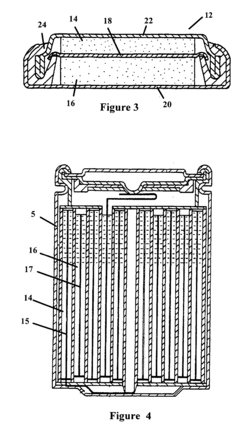
Optimizing the physical design and engineering of organic radical battery cells to enhance cycle life. This includes improving cell packaging, developing novel electrode architectures, and implementing advanced sealing techniques to minimize electrolyte loss and maintain stable performance over numerous charge-discharge cycles.Expand Specific Solutions
Key Players in ORB Development
The organic radical battery market is in an early growth stage, with increasing research and development efforts focused on improving cycle life. The market size is expanding as these batteries show promise for various applications, though it remains relatively small compared to established battery technologies. Technologically, organic radical batteries are still evolving, with key players like Samsung SDI, CATL, and Murata Manufacturing leading advancements. Companies such as Toshiba, SK Chemicals, and LG Chem are also contributing to the field, indicating growing industry interest. However, further improvements in electrolyte formulations, additives, and cell design are needed to enhance performance and commercial viability.
Samsung SDI Co., Ltd.
Technical Solution: Samsung SDI has developed advanced electrolyte formulations for organic radical batteries (ORBs) to improve cycle life. Their approach involves using a combination of carbonate-based solvents with fluorinated additives to enhance the stability of the radical polymer electrodes. The company has also implemented novel cell design techniques, such as using a porous carbon matrix to encapsulate the organic radical material, which helps to prevent dissolution and maintain electrical contact[1][3]. Additionally, Samsung SDI has explored the use of ionic liquids as electrolytes, which have shown promise in reducing side reactions and improving the overall electrochemical performance of ORBs[5].
Strengths: Extensive experience in battery technology, strong R&D capabilities, and established manufacturing infrastructure. Weaknesses: Potential high costs associated with specialized electrolyte formulations and complex cell designs.
Toshiba Corp.
Technical Solution: Toshiba has focused on developing high-performance additives for ORB electrolytes to enhance cycle life. Their research has led to the discovery of novel radical-stabilizing additives that form protective layers on electrode surfaces, reducing unwanted side reactions. Toshiba's approach also includes the use of nanostructured current collectors to improve the mechanical stability of the organic radical electrodes during cycling[2]. The company has patented a unique cell design that incorporates a dual-layer separator system, which helps to mitigate radical species crossover between electrodes, thereby extending the battery's lifespan[4]. Furthermore, Toshiba has explored the use of gel polymer electrolytes to improve the safety and stability of ORBs[6].
Strengths: Strong intellectual property portfolio in ORB technology and expertise in advanced materials. Weaknesses: May face challenges in scaling up production of specialized components for mass manufacturing.
Innovations in Electrolytes and Additives
Electrolyte additives for lithium batteries and related methods
PatentWO2009042071A9
Innovation
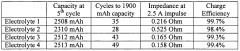
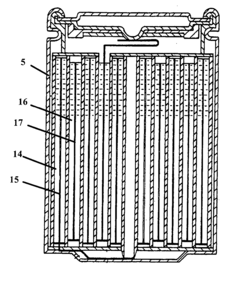
- Incorporating specific lithium-based additives, such as lithium compounds with heteroalkyl or heteroaryl groups, into the electrolyte to reduce or prevent the formation of impurities and depletion of active materials, thereby enhancing the cycling lifetime and performance of the battery.
Electrolyte additives for lithium metal and lithium ion rechargeable batteries
PatentInactiveUS20070031734A1
Innovation
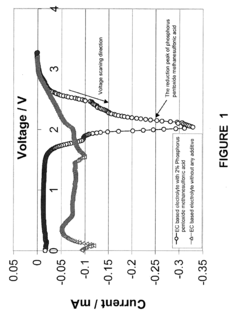
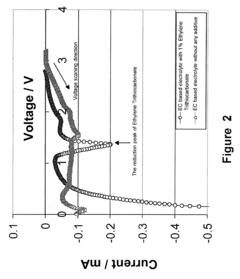
- Incorporating specific additives such as phosphorus pentoxide methanesulfonic acid, phosphonic Acid Tris(2-n-butoxyethyl) Ester, and 1,2,4-Tris(methane sulfonyloxy)butane into the electrolyte to enhance the SEI layer formation, providing improved stability and resistance to high temperature degradation, thereby extending battery life and capacity.
Environmental Impact of ORB Materials
The environmental impact of Organic Radical Battery (ORB) materials is a crucial aspect to consider in the development and implementation of this emerging energy storage technology. ORBs offer several potential environmental advantages over traditional battery systems, primarily due to their use of organic compounds as active materials.
One of the key environmental benefits of ORB materials is their biodegradability. Many of the organic radical compounds used in these batteries can naturally decompose over time, reducing the long-term environmental impact associated with battery disposal. This characteristic stands in stark contrast to conventional lithium-ion batteries, which often contain toxic and non-biodegradable materials.
The production of ORB materials generally requires less energy-intensive processes compared to the extraction and refinement of metals used in traditional batteries. This lower energy requirement translates to reduced carbon emissions during the manufacturing phase, contributing to a smaller overall carbon footprint for ORB technology.
Furthermore, the organic nature of ORB materials often allows for more environmentally friendly synthesis routes. Many of these compounds can be derived from renewable resources or even waste products from other industries, promoting a circular economy approach and reducing reliance on finite mineral resources.
However, it is important to note that the environmental impact of ORBs is not entirely benign. The synthesis of some organic radical compounds may involve the use of solvents or reagents that could have negative environmental effects if not properly managed. Additionally, while the active materials themselves may be biodegradable, other components of the battery, such as current collectors and separators, may still pose environmental challenges.
The stability and potential leaching of organic radical materials into the environment during the battery's lifecycle also require careful consideration. While generally less toxic than heavy metals, the long-term ecological effects of these compounds in various ecosystems are not yet fully understood and warrant further research.
In terms of recycling, ORBs present both opportunities and challenges. The organic nature of the active materials may facilitate easier separation and recovery processes compared to metal-based batteries. However, developing efficient recycling methods for ORBs that can effectively recover and repurpose the organic compounds is an area that requires significant development.
As research in ORB technology progresses, it is crucial to conduct comprehensive life cycle assessments to fully understand and quantify the environmental impacts of these materials throughout their production, use, and end-of-life stages. This holistic approach will help guide the development of ORBs towards more sustainable and environmentally friendly energy storage solutions.
One of the key environmental benefits of ORB materials is their biodegradability. Many of the organic radical compounds used in these batteries can naturally decompose over time, reducing the long-term environmental impact associated with battery disposal. This characteristic stands in stark contrast to conventional lithium-ion batteries, which often contain toxic and non-biodegradable materials.
The production of ORB materials generally requires less energy-intensive processes compared to the extraction and refinement of metals used in traditional batteries. This lower energy requirement translates to reduced carbon emissions during the manufacturing phase, contributing to a smaller overall carbon footprint for ORB technology.
Furthermore, the organic nature of ORB materials often allows for more environmentally friendly synthesis routes. Many of these compounds can be derived from renewable resources or even waste products from other industries, promoting a circular economy approach and reducing reliance on finite mineral resources.
However, it is important to note that the environmental impact of ORBs is not entirely benign. The synthesis of some organic radical compounds may involve the use of solvents or reagents that could have negative environmental effects if not properly managed. Additionally, while the active materials themselves may be biodegradable, other components of the battery, such as current collectors and separators, may still pose environmental challenges.
The stability and potential leaching of organic radical materials into the environment during the battery's lifecycle also require careful consideration. While generally less toxic than heavy metals, the long-term ecological effects of these compounds in various ecosystems are not yet fully understood and warrant further research.
In terms of recycling, ORBs present both opportunities and challenges. The organic nature of the active materials may facilitate easier separation and recovery processes compared to metal-based batteries. However, developing efficient recycling methods for ORBs that can effectively recover and repurpose the organic compounds is an area that requires significant development.
As research in ORB technology progresses, it is crucial to conduct comprehensive life cycle assessments to fully understand and quantify the environmental impacts of these materials throughout their production, use, and end-of-life stages. This holistic approach will help guide the development of ORBs towards more sustainable and environmentally friendly energy storage solutions.
Safety Considerations for ORB Implementation
The implementation of Organic Radical Batteries (ORBs) requires careful consideration of safety aspects to ensure their reliable and secure operation. One primary concern is the potential for thermal runaway, which can occur due to the high reactivity of organic radical compounds. To mitigate this risk, advanced thermal management systems must be integrated into the battery design, including efficient heat dissipation mechanisms and temperature monitoring sensors.
Another critical safety consideration is the stability of the electrolyte. ORBs often utilize organic solvents, which can be flammable and pose fire hazards. To address this issue, researchers are exploring flame-retardant additives and developing non-flammable electrolyte formulations. These advancements aim to reduce the risk of fire and enhance the overall safety profile of ORBs.
The potential for gas generation during cycling is another safety concern that requires attention. Organic radical compounds may undergo side reactions that produce gases, leading to pressure buildup within the cell. Implementing pressure relief mechanisms and designing cells with appropriate headspace can help manage this issue and prevent catastrophic failure.
Electrical safety is paramount in ORB implementation. The high voltage and current capabilities of these batteries necessitate robust insulation and protection circuits. Advanced battery management systems (BMS) should be employed to monitor cell voltages, prevent overcharging, and detect any abnormalities in real-time.
Environmental and health considerations also play a crucial role in ORB safety. The organic materials used in these batteries may have varying degrees of toxicity. Proper encapsulation and sealing of cells are essential to prevent leakage and exposure. Additionally, end-of-life management and recycling protocols must be established to handle spent ORBs safely and minimize environmental impact.
Lastly, the manufacturing process of ORBs requires stringent quality control measures. Ensuring the purity of materials, precise electrode fabrication, and controlled assembly conditions are vital to producing safe and reliable batteries. Implementing rigorous testing protocols, including accelerated aging and abuse tests, can help identify potential safety issues before deployment.
Another critical safety consideration is the stability of the electrolyte. ORBs often utilize organic solvents, which can be flammable and pose fire hazards. To address this issue, researchers are exploring flame-retardant additives and developing non-flammable electrolyte formulations. These advancements aim to reduce the risk of fire and enhance the overall safety profile of ORBs.
The potential for gas generation during cycling is another safety concern that requires attention. Organic radical compounds may undergo side reactions that produce gases, leading to pressure buildup within the cell. Implementing pressure relief mechanisms and designing cells with appropriate headspace can help manage this issue and prevent catastrophic failure.
Electrical safety is paramount in ORB implementation. The high voltage and current capabilities of these batteries necessitate robust insulation and protection circuits. Advanced battery management systems (BMS) should be employed to monitor cell voltages, prevent overcharging, and detect any abnormalities in real-time.
Environmental and health considerations also play a crucial role in ORB safety. The organic materials used in these batteries may have varying degrees of toxicity. Proper encapsulation and sealing of cells are essential to prevent leakage and exposure. Additionally, end-of-life management and recycling protocols must be established to handle spent ORBs safely and minimize environmental impact.
Lastly, the manufacturing process of ORBs requires stringent quality control measures. Ensuring the purity of materials, precise electrode fabrication, and controlled assembly conditions are vital to producing safe and reliable batteries. Implementing rigorous testing protocols, including accelerated aging and abuse tests, can help identify potential safety issues before deployment.
Unlock deeper insights with Patsnap Eureka Quick Research — get a full tech report to explore trends and direct your research. Try now!
Generate Your Research Report Instantly with AI Agent
Supercharge your innovation with Patsnap Eureka AI Agent Platform!