How to Integrate ORB Prototypes into Hybrid Storage Systems (Li-ion + ORB)
AUG 21, 20259 MIN READ
Generate Your Research Report Instantly with AI Agent
Patsnap Eureka helps you evaluate technical feasibility & market potential.
ORB Integration Background and Objectives
Organic Redox Flow Batteries (ORBs) have emerged as a promising technology in the field of energy storage, offering potential advantages over traditional lithium-ion batteries. The integration of ORB prototypes into hybrid storage systems, particularly in combination with lithium-ion batteries, represents a significant technological advancement with far-reaching implications for the energy sector.
The evolution of energy storage technologies has been driven by the growing demand for efficient, sustainable, and scalable solutions to support renewable energy integration and grid stability. Lithium-ion batteries have dominated the market due to their high energy density and relatively low cost. However, they face limitations in terms of cycle life, safety concerns, and resource scarcity. ORBs, on the other hand, offer promising characteristics such as long cycle life, improved safety, and the use of abundant, low-cost organic materials.
The primary objective of integrating ORB prototypes into hybrid storage systems is to leverage the complementary strengths of both technologies. Lithium-ion batteries excel in high-power applications and energy density, while ORBs offer superior long-duration storage capabilities and potentially lower costs for large-scale applications. By combining these technologies, researchers aim to create a more versatile and efficient energy storage solution that can address a wider range of grid and off-grid applications.
Key technical goals for this integration include optimizing the power management systems to effectively coordinate the operation of lithium-ion and ORB components, developing advanced control algorithms for efficient energy distribution, and designing scalable system architectures that can accommodate varying ratios of lithium-ion to ORB capacity based on specific application requirements.
Another critical objective is to enhance the overall system performance in terms of round-trip efficiency, response time, and operational flexibility. This involves addressing challenges such as managing different charge-discharge characteristics, thermal management, and ensuring compatibility of electrolyte systems.
Furthermore, the integration efforts aim to improve the economic viability of large-scale energy storage by potentially reducing the levelized cost of storage (LCOS) through the strategic use of ORBs for long-duration applications while reserving lithium-ion batteries for high-power, short-duration needs.
As the energy landscape continues to evolve, the successful integration of ORB prototypes into hybrid storage systems could play a pivotal role in accelerating the transition to renewable energy sources and enhancing grid resilience. This technological convergence represents a significant step towards more sustainable and efficient energy storage solutions, aligning with global efforts to mitigate climate change and ensure energy security.
The evolution of energy storage technologies has been driven by the growing demand for efficient, sustainable, and scalable solutions to support renewable energy integration and grid stability. Lithium-ion batteries have dominated the market due to their high energy density and relatively low cost. However, they face limitations in terms of cycle life, safety concerns, and resource scarcity. ORBs, on the other hand, offer promising characteristics such as long cycle life, improved safety, and the use of abundant, low-cost organic materials.
The primary objective of integrating ORB prototypes into hybrid storage systems is to leverage the complementary strengths of both technologies. Lithium-ion batteries excel in high-power applications and energy density, while ORBs offer superior long-duration storage capabilities and potentially lower costs for large-scale applications. By combining these technologies, researchers aim to create a more versatile and efficient energy storage solution that can address a wider range of grid and off-grid applications.
Key technical goals for this integration include optimizing the power management systems to effectively coordinate the operation of lithium-ion and ORB components, developing advanced control algorithms for efficient energy distribution, and designing scalable system architectures that can accommodate varying ratios of lithium-ion to ORB capacity based on specific application requirements.
Another critical objective is to enhance the overall system performance in terms of round-trip efficiency, response time, and operational flexibility. This involves addressing challenges such as managing different charge-discharge characteristics, thermal management, and ensuring compatibility of electrolyte systems.
Furthermore, the integration efforts aim to improve the economic viability of large-scale energy storage by potentially reducing the levelized cost of storage (LCOS) through the strategic use of ORBs for long-duration applications while reserving lithium-ion batteries for high-power, short-duration needs.
As the energy landscape continues to evolve, the successful integration of ORB prototypes into hybrid storage systems could play a pivotal role in accelerating the transition to renewable energy sources and enhancing grid resilience. This technological convergence represents a significant step towards more sustainable and efficient energy storage solutions, aligning with global efforts to mitigate climate change and ensure energy security.
Market Analysis for Hybrid Storage Systems
The market for hybrid storage systems combining Li-ion batteries and Organic Radical Batteries (ORBs) is experiencing significant growth driven by increasing demand for efficient and sustainable energy storage solutions. This emerging market segment addresses the limitations of traditional Li-ion batteries by integrating ORB technology, which offers faster charging capabilities, longer cycle life, and improved safety features.
The global energy storage market is projected to reach $546 billion by 2035, with hybrid systems expected to capture a substantial portion of this growth. Factors contributing to market expansion include the rising adoption of renewable energy sources, grid modernization initiatives, and the electrification of transportation. The integration of ORBs into hybrid systems is particularly attractive for applications requiring high power density and frequent charge-discharge cycles.
Key market segments for hybrid Li-ion and ORB storage systems include grid-scale energy storage, electric vehicles, and consumer electronics. In the grid storage sector, these hybrid systems offer enhanced flexibility and reliability for load balancing and peak shaving applications. The automotive industry is showing increased interest in hybrid storage solutions to improve electric vehicle performance and charging times. Consumer electronics manufacturers are exploring hybrid systems to develop devices with longer battery life and faster charging capabilities.
Geographically, Asia-Pacific is expected to dominate the hybrid storage system market, driven by rapid industrialization, urbanization, and government initiatives promoting clean energy adoption. North America and Europe follow closely, with strong demand from the renewable energy sector and electric vehicle manufacturers.
The market landscape is characterized by a mix of established battery manufacturers expanding into hybrid technologies and innovative startups specializing in ORB development. Major players are investing heavily in research and development to optimize the integration of ORBs into existing Li-ion battery systems, focusing on improving energy density, cycle life, and overall system performance.
Challenges facing the hybrid storage system market include the need for standardization, scalability of ORB production, and the development of advanced battery management systems capable of optimizing the performance of both Li-ion and ORB components. Additionally, educating consumers and industry stakeholders about the benefits of hybrid storage solutions remains crucial for widespread adoption.
Despite these challenges, the market outlook for hybrid Li-ion and ORB storage systems remains highly positive. The technology's potential to address key limitations of current energy storage solutions positions it as a critical enabler for the transition to a more sustainable and efficient energy landscape.
The global energy storage market is projected to reach $546 billion by 2035, with hybrid systems expected to capture a substantial portion of this growth. Factors contributing to market expansion include the rising adoption of renewable energy sources, grid modernization initiatives, and the electrification of transportation. The integration of ORBs into hybrid systems is particularly attractive for applications requiring high power density and frequent charge-discharge cycles.
Key market segments for hybrid Li-ion and ORB storage systems include grid-scale energy storage, electric vehicles, and consumer electronics. In the grid storage sector, these hybrid systems offer enhanced flexibility and reliability for load balancing and peak shaving applications. The automotive industry is showing increased interest in hybrid storage solutions to improve electric vehicle performance and charging times. Consumer electronics manufacturers are exploring hybrid systems to develop devices with longer battery life and faster charging capabilities.
Geographically, Asia-Pacific is expected to dominate the hybrid storage system market, driven by rapid industrialization, urbanization, and government initiatives promoting clean energy adoption. North America and Europe follow closely, with strong demand from the renewable energy sector and electric vehicle manufacturers.
The market landscape is characterized by a mix of established battery manufacturers expanding into hybrid technologies and innovative startups specializing in ORB development. Major players are investing heavily in research and development to optimize the integration of ORBs into existing Li-ion battery systems, focusing on improving energy density, cycle life, and overall system performance.
Challenges facing the hybrid storage system market include the need for standardization, scalability of ORB production, and the development of advanced battery management systems capable of optimizing the performance of both Li-ion and ORB components. Additionally, educating consumers and industry stakeholders about the benefits of hybrid storage solutions remains crucial for widespread adoption.
Despite these challenges, the market outlook for hybrid Li-ion and ORB storage systems remains highly positive. The technology's potential to address key limitations of current energy storage solutions positions it as a critical enabler for the transition to a more sustainable and efficient energy landscape.
ORB and Li-ion Technology Status
Organic radical batteries (ORBs) and lithium-ion (Li-ion) batteries represent two distinct yet complementary energy storage technologies. ORBs, a relatively new entrant in the energy storage landscape, are characterized by their use of organic compounds as active materials. These batteries offer promising advantages such as high power density, fast charging capabilities, and environmental friendliness due to their organic nature. However, ORBs are still in the early stages of development and face challenges in terms of energy density and cycle life.
Li-ion batteries, on the other hand, have been the dominant technology in portable electronics and electric vehicles for decades. They boast high energy density, long cycle life, and a well-established manufacturing infrastructure. Despite these advantages, Li-ion batteries face limitations in terms of charging speed, safety concerns related to thermal runaway, and reliance on finite mineral resources.
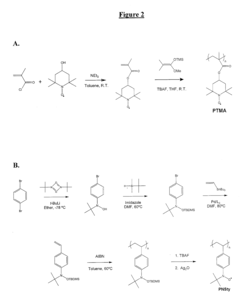
The current status of ORB technology shows significant progress in recent years, with researchers developing various organic compounds as electrode materials. Notable advancements include the use of polymeric materials like PTMA (poly(2,2,6,6-tetramethylpiperidinyloxy-4-yl methacrylate)) and small molecule compounds like TEMPO (2,2,6,6-tetramethylpiperidine-1-oxyl). These materials have demonstrated high theoretical capacities and excellent rate capabilities.
Li-ion technology continues to evolve, with ongoing research focused on improving energy density, safety, and charging speeds. Recent developments include the exploration of solid-state electrolytes to enhance safety and energy density, as well as the investigation of silicon and lithium metal anodes to increase capacity.
The integration of ORB prototypes into hybrid storage systems with Li-ion batteries presents an opportunity to leverage the strengths of both technologies. This hybrid approach aims to combine the high power density and fast charging capabilities of ORBs with the high energy density and established reliability of Li-ion batteries. Such integration could potentially address the limitations of each technology individually, resulting in a more versatile and efficient energy storage solution.
However, several challenges need to be addressed for successful integration. These include optimizing the interface between ORB and Li-ion components, developing compatible electrolytes, and designing control systems that can effectively manage the different characteristics of each battery type. Additionally, ensuring the long-term stability and safety of the hybrid system remains a critical area of focus for researchers and engineers working on this integration.
Li-ion batteries, on the other hand, have been the dominant technology in portable electronics and electric vehicles for decades. They boast high energy density, long cycle life, and a well-established manufacturing infrastructure. Despite these advantages, Li-ion batteries face limitations in terms of charging speed, safety concerns related to thermal runaway, and reliance on finite mineral resources.
The current status of ORB technology shows significant progress in recent years, with researchers developing various organic compounds as electrode materials. Notable advancements include the use of polymeric materials like PTMA (poly(2,2,6,6-tetramethylpiperidinyloxy-4-yl methacrylate)) and small molecule compounds like TEMPO (2,2,6,6-tetramethylpiperidine-1-oxyl). These materials have demonstrated high theoretical capacities and excellent rate capabilities.
Li-ion technology continues to evolve, with ongoing research focused on improving energy density, safety, and charging speeds. Recent developments include the exploration of solid-state electrolytes to enhance safety and energy density, as well as the investigation of silicon and lithium metal anodes to increase capacity.
The integration of ORB prototypes into hybrid storage systems with Li-ion batteries presents an opportunity to leverage the strengths of both technologies. This hybrid approach aims to combine the high power density and fast charging capabilities of ORBs with the high energy density and established reliability of Li-ion batteries. Such integration could potentially address the limitations of each technology individually, resulting in a more versatile and efficient energy storage solution.
However, several challenges need to be addressed for successful integration. These include optimizing the interface between ORB and Li-ion components, developing compatible electrolytes, and designing control systems that can effectively manage the different characteristics of each battery type. Additionally, ensuring the long-term stability and safety of the hybrid system remains a critical area of focus for researchers and engineers working on this integration.
Current ORB Integration Solutions
01 Battery design and composition
Organic Radical Battery (ORB) prototypes involve innovative designs and compositions. These batteries utilize organic radical compounds as active materials, offering potential advantages in terms of energy density, charge-discharge cycles, and environmental friendliness. The prototypes may incorporate novel electrode materials, electrolytes, and cell structures to optimize performance and stability.- Battery design and composition: Organic Radical Battery (ORB) prototypes involve innovative designs and compositions. These batteries utilize organic radical compounds as active materials, offering potential advantages in terms of energy density, charge-discharge cycles, and environmental friendliness. The prototypes explore various organic radical materials and electrode structures to optimize battery performance.
- Manufacturing processes for ORB prototypes: The development of ORB prototypes includes novel manufacturing processes. These processes focus on the fabrication of electrodes, assembly of battery components, and integration of organic radical materials. Advanced techniques may be employed to ensure uniform distribution of active materials and enhance the overall battery structure.
- Performance optimization and testing: ORB prototype development involves extensive performance optimization and testing. This includes evaluating charge-discharge characteristics, cycle life, energy density, and stability under various conditions. Advanced testing methodologies and equipment are utilized to assess and improve the prototypes' performance metrics.
- Integration with electronic systems: ORB prototypes are designed for integration with various electronic systems. This involves developing interfaces, control systems, and power management solutions to effectively utilize the unique characteristics of organic radical batteries in different applications, such as portable electronics or renewable energy storage systems.
- Safety and environmental considerations: The development of ORB prototypes includes a focus on safety and environmental aspects. This involves designing safety features to prevent overheating or leakage, as well as ensuring the use of environmentally friendly materials and manufacturing processes. Recycling and disposal methods for these batteries are also considered in the prototype development.
02 Manufacturing processes for ORB prototypes
The development of ORB prototypes requires specialized manufacturing processes. These may include techniques for synthesizing organic radical compounds, methods for electrode fabrication, and assembly procedures for battery cells. Advanced manufacturing technologies such as 3D printing or roll-to-roll processing might be employed to create prototype batteries with precise specifications and improved scalability.Expand Specific Solutions03 Testing and performance evaluation
ORB prototypes undergo rigorous testing and performance evaluation to assess their viability and potential advantages over conventional battery technologies. This may involve cyclic voltammetry, impedance spectroscopy, and long-term cycling tests to determine factors such as capacity retention, power density, and overall efficiency. Advanced analytical techniques may be used to study the behavior of organic radical materials during charge-discharge cycles.Expand Specific Solutions04 Integration with electronic systems
ORB prototypes are being developed with a focus on integration into various electronic systems and applications. This includes designing battery management systems tailored for ORBs, exploring their use in portable electronics, electric vehicles, or renewable energy storage systems. Prototypes may be optimized for specific power requirements, form factors, or operating conditions to suit different use cases.Expand Specific Solutions05 Computational modeling and simulation
The development of ORB prototypes is supported by computational modeling and simulation techniques. These methods help in predicting battery performance, optimizing designs, and understanding the fundamental mechanisms of organic radical materials. Advanced algorithms and machine learning approaches may be employed to accelerate the prototyping process and identify promising configurations for experimental validation.Expand Specific Solutions
Key Players in ORB and Li-ion Industries
The integration of ORB prototypes into hybrid storage systems combining Li-ion and ORB technologies represents an emerging field in energy storage. The market is in its early growth stage, with increasing interest from both established players and startups. While the exact market size is difficult to determine due to the nascent nature of the technology, it is expected to grow significantly as demand for long-duration energy storage increases. Companies like Form Energy and Siemens are at the forefront of developing ORB technologies, while traditional battery manufacturers such as Murata and Toshiba are exploring hybrid systems. The technology is still in the development phase, with ongoing research to improve performance, cost-effectiveness, and scalability for large-scale grid applications.
Alliance for Sustainable Energy LLC
Technical Solution: The Alliance for Sustainable Energy has developed an innovative approach to integrating ORB prototypes with Li-ion batteries in hybrid storage systems. Their method focuses on optimizing the complementary characteristics of both technologies. The system uses advanced control algorithms to manage power flow between ORB and Li-ion components, maximizing overall efficiency and lifespan[3]. The ORB subsystem, based on aqueous organic electrolytes, is designed for long-duration storage, while the Li-ion component handles rapid charge/discharge cycles. This integration is facilitated by a sophisticated battery management system that monitors state-of-charge, temperature, and degradation rates of both storage types[4].
Strengths: Optimized for grid-scale renewable integration, high overall system efficiency. Weaknesses: Complex control systems required, potential high initial costs.
Form Energy, Inc.
Technical Solution: Form Energy has developed a novel approach to integrating ORB (Organic Redox Flow Batteries) prototypes into hybrid storage systems with Li-ion batteries. Their technology utilizes iron-air chemistry in a multi-day storage system that complements shorter-duration Li-ion batteries[1]. This hybrid system leverages the high energy density and fast response of Li-ion batteries for short-term grid balancing, while the ORB component provides long-duration storage capabilities. The integration is achieved through advanced power electronics and a proprietary energy management system that optimizes the use of both storage technologies based on real-time grid demands and renewable energy generation patterns[2].
Strengths: Long-duration storage capability, cost-effective for grid-scale applications, uses abundant materials. Weaknesses: Lower round-trip efficiency compared to Li-ion, requires larger physical footprint.
Core ORB-Li-ion Integration Patents
Hybrid energy storage systems utilizing redox active organic compounds
PatentWO2013151588A1
Innovation
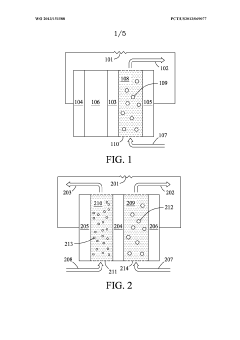
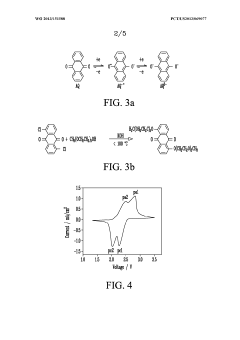
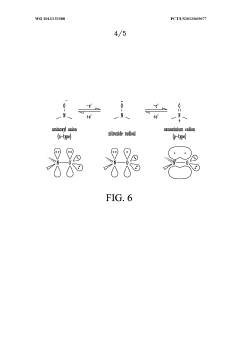
- The development of hybrid energy storage systems utilizing redox active organic compounds dissolved in non-aqueous electrolytes, combined with redox active metals, allowing for improved solubility and energy density through the use of modified anthraquinone derivatives and TEMPO in non-aqueous electrolytes, enabling enhanced energy storage capabilities.

Hybrid radical energy storage device and method of making
PatentActiveUS20120295166A1
Innovation
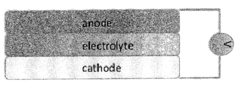
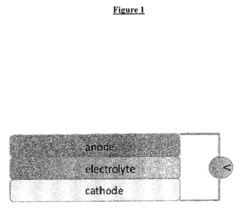
- A hybrid solid-state electrochemical device is developed, featuring a pre-lithiated nanostructured anode, a stable polymeric organic radical-based cathode, and a high-performance solid-state polymer electrolyte, which enhances energy density and cycle stability, while minimizing flammability and temperature effects.
Safety and Performance Standards
The integration of ORB (Organic Radical Battery) prototypes into hybrid storage systems with Li-ion batteries necessitates the development and adherence to rigorous safety and performance standards. These standards must address the unique characteristics of both ORB and Li-ion technologies while ensuring their seamless integration and optimal operation within a hybrid system.
Safety standards for ORB-Li-ion hybrid systems should focus on thermal management, as both technologies have distinct thermal profiles. ORB's organic materials may have different thermal stability characteristics compared to Li-ion cells, requiring careful consideration of heat dissipation and temperature control mechanisms. Standards should specify acceptable temperature ranges for operation and storage, as well as protocols for managing thermal runaway risks.
Electrical safety standards must account for the different voltage and current characteristics of ORB and Li-ion components. Guidelines should be established for proper insulation, circuit protection, and fail-safe mechanisms to prevent short circuits or overcharging. Additionally, standards should address the potential for electrochemical interactions between the two battery types, ensuring that their combination does not lead to unforeseen safety hazards.
Performance standards for hybrid ORB-Li-ion systems should define metrics for evaluating the overall system efficiency, energy density, and power output. These standards must consider the complementary nature of the two technologies, with ORB's rapid charge-discharge capabilities potentially enhancing the system's high-power performance while Li-ion provides sustained energy delivery.
Cycle life and degradation standards are crucial for hybrid systems. Guidelines should be developed to assess the long-term performance of the integrated system, considering the different aging mechanisms of ORB and Li-ion components. Standards should specify methods for monitoring and predicting the state of health for both battery types within the hybrid configuration.
Interoperability standards are essential to ensure seamless communication and coordination between ORB and Li-ion subsystems. These standards should define protocols for battery management systems (BMS) that can effectively monitor and control both battery types simultaneously, optimizing their combined performance and longevity.
Environmental and disposal standards must be established to address the unique materials used in ORB technology alongside existing Li-ion recycling processes. Guidelines should be developed for the safe handling, recycling, and disposal of hybrid systems, considering the potential environmental impact of organic radical materials.
Lastly, testing and certification standards specific to ORB-Li-ion hybrid systems should be created. These standards should outline comprehensive testing procedures that evaluate the safety, performance, and reliability of the integrated system under various operating conditions and scenarios.
Safety standards for ORB-Li-ion hybrid systems should focus on thermal management, as both technologies have distinct thermal profiles. ORB's organic materials may have different thermal stability characteristics compared to Li-ion cells, requiring careful consideration of heat dissipation and temperature control mechanisms. Standards should specify acceptable temperature ranges for operation and storage, as well as protocols for managing thermal runaway risks.
Electrical safety standards must account for the different voltage and current characteristics of ORB and Li-ion components. Guidelines should be established for proper insulation, circuit protection, and fail-safe mechanisms to prevent short circuits or overcharging. Additionally, standards should address the potential for electrochemical interactions between the two battery types, ensuring that their combination does not lead to unforeseen safety hazards.
Performance standards for hybrid ORB-Li-ion systems should define metrics for evaluating the overall system efficiency, energy density, and power output. These standards must consider the complementary nature of the two technologies, with ORB's rapid charge-discharge capabilities potentially enhancing the system's high-power performance while Li-ion provides sustained energy delivery.
Cycle life and degradation standards are crucial for hybrid systems. Guidelines should be developed to assess the long-term performance of the integrated system, considering the different aging mechanisms of ORB and Li-ion components. Standards should specify methods for monitoring and predicting the state of health for both battery types within the hybrid configuration.
Interoperability standards are essential to ensure seamless communication and coordination between ORB and Li-ion subsystems. These standards should define protocols for battery management systems (BMS) that can effectively monitor and control both battery types simultaneously, optimizing their combined performance and longevity.
Environmental and disposal standards must be established to address the unique materials used in ORB technology alongside existing Li-ion recycling processes. Guidelines should be developed for the safe handling, recycling, and disposal of hybrid systems, considering the potential environmental impact of organic radical materials.
Lastly, testing and certification standards specific to ORB-Li-ion hybrid systems should be created. These standards should outline comprehensive testing procedures that evaluate the safety, performance, and reliability of the integrated system under various operating conditions and scenarios.
Environmental Impact Assessment
The integration of Organic Radical Battery (ORB) prototypes into hybrid storage systems alongside Li-ion batteries presents both opportunities and challenges from an environmental perspective. This assessment examines the potential environmental impacts of such integration, considering the lifecycle of both battery technologies and their combined use in energy storage applications.
ORB technology, based on organic compounds, offers several environmental advantages over traditional battery chemistries. The primary materials used in ORBs are derived from abundant, renewable resources, reducing the reliance on rare earth elements and metals associated with conventional batteries. This shift in material sourcing can significantly decrease the environmental footprint of battery production, particularly in terms of resource depletion and habitat disruption caused by mining activities.
The manufacturing process for ORBs generally requires less energy and produces fewer toxic byproducts compared to Li-ion battery production. This results in lower greenhouse gas emissions and reduced environmental pollution during the manufacturing phase. Additionally, the organic nature of the materials used in ORBs makes them more biodegradable and easier to recycle at the end of their life cycle, potentially reducing the environmental burden of battery disposal.
However, the integration of ORB prototypes into hybrid systems with Li-ion batteries introduces new complexities. The combined system may require additional control mechanisms and power electronics, potentially increasing the overall material and energy requirements. The environmental impact of these additional components must be carefully evaluated and balanced against the benefits of the hybrid system.
The operational phase of the hybrid storage system presents both opportunities and challenges. ORBs typically have a higher cycle life than Li-ion batteries, which could extend the overall lifespan of the storage system and reduce the frequency of battery replacements. This longevity can lead to reduced waste generation and resource consumption over time. However, the potential for increased system complexity may result in higher maintenance requirements, potentially offsetting some of these gains.
In terms of energy efficiency, the hybrid system's performance characteristics need to be thoroughly assessed. If the integration leads to improved overall system efficiency, it could result in reduced energy losses and, consequently, lower environmental impact during operation. Conversely, any inefficiencies in the hybrid system could negate the potential environmental benefits.
The end-of-life management of hybrid Li-ion and ORB systems presents new challenges and opportunities. While ORBs are generally more environmentally friendly to dispose of, the presence of Li-ion components in the hybrid system necessitates careful consideration of recycling and disposal processes. Developing effective recycling methods for these hybrid systems will be crucial to maximizing their environmental benefits and minimizing waste.
ORB technology, based on organic compounds, offers several environmental advantages over traditional battery chemistries. The primary materials used in ORBs are derived from abundant, renewable resources, reducing the reliance on rare earth elements and metals associated with conventional batteries. This shift in material sourcing can significantly decrease the environmental footprint of battery production, particularly in terms of resource depletion and habitat disruption caused by mining activities.
The manufacturing process for ORBs generally requires less energy and produces fewer toxic byproducts compared to Li-ion battery production. This results in lower greenhouse gas emissions and reduced environmental pollution during the manufacturing phase. Additionally, the organic nature of the materials used in ORBs makes them more biodegradable and easier to recycle at the end of their life cycle, potentially reducing the environmental burden of battery disposal.
However, the integration of ORB prototypes into hybrid systems with Li-ion batteries introduces new complexities. The combined system may require additional control mechanisms and power electronics, potentially increasing the overall material and energy requirements. The environmental impact of these additional components must be carefully evaluated and balanced against the benefits of the hybrid system.
The operational phase of the hybrid storage system presents both opportunities and challenges. ORBs typically have a higher cycle life than Li-ion batteries, which could extend the overall lifespan of the storage system and reduce the frequency of battery replacements. This longevity can lead to reduced waste generation and resource consumption over time. However, the potential for increased system complexity may result in higher maintenance requirements, potentially offsetting some of these gains.
In terms of energy efficiency, the hybrid system's performance characteristics need to be thoroughly assessed. If the integration leads to improved overall system efficiency, it could result in reduced energy losses and, consequently, lower environmental impact during operation. Conversely, any inefficiencies in the hybrid system could negate the potential environmental benefits.
The end-of-life management of hybrid Li-ion and ORB systems presents new challenges and opportunities. While ORBs are generally more environmentally friendly to dispose of, the presence of Li-ion components in the hybrid system necessitates careful consideration of recycling and disposal processes. Developing effective recycling methods for these hybrid systems will be crucial to maximizing their environmental benefits and minimizing waste.
Unlock deeper insights with Patsnap Eureka Quick Research — get a full tech report to explore trends and direct your research. Try now!
Generate Your Research Report Instantly with AI Agent
Supercharge your innovation with Patsnap Eureka AI Agent Platform!