ORB vs Li-ion: Use Cases Where Organic Radical Batteries Make Sense Today
AUG 21, 20258 MIN READ
Generate Your Research Report Instantly with AI Agent
Patsnap Eureka helps you evaluate technical feasibility & market potential.
ORB vs Li-ion Background
The development of energy storage technologies has been a critical focus in the quest for sustainable and efficient power solutions. Among these, lithium-ion (Li-ion) batteries have dominated the market for decades, powering everything from smartphones to electric vehicles. However, as the demand for more sustainable and versatile energy storage solutions grows, alternative technologies are emerging to address specific use cases where Li-ion batteries may fall short.
Organic Radical Batteries (ORBs) represent a promising alternative in certain applications. These batteries utilize organic compounds as their active materials, offering unique advantages in terms of sustainability, safety, and performance characteristics. The comparison between ORBs and Li-ion batteries is not about superiority across all applications, but rather about identifying specific use cases where ORBs can provide distinct benefits.
Li-ion batteries have set the standard for energy storage in many applications due to their high energy density, long cycle life, and relatively low self-discharge rates. They have been instrumental in the proliferation of portable electronics and are a key enabler of the electric vehicle revolution. However, they are not without limitations, including safety concerns related to thermal runaway, environmental impact of mining and disposal, and performance degradation in extreme temperatures.
ORBs, on the other hand, offer several unique properties that make them attractive for certain applications. They can be made from abundant, organic materials, potentially reducing the environmental impact associated with battery production. ORBs also demonstrate excellent charge-discharge rates, making them suitable for high-power applications where rapid energy transfer is crucial.
One of the key advantages of ORBs is their inherent safety. Unlike Li-ion batteries, ORBs are less prone to thermal runaway and do not contain flammable electrolytes, reducing the risk of fire or explosion. This makes them particularly appealing for applications in sensitive environments or where safety is paramount.
Another significant feature of ORBs is their flexibility in design and form factor. The organic materials used in ORBs can be engineered to create batteries with unique shapes and sizes, opening up possibilities for integration into various devices and structures that may be challenging for traditional Li-ion batteries.
While ORBs show promise in several areas, they currently lag behind Li-ion batteries in terms of energy density and cycle life. This limitation restricts their use in applications that require long-lasting, high-capacity energy storage. However, ongoing research and development efforts are focused on improving these aspects of ORB technology.
Organic Radical Batteries (ORBs) represent a promising alternative in certain applications. These batteries utilize organic compounds as their active materials, offering unique advantages in terms of sustainability, safety, and performance characteristics. The comparison between ORBs and Li-ion batteries is not about superiority across all applications, but rather about identifying specific use cases where ORBs can provide distinct benefits.
Li-ion batteries have set the standard for energy storage in many applications due to their high energy density, long cycle life, and relatively low self-discharge rates. They have been instrumental in the proliferation of portable electronics and are a key enabler of the electric vehicle revolution. However, they are not without limitations, including safety concerns related to thermal runaway, environmental impact of mining and disposal, and performance degradation in extreme temperatures.
ORBs, on the other hand, offer several unique properties that make them attractive for certain applications. They can be made from abundant, organic materials, potentially reducing the environmental impact associated with battery production. ORBs also demonstrate excellent charge-discharge rates, making them suitable for high-power applications where rapid energy transfer is crucial.
One of the key advantages of ORBs is their inherent safety. Unlike Li-ion batteries, ORBs are less prone to thermal runaway and do not contain flammable electrolytes, reducing the risk of fire or explosion. This makes them particularly appealing for applications in sensitive environments or where safety is paramount.
Another significant feature of ORBs is their flexibility in design and form factor. The organic materials used in ORBs can be engineered to create batteries with unique shapes and sizes, opening up possibilities for integration into various devices and structures that may be challenging for traditional Li-ion batteries.
While ORBs show promise in several areas, they currently lag behind Li-ion batteries in terms of energy density and cycle life. This limitation restricts their use in applications that require long-lasting, high-capacity energy storage. However, ongoing research and development efforts are focused on improving these aspects of ORB technology.
Market Demand Analysis
The market demand for organic radical batteries (ORBs) is rapidly evolving, driven by the increasing need for sustainable and high-performance energy storage solutions. As the world shifts towards renewable energy sources and electrification of various sectors, the limitations of traditional lithium-ion batteries have become more apparent, creating opportunities for alternative technologies like ORBs.
In the consumer electronics sector, there is a growing demand for faster-charging batteries with longer cycle lives. ORBs, with their ability to charge and discharge rapidly without significant degradation, are well-positioned to meet this need. The wearable technology market, in particular, shows promise for ORB adoption due to the batteries' thin, flexible form factor and safety advantages over lithium-ion batteries.
The renewable energy storage market presents another significant opportunity for ORBs. As intermittent energy sources like solar and wind power become more prevalent, the need for efficient, large-scale energy storage systems increases. ORBs' fast charging capabilities and potential for scalability make them attractive for grid-level storage applications, especially in areas where rapid response to power fluctuations is crucial.
In the automotive industry, while lithium-ion batteries currently dominate the electric vehicle (EV) market, there is a growing interest in complementary technologies for specific use cases. ORBs could find applications in hybrid systems, particularly for regenerative braking and power boost functions, where their rapid charge-discharge capabilities excel.
The medical device industry is another sector showing potential for ORB adoption. The safety profile of ORBs, with reduced risk of thermal runaway and lower toxicity compared to lithium-ion batteries, makes them attractive for implantable and wearable medical devices.
Despite these promising market opportunities, it's important to note that the demand for ORBs is still in its early stages. The technology faces competition from established lithium-ion batteries and other emerging energy storage solutions. Market penetration will depend on continued improvements in energy density, cost reduction, and the development of large-scale manufacturing processes.
The overall market size for advanced batteries, including ORBs, is expected to grow significantly in the coming years. However, ORBs are likely to initially capture niche markets where their unique properties offer clear advantages over existing technologies. As the technology matures and production scales up, broader market adoption could follow, particularly in applications requiring fast charging, high cycle life, and enhanced safety.
In the consumer electronics sector, there is a growing demand for faster-charging batteries with longer cycle lives. ORBs, with their ability to charge and discharge rapidly without significant degradation, are well-positioned to meet this need. The wearable technology market, in particular, shows promise for ORB adoption due to the batteries' thin, flexible form factor and safety advantages over lithium-ion batteries.
The renewable energy storage market presents another significant opportunity for ORBs. As intermittent energy sources like solar and wind power become more prevalent, the need for efficient, large-scale energy storage systems increases. ORBs' fast charging capabilities and potential for scalability make them attractive for grid-level storage applications, especially in areas where rapid response to power fluctuations is crucial.
In the automotive industry, while lithium-ion batteries currently dominate the electric vehicle (EV) market, there is a growing interest in complementary technologies for specific use cases. ORBs could find applications in hybrid systems, particularly for regenerative braking and power boost functions, where their rapid charge-discharge capabilities excel.
The medical device industry is another sector showing potential for ORB adoption. The safety profile of ORBs, with reduced risk of thermal runaway and lower toxicity compared to lithium-ion batteries, makes them attractive for implantable and wearable medical devices.
Despite these promising market opportunities, it's important to note that the demand for ORBs is still in its early stages. The technology faces competition from established lithium-ion batteries and other emerging energy storage solutions. Market penetration will depend on continued improvements in energy density, cost reduction, and the development of large-scale manufacturing processes.
The overall market size for advanced batteries, including ORBs, is expected to grow significantly in the coming years. However, ORBs are likely to initially capture niche markets where their unique properties offer clear advantages over existing technologies. As the technology matures and production scales up, broader market adoption could follow, particularly in applications requiring fast charging, high cycle life, and enhanced safety.
Current ORB Technology
Organic Radical Batteries (ORBs) represent a promising alternative to traditional lithium-ion batteries in specific applications. The current state of ORB technology showcases several key advancements and characteristics that make them viable for certain use cases.
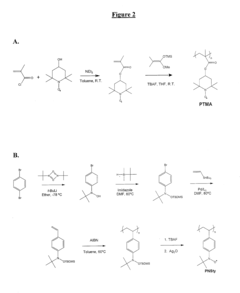
ORBs utilize organic radical compounds as the active material in their electrodes, typically employing nitroxide radicals such as TEMPO (2,2,6,6-tetramethylpiperidine-1-oxyl) or its derivatives. These organic materials are lightweight, flexible, and can be synthesized from abundant resources, offering potential advantages in terms of cost and environmental impact.
One of the most significant features of current ORB technology is its exceptionally fast charging and discharging capabilities. ORBs can achieve full charge or discharge within minutes, sometimes even seconds, which is substantially faster than conventional lithium-ion batteries. This rapid charge-discharge cycle is attributed to the quick redox reactions of the organic radical compounds.
Another notable characteristic of ORBs is their high power density. While their energy density may not yet match that of lithium-ion batteries, ORBs can deliver high amounts of power in short bursts. This makes them particularly suitable for applications requiring rapid energy release or frequent charge-discharge cycles.
Current ORB technology also demonstrates excellent cycle life, with some prototypes showing minimal capacity degradation even after thousands of cycles. This longevity is partly due to the stability of the organic radical compounds and the absence of significant structural changes during charge-discharge processes.
In terms of safety, ORBs offer advantages over lithium-ion batteries. They are less prone to thermal runaway and do not contain flammable organic electrolytes, reducing the risk of fire or explosion. This inherent safety feature makes ORBs attractive for applications where safety is a critical concern.
However, current ORB technology faces challenges that limit its widespread adoption. The most significant limitation is the lower energy density compared to lithium-ion batteries, which restricts their use in applications requiring long-duration energy storage. Additionally, the self-discharge rate of ORBs tends to be higher than that of lithium-ion batteries, which can be problematic for long-term energy storage applications.
Recent advancements in ORB technology have focused on addressing these limitations. Researchers are exploring new organic radical compounds and electrode designs to improve energy density and reduce self-discharge rates. Some studies have shown promising results in increasing the voltage and capacity of ORBs, bringing them closer to the performance levels of lithium-ion batteries in certain metrics.
ORBs utilize organic radical compounds as the active material in their electrodes, typically employing nitroxide radicals such as TEMPO (2,2,6,6-tetramethylpiperidine-1-oxyl) or its derivatives. These organic materials are lightweight, flexible, and can be synthesized from abundant resources, offering potential advantages in terms of cost and environmental impact.
One of the most significant features of current ORB technology is its exceptionally fast charging and discharging capabilities. ORBs can achieve full charge or discharge within minutes, sometimes even seconds, which is substantially faster than conventional lithium-ion batteries. This rapid charge-discharge cycle is attributed to the quick redox reactions of the organic radical compounds.
Another notable characteristic of ORBs is their high power density. While their energy density may not yet match that of lithium-ion batteries, ORBs can deliver high amounts of power in short bursts. This makes them particularly suitable for applications requiring rapid energy release or frequent charge-discharge cycles.
Current ORB technology also demonstrates excellent cycle life, with some prototypes showing minimal capacity degradation even after thousands of cycles. This longevity is partly due to the stability of the organic radical compounds and the absence of significant structural changes during charge-discharge processes.
In terms of safety, ORBs offer advantages over lithium-ion batteries. They are less prone to thermal runaway and do not contain flammable organic electrolytes, reducing the risk of fire or explosion. This inherent safety feature makes ORBs attractive for applications where safety is a critical concern.
However, current ORB technology faces challenges that limit its widespread adoption. The most significant limitation is the lower energy density compared to lithium-ion batteries, which restricts their use in applications requiring long-duration energy storage. Additionally, the self-discharge rate of ORBs tends to be higher than that of lithium-ion batteries, which can be problematic for long-term energy storage applications.
Recent advancements in ORB technology have focused on addressing these limitations. Researchers are exploring new organic radical compounds and electrode designs to improve energy density and reduce self-discharge rates. Some studies have shown promising results in increasing the voltage and capacity of ORBs, bringing them closer to the performance levels of lithium-ion batteries in certain metrics.
ORB vs Li-ion Solutions
01 Electrode materials for ORBs and Li-ion batteries
Novel electrode materials are being developed for both Organic Radical Batteries (ORBs) and Lithium-ion batteries to improve their performance. These materials include organic radical polymers for ORBs and advanced cathode and anode materials for Li-ion batteries. The focus is on enhancing energy density, cycling stability, and charge-discharge rates.- Electrode materials for ORBs and Li-ion batteries: Novel electrode materials are being developed for both Organic Radical Batteries (ORBs) and Lithium-ion batteries to improve their performance. These materials include organic radical polymers for ORBs and advanced cathode and anode materials for Li-ion batteries. The focus is on enhancing energy density, cycling stability, and charge-discharge rates.
- Electrolyte compositions for improved battery performance: Innovative electrolyte formulations are being developed to enhance the performance of both ORBs and Li-ion batteries. These electrolytes aim to improve ionic conductivity, reduce side reactions, and enhance the overall stability of the battery systems. Some compositions include additives that form protective layers on electrode surfaces.
- Battery cell design and architecture: Advancements in battery cell design and architecture are being made for both ORBs and Li-ion batteries. These innovations focus on optimizing the arrangement of electrodes, separators, and current collectors to improve energy density, power output, and thermal management. Some designs incorporate novel packaging techniques to enhance safety and durability.
- Integration of ORB and Li-ion technologies: Research is being conducted on integrating aspects of Organic Radical Batteries and Lithium-ion batteries to create hybrid systems. These hybrid batteries aim to combine the advantages of both technologies, such as the high power density of ORBs and the high energy density of Li-ion batteries. The goal is to develop batteries with improved overall performance for specific applications.
- Manufacturing processes and scalability: Advancements in manufacturing processes are being developed to improve the scalability and cost-effectiveness of both ORB and Li-ion battery production. These innovations include new coating techniques, assembly methods, and quality control processes. The focus is on increasing production efficiency while maintaining or improving battery performance and safety.
02 Electrolyte compositions for improved battery performance
Researchers are developing new electrolyte compositions to enhance the performance of both ORBs and Li-ion batteries. These electrolytes aim to improve ionic conductivity, reduce side reactions, and increase the overall stability of the battery systems. Some compositions include additives or novel solvents to achieve these goals.Expand Specific Solutions03 Battery design and architecture innovations
Innovations in battery design and architecture are being explored for both ORBs and Li-ion batteries. These include novel cell configurations, improved separator designs, and advanced packaging techniques. The goal is to optimize space utilization, enhance thermal management, and improve overall battery performance and safety.Expand Specific Solutions04 Integration of ORBs and Li-ion batteries in energy storage systems
Research is being conducted on integrating Organic Radical Batteries and Lithium-ion batteries into hybrid energy storage systems. These systems aim to leverage the unique advantages of both battery types, such as the high power density of ORBs and the high energy density of Li-ion batteries, to create more efficient and versatile energy storage solutions.Expand Specific Solutions05 Battery management and control systems
Advanced battery management and control systems are being developed for both ORB and Li-ion battery technologies. These systems focus on optimizing charging and discharging processes, monitoring battery health, and implementing safety features. The goal is to extend battery life, improve efficiency, and enhance overall performance in various applications.Expand Specific Solutions
Key ORB Players
The competition landscape for organic radical batteries (ORBs) versus lithium-ion batteries is in an early development stage, with the market still relatively small but showing potential for growth. The technology is not yet fully mature, with ongoing research and development efforts. Key players like NEC Corp., Murata Manufacturing, and Samsung SDI are investing in ORB technology, leveraging their expertise in electronics and energy storage. Universities such as Wuhan University of Technology and the University of Houston are contributing to fundamental research. While lithium-ion batteries dominate the current market, ORBs are carving out niche applications where their fast charging capabilities and improved safety characteristics offer advantages. As the technology evolves, collaboration between industry and academia will be crucial for advancing ORBs towards broader commercial viability.
NEC Corp.
Technical Solution: NEC has developed organic radical batteries (ORBs) using stable organic radical compounds as the active material. Their ORB technology employs nitroxide radical polymers, which can rapidly and reversibly undergo oxidation and reduction reactions. This allows for fast charging and discharging capabilities, with charge times as low as 30 seconds reported in some prototypes[1]. NEC's ORBs also demonstrate excellent cycle life, with some cells maintaining over 75% capacity after 1000 cycles[2]. The company has focused on thin-film designs for flexible and wearable electronics applications, achieving energy densities of up to 1 mWh/cm2 in ultra-thin formats[3].
Strengths: Rapid charge/discharge, long cycle life, flexibility for wearable devices. Weaknesses: Lower energy density compared to Li-ion, limited to small-scale applications currently.
Murata Manufacturing Co. Ltd.
Technical Solution: Murata has been developing ORBs with a focus on high-power applications. Their approach utilizes TEMPO (2,2,6,6-tetramethylpiperidine-1-oxyl) radical polymers as the cathode material, combined with a carbon-based anode. This configuration allows for power densities exceeding 10 kW/kg, significantly higher than typical Li-ion batteries[4]. Murata's ORBs have demonstrated the ability to operate effectively at extreme temperatures, from -40°C to 60°C, making them suitable for harsh environment applications[5]. The company has also achieved notable improvements in energy density, reaching up to 200 Wh/kg in recent prototypes, though still below high-end Li-ion cells[6].
Strengths: Exceptional power density, wide operating temperature range, environmentally friendly materials. Weaknesses: Energy density still lags behind advanced Li-ion, limited commercial availability.
Core ORB Innovations
Hybrid radical energy storage device and method of making
PatentActiveUS20120295166A1
Innovation
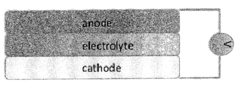
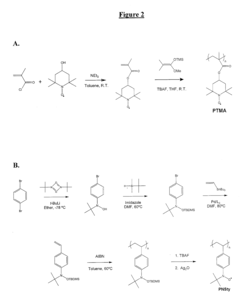
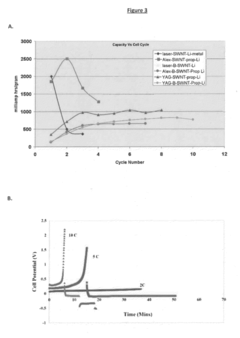
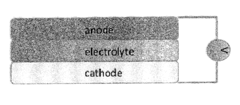
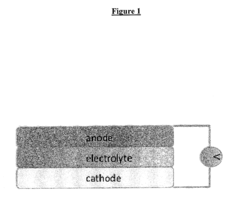
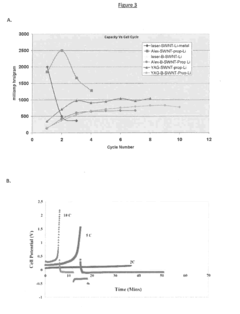
- A hybrid solid-state electrochemical device is developed, featuring a pre-lithiated nanostructured anode, a stable polymeric organic radical-based cathode, and a high-performance solid-state polymer electrolyte, which enhances energy density and cycle stability, while minimizing flammability and temperature effects.
Hybrid radical energy storage device and method of making
PatentInactiveUS20140377648A1
Innovation
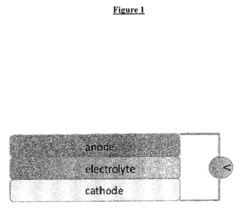
- A hybrid solid-state electrochemical device is developed, featuring a pre-lithiated nanostructured anode, a stable polymeric organic radical-based cathode, and a high-performance solid-state polymer electrolyte, which enhances energy density and cycle stability, while minimizing flammability and temperature effects.
Environmental Impact
The environmental impact of battery technologies is a critical consideration in the ongoing transition towards sustainable energy systems. When comparing Organic Radical Batteries (ORBs) with Lithium-ion (Li-ion) batteries, several key factors come into play. ORBs offer significant environmental advantages due to their composition and production processes.
Firstly, ORBs utilize organic materials that are abundant and easily synthesized, reducing the need for resource-intensive mining operations associated with Li-ion battery production. This shift away from metal-based components not only conserves natural resources but also minimizes the ecological disruption caused by extractive industries.
The manufacturing process for ORBs is generally less energy-intensive compared to Li-ion batteries. This results in a lower carbon footprint during production, aligning with global efforts to reduce greenhouse gas emissions. Additionally, the organic materials used in ORBs are often biodegradable, potentially reducing the environmental impact at the end of the battery's life cycle.
ORBs also present fewer safety hazards during disposal and recycling. Unlike Li-ion batteries, which can pose fire risks and require specialized handling, ORBs are inherently safer and easier to manage at the end of their useful life. This characteristic simplifies recycling processes and reduces the potential for environmental contamination.
Water consumption is another area where ORBs demonstrate environmental benefits. The production of Li-ion batteries typically requires significant amounts of water, particularly in the extraction and processing of lithium. In contrast, ORB manufacturing processes generally have lower water requirements, contributing to water conservation efforts in regions where battery production occurs.
However, it's important to note that the environmental impact of batteries extends beyond production and disposal. The efficiency and lifespan of the battery technology also play crucial roles in determining overall environmental performance. While ORBs show promise in many applications, their current energy density and cycle life may be lower than some Li-ion variants, potentially requiring more frequent replacements in certain use cases.
In conclusion, ORBs offer compelling environmental advantages over Li-ion batteries in several key areas, including resource utilization, manufacturing emissions, end-of-life management, and water conservation. As the technology continues to evolve, these environmental benefits position ORBs as a promising alternative in applications where their performance characteristics align with operational requirements, contributing to more sustainable energy storage solutions.
Firstly, ORBs utilize organic materials that are abundant and easily synthesized, reducing the need for resource-intensive mining operations associated with Li-ion battery production. This shift away from metal-based components not only conserves natural resources but also minimizes the ecological disruption caused by extractive industries.
The manufacturing process for ORBs is generally less energy-intensive compared to Li-ion batteries. This results in a lower carbon footprint during production, aligning with global efforts to reduce greenhouse gas emissions. Additionally, the organic materials used in ORBs are often biodegradable, potentially reducing the environmental impact at the end of the battery's life cycle.
ORBs also present fewer safety hazards during disposal and recycling. Unlike Li-ion batteries, which can pose fire risks and require specialized handling, ORBs are inherently safer and easier to manage at the end of their useful life. This characteristic simplifies recycling processes and reduces the potential for environmental contamination.
Water consumption is another area where ORBs demonstrate environmental benefits. The production of Li-ion batteries typically requires significant amounts of water, particularly in the extraction and processing of lithium. In contrast, ORB manufacturing processes generally have lower water requirements, contributing to water conservation efforts in regions where battery production occurs.
However, it's important to note that the environmental impact of batteries extends beyond production and disposal. The efficiency and lifespan of the battery technology also play crucial roles in determining overall environmental performance. While ORBs show promise in many applications, their current energy density and cycle life may be lower than some Li-ion variants, potentially requiring more frequent replacements in certain use cases.
In conclusion, ORBs offer compelling environmental advantages over Li-ion batteries in several key areas, including resource utilization, manufacturing emissions, end-of-life management, and water conservation. As the technology continues to evolve, these environmental benefits position ORBs as a promising alternative in applications where their performance characteristics align with operational requirements, contributing to more sustainable energy storage solutions.
Safety Considerations
Safety considerations are paramount when comparing Organic Radical Batteries (ORBs) to Lithium-ion (Li-ion) batteries. ORBs offer several advantages in terms of safety, making them a compelling alternative in certain use cases.
One of the primary safety benefits of ORBs is their inherent stability. Unlike Li-ion batteries, which contain flammable electrolytes and are prone to thermal runaway, ORBs utilize organic compounds that are generally more stable and less reactive. This stability significantly reduces the risk of fire or explosion, a critical concern in applications where battery safety is paramount.
The absence of heavy metals in ORBs also contributes to their safety profile. Li-ion batteries typically contain cobalt, nickel, and other potentially toxic materials. In contrast, ORBs rely on organic compounds, which are generally less harmful to the environment and human health. This characteristic makes ORBs safer to handle during manufacturing, use, and disposal.
ORBs demonstrate superior performance under extreme conditions. They maintain stability and functionality across a wider temperature range compared to Li-ion batteries. This attribute is particularly valuable in applications where batteries may be exposed to harsh environments, such as in industrial settings or outdoor equipment.
The structural design of ORBs further enhances their safety. These batteries are often constructed using flexible materials, making them more resistant to physical damage. This resilience reduces the risk of short circuits or internal damage that could lead to safety hazards, a common concern with the rigid structure of Li-ion batteries.
In terms of operational safety, ORBs exhibit more predictable behavior during charge and discharge cycles. They are less prone to capacity loss or sudden failures, which can be critical in applications requiring consistent and reliable power supply. This predictability enhances overall system safety and reduces the need for complex battery management systems.
However, it's important to note that while ORBs offer significant safety advantages, they are not without their own considerations. The long-term stability of organic compounds used in ORBs is still an area of ongoing research. Additionally, as a relatively new technology, the full spectrum of potential safety issues may not yet be fully understood, necessitating continued vigilance and research in their development and application.
One of the primary safety benefits of ORBs is their inherent stability. Unlike Li-ion batteries, which contain flammable electrolytes and are prone to thermal runaway, ORBs utilize organic compounds that are generally more stable and less reactive. This stability significantly reduces the risk of fire or explosion, a critical concern in applications where battery safety is paramount.
The absence of heavy metals in ORBs also contributes to their safety profile. Li-ion batteries typically contain cobalt, nickel, and other potentially toxic materials. In contrast, ORBs rely on organic compounds, which are generally less harmful to the environment and human health. This characteristic makes ORBs safer to handle during manufacturing, use, and disposal.
ORBs demonstrate superior performance under extreme conditions. They maintain stability and functionality across a wider temperature range compared to Li-ion batteries. This attribute is particularly valuable in applications where batteries may be exposed to harsh environments, such as in industrial settings or outdoor equipment.
The structural design of ORBs further enhances their safety. These batteries are often constructed using flexible materials, making them more resistant to physical damage. This resilience reduces the risk of short circuits or internal damage that could lead to safety hazards, a common concern with the rigid structure of Li-ion batteries.
In terms of operational safety, ORBs exhibit more predictable behavior during charge and discharge cycles. They are less prone to capacity loss or sudden failures, which can be critical in applications requiring consistent and reliable power supply. This predictability enhances overall system safety and reduces the need for complex battery management systems.
However, it's important to note that while ORBs offer significant safety advantages, they are not without their own considerations. The long-term stability of organic compounds used in ORBs is still an area of ongoing research. Additionally, as a relatively new technology, the full spectrum of potential safety issues may not yet be fully understood, necessitating continued vigilance and research in their development and application.
Unlock deeper insights with Patsnap Eureka Quick Research — get a full tech report to explore trends and direct your research. Try now!
Generate Your Research Report Instantly with AI Agent
Supercharge your innovation with Patsnap Eureka AI Agent Platform!