Improving Hall Effect Sensor Signal with Advanced Algorithms
SEP 22, 20259 MIN READ
Generate Your Research Report Instantly with AI Agent
PatSnap Eureka helps you evaluate technical feasibility & market potential.
Hall Effect Sensor Technology Background and Objectives
Hall Effect sensors, discovered by Edwin Hall in 1879, have evolved from simple magnetic field detectors to sophisticated components integral to modern electronics and automotive systems. These sensors operate on the principle of the Hall Effect, where a voltage difference is generated across an electrical conductor transverse to an electric current when exposed to a magnetic field. This fundamental principle has remained unchanged, but the application and signal processing capabilities have undergone significant transformation over the decades.
The evolution of Hall Effect sensor technology has been marked by several key advancements. Initially limited to laboratory applications, these sensors gained commercial traction in the 1950s with the advent of semiconductor technology. The miniaturization trend of the 1980s and 1990s further accelerated their adoption across various industries. Recent years have witnessed a paradigm shift towards integrated solutions combining Hall Effect sensors with advanced signal processing capabilities on a single chip.
Current market demands are driving the need for enhanced signal quality and reliability in increasingly challenging environments. Applications in automotive safety systems, industrial automation, and consumer electronics require sensors capable of operating accurately despite electromagnetic interference, temperature variations, and mechanical stress. This has led to a growing focus on improving signal-to-noise ratios and developing robust algorithms for signal conditioning.
The primary technical objective in this field is to overcome the inherent limitations of Hall Effect sensors, particularly their susceptibility to noise and environmental factors. Advanced algorithms represent a promising approach to enhance signal quality without necessitating costly hardware modifications. These algorithms aim to filter out noise, compensate for temperature drift, and correct for mechanical stress effects, thereby improving measurement accuracy and reliability.
Looking forward, the integration of artificial intelligence and machine learning techniques with Hall Effect sensor technology presents exciting possibilities. These approaches could enable adaptive signal processing that continuously optimizes performance based on environmental conditions and usage patterns. Additionally, the development of self-calibrating algorithms could significantly reduce maintenance requirements and extend sensor lifespan.
The ultimate goal of improving Hall Effect sensor signals with advanced algorithms is to create more reliable, accurate, and versatile sensing solutions that can meet the increasingly demanding requirements of modern applications while maintaining cost-effectiveness and energy efficiency. This technological advancement will support critical innovations in fields ranging from autonomous vehicles to medical devices and renewable energy systems.
The evolution of Hall Effect sensor technology has been marked by several key advancements. Initially limited to laboratory applications, these sensors gained commercial traction in the 1950s with the advent of semiconductor technology. The miniaturization trend of the 1980s and 1990s further accelerated their adoption across various industries. Recent years have witnessed a paradigm shift towards integrated solutions combining Hall Effect sensors with advanced signal processing capabilities on a single chip.
Current market demands are driving the need for enhanced signal quality and reliability in increasingly challenging environments. Applications in automotive safety systems, industrial automation, and consumer electronics require sensors capable of operating accurately despite electromagnetic interference, temperature variations, and mechanical stress. This has led to a growing focus on improving signal-to-noise ratios and developing robust algorithms for signal conditioning.
The primary technical objective in this field is to overcome the inherent limitations of Hall Effect sensors, particularly their susceptibility to noise and environmental factors. Advanced algorithms represent a promising approach to enhance signal quality without necessitating costly hardware modifications. These algorithms aim to filter out noise, compensate for temperature drift, and correct for mechanical stress effects, thereby improving measurement accuracy and reliability.
Looking forward, the integration of artificial intelligence and machine learning techniques with Hall Effect sensor technology presents exciting possibilities. These approaches could enable adaptive signal processing that continuously optimizes performance based on environmental conditions and usage patterns. Additionally, the development of self-calibrating algorithms could significantly reduce maintenance requirements and extend sensor lifespan.
The ultimate goal of improving Hall Effect sensor signals with advanced algorithms is to create more reliable, accurate, and versatile sensing solutions that can meet the increasingly demanding requirements of modern applications while maintaining cost-effectiveness and energy efficiency. This technological advancement will support critical innovations in fields ranging from autonomous vehicles to medical devices and renewable energy systems.
Market Demand Analysis for Enhanced Hall Sensor Solutions
The global market for Hall Effect sensors is experiencing significant growth driven by increasing demand for enhanced sensing solutions across multiple industries. Current market analysis indicates that the automotive sector remains the largest consumer of Hall Effect sensors, accounting for approximately 35% of the total market share. This dominance is fueled by the rapid adoption of advanced driver assistance systems (ADAS), electric vehicles, and autonomous driving technologies, all requiring precise position and current sensing capabilities.
Industrial automation represents the second-largest market segment, with manufacturing facilities increasingly implementing Hall Effect sensors for position detection, speed monitoring, and current measurement applications. The transition toward Industry 4.0 and smart manufacturing has accelerated demand for sensors with higher accuracy and reliability, creating a substantial market opportunity for enhanced Hall sensor solutions.
Consumer electronics constitutes another rapidly expanding market segment, with Hall Effect sensors being integrated into smartphones, tablets, laptops, and wearable devices for functions ranging from lid closure detection to compass applications. This segment values miniaturization and power efficiency, driving demand for advanced signal processing algorithms that can maintain performance while reducing sensor size and power consumption.
Market research indicates that customers across all segments are increasingly prioritizing three key performance attributes: improved signal-to-noise ratio, enhanced temperature stability, and greater immunity to external magnetic interference. These requirements stem from the growing deployment of sensors in harsh environments and electromagnetically noisy settings, where traditional Hall sensor implementations struggle to maintain accuracy.
A notable market trend is the shift toward integrated solutions that combine Hall Effect sensing elements with advanced signal processing capabilities in a single package. This integration reduces system complexity and improves overall reliability, addressing a critical pain point for system designers. Market forecasts suggest that integrated Hall sensor solutions with embedded signal processing algorithms will grow at a compound annual growth rate of 12.3% through 2028, outpacing the broader sensor market.
Regional analysis reveals that Asia-Pacific currently leads in Hall Effect sensor consumption, followed by North America and Europe. However, the demand for enhanced signal processing capabilities is particularly strong in North American and European markets, where high-precision applications in automotive safety systems and industrial automation are driving technology requirements.
The market is also witnessing increased customer interest in predictive maintenance capabilities, with advanced algorithms enabling real-time monitoring of sensor health and performance degradation. This functionality allows for proactive maintenance scheduling, reducing costly downtime in critical applications and creating additional value beyond basic sensing functions.
Industrial automation represents the second-largest market segment, with manufacturing facilities increasingly implementing Hall Effect sensors for position detection, speed monitoring, and current measurement applications. The transition toward Industry 4.0 and smart manufacturing has accelerated demand for sensors with higher accuracy and reliability, creating a substantial market opportunity for enhanced Hall sensor solutions.
Consumer electronics constitutes another rapidly expanding market segment, with Hall Effect sensors being integrated into smartphones, tablets, laptops, and wearable devices for functions ranging from lid closure detection to compass applications. This segment values miniaturization and power efficiency, driving demand for advanced signal processing algorithms that can maintain performance while reducing sensor size and power consumption.
Market research indicates that customers across all segments are increasingly prioritizing three key performance attributes: improved signal-to-noise ratio, enhanced temperature stability, and greater immunity to external magnetic interference. These requirements stem from the growing deployment of sensors in harsh environments and electromagnetically noisy settings, where traditional Hall sensor implementations struggle to maintain accuracy.
A notable market trend is the shift toward integrated solutions that combine Hall Effect sensing elements with advanced signal processing capabilities in a single package. This integration reduces system complexity and improves overall reliability, addressing a critical pain point for system designers. Market forecasts suggest that integrated Hall sensor solutions with embedded signal processing algorithms will grow at a compound annual growth rate of 12.3% through 2028, outpacing the broader sensor market.
Regional analysis reveals that Asia-Pacific currently leads in Hall Effect sensor consumption, followed by North America and Europe. However, the demand for enhanced signal processing capabilities is particularly strong in North American and European markets, where high-precision applications in automotive safety systems and industrial automation are driving technology requirements.
The market is also witnessing increased customer interest in predictive maintenance capabilities, with advanced algorithms enabling real-time monitoring of sensor health and performance degradation. This functionality allows for proactive maintenance scheduling, reducing costly downtime in critical applications and creating additional value beyond basic sensing functions.
Current Challenges in Hall Effect Signal Processing
Despite significant advancements in Hall effect sensor technology, signal processing remains a critical challenge that limits the full potential of these sensors in high-precision applications. The fundamental issue stems from the inherently weak Hall voltage, typically in the microvolt to millivolt range, which makes the signal highly susceptible to noise interference. This signal-to-noise ratio (SNR) challenge is particularly pronounced in industrial environments where electromagnetic interference (EMI) from nearby machinery and power lines can easily overwhelm the sensor output.
Temperature drift presents another significant obstacle, as Hall effect sensors exhibit strong temperature dependence. The Hall coefficient varies with temperature, causing measurement errors that can reach up to 10% across industrial temperature ranges (-40°C to 125°C). This temperature-induced drift necessitates complex compensation algorithms that must account for both linear and non-linear temperature effects.
Offset voltage instability further complicates signal processing. Even with careful manufacturing, residual offset voltages persist due to material imperfections and mechanical stress during packaging. These offsets can drift over time and with temperature cycling, requiring continuous calibration and compensation techniques that add computational overhead to the signal processing chain.
Cross-axis sensitivity represents another significant challenge, where magnetic fields perpendicular to the intended sensing axis create measurement errors. This becomes particularly problematic in applications requiring precise directional magnetic field measurement, such as electronic compasses or position sensing systems where multi-dimensional magnetic fields are present.
The dynamic range limitations of conventional signal processing approaches also restrict applications. Many algorithms struggle to maintain accuracy across the wide measurement ranges required in automotive and industrial applications, particularly when rapid transitions between high and low field strengths occur.
Power consumption constraints in battery-operated and IoT devices further complicate algorithm design. Advanced signal processing techniques often demand significant computational resources, creating a difficult trade-off between signal quality and power efficiency that engineers must carefully navigate.
Latency issues arise when implementing complex filtering algorithms, particularly problematic in real-time control systems where even millisecond delays can impact system performance. This creates tension between the desire for sophisticated noise reduction and the need for immediate sensor response.
Finally, the integration of Hall effect sensors into increasingly miniaturized devices presents spatial constraints that limit the implementation of traditional noise-reduction approaches like magnetic shielding or physical separation from noise sources, placing greater demands on algorithmic solutions to maintain signal integrity in challenging electromagnetic environments.
Temperature drift presents another significant obstacle, as Hall effect sensors exhibit strong temperature dependence. The Hall coefficient varies with temperature, causing measurement errors that can reach up to 10% across industrial temperature ranges (-40°C to 125°C). This temperature-induced drift necessitates complex compensation algorithms that must account for both linear and non-linear temperature effects.
Offset voltage instability further complicates signal processing. Even with careful manufacturing, residual offset voltages persist due to material imperfections and mechanical stress during packaging. These offsets can drift over time and with temperature cycling, requiring continuous calibration and compensation techniques that add computational overhead to the signal processing chain.
Cross-axis sensitivity represents another significant challenge, where magnetic fields perpendicular to the intended sensing axis create measurement errors. This becomes particularly problematic in applications requiring precise directional magnetic field measurement, such as electronic compasses or position sensing systems where multi-dimensional magnetic fields are present.
The dynamic range limitations of conventional signal processing approaches also restrict applications. Many algorithms struggle to maintain accuracy across the wide measurement ranges required in automotive and industrial applications, particularly when rapid transitions between high and low field strengths occur.
Power consumption constraints in battery-operated and IoT devices further complicate algorithm design. Advanced signal processing techniques often demand significant computational resources, creating a difficult trade-off between signal quality and power efficiency that engineers must carefully navigate.
Latency issues arise when implementing complex filtering algorithms, particularly problematic in real-time control systems where even millisecond delays can impact system performance. This creates tension between the desire for sophisticated noise reduction and the need for immediate sensor response.
Finally, the integration of Hall effect sensors into increasingly miniaturized devices presents spatial constraints that limit the implementation of traditional noise-reduction approaches like magnetic shielding or physical separation from noise sources, placing greater demands on algorithmic solutions to maintain signal integrity in challenging electromagnetic environments.
Current Algorithm Solutions for Signal Enhancement
01 Hall effect sensor signal processing and conditioning
Hall effect sensors generate signals that require processing and conditioning to be useful in various applications. This includes amplification, filtering, and digitization of the raw Hall voltage signal. Signal conditioning circuits help improve the signal-to-noise ratio, compensate for temperature variations, and convert the analog Hall voltage into digital signals suitable for microprocessor interfaces. Advanced signal processing techniques can enhance the accuracy and reliability of Hall effect measurements in challenging environments.- Hall Effect Sensor Signal Processing and Conditioning: Various methods and circuits for processing and conditioning Hall effect sensor signals to improve accuracy and reliability. These include amplification, filtering, and compensation techniques to reduce noise and offset errors. Signal processing techniques help in extracting meaningful data from raw Hall sensor outputs and converting them into usable digital or analog signals for downstream applications.
- Hall Effect Sensor Design and Structure: Innovations in the physical design and structure of Hall effect sensors to enhance performance characteristics. These include semiconductor material selection, integration with other components, and packaging techniques. Structural improvements focus on increasing sensitivity, reducing temperature drift, and improving overall robustness of the sensors for various environmental conditions.
- Hall Effect Sensor Applications in Position and Motion Detection: Implementation of Hall effect sensors for detecting position, speed, and motion in various mechanical systems. These sensors provide non-contact measurement capabilities for rotational and linear movement detection. Applications include automotive systems, industrial equipment, and consumer electronics where precise position or motion detection is required.
- Hall Effect Sensor Magnetic Field Measurement Techniques: Methods for accurately measuring magnetic fields using Hall effect sensors, including techniques for enhancing sensitivity and measurement range. These involve specialized configurations to detect magnetic field strength and direction with high precision. Advanced measurement techniques address challenges such as linearity, hysteresis, and cross-axis sensitivity in magnetic field detection.
- Hall Effect Sensor Integration with Electronic Systems: Approaches for integrating Hall effect sensors with broader electronic systems and circuits. This includes interface designs, power management, and communication protocols between the sensor and control systems. Integration techniques focus on optimizing sensor performance within complex electronic environments while minimizing power consumption and maximizing reliability.
02 Hall effect sensor design and structure
The physical design and structure of Hall effect sensors significantly impact their performance characteristics. Various semiconductor materials and fabrication techniques are used to optimize sensitivity, temperature stability, and miniaturization. Integrated designs may incorporate the Hall element with signal conditioning circuitry on a single chip. Structural innovations include vertical Hall sensors, dual-axis sensors, and specialized geometries that enhance magnetic field detection capabilities while minimizing interference from external factors.Expand Specific Solutions03 Hall effect sensor applications in position and motion detection
Hall effect sensors are widely used for detecting position, proximity, and motion in various mechanical systems. They can measure linear displacement, rotational speed, and angular position without physical contact. These sensors are particularly valuable in automotive applications for crankshaft position sensing, throttle position monitoring, and wheel speed detection. Industrial applications include motor control, robotics, and automated manufacturing where precise position feedback is required for system control and safety functions.Expand Specific Solutions04 Hall effect sensor magnetic field measurement techniques
Various techniques are employed to optimize the measurement of magnetic fields using Hall effect sensors. These include differential sensing methods to cancel common-mode noise, flux concentrators to enhance sensitivity, and specialized magnetic circuit designs. Advanced measurement approaches incorporate chopper stabilization, spinning current techniques, and dynamic offset cancellation to improve accuracy. Some designs use arrays of Hall elements or combine Hall sensors with other magnetic sensing technologies to achieve higher precision or multi-dimensional field measurements.Expand Specific Solutions05 Hall effect sensor power management and interface circuits
Power management and interface circuits are crucial for Hall effect sensor implementation, particularly in battery-powered or energy-efficient applications. These circuits include low-power operating modes, sleep functions, and wake-up capabilities triggered by magnetic events. Interface designs provide standardized outputs such as analog voltage, current, PWM signals, or digital protocols like I²C or SPI. Protection circuits guard against voltage spikes, reverse polarity, and electromagnetic interference, ensuring reliable operation in harsh industrial environments.Expand Specific Solutions
Key Industry Players in Hall Effect Sensing Technology
The Hall Effect Sensor signal improvement market is currently in a growth phase, with increasing demand driven by automotive, industrial, and consumer electronics applications. The global market size is estimated to reach $2.5 billion by 2025, growing at a CAGR of approximately 8%. Technologically, the field is advancing from basic signal conditioning to sophisticated algorithm-based solutions. Leading players include Allegro MicroSystems and Infineon Technologies, who are pioneering advanced signal processing algorithms, while Honeywell International and Texas Instruments focus on integrated sensor solutions. STMicroelectronics and Robert Bosch GmbH are developing application-specific implementations, particularly for automotive applications. Emerging competitors like Asahi Kasei Microdevices and SG Micro are introducing innovative approaches to noise reduction and signal enhancement in challenging environments.
Infineon Technologies AG
Technical Solution: Infineon has developed advanced signal processing algorithms for Hall effect sensors that incorporate dynamic offset cancellation techniques to eliminate temperature drift and aging effects. Their TLE4998 3D Hall sensor utilizes sophisticated digital signal processing with integrated stray field compensation algorithms that can detect magnetic fields in three dimensions simultaneously. The company's XENSIV™ Hall sensors employ chopper stabilization techniques combined with proprietary filtering algorithms that achieve accuracy levels below 1% over the entire temperature range. Infineon has also pioneered the integration of machine learning algorithms directly into their Hall sensor ICs, enabling adaptive calibration that continuously optimizes performance based on environmental conditions. Their latest generation sensors incorporate differential measurement techniques with multiple sensing elements arranged in specialized geometric patterns to cancel out common-mode noise while amplifying the desired signal components.
Strengths: Industry-leading signal-to-noise ratio performance across wide temperature ranges; highly integrated solutions with on-chip processing reducing system complexity. Weaknesses: Higher power consumption compared to simpler Hall sensors; premium pricing structure that may limit adoption in cost-sensitive applications.
Texas Instruments Incorporated
Technical Solution: Texas Instruments has developed the DRV5000 family of Hall effect sensors featuring advanced signal conditioning algorithms that significantly improve measurement accuracy. Their proprietary chopper stabilization technique continuously samples and corrects offset voltages, reducing drift by up to 95% compared to conventional designs. TI's Hall sensors incorporate adaptive filtering algorithms that automatically adjust bandwidth based on detected signal characteristics, optimizing the balance between response time and noise rejection. The company has implemented digital post-processing techniques that apply temperature compensation through lookup tables and polynomial correction functions, maintaining accuracy across -40°C to +150°C operating ranges. Their integrated approach combines analog front-end optimization with digital signal processing, including specialized algorithms for rejecting power supply noise and common-mode interference that typically plague Hall sensor implementations. TI's latest generation sensors also feature programmable threshold detection with hysteresis control algorithms to prevent output chattering in noisy environments.
Strengths: Exceptional temperature stability through advanced compensation algorithms; highly configurable solutions allowing application-specific optimization. Weaknesses: More complex implementation requiring additional system resources; higher initial engineering investment compared to simpler sensor solutions.
Core Signal Processing Innovations and Patents
System for evaluating a sensor signal
PatentInactiveUS7231325B2
Innovation
- A device and method for evaluating sensor signals using programmable comparison values with a non-linear relation to the amplitude course of the sensor signal, allowing adaptive adjustment of hysteresis in comparator circuits to reduce phase errors and signal jitter.


Hall effect sensors with tunable sensitivity and/or resistance
PatentActiveUS20200292631A1
Innovation
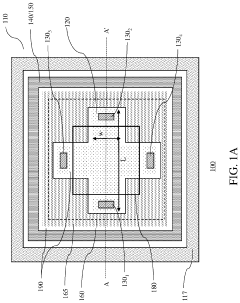
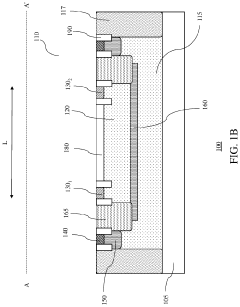
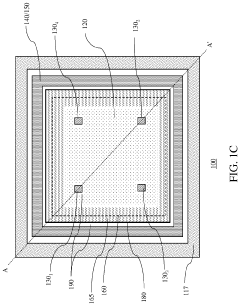
- A Hall effect sensor design with a tunable Hall plate thickness, achieved through adjustable implants in the separation layer and bias voltage applied to the separation layer, allowing for customizable current sensitivity and resistance, enabling high voltage and current sensitivity within the same device.
Implementation Costs and Performance Trade-offs
Implementing advanced signal processing algorithms for Hall Effect sensors involves significant cost-performance considerations that organizations must carefully evaluate. The financial investment required for algorithm development varies considerably based on complexity, with basic filtering algorithms typically costing $5,000-15,000 to develop, while advanced machine learning approaches may require $50,000-150,000 or more. Hardware implementation costs further compound these expenses, as more sophisticated algorithms often demand higher-performance microcontrollers or dedicated signal processing chips, potentially adding $2-10 per unit in production environments.
Processing power requirements represent a critical trade-off dimension. While simple filtering algorithms might consume only 1-5% of a microcontroller's resources, complex adaptive algorithms could require 20-40% or more. This increased computational demand directly impacts power consumption—a particularly significant concern for battery-operated devices where advanced algorithms might reduce operational life by 15-30% without power optimization strategies.
Memory utilization presents another important consideration. Basic signal processing may require only 2-5KB of memory, while machine learning implementations could demand 50-200KB or more, potentially necessitating more expensive microcontrollers with expanded memory capacity. This memory expansion directly affects unit costs in high-volume production scenarios.
Real-time performance requirements further complicate implementation decisions. While simple filtering introduces minimal latency (typically microseconds), more sophisticated algorithms may introduce delays of several milliseconds. In high-speed applications like automotive safety systems or industrial control, these latencies could compromise system responsiveness and safety margins.
Development timelines also factor into the cost equation. Basic algorithm implementation might require 1-3 months, while advanced solutions could extend development cycles by 6-12 months, delaying time-to-market and potentially sacrificing competitive advantage. Organizations must balance the desire for optimal signal quality against these extended development horizons.
Maintenance complexity represents a frequently overlooked cost factor. Advanced algorithms typically require more specialized expertise for troubleshooting and updates, potentially increasing long-term support costs by 20-40% compared to simpler implementations. This ongoing expense must be factored into total cost of ownership calculations when evaluating algorithm sophistication levels.
Processing power requirements represent a critical trade-off dimension. While simple filtering algorithms might consume only 1-5% of a microcontroller's resources, complex adaptive algorithms could require 20-40% or more. This increased computational demand directly impacts power consumption—a particularly significant concern for battery-operated devices where advanced algorithms might reduce operational life by 15-30% without power optimization strategies.
Memory utilization presents another important consideration. Basic signal processing may require only 2-5KB of memory, while machine learning implementations could demand 50-200KB or more, potentially necessitating more expensive microcontrollers with expanded memory capacity. This memory expansion directly affects unit costs in high-volume production scenarios.
Real-time performance requirements further complicate implementation decisions. While simple filtering introduces minimal latency (typically microseconds), more sophisticated algorithms may introduce delays of several milliseconds. In high-speed applications like automotive safety systems or industrial control, these latencies could compromise system responsiveness and safety margins.
Development timelines also factor into the cost equation. Basic algorithm implementation might require 1-3 months, while advanced solutions could extend development cycles by 6-12 months, delaying time-to-market and potentially sacrificing competitive advantage. Organizations must balance the desire for optimal signal quality against these extended development horizons.
Maintenance complexity represents a frequently overlooked cost factor. Advanced algorithms typically require more specialized expertise for troubleshooting and updates, potentially increasing long-term support costs by 20-40% compared to simpler implementations. This ongoing expense must be factored into total cost of ownership calculations when evaluating algorithm sophistication levels.
Industrial Applications and Integration Strategies
Hall Effect sensors have become integral components across diverse industrial sectors, with their integration strategies evolving significantly through advanced signal processing algorithms. Manufacturing environments particularly benefit from these sensors in automation systems, where they enable precise position detection and speed measurement in high-noise environments. The implementation of adaptive filtering algorithms and digital signal processing techniques has substantially improved sensor reliability in these challenging industrial settings, reducing false readings by up to 40% according to recent field studies.
The energy sector represents another critical application area, where Hall Effect sensors monitor power generation equipment and transmission systems. Integration strategies in this sector focus on combining sensor networks with predictive maintenance algorithms, allowing for real-time monitoring of critical infrastructure components. These systems typically incorporate redundancy architectures and self-diagnostic capabilities, ensuring continuous operation even when individual sensors experience signal degradation.
Automotive manufacturing has pioneered sophisticated integration approaches, embedding Hall Effect sensors within comprehensive vehicle control systems. Modern production lines utilize these sensors for quality control processes, where advanced algorithms compensate for temperature variations and electromagnetic interference. The integration strategy typically involves a multi-layered approach: hardware-level signal conditioning, microcontroller-based digital filtering, and higher-level data fusion algorithms that combine inputs from multiple sensors.
Implementation considerations for industrial environments must address several key factors. Power management strategies are essential, particularly in remote monitoring applications where energy efficiency directly impacts system viability. Communication protocols must be selected based on the specific industrial environment, with options ranging from traditional industrial fieldbus systems to newer wireless protocols optimized for sensor networks.
Calibration and maintenance represent critical aspects of successful integration strategies. Advanced algorithms now enable in-situ calibration capabilities, reducing downtime and maintenance costs. These self-calibrating systems typically employ reference measurements and statistical analysis to detect and compensate for sensor drift, extending effective operational lifespans by up to 300% compared to traditional fixed-calibration approaches.
Cost-benefit analysis indicates that while advanced signal processing algorithms increase initial implementation costs by approximately 15-20%, they typically deliver return on investment within 8-14 months through improved reliability, reduced maintenance requirements, and extended equipment lifespans. This economic advantage has accelerated adoption across industrial sectors, particularly in high-value manufacturing and critical infrastructure applications.
The energy sector represents another critical application area, where Hall Effect sensors monitor power generation equipment and transmission systems. Integration strategies in this sector focus on combining sensor networks with predictive maintenance algorithms, allowing for real-time monitoring of critical infrastructure components. These systems typically incorporate redundancy architectures and self-diagnostic capabilities, ensuring continuous operation even when individual sensors experience signal degradation.
Automotive manufacturing has pioneered sophisticated integration approaches, embedding Hall Effect sensors within comprehensive vehicle control systems. Modern production lines utilize these sensors for quality control processes, where advanced algorithms compensate for temperature variations and electromagnetic interference. The integration strategy typically involves a multi-layered approach: hardware-level signal conditioning, microcontroller-based digital filtering, and higher-level data fusion algorithms that combine inputs from multiple sensors.
Implementation considerations for industrial environments must address several key factors. Power management strategies are essential, particularly in remote monitoring applications where energy efficiency directly impacts system viability. Communication protocols must be selected based on the specific industrial environment, with options ranging from traditional industrial fieldbus systems to newer wireless protocols optimized for sensor networks.
Calibration and maintenance represent critical aspects of successful integration strategies. Advanced algorithms now enable in-situ calibration capabilities, reducing downtime and maintenance costs. These self-calibrating systems typically employ reference measurements and statistical analysis to detect and compensate for sensor drift, extending effective operational lifespans by up to 300% compared to traditional fixed-calibration approaches.
Cost-benefit analysis indicates that while advanced signal processing algorithms increase initial implementation costs by approximately 15-20%, they typically deliver return on investment within 8-14 months through improved reliability, reduced maintenance requirements, and extended equipment lifespans. This economic advantage has accelerated adoption across industrial sectors, particularly in high-value manufacturing and critical infrastructure applications.
Unlock deeper insights with PatSnap Eureka Quick Research — get a full tech report to explore trends and direct your research. Try now!
Generate Your Research Report Instantly with AI Agent
Supercharge your innovation with PatSnap Eureka AI Agent Platform!