

Improving Hall Effect Sensor Signals: Filtering Techniques
SEP 22, 202510 MIN READ
Generate Your Research Report Instantly with AI Agent
PatSnap Eureka helps you evaluate technical feasibility & market potential.
Hall Effect Sensor Technology Background and Objectives
Hall Effect sensors, discovered by Edwin Hall in 1879, have evolved from simple magnetic field detectors to sophisticated components integral to modern electronics and automotive systems. These sensors operate on the principle of the Hall Effect, where a voltage difference is generated across an electrical conductor transverse to an electric current when placed in a magnetic field. This fundamental principle has remained unchanged, but the implementation and application have undergone significant transformation over the decades.
The evolution of Hall Effect sensor technology has been marked by several key advancements. Early sensors were primarily used in laboratory settings for magnetic field measurements. The 1950s saw the first commercial applications with the advent of semiconductor technology. By the 1980s, integrated circuit technology enabled the miniaturization and mass production of Hall Effect sensors, significantly expanding their application scope.
Today's Hall Effect sensors are characterized by high sensitivity, reliability, and integration capabilities. They have become essential components in automotive systems (for position sensing, speed detection, and current monitoring), industrial automation, consumer electronics, and medical devices. The market has witnessed a shift towards more sophisticated sensors with enhanced features such as digital output, programmability, and improved temperature stability.
Despite these advancements, signal quality remains a persistent challenge in Hall Effect sensor applications. Environmental factors, electromagnetic interference, temperature variations, and mechanical vibrations can all degrade sensor signals, leading to inaccurate readings and system malfunctions. This is particularly problematic in high-precision applications and harsh operating environments.
The primary objective of improving Hall Effect sensor signals through filtering techniques is to enhance the accuracy, reliability, and robustness of these sensors across various applications. Specific goals include reducing noise interference, improving signal-to-noise ratio, compensating for temperature drift, and enhancing the overall performance in dynamic environments.
Future technological trends point towards the development of more intelligent filtering solutions that can adapt to changing environmental conditions. Machine learning algorithms and advanced digital signal processing techniques are being explored to create adaptive filtering systems that can automatically adjust parameters based on real-time conditions. Additionally, there is growing interest in integrating filtering capabilities directly into sensor packages, creating more compact and efficient solutions.
The achievement of these objectives would significantly expand the application potential of Hall Effect sensors, particularly in emerging fields such as autonomous vehicles, advanced robotics, and IoT devices where precise and reliable sensing is critical for system performance and safety.
The evolution of Hall Effect sensor technology has been marked by several key advancements. Early sensors were primarily used in laboratory settings for magnetic field measurements. The 1950s saw the first commercial applications with the advent of semiconductor technology. By the 1980s, integrated circuit technology enabled the miniaturization and mass production of Hall Effect sensors, significantly expanding their application scope.
Today's Hall Effect sensors are characterized by high sensitivity, reliability, and integration capabilities. They have become essential components in automotive systems (for position sensing, speed detection, and current monitoring), industrial automation, consumer electronics, and medical devices. The market has witnessed a shift towards more sophisticated sensors with enhanced features such as digital output, programmability, and improved temperature stability.
Despite these advancements, signal quality remains a persistent challenge in Hall Effect sensor applications. Environmental factors, electromagnetic interference, temperature variations, and mechanical vibrations can all degrade sensor signals, leading to inaccurate readings and system malfunctions. This is particularly problematic in high-precision applications and harsh operating environments.
The primary objective of improving Hall Effect sensor signals through filtering techniques is to enhance the accuracy, reliability, and robustness of these sensors across various applications. Specific goals include reducing noise interference, improving signal-to-noise ratio, compensating for temperature drift, and enhancing the overall performance in dynamic environments.
Future technological trends point towards the development of more intelligent filtering solutions that can adapt to changing environmental conditions. Machine learning algorithms and advanced digital signal processing techniques are being explored to create adaptive filtering systems that can automatically adjust parameters based on real-time conditions. Additionally, there is growing interest in integrating filtering capabilities directly into sensor packages, creating more compact and efficient solutions.
The achievement of these objectives would significantly expand the application potential of Hall Effect sensors, particularly in emerging fields such as autonomous vehicles, advanced robotics, and IoT devices where precise and reliable sensing is critical for system performance and safety.
Market Demand Analysis for High-Quality Hall Sensor Applications
The global market for Hall effect sensors is experiencing robust growth, driven by increasing demand for high-precision sensing technologies across multiple industries. Current market valuations place the Hall sensor market at approximately 2.1 billion USD in 2023, with projections indicating a compound annual growth rate of 8.7% through 2030. This growth trajectory is primarily fueled by the automotive sector, which accounts for nearly 40% of the total market share, followed by industrial automation at 25% and consumer electronics at 18%.
Within the automotive industry, the transition toward electric and autonomous vehicles has significantly amplified the need for high-quality Hall sensor applications. These sensors are critical components in battery management systems, motor control units, and position sensing mechanisms. The automotive sector's demand for Hall sensors with enhanced signal quality and noise immunity has grown by 12.3% annually since 2020, outpacing the overall market growth rate.
Industrial automation represents another substantial market segment with escalating requirements for precise position detection and current measurement capabilities. Manufacturing facilities implementing Industry 4.0 technologies have increased their integration of Hall sensors by approximately 15% year-over-year, particularly in robotics and automated production lines where signal integrity directly impacts operational accuracy and efficiency.
Consumer electronics manufacturers are increasingly incorporating Hall effect sensors in smartphones, tablets, and wearable devices for functions ranging from lid detection to compass applications. This segment demands miniaturized sensors with exceptional signal-to-noise ratios and minimal power consumption, creating a specialized market niche estimated at 380 million USD annually.
The healthcare sector presents an emerging market opportunity, with applications in medical devices and diagnostic equipment requiring ultra-precise Hall sensor measurements. This segment is growing at 10.2% annually, driven by innovations in portable medical devices and implantable technologies where signal filtering techniques are essential for accurate diagnostics and patient monitoring.
Regional analysis reveals that Asia-Pacific dominates the market with a 45% share, led by manufacturing powerhouses in China, Japan, and South Korea. North America follows at 28%, with Europe accounting for 22% of the global market. The remaining 5% is distributed across other regions, with notable growth observed in emerging economies investing in industrial modernization.
Customer requirements across these markets consistently emphasize three key performance indicators: signal stability under varying environmental conditions, immunity to electromagnetic interference, and reduced signal drift over time. Market research indicates that 78% of engineering teams consider signal filtering capabilities as a critical factor in their Hall sensor selection process, highlighting the commercial significance of advanced filtering techniques in maintaining competitive advantage.
Within the automotive industry, the transition toward electric and autonomous vehicles has significantly amplified the need for high-quality Hall sensor applications. These sensors are critical components in battery management systems, motor control units, and position sensing mechanisms. The automotive sector's demand for Hall sensors with enhanced signal quality and noise immunity has grown by 12.3% annually since 2020, outpacing the overall market growth rate.
Industrial automation represents another substantial market segment with escalating requirements for precise position detection and current measurement capabilities. Manufacturing facilities implementing Industry 4.0 technologies have increased their integration of Hall sensors by approximately 15% year-over-year, particularly in robotics and automated production lines where signal integrity directly impacts operational accuracy and efficiency.
Consumer electronics manufacturers are increasingly incorporating Hall effect sensors in smartphones, tablets, and wearable devices for functions ranging from lid detection to compass applications. This segment demands miniaturized sensors with exceptional signal-to-noise ratios and minimal power consumption, creating a specialized market niche estimated at 380 million USD annually.
The healthcare sector presents an emerging market opportunity, with applications in medical devices and diagnostic equipment requiring ultra-precise Hall sensor measurements. This segment is growing at 10.2% annually, driven by innovations in portable medical devices and implantable technologies where signal filtering techniques are essential for accurate diagnostics and patient monitoring.
Regional analysis reveals that Asia-Pacific dominates the market with a 45% share, led by manufacturing powerhouses in China, Japan, and South Korea. North America follows at 28%, with Europe accounting for 22% of the global market. The remaining 5% is distributed across other regions, with notable growth observed in emerging economies investing in industrial modernization.
Customer requirements across these markets consistently emphasize three key performance indicators: signal stability under varying environmental conditions, immunity to electromagnetic interference, and reduced signal drift over time. Market research indicates that 78% of engineering teams consider signal filtering capabilities as a critical factor in their Hall sensor selection process, highlighting the commercial significance of advanced filtering techniques in maintaining competitive advantage.
Current Challenges in Hall Effect Signal Processing
Hall Effect sensors, widely used in various industrial and automotive applications, face significant signal processing challenges that limit their performance in real-world environments. The primary challenge stems from the inherently low signal-to-noise ratio (SNR) of Hall Effect sensors, particularly in applications requiring high precision measurements of magnetic fields. These sensors typically produce output signals in the millivolt range, making them highly susceptible to electromagnetic interference (EMI) and environmental noise.
Temperature drift represents another critical challenge, as Hall Effect sensors exhibit substantial sensitivity variations across operating temperature ranges. This thermal dependency can cause measurement errors of up to 10-15% across industrial temperature ranges (-40°C to 125°C), necessitating sophisticated compensation techniques for reliable operation in varying environmental conditions.
Power supply fluctuations further complicate signal processing efforts. Hall Effect sensors require stable power sources, yet many applications involve varying supply voltages or noisy power rails. Even minor voltage variations can introduce significant measurement errors, particularly in automotive environments where battery voltage can fluctuate considerably during normal operation.
Mechanical vibration effects constitute an often-overlooked challenge in Hall Effect signal processing. In applications such as rotating machinery monitoring or automotive wheel speed sensing, vibrations can induce spurious signals that are difficult to distinguish from genuine magnetic field changes. These mechanical artifacts require specialized filtering approaches beyond standard noise reduction techniques.
Bandwidth limitations present additional complications, especially in high-speed applications. Traditional filtering methods often introduce phase delays that become problematic in real-time control systems. Engineers must carefully balance noise reduction against response time requirements, particularly in safety-critical applications where delayed signals could have serious consequences.
Cross-axis sensitivity issues arise when Hall Effect sensors detect magnetic fields from unintended directions. This phenomenon creates measurement errors in multi-axis applications and requires advanced signal processing to isolate the desired measurement axis from interference along orthogonal planes.
Aging and drift characteristics of Hall Effect sensors over their operational lifetime introduce long-term stability concerns. Signal processing algorithms must adapt to gradual sensitivity changes while maintaining measurement accuracy throughout the device's service life, which may span several years in industrial applications.
The integration of Hall Effect sensors into increasingly miniaturized and complex systems introduces additional challenges related to power consumption and heat dissipation. Signal processing techniques must be optimized for low-power operation while maintaining sufficient performance for the intended application.
Temperature drift represents another critical challenge, as Hall Effect sensors exhibit substantial sensitivity variations across operating temperature ranges. This thermal dependency can cause measurement errors of up to 10-15% across industrial temperature ranges (-40°C to 125°C), necessitating sophisticated compensation techniques for reliable operation in varying environmental conditions.
Power supply fluctuations further complicate signal processing efforts. Hall Effect sensors require stable power sources, yet many applications involve varying supply voltages or noisy power rails. Even minor voltage variations can introduce significant measurement errors, particularly in automotive environments where battery voltage can fluctuate considerably during normal operation.
Mechanical vibration effects constitute an often-overlooked challenge in Hall Effect signal processing. In applications such as rotating machinery monitoring or automotive wheel speed sensing, vibrations can induce spurious signals that are difficult to distinguish from genuine magnetic field changes. These mechanical artifacts require specialized filtering approaches beyond standard noise reduction techniques.
Bandwidth limitations present additional complications, especially in high-speed applications. Traditional filtering methods often introduce phase delays that become problematic in real-time control systems. Engineers must carefully balance noise reduction against response time requirements, particularly in safety-critical applications where delayed signals could have serious consequences.
Cross-axis sensitivity issues arise when Hall Effect sensors detect magnetic fields from unintended directions. This phenomenon creates measurement errors in multi-axis applications and requires advanced signal processing to isolate the desired measurement axis from interference along orthogonal planes.
Aging and drift characteristics of Hall Effect sensors over their operational lifetime introduce long-term stability concerns. Signal processing algorithms must adapt to gradual sensitivity changes while maintaining measurement accuracy throughout the device's service life, which may span several years in industrial applications.
The integration of Hall Effect sensors into increasingly miniaturized and complex systems introduces additional challenges related to power consumption and heat dissipation. Signal processing techniques must be optimized for low-power operation while maintaining sufficient performance for the intended application.
Current Signal Filtering Solutions and Implementation Methods
01 Signal processing techniques for Hall Effect sensors
Various signal processing techniques can be employed to improve the quality of Hall Effect sensor signals. These include filtering methods to reduce noise, amplification circuits to enhance weak signals, and digital signal processing algorithms to extract meaningful data from raw sensor outputs. Advanced processing techniques can compensate for temperature variations and other environmental factors that might affect signal quality.- Signal processing techniques for Hall Effect sensors: Various signal processing techniques can be employed to improve the quality of Hall Effect sensor signals. These include filtering methods to reduce noise, amplification circuits to enhance weak signals, and digital processing algorithms to extract meaningful data from raw sensor outputs. Advanced signal conditioning techniques help in achieving higher accuracy and reliability in measurements, particularly in environments with electromagnetic interference.
- Design optimization of Hall Effect sensor structures: The physical design and structure of Hall Effect sensors significantly impact signal quality. Optimized sensor geometries, improved semiconductor materials, and specialized fabrication techniques can enhance sensitivity while reducing noise. Structural innovations such as cross-shaped Hall plates, integrated magnetic concentrators, and multi-layer designs contribute to better signal-to-noise ratios and increased measurement precision.
- Compensation methods for environmental factors: Environmental factors like temperature variations, mechanical stress, and aging can degrade Hall Effect sensor signal quality. Various compensation methods can be implemented to mitigate these effects, including temperature compensation circuits, offset voltage correction, and calibration techniques. These approaches help maintain signal integrity and measurement accuracy across varying operating conditions and over the sensor's lifetime.
- Integration with complementary sensing technologies: Combining Hall Effect sensors with complementary sensing technologies can improve overall signal quality and reliability. Hybrid sensing approaches that integrate Hall Effect sensors with magnetoresistive sensors, fluxgate magnetometers, or MEMS devices can provide redundancy and enhanced performance. These integrated solutions offer improved accuracy, extended measurement range, and better noise immunity compared to standalone Hall sensors.
- Advanced packaging and shielding techniques: Packaging and shielding play crucial roles in preserving Hall Effect sensor signal quality. Specialized encapsulation materials, electromagnetic shields, and strategic component placement can protect the sensor from external interference. Advanced packaging techniques also improve thermal management and mechanical stability, which directly impact signal integrity, particularly in harsh industrial environments or automotive applications.
02 Sensor design optimization for improved signal quality
The physical design and construction of Hall Effect sensors significantly impact signal quality. Optimized sensor geometries, improved semiconductor materials, and specialized packaging techniques can enhance sensitivity while reducing noise. Design considerations include the shape and size of the sensing element, the configuration of magnetic flux concentrators, and the integration of on-chip compensation circuits to minimize offset and drift.Expand Specific Solutions03 Noise reduction and interference mitigation
Techniques for reducing noise and mitigating interference in Hall Effect sensor signals include shielding methods, differential sensing arrangements, and chopper stabilization. These approaches help to minimize the effects of external magnetic fields, electromagnetic interference, and thermal noise. Implementing proper grounding schemes and isolation techniques further improves signal-to-noise ratio and overall signal quality.Expand Specific Solutions04 Calibration and compensation methods
Calibration and compensation methods are essential for maintaining high signal quality in Hall Effect sensors. These include techniques for offset compensation, sensitivity adjustment, and temperature drift correction. Automated calibration procedures during manufacturing and self-calibration capabilities during operation ensure consistent performance across varying environmental conditions and over the sensor's lifetime.Expand Specific Solutions05 Integration with measurement and control systems
The integration of Hall Effect sensors with measurement and control systems affects overall signal quality. This includes considerations for sensor placement, signal conditioning circuits, analog-to-digital conversion techniques, and communication interfaces. Proper integration ensures that the sensor signals are accurately captured, processed, and utilized by the larger system, maintaining signal integrity throughout the measurement chain.Expand Specific Solutions
Leading Manufacturers and Research Institutions in Hall Sensing
The Hall Effect Sensor signal filtering technology market is currently in a growth phase, with increasing demand driven by automotive, industrial, and consumer electronics applications. The market is projected to expand significantly as sensors become integral to IoT and smart devices. Leading players include Allegro MicroSystems, Infineon Technologies, and STMicroelectronics, who have developed advanced filtering techniques to improve signal-to-noise ratios. Texas Instruments and Robert Bosch GmbH have made substantial investments in developing proprietary algorithms for noise reduction. The technology is approaching maturity in traditional applications, but emerging areas like autonomous vehicles and industrial automation present new challenges requiring innovative filtering solutions. Companies like Honeywell and Huawei are expanding their sensor portfolios to capitalize on these opportunities, focusing on miniaturization and power efficiency alongside signal quality improvements.
Allegro MicroSystems LLC
Technical Solution: Allegro MicroSystems has developed advanced signal conditioning techniques specifically for Hall Effect sensors that incorporate chopper stabilization and digital filtering algorithms. Their approach uses a combination of hardware and software solutions to minimize noise and offset drift. The hardware implementation includes differential sensing with matched Hall elements to reject common-mode noise, while their proprietary BiCMOS process integrates analog filtering stages directly with the sensor. For digital signal processing, Allegro employs adaptive filtering techniques that dynamically adjust filter parameters based on operating conditions, allowing for optimal noise rejection without compromising response time. Their latest generation sensors incorporate programmable bandwidth settings that can be adjusted through I2C or SPI interfaces, enabling system designers to balance between noise immunity and dynamic response requirements. Allegro's solutions also feature temperature compensation algorithms that maintain signal integrity across wide temperature ranges (-40°C to +150°C), critical for automotive and industrial applications.
Strengths: Industry-leading noise floor performance (typically <10μV RMS) and excellent temperature stability. Their integrated approach reduces component count and system complexity. Weaknesses: Higher power consumption compared to simpler solutions and premium pricing that may be prohibitive for cost-sensitive applications.
STMicroelectronics International NV
Technical Solution: STMicroelectronics has pioneered a comprehensive approach to Hall Effect sensor signal filtering through their multi-stage signal processing architecture. Their solution begins with an analog front-end featuring low-noise amplifiers and precision bandgap references to establish a clean baseline signal. This is followed by a hybrid filtering approach that combines analog and digital techniques. The analog section employs Butterworth filters for their maximally flat frequency response, while the digital domain implements adaptive finite impulse response (FIR) filters that can be optimized for specific noise profiles. ST's latest Hall sensor ICs incorporate embedded microcontrollers running proprietary algorithms that perform real-time signal analysis and filtering optimization. Their technology also features auto-calibration routines that compensate for manufacturing variations and aging effects, ensuring consistent performance over the device lifetime. For applications requiring high-speed response, ST has developed predictive filtering algorithms that minimize phase delay while maintaining effective noise suppression.
Strengths: Excellent balance between noise rejection and response time, with configurable filter parameters to suit various applications. Their solutions offer high integration with minimal external components required. Weaknesses: Higher computational complexity increases power consumption, and some advanced filtering modes introduce latency that may be problematic for time-critical applications.
Key Patents and Research in Hall Effect Signal Enhancement
Chopped Hall effect sensor
PatentActiveUS7425821B2
Innovation
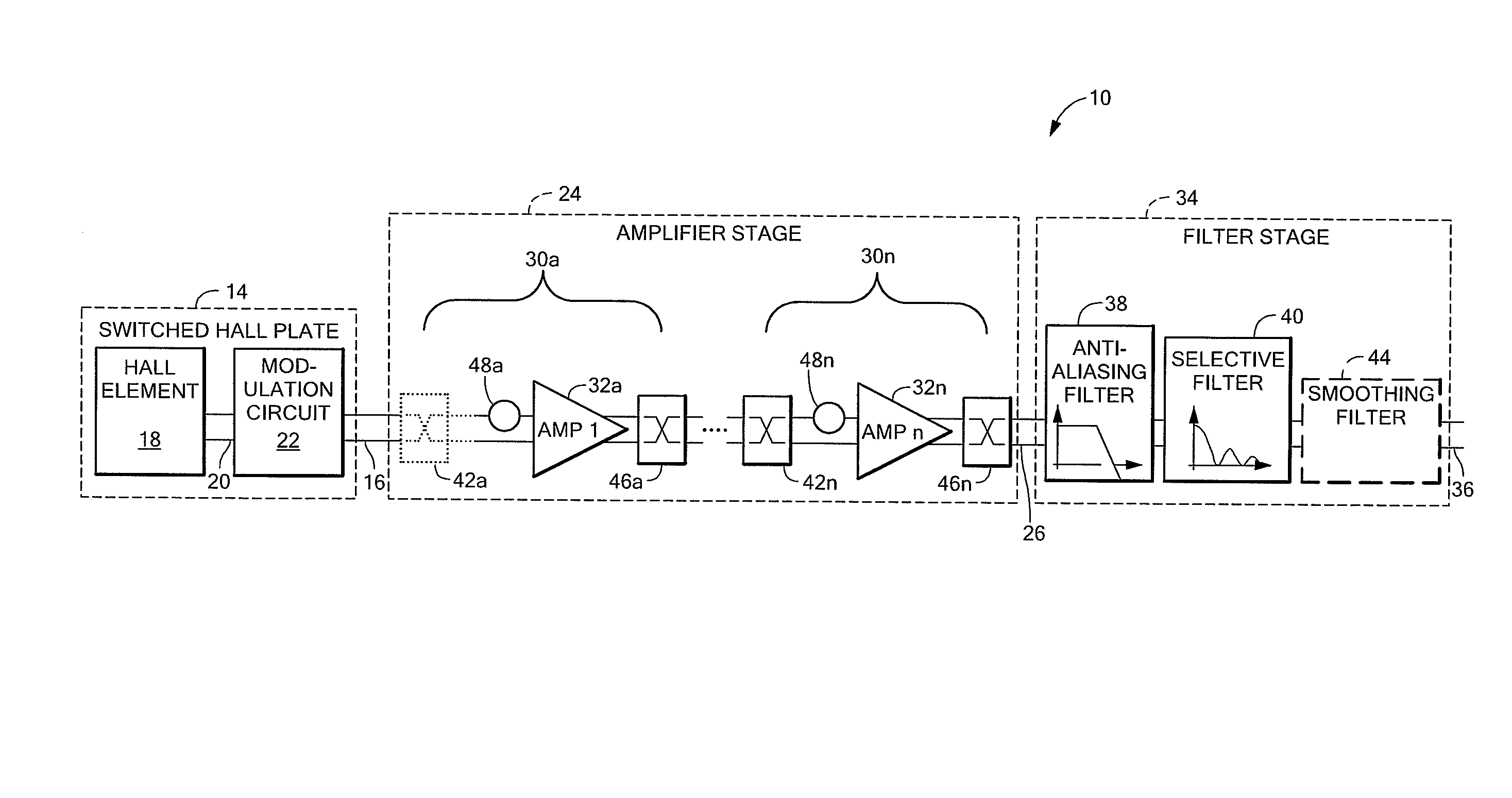
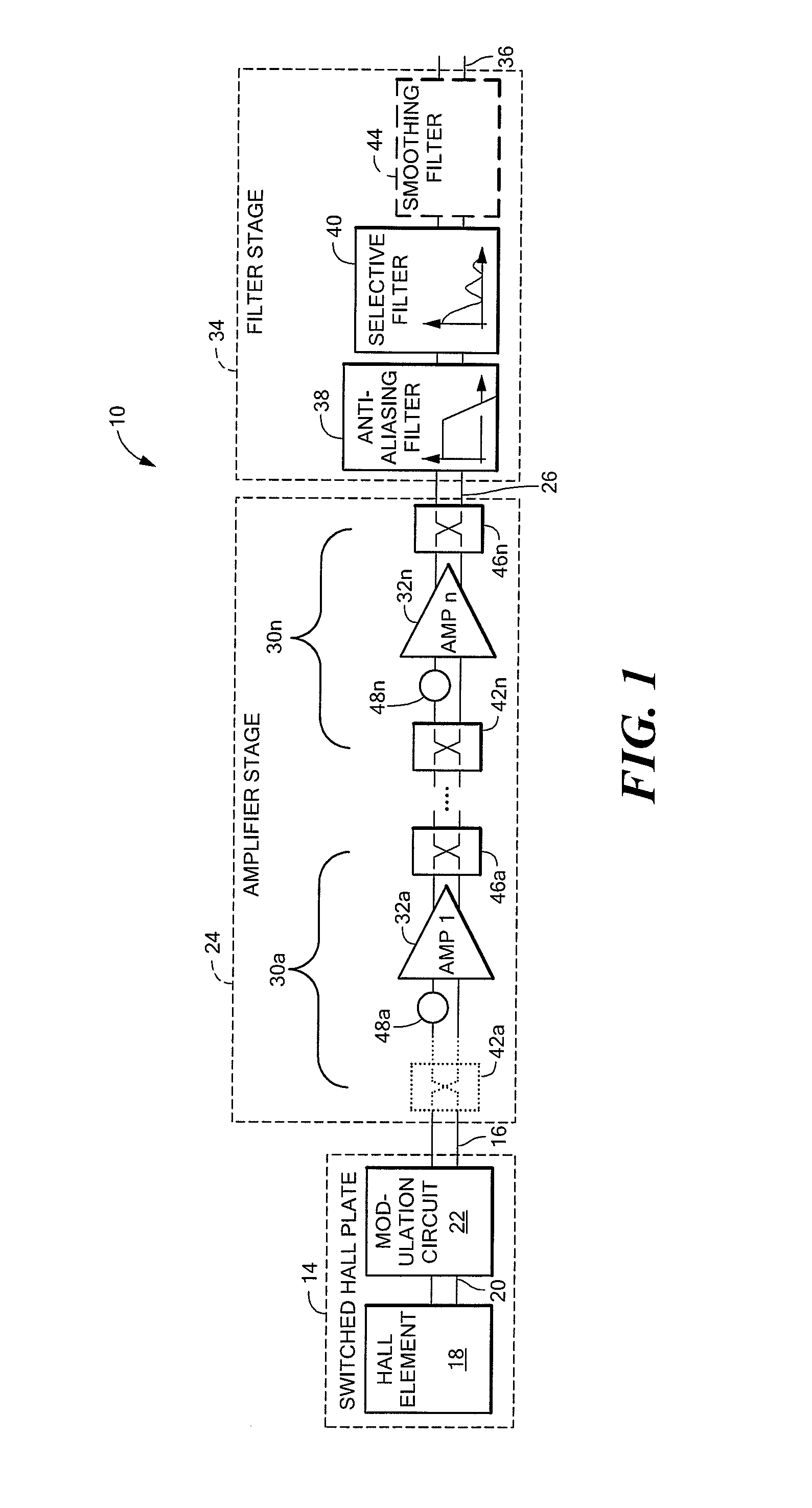
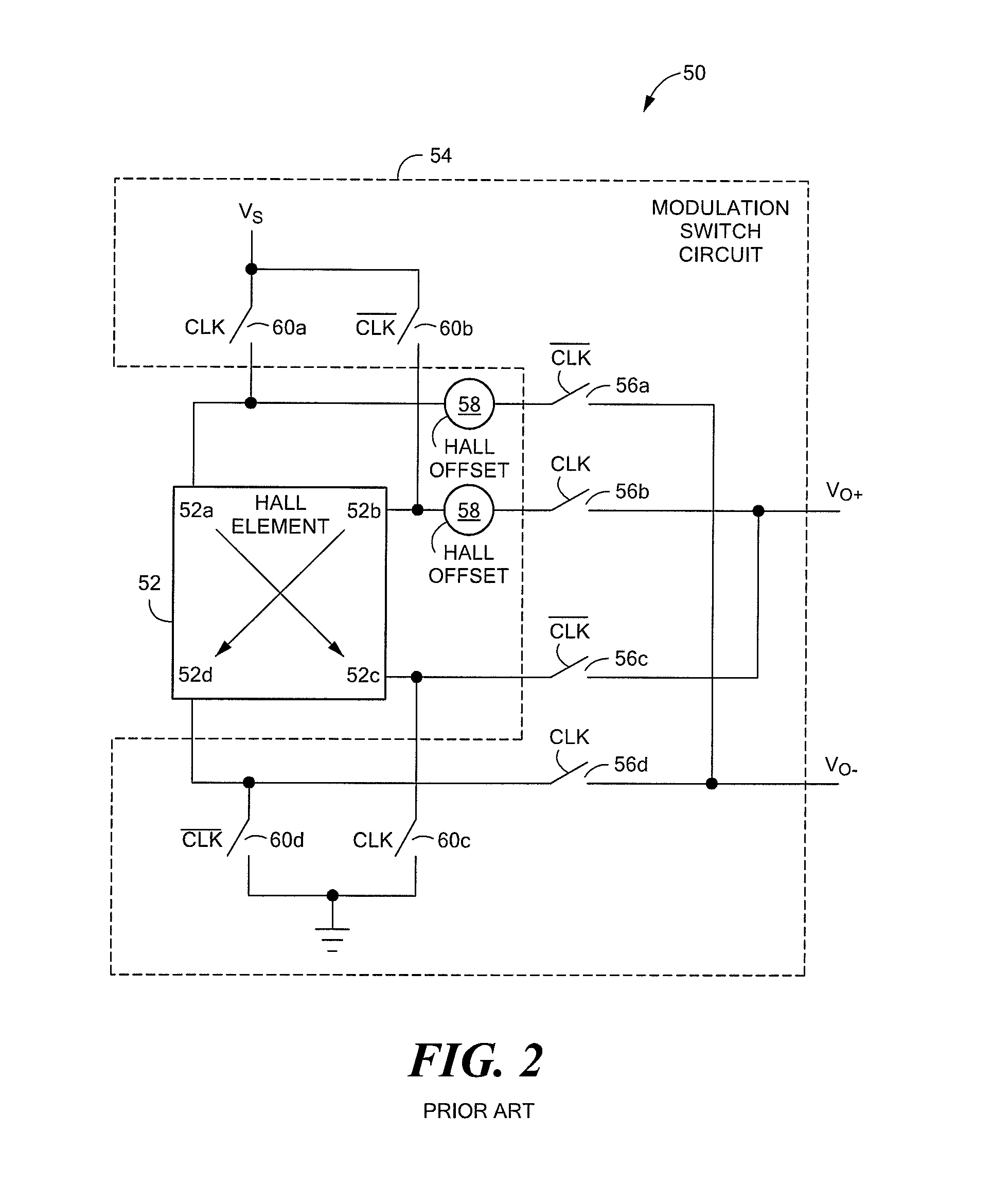
- The implementation of a Hall effect sensor with a selective filter and an anti-aliasing filter, where the selective filter removes the offset signal component and its associated ripple, and the anti-aliasing filter prevents aliasing by removing frequency components above a predetermined frequency, ensuring a high signal-to-noise ratio and fast response time.

Filtering techniques to remove noise from a periodic signal and Irms calculations
PatentInactiveUS20080007247A1
Innovation
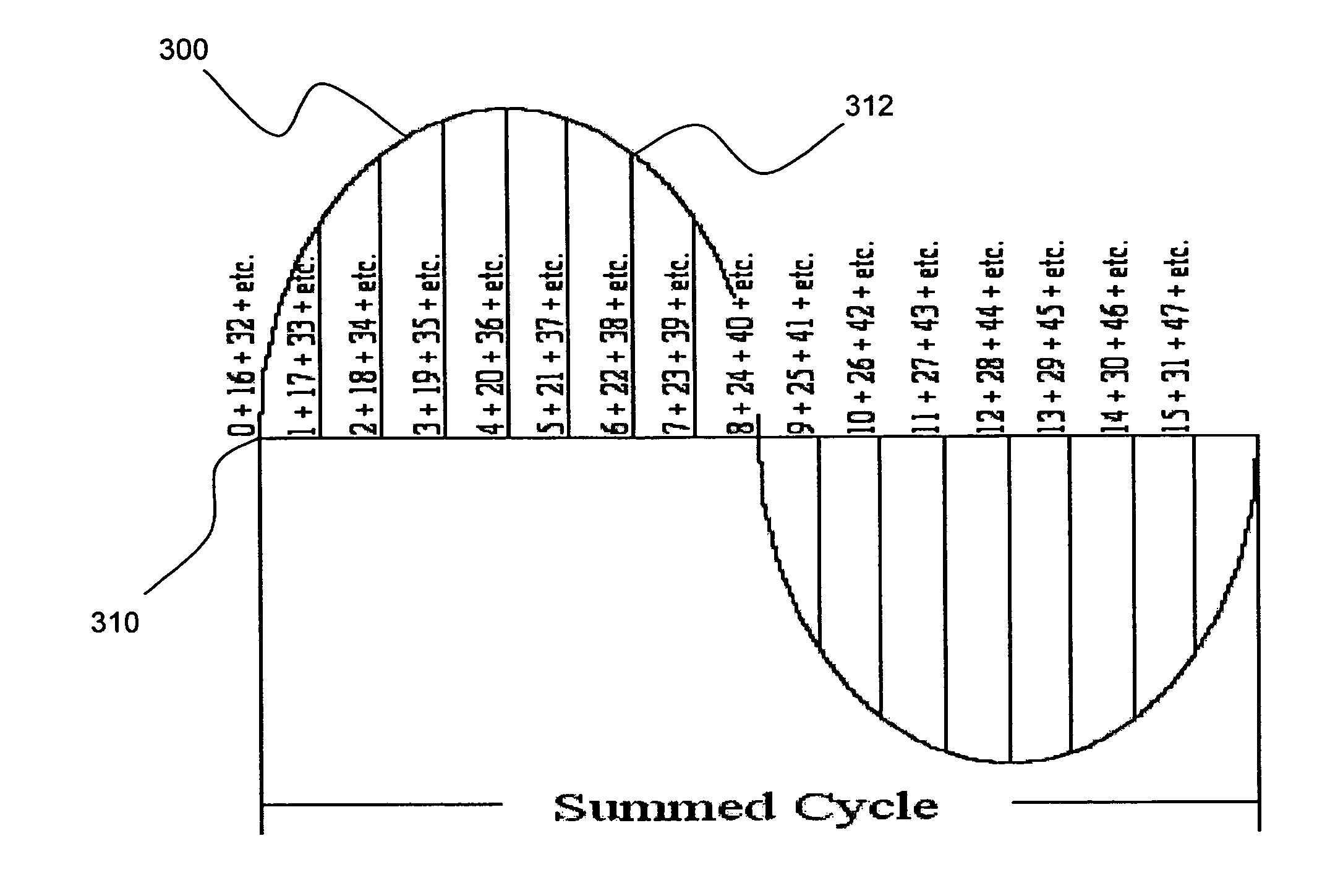
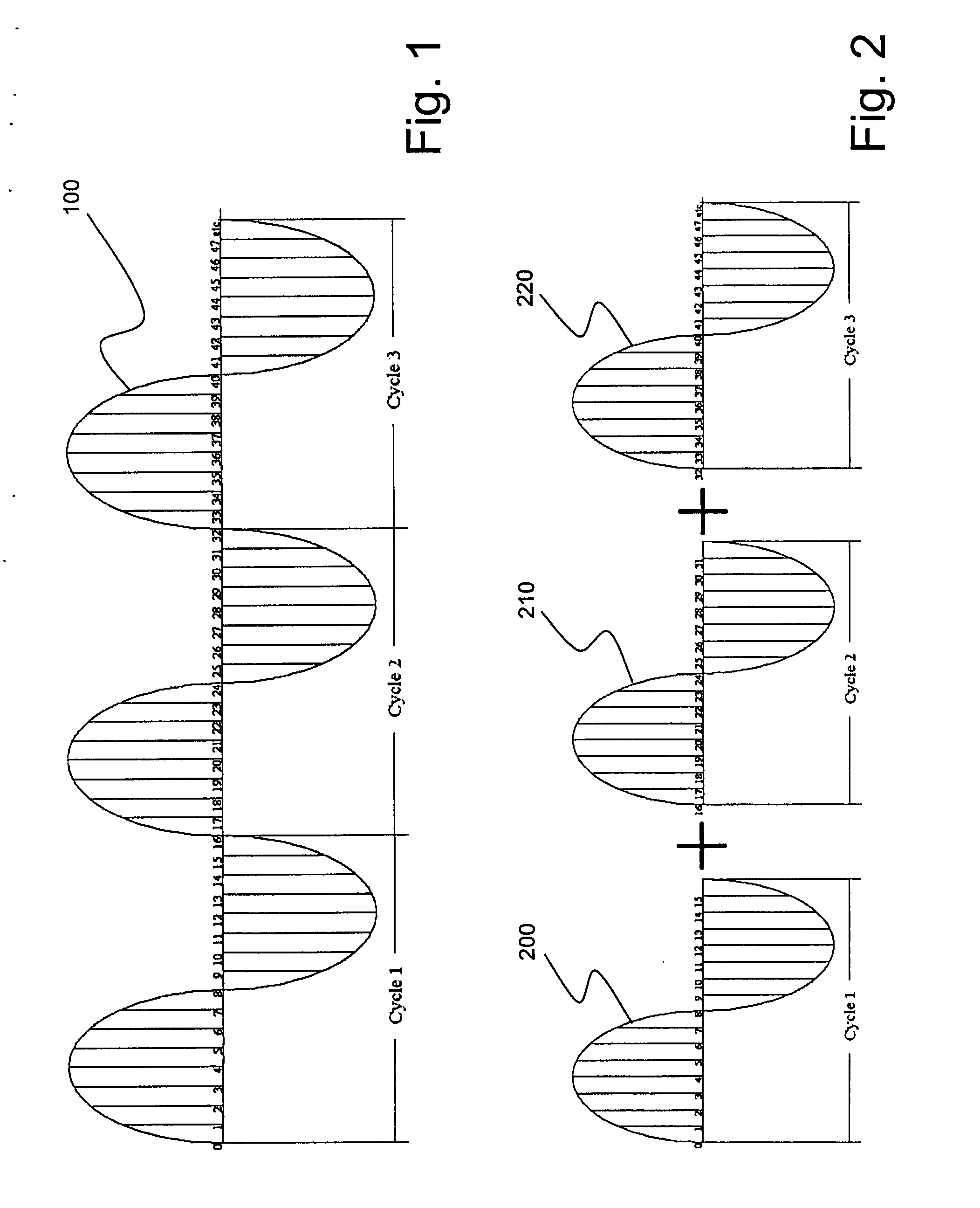
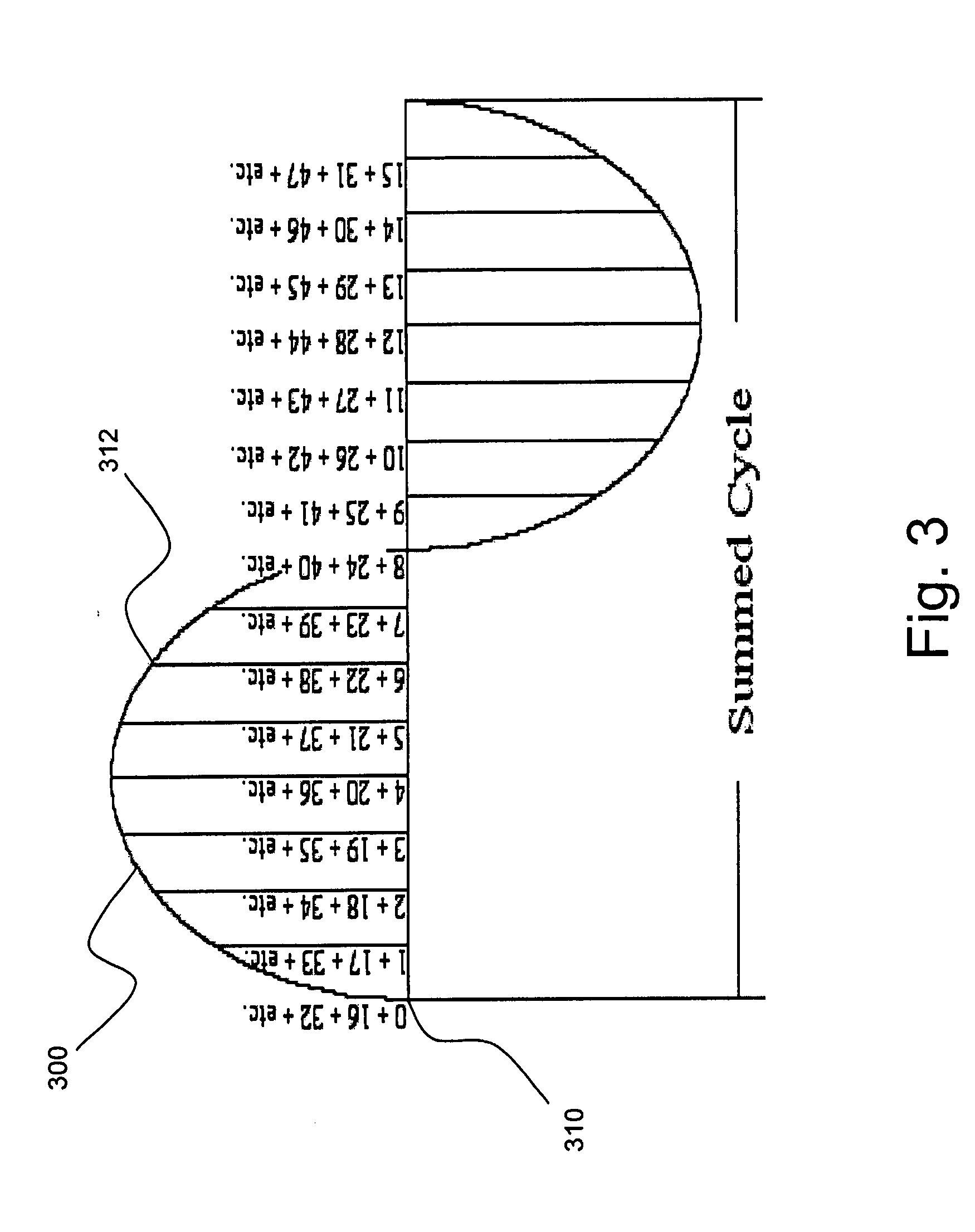
- A signal filtering methodology and apparatus that samples periodic signal waveforms at multiple points across consecutive cycles and averages these samples to reduce noise, with the number of cycles adjusted based on noise amplitude, effectively reducing random noise and improving measurement accuracy across varying environments.

Noise Source Characterization in Hall Effect Environments
To effectively improve Hall Effect sensor signals through filtering techniques, a comprehensive understanding of noise sources in Hall Effect environments is essential. The noise profile in these systems is complex and multifaceted, originating from both internal and external sources. Internal noise sources include thermal noise (Johnson-Nyquist noise) generated by the semiconductor material itself, which manifests as random voltage fluctuations proportional to temperature. This thermal noise establishes a fundamental sensitivity limit for Hall Effect sensors, particularly in high-precision applications.
Shot noise represents another significant internal noise source, arising from the discrete nature of charge carriers crossing potential barriers within the semiconductor. This quantum effect becomes particularly prominent in low-current operating conditions and can significantly impact signal integrity. Additionally, 1/f noise (flicker noise) exhibits an inverse relationship with frequency and dominates the noise spectrum at lower frequencies, making it particularly problematic for DC and low-frequency measurements common in Hall Effect applications.
External noise sources present equally challenging issues. Electromagnetic interference (EMI) from nearby electronic equipment, power lines, or wireless communication systems can couple into Hall sensor circuits, introducing spurious signals that mask the desired magnetic field measurements. Mechanical vibrations transmitted through the mounting structure can induce relative movement between the sensor and the magnetic field source, resulting in signal fluctuations that mimic actual field changes.
Power supply variations constitute another critical external noise source. Ripple, transients, and ground loops in the power delivery system can directly modulate the sensor output, creating artifacts that are difficult to distinguish from genuine magnetic field variations. Temperature fluctuations in the operating environment further complicate matters by altering the semiconductor properties, affecting both sensitivity and offset characteristics of the Hall Effect sensor.
The spatial distribution of noise sources must also be considered. Proximity effects become significant when noise sources are located near signal paths, with coupling mechanisms varying based on the physical arrangement. Temporal characteristics of noise sources range from constant background noise to intermittent bursts and periodic interference, each requiring different filtering approaches.
Understanding these noise characteristics enables the development of targeted filtering techniques. For instance, thermal noise can be addressed through bandwidth limitation, while EMI might require shielding or differential sensing approaches. Comprehensive noise source characterization thus forms the foundation for implementing effective signal improvement strategies in Hall Effect sensor applications.
Shot noise represents another significant internal noise source, arising from the discrete nature of charge carriers crossing potential barriers within the semiconductor. This quantum effect becomes particularly prominent in low-current operating conditions and can significantly impact signal integrity. Additionally, 1/f noise (flicker noise) exhibits an inverse relationship with frequency and dominates the noise spectrum at lower frequencies, making it particularly problematic for DC and low-frequency measurements common in Hall Effect applications.
External noise sources present equally challenging issues. Electromagnetic interference (EMI) from nearby electronic equipment, power lines, or wireless communication systems can couple into Hall sensor circuits, introducing spurious signals that mask the desired magnetic field measurements. Mechanical vibrations transmitted through the mounting structure can induce relative movement between the sensor and the magnetic field source, resulting in signal fluctuations that mimic actual field changes.
Power supply variations constitute another critical external noise source. Ripple, transients, and ground loops in the power delivery system can directly modulate the sensor output, creating artifacts that are difficult to distinguish from genuine magnetic field variations. Temperature fluctuations in the operating environment further complicate matters by altering the semiconductor properties, affecting both sensitivity and offset characteristics of the Hall Effect sensor.
The spatial distribution of noise sources must also be considered. Proximity effects become significant when noise sources are located near signal paths, with coupling mechanisms varying based on the physical arrangement. Temporal characteristics of noise sources range from constant background noise to intermittent bursts and periodic interference, each requiring different filtering approaches.
Understanding these noise characteristics enables the development of targeted filtering techniques. For instance, thermal noise can be addressed through bandwidth limitation, while EMI might require shielding or differential sensing approaches. Comprehensive noise source characterization thus forms the foundation for implementing effective signal improvement strategies in Hall Effect sensor applications.
Performance Metrics and Testing Standards for Signal Quality
To effectively evaluate Hall Effect sensor signal filtering techniques, standardized performance metrics and testing protocols are essential. Signal-to-Noise Ratio (SNR) serves as a fundamental metric, quantifying the relationship between desired signal strength and background noise. Higher SNR values indicate superior signal quality, with industry standards typically requiring minimum thresholds of 20-30 dB for automotive applications and 15-25 dB for consumer electronics. Total Harmonic Distortion (THD) provides critical insight into signal integrity by measuring the presence of unwanted harmonic components, with acceptable ranges generally falling below 1% for precision applications.
Response time metrics evaluate how quickly filtering solutions can process signals without introducing excessive latency. For real-time control systems, maximum acceptable latencies typically range from 1-10 milliseconds, while less time-sensitive applications may tolerate up to 50 milliseconds. Bandwidth preservation assessment ensures that filtering techniques maintain signal fidelity across the required frequency spectrum, with testing protocols examining amplitude response across the operational frequency range.
Temperature stability testing has emerged as a crucial evaluation criterion, particularly for Hall Effect sensors deployed in harsh environments. Standard protocols involve measuring signal quality across temperatures ranging from -40°C to 125°C for automotive and industrial applications. Drift characteristics under these conditions must typically remain below 0.5% of full-scale output to meet industry requirements.
The IEEE 1451 family of standards provides a framework for sensor testing methodologies, while IEC 60770 specifically addresses performance evaluation of signal processing components. Additionally, the Automotive Electronics Council's AEC-Q100 standard defines rigorous reliability testing requirements for integrated circuits used in automotive applications, including those processing Hall Effect sensor signals.
Comparative benchmarking methodologies have been standardized to enable objective evaluation of different filtering approaches. These typically involve reference datasets containing known signal patterns and noise profiles, allowing for consistent measurement of improvement factors. The International Electrotechnical Commission (IEC) has established the IEC 61000-4-4 standard for evaluating immunity to electrical fast transients, which is particularly relevant for assessing the robustness of Hall Effect sensor signal processing systems in electrically noisy environments.
Recent developments include the emergence of dynamic performance metrics that evaluate filtering techniques under varying operational conditions rather than static scenarios. These advanced testing protocols simulate real-world interference patterns and assess how effectively filtering solutions adapt to changing noise characteristics, providing more realistic performance evaluations for modern applications.
Response time metrics evaluate how quickly filtering solutions can process signals without introducing excessive latency. For real-time control systems, maximum acceptable latencies typically range from 1-10 milliseconds, while less time-sensitive applications may tolerate up to 50 milliseconds. Bandwidth preservation assessment ensures that filtering techniques maintain signal fidelity across the required frequency spectrum, with testing protocols examining amplitude response across the operational frequency range.
Temperature stability testing has emerged as a crucial evaluation criterion, particularly for Hall Effect sensors deployed in harsh environments. Standard protocols involve measuring signal quality across temperatures ranging from -40°C to 125°C for automotive and industrial applications. Drift characteristics under these conditions must typically remain below 0.5% of full-scale output to meet industry requirements.
The IEEE 1451 family of standards provides a framework for sensor testing methodologies, while IEC 60770 specifically addresses performance evaluation of signal processing components. Additionally, the Automotive Electronics Council's AEC-Q100 standard defines rigorous reliability testing requirements for integrated circuits used in automotive applications, including those processing Hall Effect sensor signals.
Comparative benchmarking methodologies have been standardized to enable objective evaluation of different filtering approaches. These typically involve reference datasets containing known signal patterns and noise profiles, allowing for consistent measurement of improvement factors. The International Electrotechnical Commission (IEC) has established the IEC 61000-4-4 standard for evaluating immunity to electrical fast transients, which is particularly relevant for assessing the robustness of Hall Effect sensor signal processing systems in electrically noisy environments.
Recent developments include the emergence of dynamic performance metrics that evaluate filtering techniques under varying operational conditions rather than static scenarios. These advanced testing protocols simulate real-world interference patterns and assess how effectively filtering solutions adapt to changing noise characteristics, providing more realistic performance evaluations for modern applications.
Unlock deeper insights with PatSnap Eureka Quick Research — get a full tech report to explore trends and direct your research. Try now!
Generate Your Research Report Instantly with AI Agent
Supercharge your innovation with PatSnap Eureka AI Agent Platform!