What Are the Material Challenges in Wearable Biosensor Design
OCT 24, 20259 MIN READ
Generate Your Research Report Instantly with AI Agent
Patsnap Eureka helps you evaluate technical feasibility & market potential.
Biosensor Materials Evolution and Objectives
Wearable biosensors have evolved significantly over the past decades, transitioning from bulky laboratory equipment to miniaturized, flexible devices capable of continuous health monitoring. The journey began in the 1960s with the development of the first glucose biosensor by Clark and Lyons, which utilized enzyme electrodes to detect glucose levels. This pioneering work laid the foundation for subsequent advancements in biosensor technology, particularly in materials science that enabled the transition to wearable formats.
The 1990s marked a significant turning point with the introduction of screen-printed electrodes and the first commercial continuous glucose monitoring systems. These developments demonstrated the feasibility of wearable biosensing but highlighted critical material limitations in terms of biocompatibility, flexibility, and long-term stability. The early 2000s saw the emergence of nanomaterials such as carbon nanotubes and graphene, which offered exceptional electrical properties and increased surface area for biomolecule immobilization.
Recent years have witnessed an acceleration in material innovation specifically tailored for wearable biosensors. Conducting polymers like PEDOT:PSS have gained prominence for their excellent electrical conductivity, processability, and compatibility with flexible substrates. Simultaneously, advances in hydrogel formulations have produced materials with tunable mechanical properties that can maintain stable sensor-skin interfaces while allowing vapor and gas permeability.
The primary objective of current material research in wearable biosensors is to develop platforms that seamlessly integrate with the human body while maintaining reliable sensing performance. This includes creating materials that can withstand mechanical deformation, resist biofouling, and operate reliably in the presence of sweat, sebum, and environmental contaminants. Additionally, there is a growing emphasis on materials that enable multimodal sensing capabilities, allowing simultaneous monitoring of multiple biomarkers from a single device.
Another critical objective is the development of sustainable and biocompatible materials that minimize environmental impact and potential health risks. This includes exploring biodegradable substrates, non-toxic conductive materials, and environmentally friendly manufacturing processes. The field is increasingly moving toward materials that not only perform well technically but also address broader concerns about sustainability and user safety.
Looking forward, the evolution of biosensor materials aims to achieve true integration with biological systems through the development of "living materials" that can self-heal, adapt to changing physiological conditions, and potentially harness the body's own energy for power. These ambitious objectives represent the frontier of wearable biosensor research, promising devices that function less as external attachments and more as extensions of the human body itself.
The 1990s marked a significant turning point with the introduction of screen-printed electrodes and the first commercial continuous glucose monitoring systems. These developments demonstrated the feasibility of wearable biosensing but highlighted critical material limitations in terms of biocompatibility, flexibility, and long-term stability. The early 2000s saw the emergence of nanomaterials such as carbon nanotubes and graphene, which offered exceptional electrical properties and increased surface area for biomolecule immobilization.
Recent years have witnessed an acceleration in material innovation specifically tailored for wearable biosensors. Conducting polymers like PEDOT:PSS have gained prominence for their excellent electrical conductivity, processability, and compatibility with flexible substrates. Simultaneously, advances in hydrogel formulations have produced materials with tunable mechanical properties that can maintain stable sensor-skin interfaces while allowing vapor and gas permeability.
The primary objective of current material research in wearable biosensors is to develop platforms that seamlessly integrate with the human body while maintaining reliable sensing performance. This includes creating materials that can withstand mechanical deformation, resist biofouling, and operate reliably in the presence of sweat, sebum, and environmental contaminants. Additionally, there is a growing emphasis on materials that enable multimodal sensing capabilities, allowing simultaneous monitoring of multiple biomarkers from a single device.
Another critical objective is the development of sustainable and biocompatible materials that minimize environmental impact and potential health risks. This includes exploring biodegradable substrates, non-toxic conductive materials, and environmentally friendly manufacturing processes. The field is increasingly moving toward materials that not only perform well technically but also address broader concerns about sustainability and user safety.
Looking forward, the evolution of biosensor materials aims to achieve true integration with biological systems through the development of "living materials" that can self-heal, adapt to changing physiological conditions, and potentially harness the body's own energy for power. These ambitious objectives represent the frontier of wearable biosensor research, promising devices that function less as external attachments and more as extensions of the human body itself.
Wearable Biosensor Market Demand Analysis
The global wearable biosensor market is experiencing unprecedented growth, driven by increasing health consciousness, rising chronic disease prevalence, and technological advancements. Current market valuations place the wearable biosensor segment at approximately 12 billion USD in 2023, with projections indicating a compound annual growth rate (CAGR) of 18-20% through 2030, potentially reaching 40 billion USD by the end of the decade.
Consumer demand for wearable biosensors has shifted dramatically from simple fitness tracking to comprehensive health monitoring capabilities. This evolution reflects growing consumer interest in preventive healthcare and continuous health parameter monitoring. Market research indicates that over 60% of consumers now expect their wearable devices to provide actionable health insights rather than just raw data collection.
Healthcare professionals represent another significant market segment, with increasing adoption of wearable biosensors for remote patient monitoring. This trend has accelerated following the COVID-19 pandemic, with remote monitoring solutions seeing adoption rates increase by 42% since 2020. Healthcare systems worldwide are recognizing the cost-efficiency and improved patient outcomes associated with continuous monitoring capabilities.
Material challenges directly impact market dynamics, as consumers consistently rank comfort, durability, and reliability among their top five purchasing considerations. Surveys indicate that 78% of users cite discomfort from rigid materials as a primary reason for discontinuing use of wearable health devices. This highlights the critical market need for advanced flexible, biocompatible materials that maintain sensor accuracy while improving user experience.
Regional market analysis reveals significant variations in demand patterns. North America currently leads with approximately 40% market share, followed by Europe (25%) and Asia-Pacific (20%). However, the Asia-Pacific region demonstrates the fastest growth trajectory, with China and India emerging as key markets due to increasing healthcare expenditure, growing middle-class populations, and greater smartphone penetration enabling connected health ecosystems.
Industry segmentation shows diverse application demands across consumer wellness (35% market share), medical diagnostics (30%), sports performance (20%), and occupational safety (15%). Each segment presents unique material requirements, from waterproof durability for sports applications to hypoallergenic properties for continuous medical monitoring.
The market increasingly demands multi-parameter sensing capabilities within single devices, creating complex material integration challenges. Consumers expect devices that can simultaneously monitor vital signs, biochemical markers, and environmental factors while maintaining form factors similar to conventional accessories. This convergence of expectations is driving research toward novel composite materials and innovative sensor designs that can address these multifaceted market requirements.
Consumer demand for wearable biosensors has shifted dramatically from simple fitness tracking to comprehensive health monitoring capabilities. This evolution reflects growing consumer interest in preventive healthcare and continuous health parameter monitoring. Market research indicates that over 60% of consumers now expect their wearable devices to provide actionable health insights rather than just raw data collection.
Healthcare professionals represent another significant market segment, with increasing adoption of wearable biosensors for remote patient monitoring. This trend has accelerated following the COVID-19 pandemic, with remote monitoring solutions seeing adoption rates increase by 42% since 2020. Healthcare systems worldwide are recognizing the cost-efficiency and improved patient outcomes associated with continuous monitoring capabilities.
Material challenges directly impact market dynamics, as consumers consistently rank comfort, durability, and reliability among their top five purchasing considerations. Surveys indicate that 78% of users cite discomfort from rigid materials as a primary reason for discontinuing use of wearable health devices. This highlights the critical market need for advanced flexible, biocompatible materials that maintain sensor accuracy while improving user experience.
Regional market analysis reveals significant variations in demand patterns. North America currently leads with approximately 40% market share, followed by Europe (25%) and Asia-Pacific (20%). However, the Asia-Pacific region demonstrates the fastest growth trajectory, with China and India emerging as key markets due to increasing healthcare expenditure, growing middle-class populations, and greater smartphone penetration enabling connected health ecosystems.
Industry segmentation shows diverse application demands across consumer wellness (35% market share), medical diagnostics (30%), sports performance (20%), and occupational safety (15%). Each segment presents unique material requirements, from waterproof durability for sports applications to hypoallergenic properties for continuous medical monitoring.
The market increasingly demands multi-parameter sensing capabilities within single devices, creating complex material integration challenges. Consumers expect devices that can simultaneously monitor vital signs, biochemical markers, and environmental factors while maintaining form factors similar to conventional accessories. This convergence of expectations is driving research toward novel composite materials and innovative sensor designs that can address these multifaceted market requirements.
Material Limitations and Technical Barriers
Despite significant advancements in wearable biosensor technology, material limitations continue to pose substantial challenges to widespread adoption and optimal functionality. Current flexible substrate materials such as polyimide and polyethylene terephthalate (PET) exhibit limited stretchability, typically below 5%, which restricts their application in dynamic body locations where significant deformation occurs. This fundamental limitation creates a critical trade-off between sensor flexibility and durability that has yet to be fully resolved.
Biocompatibility remains a persistent barrier, with prolonged skin contact often resulting in irritation, inflammation, or allergic reactions. Even medical-grade silicones and hydrogels, while representing improvements, still demonstrate inadequate gas permeability and moisture management properties for extended wear periods exceeding 7-14 days. This limitation significantly impacts user compliance and data collection continuity in longitudinal health monitoring scenarios.
The interface between rigid electronic components and flexible substrates creates stress concentration points that frequently lead to mechanical failure. Current encapsulation materials provide insufficient protection against environmental factors such as sweat, water, and mechanical stress, with typical failure rates increasing dramatically after 30-50 washing cycles or 3-6 months of regular use. This durability constraint severely limits product lifecycle and reliability in real-world applications.
Power management presents another critical material challenge, as current flexible battery technologies offer energy densities below 200 Wh/L, approximately one-fifth of conventional rigid lithium-ion batteries. Additionally, these flexible power sources often demonstrate capacity degradation exceeding 30% after 300 charge cycles, necessitating frequent replacement and limiting long-term deployment viability.
Signal fidelity is compromised by motion artifacts and environmental interference, with current electrode materials and designs struggling to maintain stable skin contact during movement. Conventional Ag/AgCl electrodes degrade in performance after 24-48 hours of continuous wear due to skin impedance changes and electrode drying, while emerging carbon-based alternatives lack sufficient conductivity under varying moisture conditions.
Manufacturability presents significant scaling challenges, as many advanced materials with promising properties remain confined to laboratory settings due to complex fabrication requirements. Current manufacturing techniques for stretchable electronics typically yield defect rates exceeding 15-20%, substantially higher than the <5% standard in conventional electronics manufacturing, driving up production costs and limiting mass-market feasibility.
Biocompatibility remains a persistent barrier, with prolonged skin contact often resulting in irritation, inflammation, or allergic reactions. Even medical-grade silicones and hydrogels, while representing improvements, still demonstrate inadequate gas permeability and moisture management properties for extended wear periods exceeding 7-14 days. This limitation significantly impacts user compliance and data collection continuity in longitudinal health monitoring scenarios.
The interface between rigid electronic components and flexible substrates creates stress concentration points that frequently lead to mechanical failure. Current encapsulation materials provide insufficient protection against environmental factors such as sweat, water, and mechanical stress, with typical failure rates increasing dramatically after 30-50 washing cycles or 3-6 months of regular use. This durability constraint severely limits product lifecycle and reliability in real-world applications.
Power management presents another critical material challenge, as current flexible battery technologies offer energy densities below 200 Wh/L, approximately one-fifth of conventional rigid lithium-ion batteries. Additionally, these flexible power sources often demonstrate capacity degradation exceeding 30% after 300 charge cycles, necessitating frequent replacement and limiting long-term deployment viability.
Signal fidelity is compromised by motion artifacts and environmental interference, with current electrode materials and designs struggling to maintain stable skin contact during movement. Conventional Ag/AgCl electrodes degrade in performance after 24-48 hours of continuous wear due to skin impedance changes and electrode drying, while emerging carbon-based alternatives lack sufficient conductivity under varying moisture conditions.
Manufacturability presents significant scaling challenges, as many advanced materials with promising properties remain confined to laboratory settings due to complex fabrication requirements. Current manufacturing techniques for stretchable electronics typically yield defect rates exceeding 15-20%, substantially higher than the <5% standard in conventional electronics manufacturing, driving up production costs and limiting mass-market feasibility.
Current Material Solutions for Wearable Biosensors
01 Flexible and stretchable materials for wearable biosensors
Flexible and stretchable materials are essential for wearable biosensors to ensure comfort and adaptability to body movements. These materials include elastomers, conductive polymers, and flexible substrates that can conform to the skin's surface while maintaining their sensing capabilities. The flexibility allows for continuous monitoring of physiological parameters without restricting the user's mobility, making them suitable for long-term health monitoring applications.- Flexible and stretchable materials for wearable biosensors: Flexible and stretchable materials are essential for wearable biosensors to ensure comfort and adaptability to body movements. These materials include elastomers, conductive polymers, and flexible substrates that can conform to the skin's surface while maintaining sensor functionality. The flexibility allows for continuous monitoring without restricting user movement, making them suitable for long-term health monitoring applications.
- Conductive and sensing materials for biosignal detection: Advanced conductive materials are used in wearable biosensors to detect and transmit biological signals. These include nanomaterials like carbon nanotubes, graphene, and metallic nanoparticles that offer high conductivity and sensitivity for detecting various biomarkers. These materials can be integrated into textiles or directly applied to the skin to monitor physiological parameters such as heart rate, temperature, and glucose levels.
- Biocompatible and skin-friendly sensor materials: Biocompatible materials are crucial for wearable biosensors to prevent skin irritation and allergic reactions during prolonged contact. These materials include medical-grade silicones, hypoallergenic adhesives, and breathable substrates that minimize skin reactions while maintaining sensor performance. The biocompatibility ensures that the sensors can be worn for extended periods without causing discomfort or health issues.
- Energy harvesting and power management materials: Materials for energy harvesting and power management are integrated into wearable biosensors to extend battery life or enable self-powered operation. These include piezoelectric materials that convert body movement into electricity, thermoelectric materials that harvest body heat, and photovoltaic materials for solar energy conversion. These solutions address the power limitations of wearable devices and enable continuous monitoring without frequent recharging.
- Smart textiles and fabric-integrated biosensor materials: Smart textiles incorporate sensing materials directly into fabrics for seamless integration of biosensors into everyday clothing. These materials include conductive yarns, fiber optics, and printable electronic inks that can be woven or embedded into textiles. The resulting smart garments can monitor various health parameters while maintaining the comfort and appearance of regular clothing, improving user compliance and enabling continuous health monitoring.
02 Conductive and sensing materials for biosignal detection
Various conductive and sensing materials are used in wearable biosensors to detect biological signals. These include nanomaterials like carbon nanotubes, graphene, and metal nanoparticles that offer high conductivity and sensitivity. These materials can be integrated into textiles or directly applied to the skin to measure parameters such as heart rate, temperature, and glucose levels. Their high surface-to-volume ratio enhances detection sensitivity while maintaining minimal power consumption.Expand Specific Solutions03 Biocompatible and skin-friendly sensor materials
Biocompatible materials are crucial for wearable biosensors to prevent skin irritation and allergic reactions during prolonged wear. These materials include medical-grade silicones, hypoallergenic adhesives, and natural polymers that minimize adverse skin reactions. The biocompatibility ensures that the sensors can be worn continuously for extended periods, making them suitable for monitoring chronic conditions and providing reliable data without causing discomfort to the user.Expand Specific Solutions04 Energy harvesting and power management materials
Energy harvesting materials are integrated into wearable biosensors to extend battery life or enable self-powered operation. These include piezoelectric materials that convert mechanical motion into electricity, thermoelectric materials that harvest body heat, and photovoltaic materials for solar energy conversion. These materials help overcome the power limitations of wearable devices, allowing for continuous monitoring without frequent recharging or battery replacement.Expand Specific Solutions05 Smart textiles and fabric-integrated sensor materials
Smart textiles incorporate sensing materials directly into fabrics to create comfortable and unobtrusive wearable biosensors. These textiles use conductive threads, functional coatings, and embedded electronic components to monitor physiological parameters while maintaining the look and feel of conventional clothing. The integration of sensors into everyday garments improves user compliance and enables continuous health monitoring in daily life without additional devices attached to the body.Expand Specific Solutions
Leading Companies in Biosensor Materials Industry
The wearable biosensor market for material challenges is in a growth phase, with an estimated market size exceeding $10 billion and projected double-digit annual growth. The technology maturity varies across applications, with companies demonstrating different specialization levels. Leading players like Nitto Denko and LG Chem focus on advanced materials development, while Polar Electro and Sinocare have established consumer-facing product lines. Academic institutions (Carnegie Mellon, University of Tokyo) are driving fundamental research innovations. Research organizations like Electronics & Telecommunications Research Institute bridge the gap between theoretical advances and commercial applications. The competitive landscape shows a balance between established materials manufacturers, specialized biosensor companies, and research institutions collaborating to overcome key challenges in flexibility, biocompatibility, and long-term stability.
Carnegie Mellon University
Technical Solution: Carnegie Mellon University has developed advanced material solutions for wearable biosensors focusing on skin-interfacing hydrogel composites. Their technology incorporates electrically conductive hydrogels with tunable mechanical properties that match human tissue compliance while maintaining stable electrical characteristics during deformation. A key innovation is their development of self-adhesive, biocompatible hydrogels that create robust skin-sensor interfaces without traditional adhesives, reducing irritation during prolonged wear. These materials feature antimicrobial properties through the incorporation of silver nanoparticles or other antimicrobial agents that prevent bacterial growth on the sensor surface. CMU researchers have also pioneered stimuli-responsive materials that can change properties in response to environmental triggers, enabling adaptive sensing capabilities. Their recent work includes the development of printable composite inks that allow direct fabrication of sensors onto textiles and other substrates using standard printing techniques.
Strengths: Exceptional skin-compatibility with reduced irritation during long-term wear; adaptive sensing capabilities through stimuli-responsive materials; simplified manufacturing through printable formulations. Weaknesses: Potential hydration-dependent performance variations requiring moisture control; limited shelf-life compared to fully synthetic alternatives; challenges in achieving consistent electrical properties across manufacturing batches.
Polar Electro Oy
Technical Solution: Polar Electro has developed specialized materials for wearable biosensors focused on addressing the challenges of continuous monitoring during physical activity. Their technology centers on advanced textile-integrated sensing materials that combine elastomeric polymers with conductive elements to create comfortable, washable sensors that maintain performance during movement and sweating. A key innovation is their development of hydrophobic yet breathable electrode materials that repel sweat while maintaining skin contact, reducing motion artifacts in biopotential measurements. Their sensors incorporate specialized surface textures that enhance skin contact while allowing airflow, reducing the discomfort associated with extended wear. Polar has also pioneered hybrid rigid-flexible architectures that strategically place rigid electronic components within highly flexible substrates to optimize both comfort and functionality. Their recent advances include materials with adaptive properties that respond to body temperature changes, maintaining optimal sensor contact across varying environmental conditions.
Strengths: Superior motion artifact rejection during physical activity; excellent durability through multiple washing cycles; optimized comfort for all-day wear through strategic material selection. Weaknesses: Higher manufacturing costs compared to standard medical electrodes; potential for reduced signal quality in extremely dry conditions; challenges in miniaturization while maintaining performance during activity.
Key Material Innovations and Patent Landscape
Wearable biosensors and applications thereof
PatentActiveUS20230060118A9
Innovation
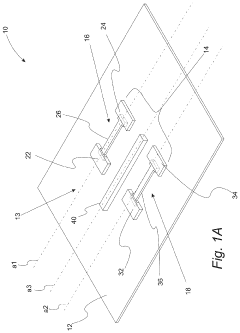
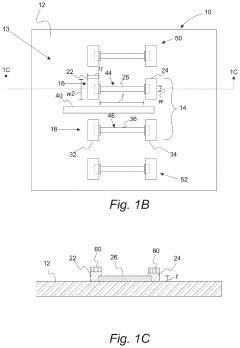
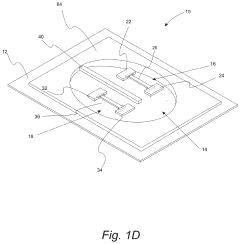
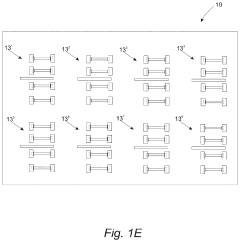
- Development of highly sensitive In2O3 nanoribbon transistor biosensors with integrated on-chip gold gate electrodes, functionalized with glucose oxidase, chitosan, and single-walled carbon nanotubes, capable of detecting glucose concentrations between 10 nM to 1 mM in external body fluids without breaking the skin, and integrated into flexible, conformable devices like skin patches and contact lenses.
Wearable sensor and method for manufacturing same
PatentWO2023085583A1
Innovation
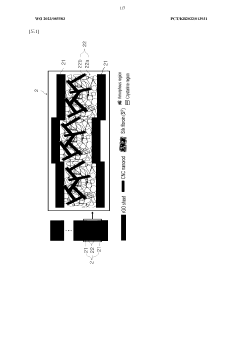
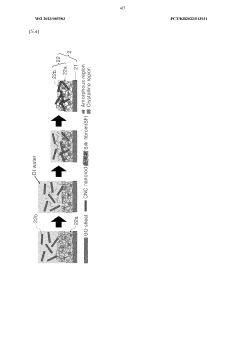
- A wearable sensor with a deformable layer and a sensing layer composed of graphene and eco-friendly materials like silk fibroin and cellulose nanocrystals, which are biodegradable and conductive, allowing for deformation and resistance changes to measure biosignals without skin damage, using a layer-by-layer multilayer thin film structure and spin coating method.


Biocompatibility and Safety Standards
Biocompatibility remains a paramount concern in wearable biosensor development, as these devices maintain prolonged contact with human skin or other tissues. The ISO 10993 standards series provides comprehensive guidelines for evaluating biological responses to medical devices, with specific sections addressing cytotoxicity, sensitization, and irritation particularly relevant to wearable technology. These standards ensure materials used in biosensors do not cause adverse reactions when in contact with the body over extended periods.
Material selection for wearable biosensors must balance functionality with safety considerations. Polymers like medical-grade silicone, polyurethane, and certain hydrogels have demonstrated excellent biocompatibility profiles while maintaining necessary flexibility and durability. However, additives such as plasticizers, stabilizers, and colorants in these materials can potentially leach into the skin, requiring thorough safety assessment before implementation in commercial products.
The FDA's regulatory framework for wearable biosensors varies based on their intended use and risk classification. Class II medical devices, which include many advanced biosensors, must undergo premarket notification (510(k)) processes that specifically evaluate biocompatibility aspects. European regulations under the Medical Device Regulation (MDR) similarly emphasize biocompatibility testing as a critical component of the conformity assessment procedure.
Recent advances in biocompatible materials have focused on developing substrates that mimic skin mechanical properties. Materials with elastic moduli between 0.5-2 MPa have shown optimal conformability while minimizing mechanical irritation. Additionally, breathable materials that allow water vapor and heat dissipation have demonstrated reduced skin inflammation during prolonged wear, addressing a common limitation in earlier generation devices.
Antimicrobial properties represent another crucial safety consideration, as the warm, moist environment between wearable sensors and skin creates ideal conditions for microbial growth. Incorporating antimicrobial agents such as silver nanoparticles or quaternary ammonium compounds into sensor materials has shown promise, though concerns about long-term exposure effects remain under investigation.
Allergenicity testing protocols have evolved specifically for wearable technology applications, with modified versions of the traditional patch test accounting for the unique exposure patterns of continuously worn devices. Materials must now undergo dynamic testing that simulates movement, perspiration, and temperature fluctuations to better predict real-world biocompatibility performance.
Standardization efforts continue to evolve as the wearable biosensor market expands. The ASTM F2407 standard specifically addresses absorbable materials in medical devices, while newer initiatives through organizations like IEEE focus on developing standards specifically for flexible and stretchable electronics in biomedical applications, addressing the unique material challenges these technologies present.
Material selection for wearable biosensors must balance functionality with safety considerations. Polymers like medical-grade silicone, polyurethane, and certain hydrogels have demonstrated excellent biocompatibility profiles while maintaining necessary flexibility and durability. However, additives such as plasticizers, stabilizers, and colorants in these materials can potentially leach into the skin, requiring thorough safety assessment before implementation in commercial products.
The FDA's regulatory framework for wearable biosensors varies based on their intended use and risk classification. Class II medical devices, which include many advanced biosensors, must undergo premarket notification (510(k)) processes that specifically evaluate biocompatibility aspects. European regulations under the Medical Device Regulation (MDR) similarly emphasize biocompatibility testing as a critical component of the conformity assessment procedure.
Recent advances in biocompatible materials have focused on developing substrates that mimic skin mechanical properties. Materials with elastic moduli between 0.5-2 MPa have shown optimal conformability while minimizing mechanical irritation. Additionally, breathable materials that allow water vapor and heat dissipation have demonstrated reduced skin inflammation during prolonged wear, addressing a common limitation in earlier generation devices.
Antimicrobial properties represent another crucial safety consideration, as the warm, moist environment between wearable sensors and skin creates ideal conditions for microbial growth. Incorporating antimicrobial agents such as silver nanoparticles or quaternary ammonium compounds into sensor materials has shown promise, though concerns about long-term exposure effects remain under investigation.
Allergenicity testing protocols have evolved specifically for wearable technology applications, with modified versions of the traditional patch test accounting for the unique exposure patterns of continuously worn devices. Materials must now undergo dynamic testing that simulates movement, perspiration, and temperature fluctuations to better predict real-world biocompatibility performance.
Standardization efforts continue to evolve as the wearable biosensor market expands. The ASTM F2407 standard specifically addresses absorbable materials in medical devices, while newer initiatives through organizations like IEEE focus on developing standards specifically for flexible and stretchable electronics in biomedical applications, addressing the unique material challenges these technologies present.
Sustainability in Biosensor Materials
The environmental impact of biosensor materials has become a critical consideration in wearable technology development. Current manufacturing processes for biosensors often involve energy-intensive methods and hazardous chemicals, contributing significantly to their ecological footprint. The extraction of rare metals used in electrodes and conductive components presents particular sustainability challenges, with mining operations causing habitat destruction and water pollution in resource-rich regions.
Biodegradable alternatives are emerging as promising solutions to address end-of-life concerns for wearable biosensors. Materials such as cellulose derivatives, silk fibroin, and poly(lactic-co-glycolic acid) (PLGA) demonstrate potential for creating sensors that can decompose naturally after their functional lifetime. These materials reduce waste accumulation while maintaining necessary performance characteristics during their operational period.
Renewable sourcing represents another frontier in sustainable biosensor development. Researchers have successfully utilized plant-derived polymers, bacterial cellulose, and alginate-based hydrogels as substrates and encapsulation materials. These renewable resources offer reduced environmental impact compared to petroleum-based polymers while providing comparable mechanical properties and biocompatibility essential for wearable applications.
Energy efficiency in biosensor operation presents both a challenge and opportunity for sustainability improvements. Low-power designs that minimize energy consumption extend battery life and reduce the frequency of battery replacement or recharging. Energy harvesting technologies, including piezoelectric elements that capture mechanical energy from body movement and photovoltaic cells that convert ambient light, are being integrated into biosensor systems to create self-powered devices that further reduce environmental impact.
Toxicity reduction remains a critical sustainability concern, particularly for materials in direct contact with skin. Traditional flexible electronics often contain phthalates, heavy metals, and halogenated flame retardants with known health and environmental risks. Recent innovations focus on non-toxic alternatives such as natural waxes for waterproofing, carbon-based conductive inks to replace metal-based versions, and bio-based adhesives derived from plant proteins or polysaccharides.
Circular economy principles are increasingly being applied to biosensor design, emphasizing material recovery and reuse. Modular designs allow for component separation at end-of-life, facilitating the recovery of valuable materials like gold and silver from sensing elements. Some manufacturers have implemented take-back programs for used biosensors, creating closed-loop systems that recapture materials and reduce virgin resource demand.
Biodegradable alternatives are emerging as promising solutions to address end-of-life concerns for wearable biosensors. Materials such as cellulose derivatives, silk fibroin, and poly(lactic-co-glycolic acid) (PLGA) demonstrate potential for creating sensors that can decompose naturally after their functional lifetime. These materials reduce waste accumulation while maintaining necessary performance characteristics during their operational period.
Renewable sourcing represents another frontier in sustainable biosensor development. Researchers have successfully utilized plant-derived polymers, bacterial cellulose, and alginate-based hydrogels as substrates and encapsulation materials. These renewable resources offer reduced environmental impact compared to petroleum-based polymers while providing comparable mechanical properties and biocompatibility essential for wearable applications.
Energy efficiency in biosensor operation presents both a challenge and opportunity for sustainability improvements. Low-power designs that minimize energy consumption extend battery life and reduce the frequency of battery replacement or recharging. Energy harvesting technologies, including piezoelectric elements that capture mechanical energy from body movement and photovoltaic cells that convert ambient light, are being integrated into biosensor systems to create self-powered devices that further reduce environmental impact.
Toxicity reduction remains a critical sustainability concern, particularly for materials in direct contact with skin. Traditional flexible electronics often contain phthalates, heavy metals, and halogenated flame retardants with known health and environmental risks. Recent innovations focus on non-toxic alternatives such as natural waxes for waterproofing, carbon-based conductive inks to replace metal-based versions, and bio-based adhesives derived from plant proteins or polysaccharides.
Circular economy principles are increasingly being applied to biosensor design, emphasizing material recovery and reuse. Modular designs allow for component separation at end-of-life, facilitating the recovery of valuable materials like gold and silver from sensing elements. Some manufacturers have implemented take-back programs for used biosensors, creating closed-loop systems that recapture materials and reduce virgin resource demand.
Unlock deeper insights with Patsnap Eureka Quick Research — get a full tech report to explore trends and direct your research. Try now!
Generate Your Research Report Instantly with AI Agent
Supercharge your innovation with Patsnap Eureka AI Agent Platform!