

Optimize Load Paths in Structural Components Through Topology Optimization
SEP 16, 20259 MIN READ
Generate Your Research Report Instantly with AI Agent
PatSnap Eureka helps you evaluate technical feasibility & market potential.
Topology Optimization Background and Objectives
Topology optimization has emerged as a revolutionary approach in structural engineering, evolving from theoretical concepts in the 1980s to a practical design methodology widely adopted across industries today. This mathematical method determines the optimal material distribution within a defined design space, subject to specific constraints and load conditions, to maximize performance criteria such as stiffness while minimizing material usage. The fundamental principle involves iteratively removing inefficient material from a design domain while maintaining structural integrity under applied loads.
The historical development of topology optimization traces back to Michell's theoretical work on optimal structures in 1904, but practical implementation only became feasible with advances in computational capabilities in the late 20th century. Bendsøe and Kikuchi's groundbreaking density-based methods in 1988 established the foundation for modern topology optimization algorithms. Subsequent developments, including the SIMP (Solid Isotropic Material with Penalization) method and level-set approaches, have significantly enhanced the applicability and efficiency of these techniques.
Current technological trends show increasing integration of topology optimization with additive manufacturing technologies, enabling the fabrication of complex geometries previously impossible with traditional manufacturing methods. This synergy has accelerated adoption across aerospace, automotive, and medical device industries, where weight reduction directly translates to performance improvements and cost savings.
The primary objective of load path optimization through topology optimization is to identify the most efficient material distribution that channels forces through a structure while minimizing material usage. This approach aims to mimic nature's efficiency, as observed in biological structures like bones and trees, which naturally develop optimal load paths through evolutionary processes.
Specific technical goals include developing robust algorithms capable of handling multiple load cases and manufacturing constraints simultaneously, improving computational efficiency to enable real-time optimization of complex structures, and enhancing integration with CAD/CAE workflows for seamless implementation in industrial design processes.
The long-term vision encompasses the development of multi-physics optimization frameworks that consider thermal, fluid, and structural interactions simultaneously, enabling truly holistic design optimization. Additionally, research aims to incorporate uncertainty quantification methods to develop designs robust to variations in loading conditions and material properties, addressing real-world variability in engineering applications.
The historical development of topology optimization traces back to Michell's theoretical work on optimal structures in 1904, but practical implementation only became feasible with advances in computational capabilities in the late 20th century. Bendsøe and Kikuchi's groundbreaking density-based methods in 1988 established the foundation for modern topology optimization algorithms. Subsequent developments, including the SIMP (Solid Isotropic Material with Penalization) method and level-set approaches, have significantly enhanced the applicability and efficiency of these techniques.
Current technological trends show increasing integration of topology optimization with additive manufacturing technologies, enabling the fabrication of complex geometries previously impossible with traditional manufacturing methods. This synergy has accelerated adoption across aerospace, automotive, and medical device industries, where weight reduction directly translates to performance improvements and cost savings.
The primary objective of load path optimization through topology optimization is to identify the most efficient material distribution that channels forces through a structure while minimizing material usage. This approach aims to mimic nature's efficiency, as observed in biological structures like bones and trees, which naturally develop optimal load paths through evolutionary processes.
Specific technical goals include developing robust algorithms capable of handling multiple load cases and manufacturing constraints simultaneously, improving computational efficiency to enable real-time optimization of complex structures, and enhancing integration with CAD/CAE workflows for seamless implementation in industrial design processes.
The long-term vision encompasses the development of multi-physics optimization frameworks that consider thermal, fluid, and structural interactions simultaneously, enabling truly holistic design optimization. Additionally, research aims to incorporate uncertainty quantification methods to develop designs robust to variations in loading conditions and material properties, addressing real-world variability in engineering applications.
Market Analysis for Lightweight Structural Components
The global market for lightweight structural components is experiencing robust growth, driven primarily by the automotive, aerospace, and construction industries. This growth is fueled by increasing regulatory pressure to reduce carbon emissions, improve fuel efficiency, and enhance overall sustainability. The market value for lightweight structural components reached approximately $142 billion in 2022 and is projected to grow at a compound annual growth rate (CAGR) of 7.2% through 2030, potentially reaching $245 billion by the end of the forecast period.
In the automotive sector, which accounts for nearly 40% of the total market share, manufacturers are aggressively pursuing weight reduction strategies to meet stringent fuel efficiency standards. The average vehicle is expected to incorporate 350 kg of lightweight materials by 2025, up from 250 kg in 2020. This transition represents a significant market opportunity for topology optimization technologies that can reduce component weight while maintaining or improving structural integrity.
The aerospace industry, contributing approximately 25% to the market, demonstrates even more stringent requirements for lightweight components. With each kilogram of weight reduction translating to approximately $3,000 in fuel savings over an aircraft's lifetime, the economic incentive for advanced optimization techniques is substantial. Major aerospace manufacturers have reported weight reductions of 15-30% through topology optimization implementation in non-critical components, with ongoing research to expand applications to primary structures.
Construction and infrastructure sectors are emerging as high-potential growth areas, currently representing about 20% of the market but growing at the fastest rate among all segments (8.5% CAGR). The push toward sustainable building practices and the need for earthquake-resistant structures are driving adoption of optimized structural components that minimize material usage while maximizing performance.
Regional analysis reveals that North America and Europe currently lead the market with 35% and 30% market share respectively, primarily due to stringent regulatory environments and higher technology adoption rates. However, the Asia-Pacific region is expected to witness the highest growth rate (9.3% CAGR) due to rapid industrialization, increasing automotive and aerospace manufacturing activities, and significant infrastructure development projects in China and India.
Customer demand patterns indicate a growing preference for integrated design and manufacturing solutions that incorporate topology optimization from the conceptual design phase. This trend is particularly evident in industries where customization and performance optimization are critical competitive factors. Market surveys indicate that 68% of engineering firms plan to increase their investment in advanced structural optimization technologies over the next three years.
In the automotive sector, which accounts for nearly 40% of the total market share, manufacturers are aggressively pursuing weight reduction strategies to meet stringent fuel efficiency standards. The average vehicle is expected to incorporate 350 kg of lightweight materials by 2025, up from 250 kg in 2020. This transition represents a significant market opportunity for topology optimization technologies that can reduce component weight while maintaining or improving structural integrity.
The aerospace industry, contributing approximately 25% to the market, demonstrates even more stringent requirements for lightweight components. With each kilogram of weight reduction translating to approximately $3,000 in fuel savings over an aircraft's lifetime, the economic incentive for advanced optimization techniques is substantial. Major aerospace manufacturers have reported weight reductions of 15-30% through topology optimization implementation in non-critical components, with ongoing research to expand applications to primary structures.
Construction and infrastructure sectors are emerging as high-potential growth areas, currently representing about 20% of the market but growing at the fastest rate among all segments (8.5% CAGR). The push toward sustainable building practices and the need for earthquake-resistant structures are driving adoption of optimized structural components that minimize material usage while maximizing performance.
Regional analysis reveals that North America and Europe currently lead the market with 35% and 30% market share respectively, primarily due to stringent regulatory environments and higher technology adoption rates. However, the Asia-Pacific region is expected to witness the highest growth rate (9.3% CAGR) due to rapid industrialization, increasing automotive and aerospace manufacturing activities, and significant infrastructure development projects in China and India.
Customer demand patterns indicate a growing preference for integrated design and manufacturing solutions that incorporate topology optimization from the conceptual design phase. This trend is particularly evident in industries where customization and performance optimization are critical competitive factors. Market surveys indicate that 68% of engineering firms plan to increase their investment in advanced structural optimization technologies over the next three years.
Current Challenges in Load Path Optimization
Despite significant advancements in topology optimization for structural components, several critical challenges persist in load path optimization. The computational complexity remains a formidable barrier, particularly for large-scale industrial applications. Current algorithms often require substantial computational resources and time, making real-time optimization impractical for complex structures. This limitation becomes especially pronounced when dealing with multiple load cases or dynamic loading conditions, where the optimization problem expands exponentially.
Manufacturing constraints present another significant challenge. While topology optimization can generate theoretically optimal designs, these often include complex geometries with intricate features that prove difficult or impossible to manufacture using conventional methods. The gap between mathematically optimal solutions and practically manufacturable components continues to limit industrial adoption, necessitating post-optimization modifications that may compromise performance.
Multi-objective optimization presents additional complexity. Real-world structural components typically need to satisfy multiple, often competing objectives beyond just load path efficiency, such as weight reduction, thermal performance, and cost constraints. Current methods struggle to effectively balance these diverse requirements without sacrificing critical performance metrics, leading to suboptimal compromises.
Material anisotropy and heterogeneity introduce further complications. Most topology optimization approaches assume homogeneous, isotropic materials, whereas advanced manufacturing techniques like additive manufacturing enable the use of complex composite materials with directional properties. Incorporating these material characteristics into optimization algorithms remains challenging but essential for maximizing structural performance.
Uncertainty quantification represents another frontier challenge. Real-world loading conditions often involve significant uncertainties, yet most current optimization approaches are deterministic. Developing robust optimization methods that account for statistical variations in loads, material properties, and manufacturing tolerances is crucial for ensuring reliable performance in practical applications.
Integration with other design methodologies poses additional difficulties. Topology optimization typically occurs in isolation from other aspects of the design process, such as dynamic analysis, thermal management, or fluid-structure interaction. Creating holistic optimization frameworks that simultaneously address multiple physics domains would significantly enhance structural component performance but requires overcoming substantial theoretical and computational hurdles.
Manufacturing constraints present another significant challenge. While topology optimization can generate theoretically optimal designs, these often include complex geometries with intricate features that prove difficult or impossible to manufacture using conventional methods. The gap between mathematically optimal solutions and practically manufacturable components continues to limit industrial adoption, necessitating post-optimization modifications that may compromise performance.
Multi-objective optimization presents additional complexity. Real-world structural components typically need to satisfy multiple, often competing objectives beyond just load path efficiency, such as weight reduction, thermal performance, and cost constraints. Current methods struggle to effectively balance these diverse requirements without sacrificing critical performance metrics, leading to suboptimal compromises.
Material anisotropy and heterogeneity introduce further complications. Most topology optimization approaches assume homogeneous, isotropic materials, whereas advanced manufacturing techniques like additive manufacturing enable the use of complex composite materials with directional properties. Incorporating these material characteristics into optimization algorithms remains challenging but essential for maximizing structural performance.
Uncertainty quantification represents another frontier challenge. Real-world loading conditions often involve significant uncertainties, yet most current optimization approaches are deterministic. Developing robust optimization methods that account for statistical variations in loads, material properties, and manufacturing tolerances is crucial for ensuring reliable performance in practical applications.
Integration with other design methodologies poses additional difficulties. Topology optimization typically occurs in isolation from other aspects of the design process, such as dynamic analysis, thermal management, or fluid-structure interaction. Creating holistic optimization frameworks that simultaneously address multiple physics domains would significantly enhance structural component performance but requires overcoming substantial theoretical and computational hurdles.
State-of-the-Art Topology Optimization Algorithms
01 Load path optimization methods for structural design
Methods for optimizing load paths in structural design involve analyzing force flow through components to identify efficient material distribution. These approaches use mathematical algorithms to determine optimal material placement that minimizes weight while maintaining structural integrity. The optimization process considers boundary conditions, applied forces, and manufacturing constraints to create structures with enhanced performance characteristics.- Load path optimization methods in structural design: Various methods are employed to optimize load paths in structural design, focusing on identifying the most efficient material distribution to transfer forces through a structure. These methods typically involve mathematical algorithms that analyze stress distributions and iteratively remove or redistribute material to achieve optimal load-bearing paths while minimizing weight. The optimization process considers multiple load cases and boundary conditions to ensure structural integrity under various operating conditions.
- Integration of topology optimization with additive manufacturing: Topology optimization techniques are increasingly being integrated with additive manufacturing processes to create complex, lightweight structures with optimized load paths. This combination allows for the fabrication of components with intricate internal geometries that would be impossible to produce using traditional manufacturing methods. The approach enables designers to implement biomimetic structures and lattice configurations that efficiently distribute loads while minimizing material usage.
- Multi-objective optimization for load path design: Multi-objective optimization approaches are applied to load path design to balance competing requirements such as structural stiffness, weight reduction, thermal performance, and manufacturing constraints. These methods employ various algorithms including genetic algorithms, particle swarm optimization, and machine learning techniques to explore the design space and identify Pareto-optimal solutions. The resulting designs offer improved performance across multiple criteria while maintaining optimal load transfer characteristics.
- Dynamic load path optimization for variable operating conditions: Dynamic load path optimization techniques address structures subjected to varying or time-dependent loading conditions. These methods incorporate time-domain analysis and consider load history effects to develop structures that can efficiently handle multiple loading scenarios. Advanced algorithms identify critical load paths under different operating conditions and optimize the structure to maintain performance across the entire operating envelope, resulting in more robust and adaptable designs.
- Computational methods for load path visualization and analysis: Specialized computational methods have been developed for visualizing and analyzing load paths within complex structures. These techniques employ advanced graphics algorithms, tensor field visualization, and stress trajectory mapping to provide engineers with intuitive representations of how forces flow through a structure. By clearly identifying primary and secondary load paths, these tools enable designers to make more informed decisions about material placement and structural reinforcement, leading to more efficient designs with optimized load transfer characteristics.
02 Topology optimization for additive manufacturing
Topology optimization techniques specifically adapted for additive manufacturing processes enable the creation of complex, lightweight structures with optimized load paths. These methods account for the unique capabilities and constraints of 3D printing technologies, allowing for the fabrication of components with internal lattice structures, variable densities, and organic geometries that would be impossible to produce using traditional manufacturing methods.Expand Specific Solutions03 Multi-objective optimization frameworks
Multi-objective optimization frameworks for load path design balance competing requirements such as structural stiffness, weight reduction, thermal performance, and manufacturability. These approaches use advanced algorithms to generate Pareto-optimal solutions that represent different trade-offs between objectives. The frameworks incorporate sensitivity analysis and iterative refinement to converge on designs that satisfy multiple performance criteria simultaneously.Expand Specific Solutions04 Integration of machine learning with topology optimization
Machine learning techniques are being integrated with topology optimization to enhance load path design processes. Neural networks and other AI methods can predict optimal structural configurations based on training data from previous optimizations, significantly reducing computational time. These approaches can identify non-intuitive design patterns and relationships between loading conditions and optimal material distributions that might be missed by traditional optimization methods.Expand Specific Solutions05 Dynamic load path optimization for variable operating conditions
Methods for optimizing structures subject to dynamic or variable loading conditions focus on creating robust designs that perform well across multiple scenarios. These approaches consider load path variations under different operating conditions and optimize for worst-case scenarios or statistical distributions of loads. The resulting designs feature adaptive load paths that can efficiently transfer forces regardless of how loading conditions change during operation.Expand Specific Solutions
Leading Companies and Research Institutions
Topology optimization for structural components is currently in a growth phase, with the market expanding rapidly due to increasing adoption in automotive, aerospace, and industrial manufacturing sectors. The global market size for this technology is estimated to reach several billion dollars by 2025, driven by demands for lightweight, high-performance components. Leading players include Siemens AG, which offers comprehensive topology optimization solutions through its Simcenter software suite, and Dassault Systèmes, whose SOLIDWORKS and CATIA platforms incorporate advanced optimization algorithms. Autodesk has democratized access with its generative design tools, while academic institutions like Northwestern Polytechnical University and Michigan contribute significant research advancements. Industrial adopters such as Toyota, JFE Steel, and Caterpillar are implementing these technologies to achieve material efficiency and performance improvements in structural components.
Siemens AG
Technical Solution: Siemens has developed comprehensive topology optimization solutions through their NX and Simcenter software suites. Their approach integrates multi-physics simulation with advanced optimization algorithms to identify optimal load paths in structural components. The technology employs non-parametric design methods where material is systematically redistributed within a design space based on specified constraints and objectives[1]. Siemens' solution incorporates both SIMP (Solid Isotropic Material with Penalization) and level-set methods, allowing engineers to define manufacturing constraints such as minimum member size, symmetry requirements, and draw directions. Their platform enables seamless integration between CAD modeling and simulation environments, facilitating direct modification of optimized structures without extensive remodeling[3]. The system also supports multi-objective optimization, balancing competing factors like weight reduction, stiffness maximization, and natural frequency targets simultaneously.
Strengths: Seamless integration with existing CAD/CAM workflows; comprehensive manufacturing constraints handling; multi-disciplinary optimization capabilities. Weaknesses: Computationally intensive for complex models; requires significant expertise to properly set up optimization problems; sometimes produces designs requiring substantial interpretation and refinement before manufacturing.
Dassault Systèmes SE
Technical Solution: Dassault Systèmes has pioneered topology optimization through their SIMULIA and CATIA platforms, offering a comprehensive solution for structural component optimization. Their approach utilizes the ATOM (Advanced Topology Optimization Method) algorithm that combines traditional density-based methods with innovative smoothing techniques to generate manufacturing-ready designs[2]. The technology incorporates multi-scale optimization, allowing simultaneous consideration of macrostructure and microstructure characteristics. Dassault's solution features adaptive meshing that automatically refines critical areas during the optimization process, improving accuracy while maintaining computational efficiency[4]. Their platform supports generative design workflows where engineers can specify functional requirements and manufacturing constraints, after which the system explores thousands of design alternatives to identify optimal load paths. The technology also incorporates knowledge-based systems that leverage machine learning to apply lessons from previous optimizations to new design challenges[7].
Strengths: Exceptional integration between design and simulation environments; advanced manufacturing constraints handling; intuitive user interface that simplifies complex optimization setup. Weaknesses: High computational requirements for complex multi-physics problems; premium pricing model limits accessibility for smaller organizations; occasional challenges with interpreting results for certain manufacturing processes.
Key Patents and Research in Load Path Design
System and method for performing structural topology optimization
PatentPendingUS20250005222A1
Innovation
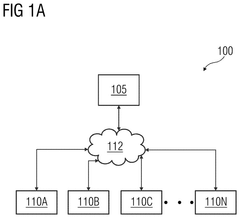
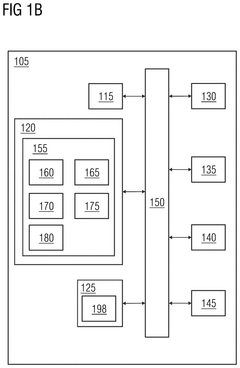
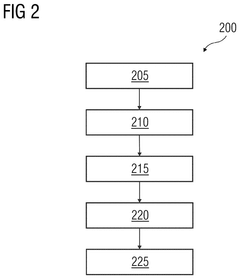
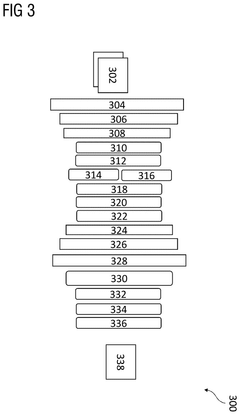
- A system and method that utilizes a deep learning model, specifically a U-Net variational autoencoder, to predict a suboptimal topology, which is then used to initialize an optimization solver for computing the optimal topology using methods like SIMP and BESO, thereby reducing computational resources and improving efficiency.
Structural topology optimization design method
PatentInactiveUS20160140269A1
Innovation
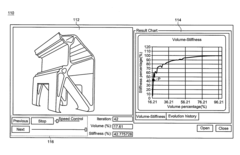
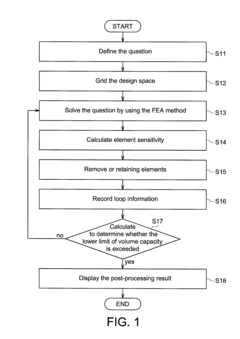
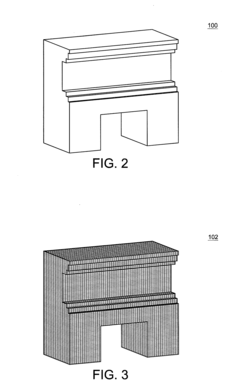
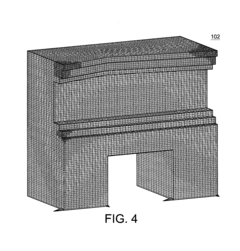
- A modified BESO method that omits the iteration process until the target volume capacity is reached, directly using structural profiles after each loop as optimization results, and utilizes a display interface to show the relationship between volume capacity and stiffness, allowing for easier determination of processing feasibility.
Material Science Considerations for Optimized Structures
Material selection plays a pivotal role in topology optimization processes, directly influencing the performance, manufacturability, and economic viability of optimized structural components. The material properties fundamentally determine how loads are distributed through a structure and significantly impact the final optimized design. When implementing topology optimization, engineers must consider the anisotropic properties of materials, as directional strength characteristics can lead to dramatically different optimal configurations.
Advanced composite materials have revolutionized topology optimization by offering tailored mechanical properties. Carbon fiber reinforced polymers (CFRP), for instance, provide exceptional strength-to-weight ratios that enable more efficient load paths compared to traditional isotropic materials. The strategic orientation of fibers within these composites can be integrated into optimization algorithms to further enhance structural performance while reducing material usage.
Additive manufacturing has expanded material possibilities for topology-optimized structures, allowing for the use of novel alloys and metamaterials with programmed mechanical properties. Lattice structures and functionally graded materials (FGMs) represent significant advancements, enabling spatial variation of material properties throughout a component to better address localized stress concentrations and optimize load distribution.
Material fatigue behavior must be incorporated into topology optimization algorithms when designing components subject to cyclic loading. The fatigue resistance of materials significantly influences the long-term reliability of optimized structures, particularly in aerospace and automotive applications where weight reduction must not compromise safety margins. Recent research has developed multi-objective optimization approaches that simultaneously consider static strength, fatigue life, and weight reduction.
Thermal considerations present another critical dimension in material selection for topology optimization. Thermal expansion coefficients, thermal conductivity, and temperature-dependent mechanical properties can dramatically alter optimal load paths under varying operating conditions. For applications involving thermal cycling or extreme temperatures, materials with stable properties across the operational temperature range are essential to maintain the intended load paths.
Sustainability factors are increasingly influencing material selection in topology optimization. Life cycle assessment metrics, recyclability, and embodied carbon are becoming standard considerations alongside traditional mechanical properties. Bio-based composites and recycled materials are gaining traction as environmentally responsible alternatives that can still deliver competitive mechanical performance when properly integrated into topology optimization frameworks.
Advanced composite materials have revolutionized topology optimization by offering tailored mechanical properties. Carbon fiber reinforced polymers (CFRP), for instance, provide exceptional strength-to-weight ratios that enable more efficient load paths compared to traditional isotropic materials. The strategic orientation of fibers within these composites can be integrated into optimization algorithms to further enhance structural performance while reducing material usage.
Additive manufacturing has expanded material possibilities for topology-optimized structures, allowing for the use of novel alloys and metamaterials with programmed mechanical properties. Lattice structures and functionally graded materials (FGMs) represent significant advancements, enabling spatial variation of material properties throughout a component to better address localized stress concentrations and optimize load distribution.
Material fatigue behavior must be incorporated into topology optimization algorithms when designing components subject to cyclic loading. The fatigue resistance of materials significantly influences the long-term reliability of optimized structures, particularly in aerospace and automotive applications where weight reduction must not compromise safety margins. Recent research has developed multi-objective optimization approaches that simultaneously consider static strength, fatigue life, and weight reduction.
Thermal considerations present another critical dimension in material selection for topology optimization. Thermal expansion coefficients, thermal conductivity, and temperature-dependent mechanical properties can dramatically alter optimal load paths under varying operating conditions. For applications involving thermal cycling or extreme temperatures, materials with stable properties across the operational temperature range are essential to maintain the intended load paths.
Sustainability factors are increasingly influencing material selection in topology optimization. Life cycle assessment metrics, recyclability, and embodied carbon are becoming standard considerations alongside traditional mechanical properties. Bio-based composites and recycled materials are gaining traction as environmentally responsible alternatives that can still deliver competitive mechanical performance when properly integrated into topology optimization frameworks.
Manufacturing Constraints and Implementation Strategies
The implementation of topology optimization in real-world manufacturing environments necessitates careful consideration of manufacturing constraints. Traditional manufacturing methods such as machining, casting, and forging impose significant limitations on the geometric complexity achievable in final components. For instance, conventional machining requires tool accessibility to all surfaces, which may conflict with the complex, organic structures often generated by unconstrained topology optimization algorithms.
Additive manufacturing (AM) technologies have substantially expanded the feasible design space, enabling the production of previously impossible geometries. However, even AM processes have constraints that must be addressed, including minimum feature size, support structure requirements, build orientation considerations, and residual stress management. Successful implementation strategies must incorporate these constraints directly into the optimization algorithm rather than applying them as post-processing steps.
Constraint formulation approaches can be categorized into three primary methodologies. Explicit constraints involve direct mathematical formulations that prevent specific geometric features from appearing in the solution. Implicit constraints modify the optimization algorithm's behavior to naturally avoid infeasible designs. Penalty-based approaches incorporate manufacturing limitations as soft constraints by adding penalty terms to the objective function, allowing the algorithm to balance performance against manufacturability.
Filter-based techniques represent another powerful implementation strategy, where specialized filters are applied during the optimization process to ensure minimum feature sizes and prevent checkerboard patterns. These filters can be tailored to specific manufacturing processes, such as ensuring proper wall thicknesses for casting or minimum member sizes for extrusion processes.
Multi-stage optimization workflows have proven particularly effective in industrial applications. These approaches begin with a less constrained optimization to explore the design space broadly, followed by increasingly constrained iterations that gradually incorporate manufacturing limitations. This strategy prevents premature design space restriction while ensuring final designs remain manufacturable.
Integration with Design for Manufacturing (DFM) principles represents the most comprehensive implementation approach. This involves close collaboration between design engineers and manufacturing specialists throughout the optimization process. Software platforms that combine topology optimization with manufacturing simulation capabilities enable real-time feedback on manufacturability, allowing designers to make informed decisions about trade-offs between structural performance and production feasibility.
Cost considerations must also factor into implementation strategies, as highly optimized components may achieve theoretical performance improvements but at prohibitive manufacturing costs. Effective implementation therefore requires balancing multiple objectives including structural performance, manufacturing complexity, material usage, and production economics.
Additive manufacturing (AM) technologies have substantially expanded the feasible design space, enabling the production of previously impossible geometries. However, even AM processes have constraints that must be addressed, including minimum feature size, support structure requirements, build orientation considerations, and residual stress management. Successful implementation strategies must incorporate these constraints directly into the optimization algorithm rather than applying them as post-processing steps.
Constraint formulation approaches can be categorized into three primary methodologies. Explicit constraints involve direct mathematical formulations that prevent specific geometric features from appearing in the solution. Implicit constraints modify the optimization algorithm's behavior to naturally avoid infeasible designs. Penalty-based approaches incorporate manufacturing limitations as soft constraints by adding penalty terms to the objective function, allowing the algorithm to balance performance against manufacturability.
Filter-based techniques represent another powerful implementation strategy, where specialized filters are applied during the optimization process to ensure minimum feature sizes and prevent checkerboard patterns. These filters can be tailored to specific manufacturing processes, such as ensuring proper wall thicknesses for casting or minimum member sizes for extrusion processes.
Multi-stage optimization workflows have proven particularly effective in industrial applications. These approaches begin with a less constrained optimization to explore the design space broadly, followed by increasingly constrained iterations that gradually incorporate manufacturing limitations. This strategy prevents premature design space restriction while ensuring final designs remain manufacturable.
Integration with Design for Manufacturing (DFM) principles represents the most comprehensive implementation approach. This involves close collaboration between design engineers and manufacturing specialists throughout the optimization process. Software platforms that combine topology optimization with manufacturing simulation capabilities enable real-time feedback on manufacturability, allowing designers to make informed decisions about trade-offs between structural performance and production feasibility.
Cost considerations must also factor into implementation strategies, as highly optimized components may achieve theoretical performance improvements but at prohibitive manufacturing costs. Effective implementation therefore requires balancing multiple objectives including structural performance, manufacturing complexity, material usage, and production economics.
Unlock deeper insights with PatSnap Eureka Quick Research — get a full tech report to explore trends and direct your research. Try now!
Generate Your Research Report Instantly with AI Agent
Supercharge your innovation with PatSnap Eureka AI Agent Platform!