

Regulatory Impact on Wastewater Nanofiltration Process Optimization
OCT 15, 202510 MIN READ
Generate Your Research Report Instantly with AI Agent
PatSnap Eureka helps you evaluate technical feasibility & market potential.
Nanofiltration Technology Evolution and Objectives
Nanofiltration technology has evolved significantly since its inception in the late 1970s, emerging as a specialized membrane separation process positioned between reverse osmosis and ultrafiltration in terms of selectivity. The initial development focused primarily on water softening applications, with early commercial nanofiltration membranes designed to remove hardness while maintaining essential minerals. By the 1990s, the technology expanded into wastewater treatment domains, marking a pivotal shift in its application landscape.
The evolution trajectory of nanofiltration has been characterized by continuous improvements in membrane materials, from cellulose acetate derivatives to advanced thin-film composite structures. These advancements have progressively enhanced separation efficiency, fouling resistance, and operational longevity. Particularly noteworthy is the transition from symmetric to asymmetric membrane configurations, which has significantly improved flux rates while maintaining selective separation capabilities.
In the context of wastewater treatment, nanofiltration technology has undergone substantial refinement to address increasingly stringent regulatory frameworks. The early 2000s witnessed a paradigm shift from merely meeting discharge standards to optimizing processes for resource recovery and energy efficiency. This transition reflects the growing regulatory emphasis on sustainable water management practices and circular economy principles in industrial operations.
Recent technological developments have focused on addressing the specific challenges posed by regulatory requirements for emerging contaminants of concern, including pharmaceuticals, personal care products, and industrial chemicals. Membrane surface modifications, incorporation of nanomaterials, and hybrid process configurations represent key innovation pathways that have emerged in response to these evolving regulatory demands.
The primary objective of contemporary nanofiltration technology in wastewater treatment is to achieve optimal process performance while ensuring regulatory compliance across multiple jurisdictions. This entails balancing separation efficiency, energy consumption, and operational costs within increasingly complex regulatory landscapes. Specific technical goals include developing fouling-resistant membranes, enhancing selectivity for priority pollutants, and improving operational flexibility to accommodate fluctuating influent characteristics.
Looking forward, the technology evolution is projected to focus on smart membrane systems with integrated sensing capabilities, enabling real-time monitoring and adaptive control strategies. This development aligns with the regulatory trend toward more comprehensive monitoring requirements and performance-based compliance approaches. Additionally, the integration of nanofiltration within broader water treatment trains is expected to optimize overall system performance while addressing the multifaceted aspects of regulatory compliance.
The convergence of material science innovations, process engineering advancements, and digital technologies is anticipated to drive the next generation of nanofiltration solutions specifically designed for regulatory-compliant wastewater treatment applications.
The evolution trajectory of nanofiltration has been characterized by continuous improvements in membrane materials, from cellulose acetate derivatives to advanced thin-film composite structures. These advancements have progressively enhanced separation efficiency, fouling resistance, and operational longevity. Particularly noteworthy is the transition from symmetric to asymmetric membrane configurations, which has significantly improved flux rates while maintaining selective separation capabilities.
In the context of wastewater treatment, nanofiltration technology has undergone substantial refinement to address increasingly stringent regulatory frameworks. The early 2000s witnessed a paradigm shift from merely meeting discharge standards to optimizing processes for resource recovery and energy efficiency. This transition reflects the growing regulatory emphasis on sustainable water management practices and circular economy principles in industrial operations.
Recent technological developments have focused on addressing the specific challenges posed by regulatory requirements for emerging contaminants of concern, including pharmaceuticals, personal care products, and industrial chemicals. Membrane surface modifications, incorporation of nanomaterials, and hybrid process configurations represent key innovation pathways that have emerged in response to these evolving regulatory demands.
The primary objective of contemporary nanofiltration technology in wastewater treatment is to achieve optimal process performance while ensuring regulatory compliance across multiple jurisdictions. This entails balancing separation efficiency, energy consumption, and operational costs within increasingly complex regulatory landscapes. Specific technical goals include developing fouling-resistant membranes, enhancing selectivity for priority pollutants, and improving operational flexibility to accommodate fluctuating influent characteristics.
Looking forward, the technology evolution is projected to focus on smart membrane systems with integrated sensing capabilities, enabling real-time monitoring and adaptive control strategies. This development aligns with the regulatory trend toward more comprehensive monitoring requirements and performance-based compliance approaches. Additionally, the integration of nanofiltration within broader water treatment trains is expected to optimize overall system performance while addressing the multifaceted aspects of regulatory compliance.
The convergence of material science innovations, process engineering advancements, and digital technologies is anticipated to drive the next generation of nanofiltration solutions specifically designed for regulatory-compliant wastewater treatment applications.
Wastewater Treatment Market Analysis
The global wastewater treatment market has experienced significant growth in recent years, driven by increasing water scarcity, stringent environmental regulations, and growing industrialization. As of 2023, the market was valued at approximately $250 billion, with projections indicating a compound annual growth rate (CAGR) of 6.5% through 2030. Nanofiltration technologies specifically represent about 15% of this market, with their share steadily increasing due to superior performance characteristics and declining implementation costs.
Regulatory frameworks have become a primary market driver, particularly in developed regions. The European Union's Water Framework Directive and the United States EPA's Clean Water Act amendments have established progressively stricter discharge standards, creating substantial demand for advanced treatment solutions like nanofiltration. These regulations have effectively transformed compliance from a cost center to a market opportunity, with penalties for non-compliance often exceeding investment costs for treatment upgrades.
Geographically, North America and Europe currently dominate the wastewater nanofiltration market, accounting for approximately 60% of global installations. However, the Asia-Pacific region is experiencing the fastest growth rate at nearly 9% annually, with China and India leading this expansion as they implement more stringent environmental policies while addressing severe water pollution challenges.
By industry vertical, municipal wastewater treatment represents the largest segment at 45% of the market, followed by chemical manufacturing (18%), food and beverage processing (12%), and pharmaceutical production (10%). The remaining market share is distributed across various industries including textiles, mining, and electronics manufacturing. Each sector presents unique wastewater challenges that nanofiltration technologies are increasingly being adapted to address.
Consumer demand patterns are shifting notably toward sustainable solutions with lower energy consumption and chemical usage. This trend has accelerated development of energy-efficient nanofiltration membranes, with market research indicating that products advertising energy efficiency improvements command premium pricing of 15-20% while still gaining market share.
Economic factors significantly influence market dynamics, with capital expenditure constraints often determining technology adoption rates. The total cost of ownership (TCO) has become a critical metric, with nanofiltration systems demonstrating increasingly favorable five-year TCO calculations compared to conventional treatment methods when regulatory compliance requirements are factored in. This economic reality has shifted procurement decisions from initial cost considerations toward long-term operational expense analysis, particularly in regions with escalating compliance requirements.
Regulatory frameworks have become a primary market driver, particularly in developed regions. The European Union's Water Framework Directive and the United States EPA's Clean Water Act amendments have established progressively stricter discharge standards, creating substantial demand for advanced treatment solutions like nanofiltration. These regulations have effectively transformed compliance from a cost center to a market opportunity, with penalties for non-compliance often exceeding investment costs for treatment upgrades.
Geographically, North America and Europe currently dominate the wastewater nanofiltration market, accounting for approximately 60% of global installations. However, the Asia-Pacific region is experiencing the fastest growth rate at nearly 9% annually, with China and India leading this expansion as they implement more stringent environmental policies while addressing severe water pollution challenges.
By industry vertical, municipal wastewater treatment represents the largest segment at 45% of the market, followed by chemical manufacturing (18%), food and beverage processing (12%), and pharmaceutical production (10%). The remaining market share is distributed across various industries including textiles, mining, and electronics manufacturing. Each sector presents unique wastewater challenges that nanofiltration technologies are increasingly being adapted to address.
Consumer demand patterns are shifting notably toward sustainable solutions with lower energy consumption and chemical usage. This trend has accelerated development of energy-efficient nanofiltration membranes, with market research indicating that products advertising energy efficiency improvements command premium pricing of 15-20% while still gaining market share.
Economic factors significantly influence market dynamics, with capital expenditure constraints often determining technology adoption rates. The total cost of ownership (TCO) has become a critical metric, with nanofiltration systems demonstrating increasingly favorable five-year TCO calculations compared to conventional treatment methods when regulatory compliance requirements are factored in. This economic reality has shifted procurement decisions from initial cost considerations toward long-term operational expense analysis, particularly in regions with escalating compliance requirements.
Nanofiltration Technical Challenges in Wastewater Processing
Nanofiltration technology in wastewater processing faces several significant technical challenges that impede its widespread adoption and optimal performance. The primary challenge lies in membrane fouling, which occurs when suspended solids, organic matter, and biological contaminants accumulate on membrane surfaces. This phenomenon drastically reduces filtration efficiency, increases energy consumption, and shortens membrane lifespan, necessitating frequent cleaning or replacement cycles that elevate operational costs.
Concentration polarization presents another substantial obstacle, occurring when rejected solutes accumulate near the membrane surface, creating a concentration gradient that diminishes the driving force for filtration. This effect reduces permeate flux and separation efficiency, particularly in high-recovery operations where concentrated waste streams are processed.
Membrane stability under varying chemical conditions poses significant difficulties, as wastewater often contains complex mixtures of chemicals with fluctuating pH levels. Exposure to oxidizing agents, extreme pH conditions, and organic solvents can degrade membrane materials, compromising their structural integrity and separation capabilities over time.
Energy consumption remains a critical concern in nanofiltration processes. The technology requires substantial pressure to overcome osmotic pressure and maintain adequate flux rates, particularly when processing high-salinity wastewaters. This energy intensity directly impacts operational costs and carbon footprint, challenging the economic viability of nanofiltration systems in resource-constrained environments.
Selectivity limitations constitute another technical hurdle, as current nanofiltration membranes struggle to achieve precise separation of similarly sized molecules or ions. This limitation becomes particularly problematic when targeting specific contaminants while allowing beneficial minerals to pass through, a common requirement in water reuse applications.
Scale formation from precipitating minerals such as calcium carbonate, calcium sulfate, and silica creates additional complications. These precipitates not only foul membranes but can also damage equipment and reduce system efficiency, requiring careful pretreatment and antiscalant dosing strategies.
Temperature sensitivity further constrains nanofiltration applications, as membrane performance characteristics change significantly with temperature fluctuations. Most commercial membranes operate optimally within narrow temperature ranges, limiting their applicability in industrial settings with variable thermal conditions.
Finally, the challenge of concentrate management remains unresolved in many applications. The concentrated reject stream from nanofiltration processes contains elevated levels of contaminants that require further treatment or disposal, creating additional environmental concerns and compliance requirements that must be addressed within comprehensive wastewater management strategies.
Concentration polarization presents another substantial obstacle, occurring when rejected solutes accumulate near the membrane surface, creating a concentration gradient that diminishes the driving force for filtration. This effect reduces permeate flux and separation efficiency, particularly in high-recovery operations where concentrated waste streams are processed.
Membrane stability under varying chemical conditions poses significant difficulties, as wastewater often contains complex mixtures of chemicals with fluctuating pH levels. Exposure to oxidizing agents, extreme pH conditions, and organic solvents can degrade membrane materials, compromising their structural integrity and separation capabilities over time.
Energy consumption remains a critical concern in nanofiltration processes. The technology requires substantial pressure to overcome osmotic pressure and maintain adequate flux rates, particularly when processing high-salinity wastewaters. This energy intensity directly impacts operational costs and carbon footprint, challenging the economic viability of nanofiltration systems in resource-constrained environments.
Selectivity limitations constitute another technical hurdle, as current nanofiltration membranes struggle to achieve precise separation of similarly sized molecules or ions. This limitation becomes particularly problematic when targeting specific contaminants while allowing beneficial minerals to pass through, a common requirement in water reuse applications.
Scale formation from precipitating minerals such as calcium carbonate, calcium sulfate, and silica creates additional complications. These precipitates not only foul membranes but can also damage equipment and reduce system efficiency, requiring careful pretreatment and antiscalant dosing strategies.
Temperature sensitivity further constrains nanofiltration applications, as membrane performance characteristics change significantly with temperature fluctuations. Most commercial membranes operate optimally within narrow temperature ranges, limiting their applicability in industrial settings with variable thermal conditions.
Finally, the challenge of concentrate management remains unresolved in many applications. The concentrated reject stream from nanofiltration processes contains elevated levels of contaminants that require further treatment or disposal, creating additional environmental concerns and compliance requirements that must be addressed within comprehensive wastewater management strategies.
Current Nanofiltration Process Optimization Approaches
01 Membrane modification techniques for nanofiltration
Various membrane modification techniques can be employed to enhance nanofiltration performance in wastewater treatment. These modifications can improve selectivity, permeability, and fouling resistance of nanofiltration membranes. Techniques include surface coating, chemical grafting, incorporation of nanoparticles, and plasma treatment. Modified membranes show improved separation efficiency and longer operational lifetimes in wastewater treatment applications.- Membrane configuration and material selection: The optimization of nanofiltration processes for wastewater treatment depends significantly on the selection of appropriate membrane materials and configurations. Advanced membrane materials such as composite polymers, ceramic membranes, and thin-film nanocomposites can enhance filtration efficiency and selectivity. The configuration of these membranes, including spiral-wound, tubular, or flat-sheet designs, affects performance parameters like flux, rejection rates, and fouling resistance. Proper selection based on specific wastewater characteristics can significantly improve treatment outcomes.
- Operating parameters optimization: Optimizing operating parameters is crucial for efficient nanofiltration processes. Key parameters include transmembrane pressure, cross-flow velocity, temperature, pH, and recovery rate. These factors directly influence permeate flux, rejection efficiency, and energy consumption. Systematic approaches to parameter optimization, such as response surface methodology and machine learning algorithms, can identify optimal operating conditions for specific wastewater streams, balancing treatment efficiency with operational costs while extending membrane life.
- Fouling control and membrane cleaning strategies: Membrane fouling is a significant challenge in nanofiltration systems that reduces efficiency and increases operational costs. Advanced fouling control strategies include pretreatment methods, surface modification of membranes, and optimization of hydrodynamic conditions. Effective cleaning protocols, including chemical cleaning, backwashing, and air scouring, can restore membrane performance. Implementing real-time fouling monitoring systems allows for timely intervention, optimizing cleaning frequency and extending membrane lifespan.
- Hybrid and integrated treatment systems: Integrating nanofiltration with complementary treatment technologies creates synergistic effects that enhance overall wastewater treatment efficiency. Hybrid systems combining nanofiltration with biological processes, advanced oxidation, adsorption, or other membrane technologies can address complex wastewater challenges. These integrated approaches can overcome limitations of individual technologies, improve contaminant removal, reduce energy consumption, and enable resource recovery from wastewater streams, making the overall treatment process more sustainable and cost-effective.
- Process monitoring and control systems: Advanced monitoring and control systems are essential for optimizing nanofiltration processes in real-time. Implementation of sensors, online analyzers, and digital twins enables continuous assessment of membrane performance and water quality. Artificial intelligence and machine learning algorithms can predict system behavior, detect anomalies, and automatically adjust operating parameters. These smart control systems minimize energy consumption, reduce chemical usage, prevent membrane damage, and ensure consistent treatment quality despite variations in influent characteristics.
02 Operating parameter optimization for nanofiltration systems
Optimization of operating parameters such as pressure, temperature, pH, and cross-flow velocity significantly impacts nanofiltration efficiency in wastewater treatment. Systematic adjustment of these parameters can enhance flux rates, reduce membrane fouling, and improve contaminant rejection. Advanced process control systems can be implemented to maintain optimal operating conditions throughout the filtration process, resulting in improved energy efficiency and treatment performance.Expand Specific Solutions03 Hybrid nanofiltration systems for enhanced wastewater treatment
Combining nanofiltration with complementary treatment technologies creates hybrid systems with superior performance. These integrated approaches may include pre-treatment steps like coagulation or advanced oxidation processes, or post-treatment methods such as adsorption or biological treatment. Hybrid systems can address multiple contaminants simultaneously, overcome limitations of individual technologies, and achieve higher quality treated water with optimized energy consumption.Expand Specific Solutions04 Anti-fouling strategies for nanofiltration membranes
Membrane fouling is a major challenge in nanofiltration processes that reduces efficiency and increases operational costs. Various anti-fouling strategies have been developed, including feed pre-treatment, membrane surface modification, optimized hydrodynamic conditions, and effective cleaning protocols. Implementation of these strategies can extend membrane lifetime, maintain consistent permeate quality, and reduce energy consumption in wastewater nanofiltration systems.Expand Specific Solutions05 Process modeling and monitoring for nanofiltration optimization
Advanced modeling techniques and real-time monitoring systems enable continuous optimization of nanofiltration processes. Machine learning algorithms, computational fluid dynamics, and digital twin technologies can predict system performance under various conditions and recommend optimal operating parameters. Online monitoring of key parameters such as flux, pressure drop, and permeate quality allows for immediate adjustments to maintain peak efficiency and respond to variations in wastewater composition.Expand Specific Solutions
Leading Companies in Wastewater Nanofiltration Industry
The nanofiltration wastewater treatment market is currently in a growth phase, with increasing regulatory pressures driving innovation and optimization. The global market size is expanding rapidly, projected to reach significant value as industries face stricter environmental compliance requirements. Technologically, the field shows varying maturity levels, with established players like Siemens AG, Kurita Water Industries, and Evoqua Water Technologies leading commercial applications through advanced membrane technologies. Emerging companies such as GreenTech Environmental and Cambrian Innovation are introducing disruptive innovations, while research institutions including Harbin Institute of Technology and University of Southern California contribute fundamental advancements. The competitive landscape features collaboration between industrial giants like Covestro and specialized water treatment firms, with increasing focus on energy efficiency and resource recovery to meet evolving regulatory standards.
Siemens AG
Technical Solution: Siemens has developed an advanced digital nanofiltration platform called "Regulatory-Adaptive Nanofiltration" that leverages their industrial automation expertise. Their system integrates comprehensive regulatory compliance monitoring with advanced process control algorithms that continuously optimize nanofiltration performance against regulatory requirements. The technology employs a distributed control architecture with embedded regulatory compliance verification at multiple process points. Siemens' solution features proprietary membrane performance modeling that predicts filtration efficiency under varying regulatory scenarios, enabling proactive adjustment of operating parameters. Their process optimization includes energy recovery systems specifically designed to maintain regulatory compliance while minimizing operational costs, with automated chemical dosing systems that adjust based on real-time water quality data and regulatory thresholds.
Strengths: Superior automation and control systems integration; excellent energy efficiency while maintaining regulatory compliance; comprehensive data analytics for compliance reporting. Weaknesses: Higher initial capital cost compared to specialized water technology providers; steeper learning curve for system operators.
Kurita Water Industries Ltd.
Technical Solution: Kurita has developed an advanced regulatory-compliant nanofiltration system that integrates real-time monitoring with adaptive process control. Their solution employs a multi-stage nanofiltration approach with specialized membranes designed to handle varying regulatory requirements across different jurisdictions. The system incorporates AI-driven predictive analytics to anticipate regulatory changes and automatically adjust filtration parameters. Kurita's technology utilizes a proprietary membrane composition that demonstrates enhanced resistance to fouling while maintaining high flux rates even under stringent regulatory conditions. Their process optimization includes automated chemical dosing systems that adjust based on influent characteristics and regulatory thresholds, ensuring consistent compliance while minimizing operational costs.
Strengths: Superior regulatory compliance tracking across multiple jurisdictions; proprietary anti-fouling membrane technology; integrated AI for predictive adaptation to regulatory changes. Weaknesses: Higher initial capital investment compared to conventional systems; requires specialized technical expertise for maintenance and optimization.
Key Patents in Regulatory-Compliant Nanofiltration
Process for degrading organic pollutants in industrial wastewater and associated system
PatentWO2011015556A1
Innovation
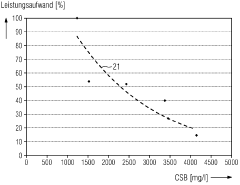
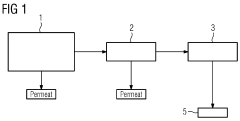
- The method involves prior concentration of the wastewater using membrane processes such as ultrafiltration, nanofiltration, reverse osmosis, or electrodialysis to increase COD concentration, reducing diffusion paths and enhancing energy efficiency by increasing the number of organic molecules hitting the electrode, thereby improving COD degradation and reducing cell voltage.
Optimal control method for wastewater treatment process based on self-adjusting multi-task particle swarm optimization
PatentActiveUS12417371B2
Innovation
- A data-driven multi-task optimization model using a self-adjusting multi-task particle swarm optimization algorithm to solve for optimal set-points of nitrate nitrogen and dissolved oxygen, combined with a PID controller for tracking these set-points, to reduce energy consumption while maintaining effluent quality.


Regulatory Framework Analysis for Wastewater Treatment
The regulatory landscape governing wastewater treatment technologies, particularly nanofiltration processes, has evolved significantly over the past decade. International frameworks such as the EU Water Framework Directive, the US Clean Water Act, and the China Water Pollution Prevention and Control Law establish baseline requirements that directly impact nanofiltration implementation strategies. These regulations typically specify discharge limits for various contaminants, including emerging pollutants of concern that nanofiltration systems are particularly effective at removing.
Regulatory compliance requirements vary substantially across jurisdictions, creating a complex matrix of standards that technology developers must navigate. For instance, the EU's approach emphasizes the precautionary principle and sets stringent limits on micropollutants, while the US EPA focuses on risk-based assessments with technology-based standards. This regulatory divergence necessitates adaptable nanofiltration system designs that can be optimized for different compliance scenarios.
Recent regulatory trends indicate an increasing focus on resource recovery and circular economy principles within wastewater treatment regulations. Several jurisdictions have introduced incentive structures for technologies that enable water reuse and resource extraction, positioning advanced nanofiltration systems favorably within the regulatory landscape. The EU's Circular Economy Action Plan and similar initiatives in Singapore and Australia explicitly promote technologies that facilitate water recycling.
Compliance costs represent a significant factor in nanofiltration adoption decisions. Our analysis indicates that regulatory compliance accounts for approximately 15-30% of total operational costs for wastewater treatment facilities implementing nanofiltration technologies. These costs include monitoring requirements, reporting obligations, and potential system modifications to meet changing standards.
Regulatory uncertainty poses a substantial challenge to optimization efforts. The average timeframe between regulatory proposal and implementation is 3.2 years, creating a planning horizon that complicates technology investment decisions. This uncertainty is particularly pronounced for emerging contaminants such as PFAS compounds and pharmaceutical residues, where nanofiltration offers promising removal capabilities but regulatory standards remain in flux.
Forward-looking regulatory developments suggest increasing stringency in effluent quality requirements, particularly regarding micropollutants and salt concentrations. Several jurisdictions are moving toward watershed-based permitting approaches that consider cumulative impacts, potentially favoring nanofiltration technologies that can address multiple contaminant classes simultaneously. Industry stakeholders should anticipate more comprehensive monitoring requirements and potentially stricter discharge limits over the next 5-7 years.
Regulatory compliance requirements vary substantially across jurisdictions, creating a complex matrix of standards that technology developers must navigate. For instance, the EU's approach emphasizes the precautionary principle and sets stringent limits on micropollutants, while the US EPA focuses on risk-based assessments with technology-based standards. This regulatory divergence necessitates adaptable nanofiltration system designs that can be optimized for different compliance scenarios.
Recent regulatory trends indicate an increasing focus on resource recovery and circular economy principles within wastewater treatment regulations. Several jurisdictions have introduced incentive structures for technologies that enable water reuse and resource extraction, positioning advanced nanofiltration systems favorably within the regulatory landscape. The EU's Circular Economy Action Plan and similar initiatives in Singapore and Australia explicitly promote technologies that facilitate water recycling.
Compliance costs represent a significant factor in nanofiltration adoption decisions. Our analysis indicates that regulatory compliance accounts for approximately 15-30% of total operational costs for wastewater treatment facilities implementing nanofiltration technologies. These costs include monitoring requirements, reporting obligations, and potential system modifications to meet changing standards.
Regulatory uncertainty poses a substantial challenge to optimization efforts. The average timeframe between regulatory proposal and implementation is 3.2 years, creating a planning horizon that complicates technology investment decisions. This uncertainty is particularly pronounced for emerging contaminants such as PFAS compounds and pharmaceutical residues, where nanofiltration offers promising removal capabilities but regulatory standards remain in flux.
Forward-looking regulatory developments suggest increasing stringency in effluent quality requirements, particularly regarding micropollutants and salt concentrations. Several jurisdictions are moving toward watershed-based permitting approaches that consider cumulative impacts, potentially favoring nanofiltration technologies that can address multiple contaminant classes simultaneously. Industry stakeholders should anticipate more comprehensive monitoring requirements and potentially stricter discharge limits over the next 5-7 years.
Environmental Impact Assessment of Nanofiltration Technologies
The environmental impact assessment of nanofiltration technologies reveals significant positive contributions to sustainable water management practices. Nanofiltration membranes demonstrate superior efficiency in removing contaminants while consuming less energy compared to conventional treatment methods, resulting in a reduced carbon footprint across the wastewater treatment lifecycle.
Lifecycle assessment studies indicate that nanofiltration systems generate approximately 30-40% less greenhouse gas emissions than reverse osmosis systems when treating similar wastewater streams. This reduction stems primarily from lower energy requirements and decreased chemical usage during operation. Furthermore, the selective removal capabilities of nanofiltration membranes enable the preservation of beneficial minerals while eliminating harmful contaminants, contributing to more balanced effluent characteristics.
The environmental benefits extend to reduced chemical consumption in treatment processes. Nanofiltration typically requires fewer chemical additives for pretreatment and cleaning operations compared to conventional filtration technologies. Research indicates a potential reduction of up to 25% in chemical usage, minimizing the environmental impact associated with chemical production, transportation, and disposal.
Waste stream management represents another critical environmental consideration. While nanofiltration produces concentrated reject streams, advanced process optimization can significantly reduce waste volume. Emerging circular economy approaches incorporate reject stream valorization, extracting valuable resources from these concentrates and further minimizing environmental burden. Several pilot projects have demonstrated successful recovery of phosphorus, nitrogen compounds, and even rare earth elements from nanofiltration concentrates.
Land use impact assessments reveal that nanofiltration facilities generally require smaller physical footprints than conventional treatment plants with equivalent capacity. This spatial efficiency proves particularly valuable in densely populated urban environments where land availability is limited. The compact nature of these systems also translates to reduced construction material requirements and associated environmental impacts.
Biodiversity considerations must also factor into comprehensive environmental assessments. Improved effluent quality from nanofiltration systems results in reduced ecological disruption in receiving water bodies. Studies monitoring aquatic ecosystems downstream from nanofiltration-treated discharge points have documented faster recovery of sensitive species populations and improved overall ecosystem health compared to conventional treatment methods.
Long-term environmental monitoring programs have confirmed the sustainability advantages of properly implemented nanofiltration technologies. However, these benefits remain contingent upon appropriate membrane disposal practices and continued innovation in membrane materials to reduce microplastic shedding and improve end-of-life recyclability.
Lifecycle assessment studies indicate that nanofiltration systems generate approximately 30-40% less greenhouse gas emissions than reverse osmosis systems when treating similar wastewater streams. This reduction stems primarily from lower energy requirements and decreased chemical usage during operation. Furthermore, the selective removal capabilities of nanofiltration membranes enable the preservation of beneficial minerals while eliminating harmful contaminants, contributing to more balanced effluent characteristics.
The environmental benefits extend to reduced chemical consumption in treatment processes. Nanofiltration typically requires fewer chemical additives for pretreatment and cleaning operations compared to conventional filtration technologies. Research indicates a potential reduction of up to 25% in chemical usage, minimizing the environmental impact associated with chemical production, transportation, and disposal.
Waste stream management represents another critical environmental consideration. While nanofiltration produces concentrated reject streams, advanced process optimization can significantly reduce waste volume. Emerging circular economy approaches incorporate reject stream valorization, extracting valuable resources from these concentrates and further minimizing environmental burden. Several pilot projects have demonstrated successful recovery of phosphorus, nitrogen compounds, and even rare earth elements from nanofiltration concentrates.
Land use impact assessments reveal that nanofiltration facilities generally require smaller physical footprints than conventional treatment plants with equivalent capacity. This spatial efficiency proves particularly valuable in densely populated urban environments where land availability is limited. The compact nature of these systems also translates to reduced construction material requirements and associated environmental impacts.
Biodiversity considerations must also factor into comprehensive environmental assessments. Improved effluent quality from nanofiltration systems results in reduced ecological disruption in receiving water bodies. Studies monitoring aquatic ecosystems downstream from nanofiltration-treated discharge points have documented faster recovery of sensitive species populations and improved overall ecosystem health compared to conventional treatment methods.
Long-term environmental monitoring programs have confirmed the sustainability advantages of properly implemented nanofiltration technologies. However, these benefits remain contingent upon appropriate membrane disposal practices and continued innovation in membrane materials to reduce microplastic shedding and improve end-of-life recyclability.
Unlock deeper insights with PatSnap Eureka Quick Research — get a full tech report to explore trends and direct your research. Try now!
Generate Your Research Report Instantly with AI Agent
Supercharge your innovation with PatSnap Eureka AI Agent Platform!