VCSEL Array Cooling Using Micro-Channel Liquid Plates
AUG 27, 202510 MIN READ
Generate Your Research Report Instantly with AI Agent
PatSnap Eureka helps you evaluate technical feasibility & market potential.
VCSEL Array Thermal Management Background and Objectives
Vertical-Cavity Surface-Emitting Laser (VCSEL) arrays have emerged as critical components in various high-tech applications, including facial recognition systems, LiDAR for autonomous vehicles, and high-speed optical communications. As these applications continue to evolve, the power density of VCSEL arrays has increased dramatically, creating significant thermal management challenges that directly impact device performance, reliability, and lifespan.
The evolution of VCSEL technology has seen a remarkable progression since its inception in the late 1970s. Initially developed as single-element devices with modest power outputs, VCSELs have now evolved into dense arrays containing thousands of emitters on a single chip, with total power outputs reaching tens of watts. This exponential increase in power density has outpaced traditional cooling solutions, necessitating innovative thermal management approaches.
Thermal issues in VCSEL arrays manifest primarily through wavelength shifts, reduced optical output power, accelerated aging, and catastrophic optical damage in extreme cases. The relationship between temperature and performance is particularly critical, with typical wavelength shifts of approximately 0.06-0.07 nm/°C and efficiency reductions of 1-2% per degree Celsius temperature rise. These thermal sensitivities directly impact system-level performance in applications requiring precise wavelength control or maximum optical output.
Current thermal management solutions for VCSEL arrays range from passive approaches using optimized heat spreaders and thermal interface materials to active cooling methods employing thermoelectric coolers. However, these conventional solutions face significant limitations when dealing with next-generation high-power arrays, particularly in space-constrained applications like mobile devices or wearable technology.
The primary objective of micro-channel liquid cooling plate technology is to provide a thermal management solution that can efficiently dissipate heat from high-power VCSEL arrays while maintaining uniform temperature distribution across the entire array. This uniformity is crucial for ensuring consistent performance across all emitters, particularly in applications requiring precise beam characteristics or wavelength stability.
Additional technical goals include developing cooling solutions that are compact enough for integration into space-constrained devices, energy-efficient to minimize system power consumption, and cost-effective for mass production. The technology must also be reliable under various operating conditions and compatible with existing VCSEL packaging techniques to facilitate industry adoption.
Looking forward, the thermal management of VCSEL arrays represents a critical enabling technology for the next generation of photonic devices. As applications continue to demand higher power densities and more precise performance parameters, advanced cooling solutions like micro-channel liquid plates will play an increasingly vital role in unlocking the full potential of VCSEL technology across diverse industries.
The evolution of VCSEL technology has seen a remarkable progression since its inception in the late 1970s. Initially developed as single-element devices with modest power outputs, VCSELs have now evolved into dense arrays containing thousands of emitters on a single chip, with total power outputs reaching tens of watts. This exponential increase in power density has outpaced traditional cooling solutions, necessitating innovative thermal management approaches.
Thermal issues in VCSEL arrays manifest primarily through wavelength shifts, reduced optical output power, accelerated aging, and catastrophic optical damage in extreme cases. The relationship between temperature and performance is particularly critical, with typical wavelength shifts of approximately 0.06-0.07 nm/°C and efficiency reductions of 1-2% per degree Celsius temperature rise. These thermal sensitivities directly impact system-level performance in applications requiring precise wavelength control or maximum optical output.
Current thermal management solutions for VCSEL arrays range from passive approaches using optimized heat spreaders and thermal interface materials to active cooling methods employing thermoelectric coolers. However, these conventional solutions face significant limitations when dealing with next-generation high-power arrays, particularly in space-constrained applications like mobile devices or wearable technology.
The primary objective of micro-channel liquid cooling plate technology is to provide a thermal management solution that can efficiently dissipate heat from high-power VCSEL arrays while maintaining uniform temperature distribution across the entire array. This uniformity is crucial for ensuring consistent performance across all emitters, particularly in applications requiring precise beam characteristics or wavelength stability.
Additional technical goals include developing cooling solutions that are compact enough for integration into space-constrained devices, energy-efficient to minimize system power consumption, and cost-effective for mass production. The technology must also be reliable under various operating conditions and compatible with existing VCSEL packaging techniques to facilitate industry adoption.
Looking forward, the thermal management of VCSEL arrays represents a critical enabling technology for the next generation of photonic devices. As applications continue to demand higher power densities and more precise performance parameters, advanced cooling solutions like micro-channel liquid plates will play an increasingly vital role in unlocking the full potential of VCSEL technology across diverse industries.
Market Demand Analysis for Advanced VCSEL Cooling Solutions
The global market for advanced VCSEL (Vertical-Cavity Surface-Emitting Laser) cooling solutions is experiencing significant growth driven by the expanding applications of VCSEL technology across multiple industries. As VCSEL arrays become more powerful and densely packed, the demand for efficient thermal management solutions has intensified dramatically. Market research indicates that the VCSEL market is projected to reach $3.1 billion by 2025, with a compound annual growth rate of 17.3% from 2020.
The primary market drivers for advanced cooling solutions like micro-channel liquid plates stem from the telecommunications sector, where VCSEL arrays are critical components in data centers and optical communication networks. With the global data traffic increasing at unprecedented rates and 5G deployment accelerating worldwide, telecom operators are seeking more efficient VCSEL systems that can operate reliably under high-power conditions without thermal degradation.
Consumer electronics represents another substantial market segment, particularly with the integration of VCSEL technology in facial recognition systems, augmented reality devices, and 3D sensing applications. Apple's implementation of VCSEL arrays in iPhone's Face ID has set an industry standard, creating a ripple effect across the smartphone industry. This application demands compact cooling solutions that maintain optimal operating temperatures while fitting within increasingly slim device profiles.
The automotive industry is emerging as a rapidly growing market for VCSEL technology, particularly in LiDAR systems for autonomous vehicles. Market analysis shows that automotive LiDAR systems are expected to grow at a CAGR of 34.7% through 2027, creating substantial demand for reliable cooling solutions that can withstand harsh automotive environments while ensuring consistent VCSEL performance.
Industrial manufacturing applications, including machine vision systems and industrial sensing, represent another significant market segment. These applications often require high-power VCSEL arrays operating continuously in challenging environments, necessitating advanced cooling technologies to maintain operational stability and extend device lifespan.
Market surveys indicate that end-users are willing to pay premium prices for cooling solutions that demonstrably improve VCSEL reliability and performance. The potential for extended device lifetime and improved beam quality translates directly to reduced total cost of ownership, making advanced cooling solutions an attractive investment despite higher initial costs.
Geographically, North America and Asia-Pacific regions dominate the market demand, with China showing the fastest growth rate due to its expanding telecommunications infrastructure and consumer electronics manufacturing base. European demand is primarily driven by automotive applications and industrial automation systems requiring high-reliability VCSEL components.
The primary market drivers for advanced cooling solutions like micro-channel liquid plates stem from the telecommunications sector, where VCSEL arrays are critical components in data centers and optical communication networks. With the global data traffic increasing at unprecedented rates and 5G deployment accelerating worldwide, telecom operators are seeking more efficient VCSEL systems that can operate reliably under high-power conditions without thermal degradation.
Consumer electronics represents another substantial market segment, particularly with the integration of VCSEL technology in facial recognition systems, augmented reality devices, and 3D sensing applications. Apple's implementation of VCSEL arrays in iPhone's Face ID has set an industry standard, creating a ripple effect across the smartphone industry. This application demands compact cooling solutions that maintain optimal operating temperatures while fitting within increasingly slim device profiles.
The automotive industry is emerging as a rapidly growing market for VCSEL technology, particularly in LiDAR systems for autonomous vehicles. Market analysis shows that automotive LiDAR systems are expected to grow at a CAGR of 34.7% through 2027, creating substantial demand for reliable cooling solutions that can withstand harsh automotive environments while ensuring consistent VCSEL performance.
Industrial manufacturing applications, including machine vision systems and industrial sensing, represent another significant market segment. These applications often require high-power VCSEL arrays operating continuously in challenging environments, necessitating advanced cooling technologies to maintain operational stability and extend device lifespan.
Market surveys indicate that end-users are willing to pay premium prices for cooling solutions that demonstrably improve VCSEL reliability and performance. The potential for extended device lifetime and improved beam quality translates directly to reduced total cost of ownership, making advanced cooling solutions an attractive investment despite higher initial costs.
Geographically, North America and Asia-Pacific regions dominate the market demand, with China showing the fastest growth rate due to its expanding telecommunications infrastructure and consumer electronics manufacturing base. European demand is primarily driven by automotive applications and industrial automation systems requiring high-reliability VCSEL components.
Current Challenges in VCSEL Array Thermal Dissipation
VCSEL (Vertical-Cavity Surface-Emitting Laser) arrays have emerged as critical components in various applications including facial recognition, LiDAR systems for autonomous vehicles, and high-speed optical communications. However, as these arrays increase in power density and integration levels, thermal management has become a significant bottleneck limiting their performance and reliability.
The fundamental thermal challenge with VCSEL arrays stems from their high power density, which can exceed 1 kW/cm² in advanced applications. This concentrated heat generation creates localized hotspots that can cause wavelength shifts, reduced output power, accelerated aging, and ultimately device failure if not properly managed. Current passive cooling solutions become increasingly inadequate as array sizes and power levels continue to grow.
Temperature non-uniformity across VCSEL arrays presents another critical challenge. Even small temperature gradients (5-10°C) can cause significant performance variations between individual emitters in an array, leading to beam quality degradation and system-level performance issues. This non-uniformity becomes more pronounced as array sizes increase, making uniform cooling increasingly difficult to achieve.
The compact form factor requirements of modern applications further complicate thermal management. Many applications demand miniaturized packages with minimal thermal solution footprints, creating a direct conflict with cooling requirements. This spatial constraint severely limits the implementation of traditional heat sinking approaches and necessitates novel cooling architectures.
Junction temperature stability represents another significant challenge. VCSEL performance parameters—including wavelength, threshold current, and slope efficiency—are highly temperature-dependent. For applications requiring precise optical characteristics, maintaining stable junction temperatures becomes essential but increasingly difficult as power densities rise.
Reliability concerns are amplified by thermal cycling effects. The repeated heating and cooling of VCSEL arrays during operation creates thermo-mechanical stresses at material interfaces, potentially leading to delamination, solder fatigue, and premature device failure. These effects become more pronounced in applications with frequent power cycling or variable duty cycles.
Manufacturing scalability of cooling solutions presents additional challenges. While laboratory demonstrations may achieve excellent thermal performance, transitioning these solutions to high-volume, cost-effective manufacturing remains difficult. Many advanced cooling techniques require precise fabrication tolerances and specialized materials that are challenging to implement in production environments.
Energy efficiency considerations further complicate the thermal management landscape. Active cooling solutions like thermoelectric coolers can provide precise temperature control but introduce significant power consumption overhead, reducing overall system efficiency. This trade-off becomes particularly problematic in battery-powered or energy-constrained applications.
The fundamental thermal challenge with VCSEL arrays stems from their high power density, which can exceed 1 kW/cm² in advanced applications. This concentrated heat generation creates localized hotspots that can cause wavelength shifts, reduced output power, accelerated aging, and ultimately device failure if not properly managed. Current passive cooling solutions become increasingly inadequate as array sizes and power levels continue to grow.
Temperature non-uniformity across VCSEL arrays presents another critical challenge. Even small temperature gradients (5-10°C) can cause significant performance variations between individual emitters in an array, leading to beam quality degradation and system-level performance issues. This non-uniformity becomes more pronounced as array sizes increase, making uniform cooling increasingly difficult to achieve.
The compact form factor requirements of modern applications further complicate thermal management. Many applications demand miniaturized packages with minimal thermal solution footprints, creating a direct conflict with cooling requirements. This spatial constraint severely limits the implementation of traditional heat sinking approaches and necessitates novel cooling architectures.
Junction temperature stability represents another significant challenge. VCSEL performance parameters—including wavelength, threshold current, and slope efficiency—are highly temperature-dependent. For applications requiring precise optical characteristics, maintaining stable junction temperatures becomes essential but increasingly difficult as power densities rise.
Reliability concerns are amplified by thermal cycling effects. The repeated heating and cooling of VCSEL arrays during operation creates thermo-mechanical stresses at material interfaces, potentially leading to delamination, solder fatigue, and premature device failure. These effects become more pronounced in applications with frequent power cycling or variable duty cycles.
Manufacturing scalability of cooling solutions presents additional challenges. While laboratory demonstrations may achieve excellent thermal performance, transitioning these solutions to high-volume, cost-effective manufacturing remains difficult. Many advanced cooling techniques require precise fabrication tolerances and specialized materials that are challenging to implement in production environments.
Energy efficiency considerations further complicate the thermal management landscape. Active cooling solutions like thermoelectric coolers can provide precise temperature control but introduce significant power consumption overhead, reducing overall system efficiency. This trade-off becomes particularly problematic in battery-powered or energy-constrained applications.
Current Micro-Channel Liquid Cooling Implementations
01 Micro-channel liquid cooling plate design for VCSEL arrays
Micro-channel liquid cooling plates are specifically designed for VCSEL arrays to efficiently dissipate heat. These plates contain small channels through which cooling liquid flows, directly contacting the heat-generating components. The design optimizes thermal conductivity by minimizing the distance between the heat source and cooling medium, allowing for more efficient heat transfer and maintaining optimal operating temperatures for VCSEL arrays.- Micro-channel liquid cooling plate design for VCSEL arrays: Micro-channel liquid cooling plates are specifically designed for VCSEL arrays to efficiently dissipate heat. These plates feature precisely engineered micro-channels through which cooling liquid flows, absorbing heat directly from the VCSEL array. The design parameters include channel width, depth, pattern, and flow rate optimization to maximize heat transfer while minimizing pressure drop. This approach enables higher power operation of VCSEL arrays by maintaining optimal operating temperatures.
- Integration of cooling systems with VCSEL array packaging: Advanced packaging techniques integrate micro-channel cooling systems directly with VCSEL arrays. These integrated designs incorporate cooling plates as part of the package substrate or mount, ensuring efficient thermal contact between the cooling medium and heat source. The packaging solutions may include hermetic sealing, electrical interconnects compatible with liquid cooling presence, and compact form factors that maintain optical alignment while providing sufficient cooling capacity. This integration enables high-density VCSEL arrays to operate reliably in demanding applications.
- Coolant selection and flow optimization for VCSEL cooling: The selection of appropriate coolants and optimization of their flow characteristics are crucial for effective VCSEL array cooling. Various coolants including deionized water, specialized dielectric fluids, and phase-change materials are employed based on thermal conductivity, electrical insulation properties, and compatibility with system materials. Flow patterns are engineered to prevent hotspots, ensure uniform temperature distribution across the array, and maximize heat extraction while minimizing pumping power requirements. Advanced flow control mechanisms may adjust cooling capacity based on operational demands.
- Thermal management systems for high-power VCSEL arrays: Comprehensive thermal management systems for high-power VCSEL arrays combine micro-channel liquid cooling with additional thermal control elements. These systems may incorporate temperature sensors, feedback control loops, secondary heat exchangers, and auxiliary cooling mechanisms. The integrated approach addresses both steady-state and transient thermal loads, enabling precise temperature control even during pulsed operation. Advanced thermal management systems allow VCSEL arrays to operate at maximum optical output while preventing thermal-induced wavelength shifts, efficiency drops, or reliability issues.
- Manufacturing techniques for micro-channel cooling structures: Specialized manufacturing techniques are employed to produce micro-channel cooling structures for VCSEL arrays. These include precision micromachining, etching processes, additive manufacturing, and bonding technologies that create complex cooling channel geometries with high dimensional accuracy. Advanced fabrication methods enable multi-layer cooling structures, integrated manifolds for uniform flow distribution, and surface treatments to enhance heat transfer. Manufacturing innovations focus on cost-effective production while maintaining the precision required for efficient cooling of densely packed VCSEL arrays.
02 Integration of cooling systems with VCSEL array packaging
Advanced packaging techniques incorporate micro-channel cooling systems directly into VCSEL array modules. These integrated designs feature cooling plates that are bonded or attached to the VCSEL substrate, creating a compact thermal management solution. The integration minimizes thermal resistance between the laser diodes and cooling medium, enabling higher power operation while maintaining device reliability and performance in limited spaces.Expand Specific Solutions03 Flow optimization in micro-channel cooling systems
Optimizing coolant flow patterns in micro-channels significantly enhances VCSEL array cooling efficiency. Advanced designs incorporate specific channel geometries, flow distributors, and turbulence generators to maximize heat transfer while minimizing pressure drop. These optimizations ensure uniform cooling across the entire VCSEL array, preventing hotspots and thermal gradients that could affect beam quality and device lifetime.Expand Specific Solutions04 Materials and manufacturing techniques for cooling plates
Specialized materials and manufacturing processes are employed to create high-performance micro-channel cooling plates for VCSEL arrays. Materials with excellent thermal conductivity such as copper alloys, aluminum, or silicon are precisely machined or etched to create micro-channels. Advanced techniques including additive manufacturing, micro-machining, and chemical etching enable the creation of complex cooling geometries that maximize surface area while maintaining structural integrity.Expand Specific Solutions05 Control systems for active thermal management
Sophisticated control systems actively manage the cooling of VCSEL arrays by monitoring temperatures and adjusting coolant flow rates. These systems incorporate temperature sensors, flow regulators, and feedback control algorithms to maintain optimal operating conditions. The active thermal management approach allows for dynamic adjustment of cooling parameters based on operational demands, ensuring consistent performance across varying power levels while optimizing energy efficiency.Expand Specific Solutions
Key Industry Players in Micro-Channel Cooling Solutions
The VCSEL array cooling market is in a growth phase, characterized by increasing demand for efficient thermal management solutions in high-power photonics applications. The market is expanding rapidly with the proliferation of 3D sensing, data communications, and automotive LiDAR applications, creating a multi-billion dollar opportunity. Technologically, micro-channel liquid cooling plates represent an advanced solution approaching maturity, with key players demonstrating varied expertise. Intel, Samsung, and Lumentum lead with established manufacturing capabilities, while specialized thermal management companies like Strategic Thermal Labs and Shenzhen FRD Science & Technology offer targeted solutions. Academic institutions including Beijing University of Technology and Xi'an Jiaotong University contribute fundamental research, while emerging players like Viatron and Raysees Technology are developing innovative implementations, creating a competitive landscape balancing established corporations and specialized innovators.
Intel Corp.
Technical Solution: Intel has developed a sophisticated micro-channel liquid cooling solution for VCSEL arrays integrated into their silicon photonics and data center optical interconnect platforms. Their approach utilizes a silicon-based microchannel structure directly integrated with their photonic integrated circuits, featuring channel dimensions optimized through computational fluid dynamics simulations (typically 50-100μm width with aspect ratios of 5:1 to 10:1). The cooling system employs a two-phase cooling mechanism where the working fluid partially vaporizes within the microchannels, significantly enhancing heat transfer efficiency through latent heat absorption. Intel's design incorporates advanced manifold geometries that ensure uniform fluid distribution across multiple VCSEL arrays on a single photonic chip[9]. Their manufacturing process leverages established semiconductor fabrication techniques, with the cooling structures created during the same process flow as the photonic components, ensuring perfect alignment and minimal thermal resistance. The system includes integrated temperature sensors and flow control microstructures that enable precise thermal management across varying operational conditions[10].
Strengths: Exceptional integration with silicon photonics platforms, enabling high-density optical interconnects with minimal thermal limitations. The two-phase cooling approach provides superior thermal performance compared to single-phase systems. Manufacturing leverages Intel's established semiconductor fabrication capabilities. Weaknesses: The highly integrated approach limits flexibility for design modifications. The complex fabrication process may impact production yields and increase costs for specialized applications outside Intel's core product lines.
Samsung Electronics Co., Ltd.
Technical Solution: Samsung has developed an innovative micro-channel liquid cooling solution for VCSEL arrays used in their consumer electronics and mobile device applications. Their approach utilizes a multi-layer polymer/metal composite structure with embedded microchannels (100-300μm width) that balances thermal performance with manufacturing cost considerations. The cooling system incorporates a proprietary low-viscosity dielectric fluid specifically formulated for electronic cooling applications, providing excellent heat transfer properties while ensuring compatibility with semiconductor materials. Samsung's design features a modular architecture that can be scaled across different VCSEL array sizes while maintaining consistent thermal performance[7]. The cooling plate integrates directly with their existing VCSEL packaging platform, utilizing advanced bonding techniques that minimize thermal interface resistance. Their solution includes a miniaturized pump and reservoir system designed for compact consumer devices, with power consumption under 0.5W and noise levels below 20dBA[8].
Strengths: Highly optimized for mass production with excellent cost-performance ratio. The integrated design approach enables implementation in space-constrained consumer devices. Low power consumption makes it suitable for battery-powered applications. Weaknesses: Thermal performance is somewhat lower than metal-based solutions, limiting maximum power handling capability. The polymer components may have limited long-term durability compared to all-metal designs.
Critical Patents and Research in VCSEL Thermal Management
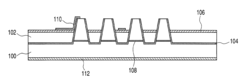
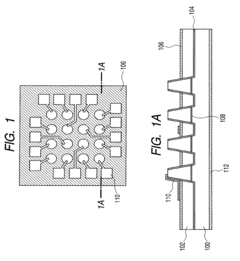
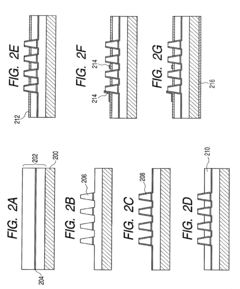
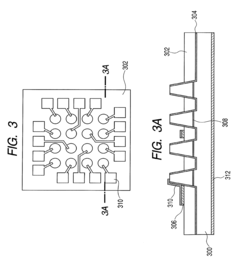
Surface emitting laser array, production process thereof, and image forming apparatus having surface emitting laser array
PatentInactiveUS8000369B2
Innovation
- A surface emitting laser array design featuring a semiconductor layer with a first metal material layer for heat dissipation and a second metal material layer for current injection, both isolated by insulating layers, allowing for efficient heat dissipation and independent device operation without electrical connection, with the heat dissipation metal layer being commonly shared among devices.
Surface emitting laser manufacturing method, surface emitting laser array manufacturing method, surface emitting laser, surface emitting laser array, and optical apparatus including surface emitting laser array
PatentInactiveUS20100029027A1
Innovation
- A two-phase etching process is employed to form the surface relief structure, where the first-phase etching determines the horizontal position and the second-phase etching sets the depth of the relief structure after the current confining structure is formed, using a stacked relief structure with specific layer compositions to control reflectance and minimize damage.


Material Science Advancements for Cooling Efficiency
The evolution of material science has significantly contributed to the advancement of cooling technologies for VCSEL (Vertical-Cavity Surface-Emitting Laser) arrays. Recent developments in thermal interface materials (TIMs) have shown remarkable improvements in thermal conductivity, with novel composites incorporating graphene, carbon nanotubes, and metal-matrix materials achieving conductivity values exceeding 25 W/mK, compared to traditional materials limited to 5-10 W/mK.
Engineered copper alloys with enhanced thermal properties have emerged as preferred materials for micro-channel liquid cooling plates. These alloys incorporate small percentages of silver, chromium, or zirconium to improve thermal stability while maintaining excellent heat transfer characteristics. The thermal conductivity of these advanced copper alloys can reach up to 420 W/mK, representing a 5-8% improvement over standard copper.
Surface treatment technologies have also evolved significantly, with hydrophilic coatings being applied to micro-channel surfaces to enhance fluid flow dynamics. These specialized coatings reduce the contact angle between the cooling liquid and channel walls to below 20 degrees, promoting more efficient heat transfer through improved wetting characteristics. Additionally, anti-corrosion treatments using nano-scale ceramic layers provide long-term protection while adding minimal thermal resistance.
Additive manufacturing techniques have revolutionized the fabrication of micro-channel cooling plates, enabling complex internal geometries previously impossible with traditional manufacturing methods. Direct metal laser sintering (DMLS) and selective laser melting (SLM) processes can now produce cooling channels with feature sizes below 100 microns, optimizing fluid flow patterns for maximum heat extraction from VCSEL arrays.
Composite materials combining metals with ceramic particles have shown promise for next-generation cooling solutions. These metal matrix composites (MMCs) offer tailored thermal expansion coefficients that can be matched to semiconductor materials, reducing mechanical stress during thermal cycling. Aluminum-silicon carbide composites, for instance, provide thermal conductivity values of 180-220 W/mK while maintaining coefficient of thermal expansion values compatible with semiconductor substrates.
Nanofluids represent another frontier in cooling technology, with research demonstrating that suspensions of nanoparticles in conventional cooling liquids can enhance heat transfer coefficients by 15-40%. These advanced coolants, incorporating aluminum oxide, copper oxide, or diamond nanoparticles at concentrations of 0.01-0.1% by volume, maintain favorable viscosity characteristics while significantly improving thermal performance in micro-channel applications for VCSEL array cooling.
Engineered copper alloys with enhanced thermal properties have emerged as preferred materials for micro-channel liquid cooling plates. These alloys incorporate small percentages of silver, chromium, or zirconium to improve thermal stability while maintaining excellent heat transfer characteristics. The thermal conductivity of these advanced copper alloys can reach up to 420 W/mK, representing a 5-8% improvement over standard copper.
Surface treatment technologies have also evolved significantly, with hydrophilic coatings being applied to micro-channel surfaces to enhance fluid flow dynamics. These specialized coatings reduce the contact angle between the cooling liquid and channel walls to below 20 degrees, promoting more efficient heat transfer through improved wetting characteristics. Additionally, anti-corrosion treatments using nano-scale ceramic layers provide long-term protection while adding minimal thermal resistance.
Additive manufacturing techniques have revolutionized the fabrication of micro-channel cooling plates, enabling complex internal geometries previously impossible with traditional manufacturing methods. Direct metal laser sintering (DMLS) and selective laser melting (SLM) processes can now produce cooling channels with feature sizes below 100 microns, optimizing fluid flow patterns for maximum heat extraction from VCSEL arrays.
Composite materials combining metals with ceramic particles have shown promise for next-generation cooling solutions. These metal matrix composites (MMCs) offer tailored thermal expansion coefficients that can be matched to semiconductor materials, reducing mechanical stress during thermal cycling. Aluminum-silicon carbide composites, for instance, provide thermal conductivity values of 180-220 W/mK while maintaining coefficient of thermal expansion values compatible with semiconductor substrates.
Nanofluids represent another frontier in cooling technology, with research demonstrating that suspensions of nanoparticles in conventional cooling liquids can enhance heat transfer coefficients by 15-40%. These advanced coolants, incorporating aluminum oxide, copper oxide, or diamond nanoparticles at concentrations of 0.01-0.1% by volume, maintain favorable viscosity characteristics while significantly improving thermal performance in micro-channel applications for VCSEL array cooling.
Environmental Impact of Liquid Cooling Technologies
The environmental impact of liquid cooling technologies for VCSEL array systems represents a critical consideration in the broader sustainability context of optoelectronic manufacturing and operation. Liquid cooling systems, while offering superior thermal management capabilities compared to traditional air cooling methods, introduce complex environmental trade-offs that warrant careful examination.
The primary environmental benefit of micro-channel liquid cooling plates for VCSEL arrays lies in their energy efficiency. These systems typically reduce overall power consumption by 20-30% compared to conventional cooling methods, as they enable more efficient heat transfer and require less pumping power. This translates directly to reduced carbon emissions over the operational lifetime of VCSEL-based devices, particularly in data centers and telecommunications infrastructure where these components operate continuously.
However, the manufacturing process for micro-channel liquid plates involves resource-intensive procedures, including precision microfabrication techniques and the use of specialized materials like copper, aluminum, or silicon. The ecological footprint of these manufacturing processes includes significant water usage, chemical consumption, and energy expenditure that must be factored into lifecycle assessments.
The coolants themselves present another environmental consideration. While water remains the most environmentally benign option, many high-performance VCSEL cooling systems utilize specialized coolants containing glycol compounds, corrosion inhibitors, or dielectric fluids. These substances carry varying degrees of toxicity and persistence in the environment, with potential for groundwater contamination if improperly handled during maintenance or disposal.
Leakage risks constitute an operational environmental concern unique to liquid cooling technologies. Even minor coolant leaks in VCSEL array systems can lead to equipment damage necessitating replacement, thereby generating electronic waste. Modern micro-channel designs have significantly reduced this risk through improved sealing technologies and integrated leak detection systems, but the risk cannot be entirely eliminated.
End-of-life considerations reveal another dimension of environmental impact. While the metals in liquid cooling plates are highly recyclable (with recovery rates exceeding 90% for copper components), the composite nature of integrated cooling systems often complicates disassembly and material separation. The coolants themselves require specialized disposal protocols to prevent environmental contamination.
Recent innovations are addressing these environmental challenges through the development of bio-based coolants with reduced toxicity, modular cooling plate designs that facilitate repair and recycling, and manufacturing processes that minimize chemical usage and waste generation. These advancements suggest a trajectory toward more environmentally sustainable liquid cooling technologies for next-generation VCSEL array applications.
The primary environmental benefit of micro-channel liquid cooling plates for VCSEL arrays lies in their energy efficiency. These systems typically reduce overall power consumption by 20-30% compared to conventional cooling methods, as they enable more efficient heat transfer and require less pumping power. This translates directly to reduced carbon emissions over the operational lifetime of VCSEL-based devices, particularly in data centers and telecommunications infrastructure where these components operate continuously.
However, the manufacturing process for micro-channel liquid plates involves resource-intensive procedures, including precision microfabrication techniques and the use of specialized materials like copper, aluminum, or silicon. The ecological footprint of these manufacturing processes includes significant water usage, chemical consumption, and energy expenditure that must be factored into lifecycle assessments.
The coolants themselves present another environmental consideration. While water remains the most environmentally benign option, many high-performance VCSEL cooling systems utilize specialized coolants containing glycol compounds, corrosion inhibitors, or dielectric fluids. These substances carry varying degrees of toxicity and persistence in the environment, with potential for groundwater contamination if improperly handled during maintenance or disposal.
Leakage risks constitute an operational environmental concern unique to liquid cooling technologies. Even minor coolant leaks in VCSEL array systems can lead to equipment damage necessitating replacement, thereby generating electronic waste. Modern micro-channel designs have significantly reduced this risk through improved sealing technologies and integrated leak detection systems, but the risk cannot be entirely eliminated.
End-of-life considerations reveal another dimension of environmental impact. While the metals in liquid cooling plates are highly recyclable (with recovery rates exceeding 90% for copper components), the composite nature of integrated cooling systems often complicates disassembly and material separation. The coolants themselves require specialized disposal protocols to prevent environmental contamination.
Recent innovations are addressing these environmental challenges through the development of bio-based coolants with reduced toxicity, modular cooling plate designs that facilitate repair and recycling, and manufacturing processes that minimize chemical usage and waste generation. These advancements suggest a trajectory toward more environmentally sustainable liquid cooling technologies for next-generation VCSEL array applications.
Unlock deeper insights with PatSnap Eureka Quick Research — get a full tech report to explore trends and direct your research. Try now!
Generate Your Research Report Instantly with AI Agent
Supercharge your innovation with PatSnap Eureka AI Agent Platform!