
SNP molecular marker related to Cucumis sativus L multiple-trichome character, and application of SNP molecular marker
A technology of molecular markers and epidermis, which is applied in the direction of recombinant DNA technology, microbial measurement/inspection, DNA/RNA fragments, etc., can solve the problems of molecular marker-assisted breeding and other problems, achieve convenient identification, solve low reliability, and gene loci point precise effect
Patent Information
- Authority / Receiving Office
- CN · China
- Patent Type
- Applications(China)
- Current Assignee / Owner
- Publication Date
- 2021-02-05
Smart Images
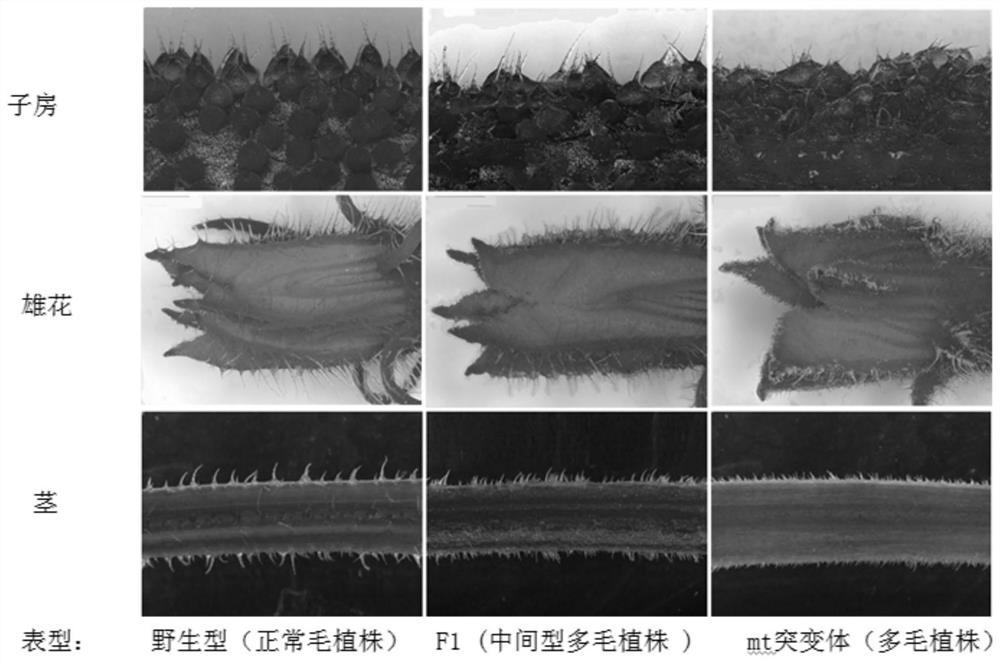
Figure 1 
Figure 2 
Figure 3
Abstract
Description
technical field
[0001] The invention relates to a SNP molecular marker related to the multi-skinned trichomes trait of cucumber and an application thereof, belonging to the field of molecular genetic breeding of cucumber. Background technique
[0002] Epidermal hairs (Trichomes) develop from epidermal cells. It is divided into unicellular or multicellular, some branched and some not branched. Some of the epidermis have glands, which can secrete some lipid substances or secondary metabolites, and some have no glands. Different types of epidermis can be produced on the same plant. Plant epidermal trichomes have a series of functions: non-glandular epidermal trichomes can dissipate heat, increase tolerance to chilling damage, facilitate seed dispersal, absorb water, protect from ultraviolet rays and damage plant tissues from some herbivorous insects; glandular trichomes Cuticle hairs help plants resist herbivorous insects and pathogens by secreting chemicals, but they also ha...
Examples
Embodiment 1
[0032] Example 1 Cucumber multiple epidermis trait linkage molecular markers are obtained by the following methods:
[0033] (1) Acquisition and genetic analysis of the trait of multiple epidermis in cucumber
[0034] Cucumber multiple trichomes mutant mt was obtained by mutagenizing the northern cucumber cultivar 'Changchun Mici' with EMS (ethyl methanesulfonate). Compared with wild-type plants, the mt mutant had more epidermal trichomes on the surface of leaves, stems, tendrils, floral organs and ovaries. F1 plants of WT and mt crosses exhibited an intermediate phenotype with a moderate number of epidermal trichomes on the surface. The length of the epidermal trichomes of the mt mutant was shorter than that of the wild type, and the length of the epidermal trichomes of the F1 was intermediate between the parents. Microscopic observation revealed that the number, size, arrangement and shape of epidermal trichomes in leaves of mt were different from those of wild type. In a...