
Method for evaluating eye stimulation of infant cosmetics by using zebra fish
A zebrafish and cosmetic technology, applied in the field of toxicity evaluation, can solve the problems of non-compliance with animal protection and welfare, subjectivity of test scores, long experimental period, etc., to achieve eye irritation, easy microscopic manipulation, and high accuracy Effect
Patent Information
- Authority / Receiving Office
- CN · China
- Patent Type
- Applications(China)
- Current Assignee / Owner
- Publication Date
- 2022-01-11
Smart Images
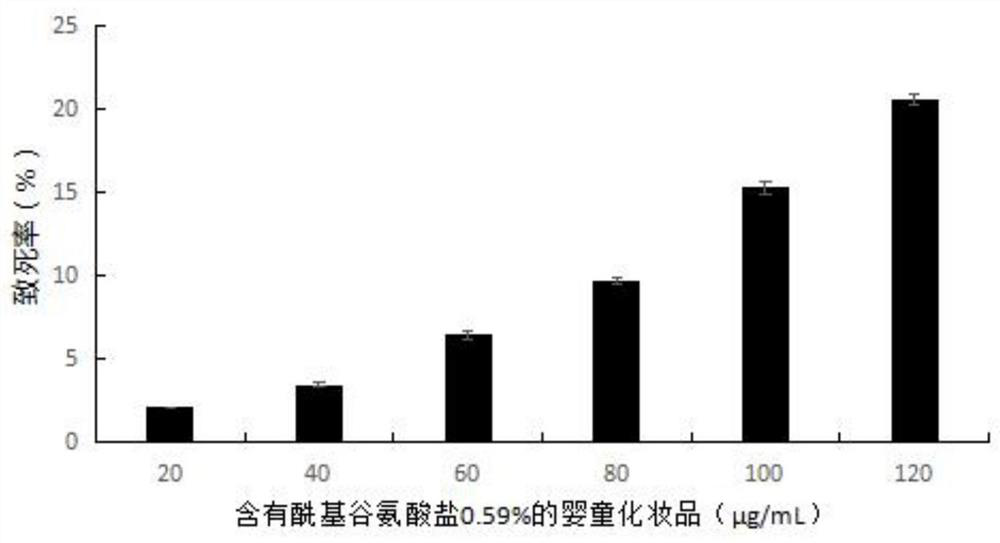
Figure 1 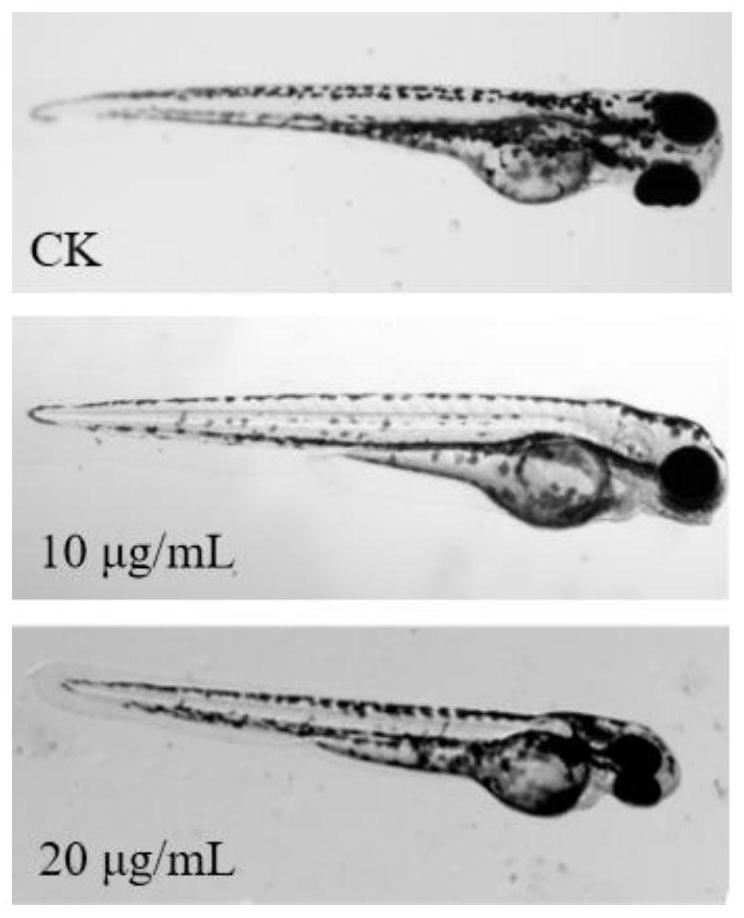
Figure 2 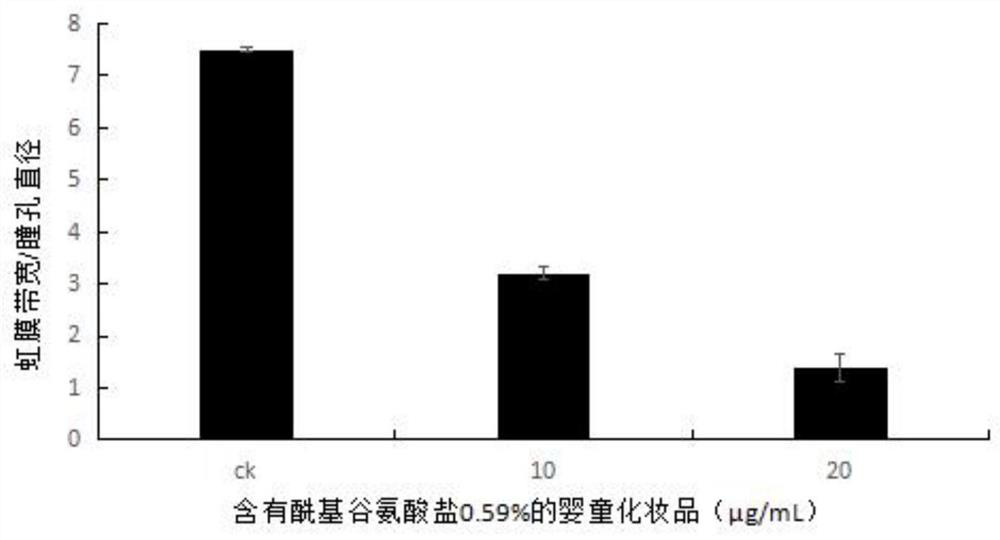
Figure 3
Abstract
Description
technical field
[0001] The invention belongs to the technical field of toxicity evaluation, and in particular relates to a method for evaluating eye irritation of baby cosmetics by using zebrafish. Background technique
[0002] Infants are essential to the use of infant and child cosmetics. However, the safety of such products must be considered during use, especially the eye irritation evaluation of infant and child cosmetics due to contact with eyes for bath and shampoo products It is an important item for safety evaluation. The eye irritation evaluation method for a long time is the rabbit eye Draize test. However, with the implementation of the "3R" principle, the Draize test has been questioned ethically and scientifically, causing great pain to animals, and the test data is subjective. is no longer recognized. At present, a variety of in vitro alternative methods have been approved by the European Chemicals Agency, the United States National Environmental Protection ...
Examples
Embodiment 1
[0038] The selection of the safety concentration of baby cosmetics to be tested in embodiment 1:
[0039] 1) The present invention selects the test model as the wild type AB;
[0040] 2) Using dimethyl sulfoxide (DMSO) as a solvent to prepare infant cosmetics containing 0.59% acyl glutamate into a high-concentration mother solution with a concentration of 120 mg / mL, and store at -20°C;
[0041]3) Dilute the prepared mother solution with embryo culture solution into working solutions of 10, 20, 40, 60, 80, 100 and 120 μg / mL. The solutions are prepared and used immediately, and the concentration of DMSO is kept less than one thousandth;
[0042] 4) Inject the culture solution containing the baby cosmetics to be tested and the culture solution not containing the sample to be tested into a 6cm petri dish, and control the volume of the culture solution at 8-9mL.;
[0043] 5) Select healthy and well-developed embryos reproduced and developed by zebrafish for exposure experiments, a...
Embodiment 2
[0047] Example 2 In Vivo Observation of Eye Damage of Cosmetic Zebrafish Containing 0.59% Acyl Glutamate Content
[0048] 1) Randomly select 3dpf zebrafish with normal development, 20 in each group;
[0049] 2) Select cosmetics containing 0.59% acyl glutamate content, and other components are mild and non-irritating, with a concentration of 10 μg / mL and 20 μg / mL as the experimental group, and 0.1% DMSO as the control group.
[0050] 3) Place the petri dish in a constant temperature light-controlled incubator, the temperature is controlled at 28±1°C, the light and dark cycle is 14 / 10h, the semi-static culture method is adopted, the culture medium is replaced every 24h, and the exposure time is 72h;
[0051] 4) Observe the morphological changes of the eyes of zebrafish juveniles under a stereomicroscope and take pictures to record;
[0052] 5) Measure iris bandwidth and pupil diameter with Image J software, and calculate the ratio of the two.
[0053] The result is as image ...
Embodiment 3
[0054] Example 3 Analysis of Behavioral Trajectories of Zebrafish After Exposure to Cosmetics Containing 0.59% Acyl Glutamate Content for 72h
[0055] 1) Randomly select 3dpf zebrafish with normal development, 20 in each group;
[0056] 2) Choose a cosmetic containing 0.59% of acyl glutamate, and other components are mild and non-irritating, with a concentration of 10 μg / mL and 20 μg / mL as the experimental group, and 0.1% DMSO as the control group;
[0057] 3) Place the petri dish in a constant temperature light-controlled incubator, the temperature is controlled at 28±1°C, the light and dark cycle is 14 / 10h, the semi-static culture method is adopted, the culture medium is replaced every 24h, and the exposure time is 72h;
[0058] 4) After 72 hours, wash 3 times, place in a 96-well plate, one fish per well, 15 fish per group, put them into the zebrafish behavior track tracking system (zebrafish behavior detector) and let stand for 10 minutes;
[0059] 5) Immediately give ligh...