Measuring agglutination parameters

a technology of agglutination parameters and measurement methods, applied in the field of measuring agglutination parameters, can solve the problems of prior tagging techniques, optical methods that are not suitable for use with raw samples, and quantitative tests based on optical detection of large particles are only moderately sensitive, so as to alleviate one or more, the effect of eliminating one or mor

US20100033158A1Active Publication Date: 2010-02-11KONINKLIJKE PHILIPS ELECTRONICS NV
5 Cites 23 Cited by

Patent Information

Authority / Receiving Office
US · United States
Current Assignee / Owner
Publication Date
2010-02-11

Smart Images

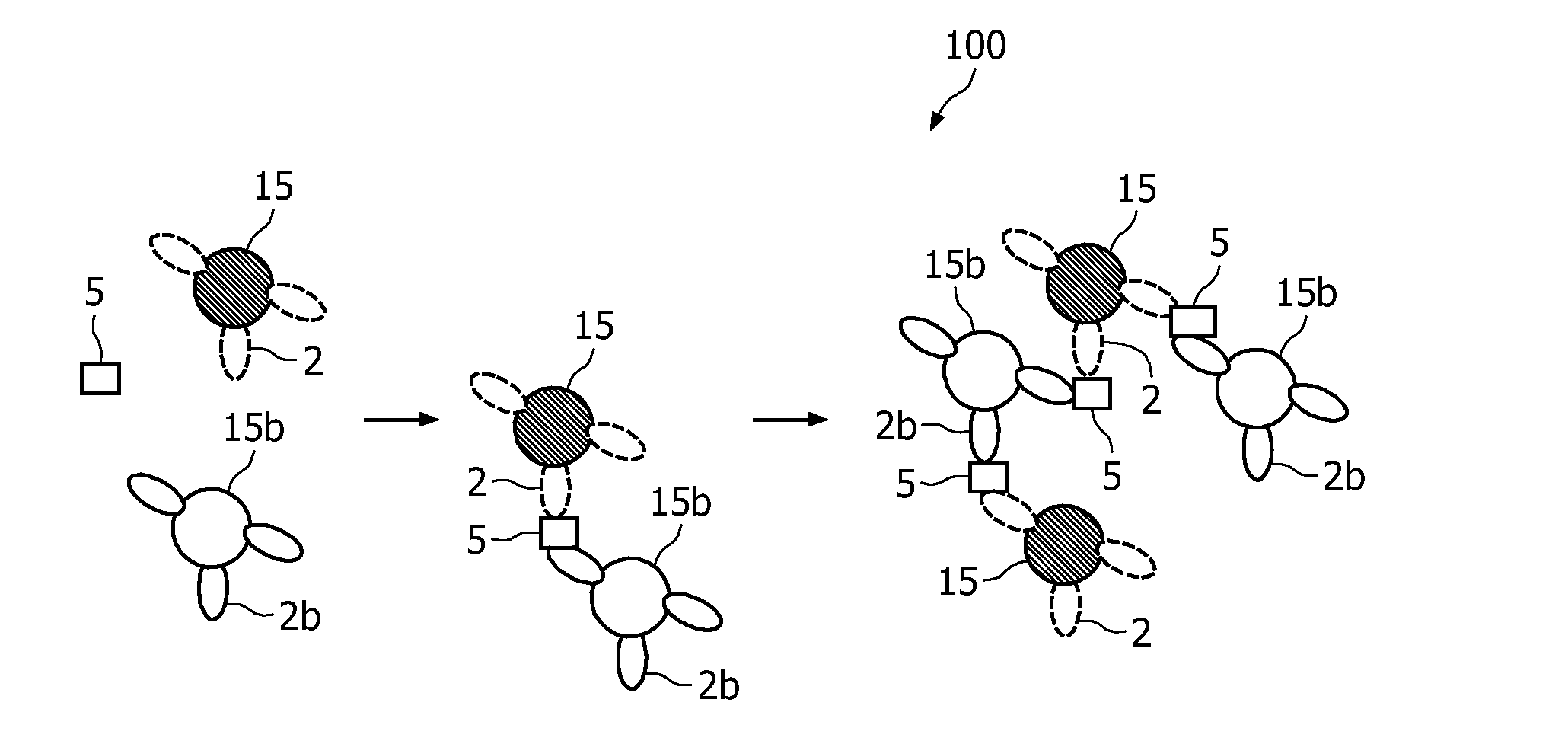
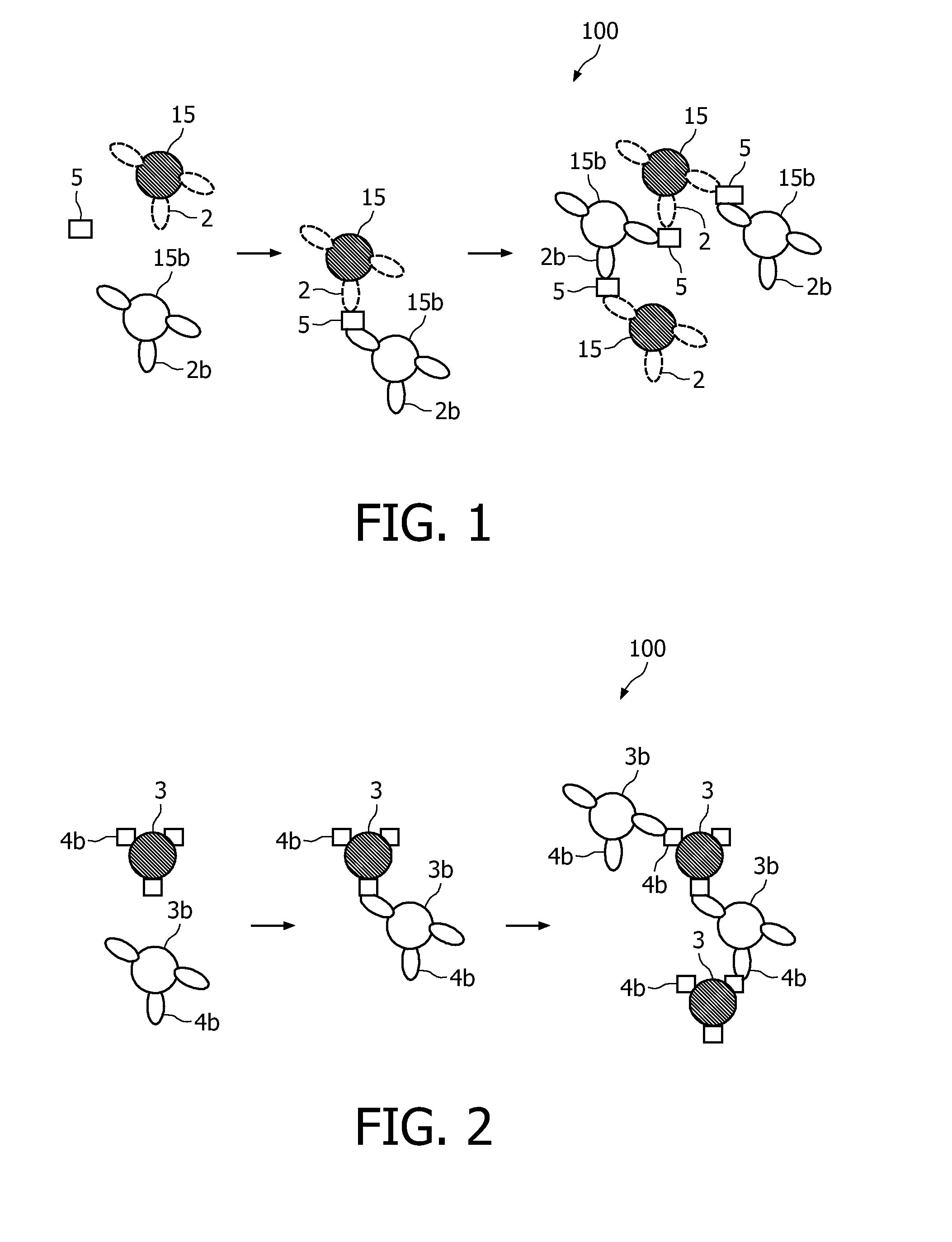
  • Figure 1
    Figure 1
  • Figure 2
    Figure 2
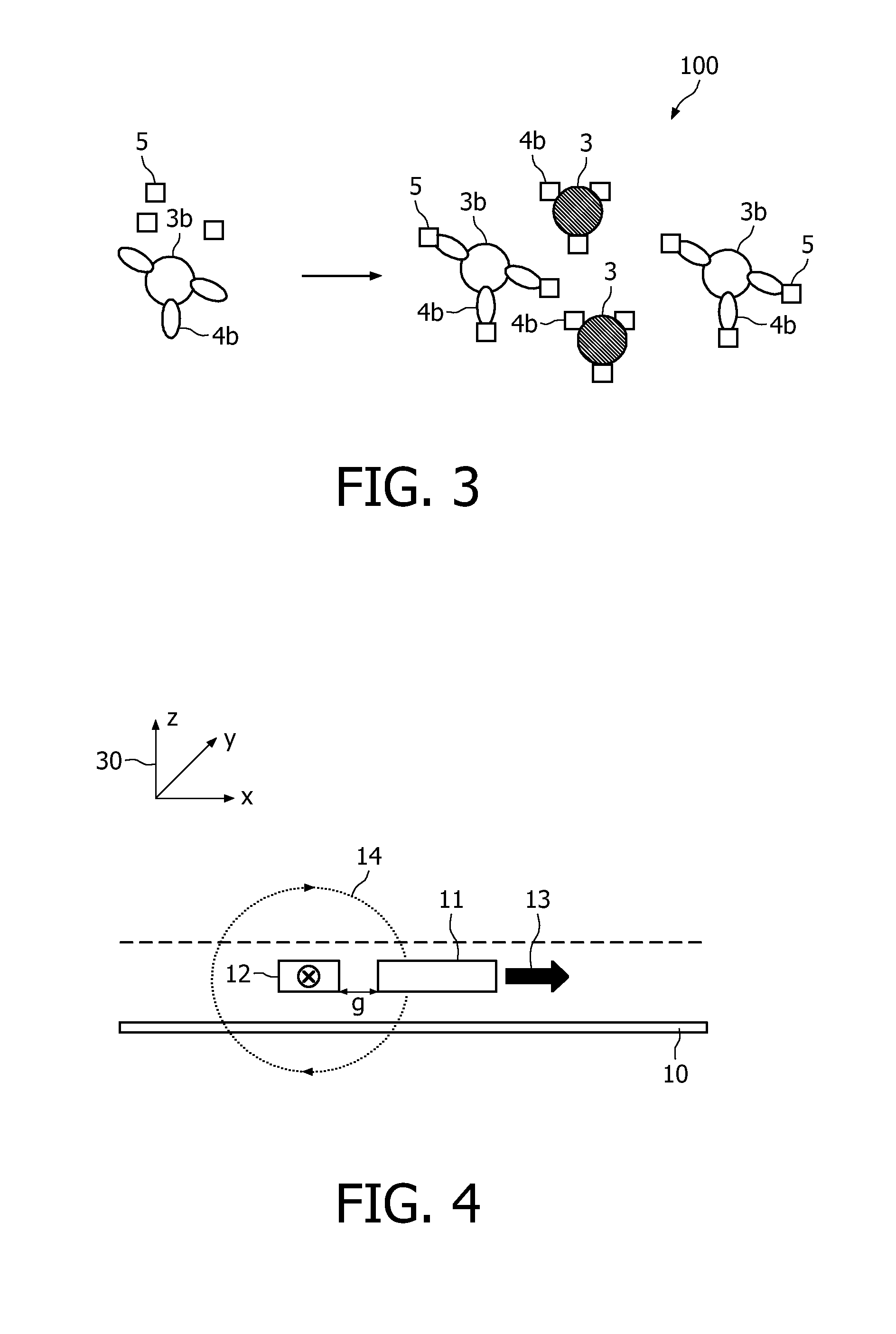
  • Figure 3
    Figure 3
Patent Text Reader

Abstract

A method and system are described for measuring agglutination in a target-induced agglutination assay with one or more magnetic particles performed in a reaction chamber. After the magnetic particles (3, 15), which are capable of binding to a target (5) are provided in the assay, an agglutination process resulting in agglutinated particles (100) comprising at least one magnetic particle is performed. The method then further comprises applying an alternating current magnetic field (HAC) to the assay and—measuring an effect of the HAC on the one or more magnetic particles (3,15) unattached to any surface. The measured effect is indicative of one or more agglutination parameters.
Need to check novelty before this filing date? Find Prior Art

Description

FIELD OF THE INVENTION

[0001] The present invention relates to the field of biological, chemical or biochemical sensing. More particularly, the present invention relates to a method for quantitatively measuring one or more agglutination parameters of magnetic labels in a target-induced agglutination assay. The invention also relates to a corresponding kit, and a corresponding device.BACKGROUND OF THE INVENTION

[0002] Recent efforts have been given to measurement techniques for determining the presence, and possibly the level of concentration, of targets in a larger mixture or solution in which the particles reside. It is often desirable to measure relatively low concentrations of certain organic compounds. In medicine, for example, it is very useful to determine the concentration of a given kind of molecule, usually in solution, which either exists naturally in physiological fluids e.g. blood or urine or which is introduced into the living system e.g. drugs.

[0003] One broad approach used...

Examples

Embodiment Construction

[0062]The present invention will be described with respect to particular embodiments and with reference to certain drawings but the invention is not limited thereto but only by the claims. Any reference signs in the claims shall not be construed as limiting the scope. The drawings described are only schematic and are non-limiting. In the drawings, the size of some of the elements may be exaggerated and not drawn on scale for illustrative purposes.

[0063]Where the term “comprising” is used in the present description and claims, it does not exclude other elements or steps. Where an indefinite or definite article is used when referring to a singular noun e.g. “a” or “an”, “the”, this includes a plural of that noun unless something else is specifically stated.

[0064]Furthermore, the terms first, second, third and the like in the description and in the claims, are used for distinguishing between similar elements and not necessarily for describing a sequence, either temporally, spatially, i...