
Medical Affixation Device
a technology of affixing device and affixing device, which is applied in the field of affixing device, can solve the problems of long surgical recovery time, inability to provide the functionality of the damaged tissue permanently, and inability to fully discharge the operation, so as to prevent damage to the soft tissue incurred through in vivo affixing procedure, the effect of reducing the amount of damag
- Summary
- Abstract
- Description
- Claims
- Application Information
AI Technical Summary
Benefits of technology
Problems solved by technology
Method used
Image

Examples
Embodiment Construction
[0026]The objects and advantages enumerated above together with other objects, features, and advances represented by the present invention will now be presented in terms of detailed embodiments described with reference to the attached drawing figures which are intended to be representative of various possible configurations of the invention. Other embodiments and aspects of the invention are recognized as being within the grasp of those having ordinary skill in the art.
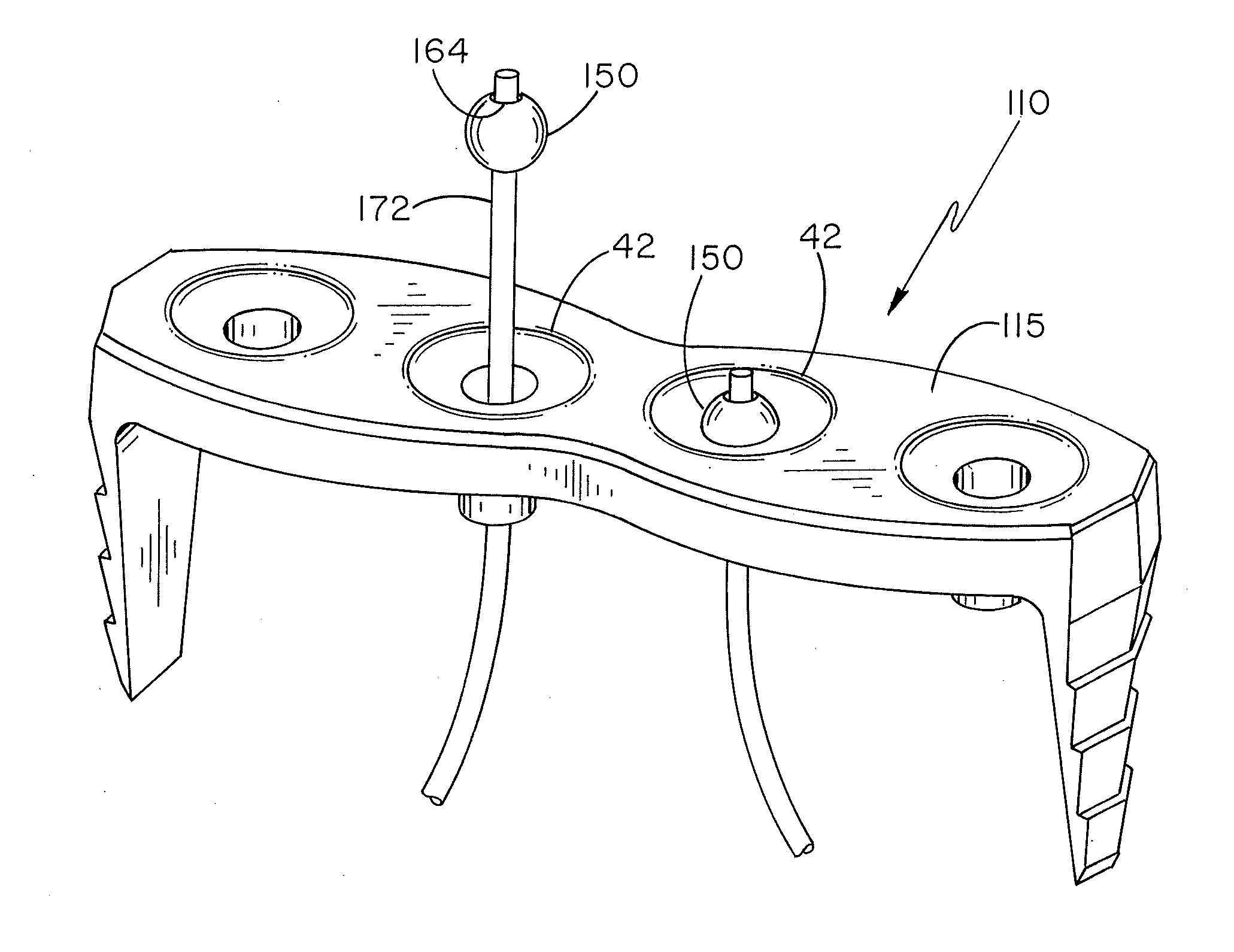
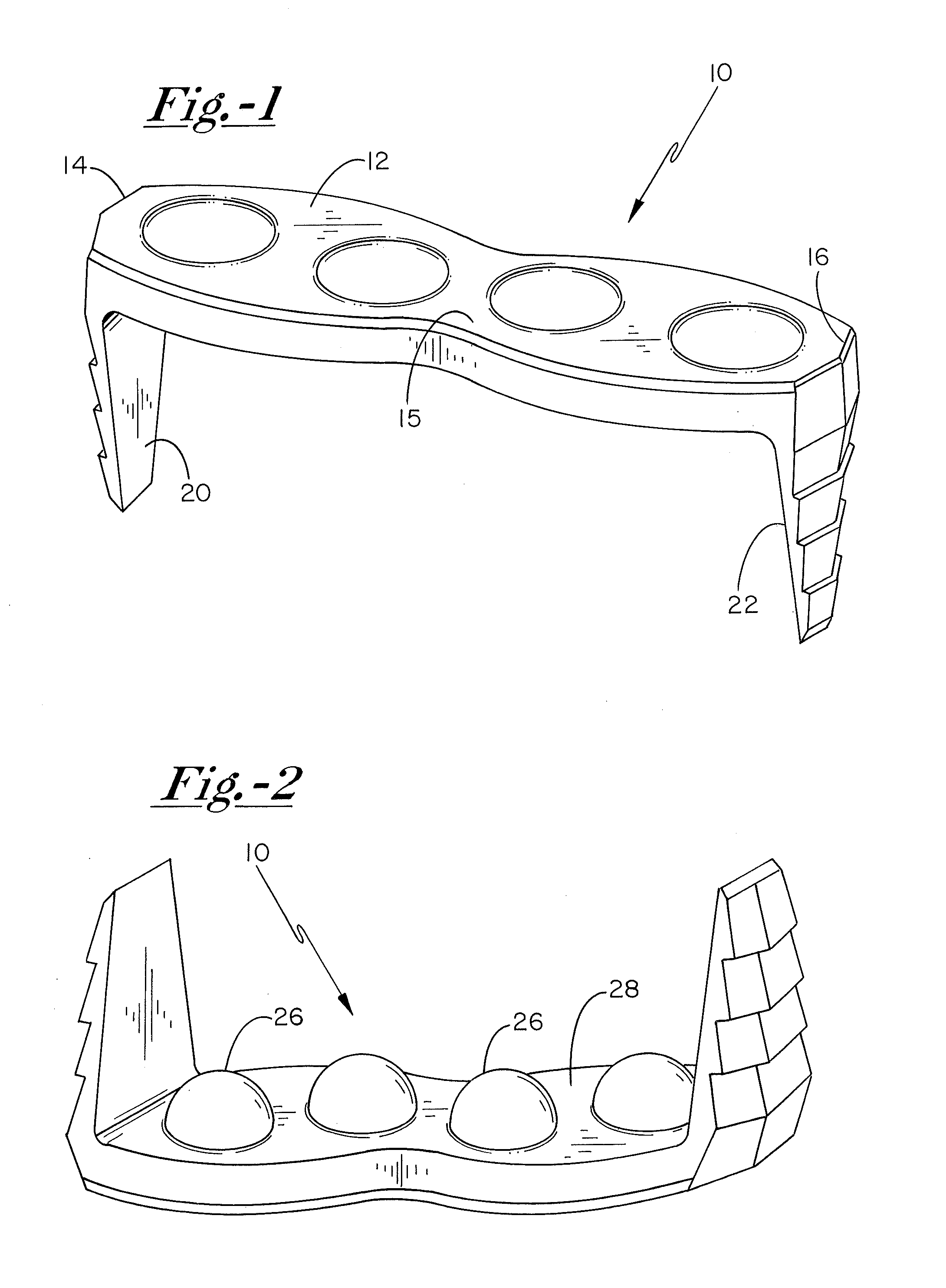
[0027]With reference now to the drawing figures, and first to FIG. 1, a medical affixation device 10 includes a main body portion 12 having first and second opposed ends 14, 16, from which first and second prongs 20, 22 extend. In preferred embodiments, affixation device 10 takes the form of a medical staple, although a variety of other configurations, such as medical plates, pins, and the like are contemplated as being within the scope of the present invention.
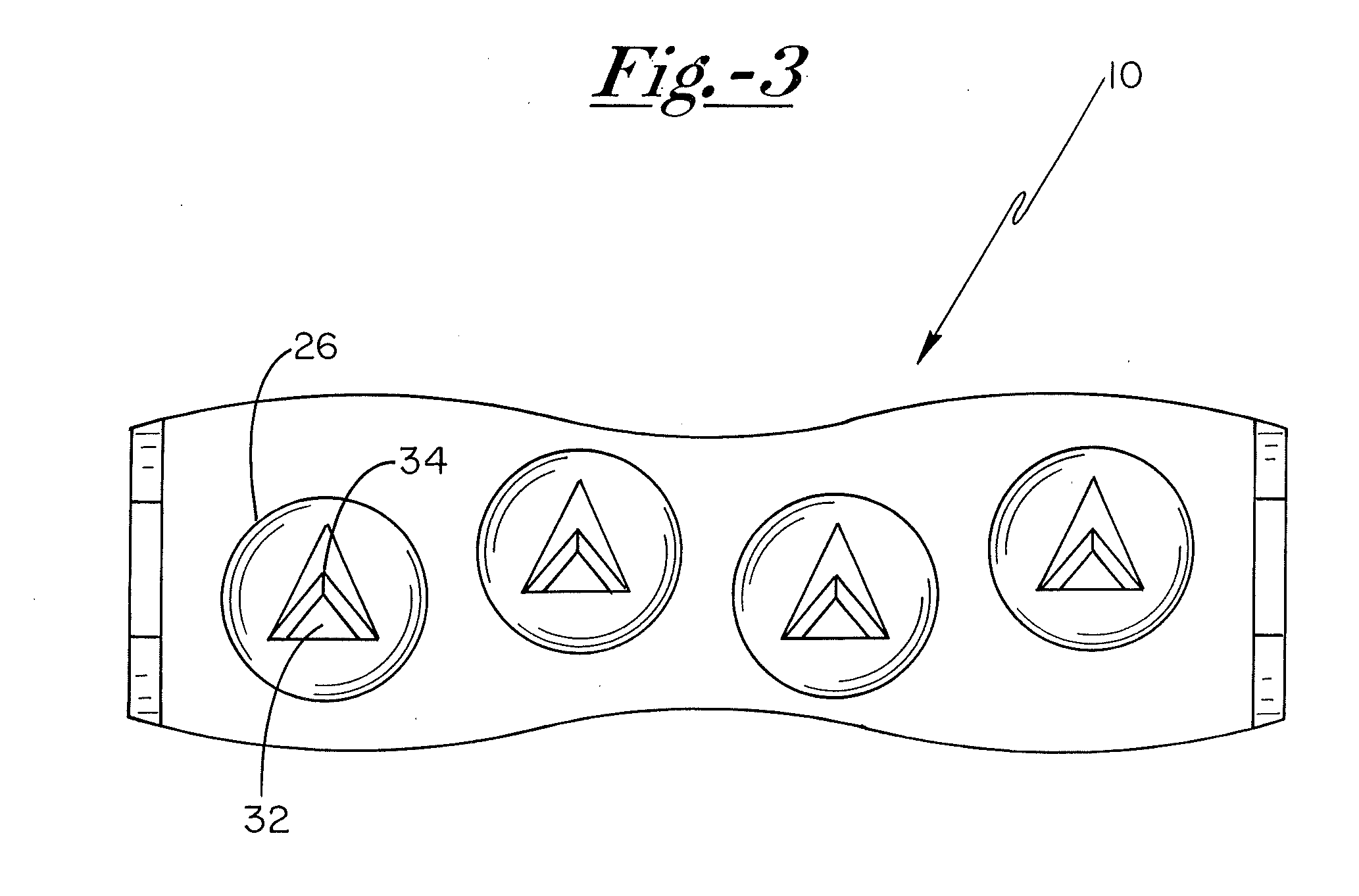
[0028]As illustrated in FIGS. 1 and 2, first surface 13 o...
PUM
 Login to View More
 Abstract
Description
Claims
Application Information
 Login to View More