
Semantic matching
- Summary
- Abstract
- Description
- Claims
- Application Information
AI Technical Summary
Benefits of technology
Problems solved by technology
Method used
Image

Examples
Embodiment Construction
General Overview
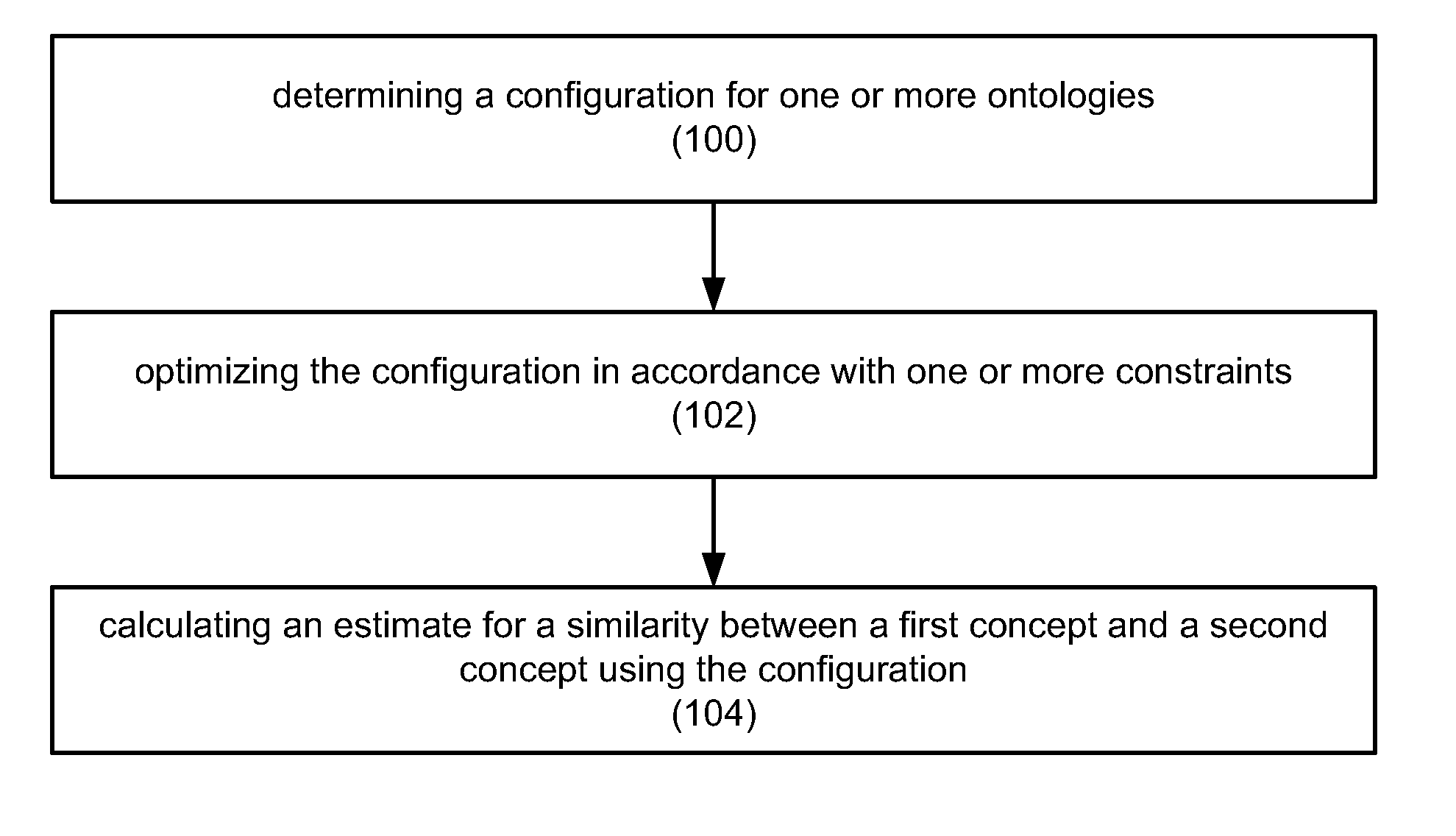
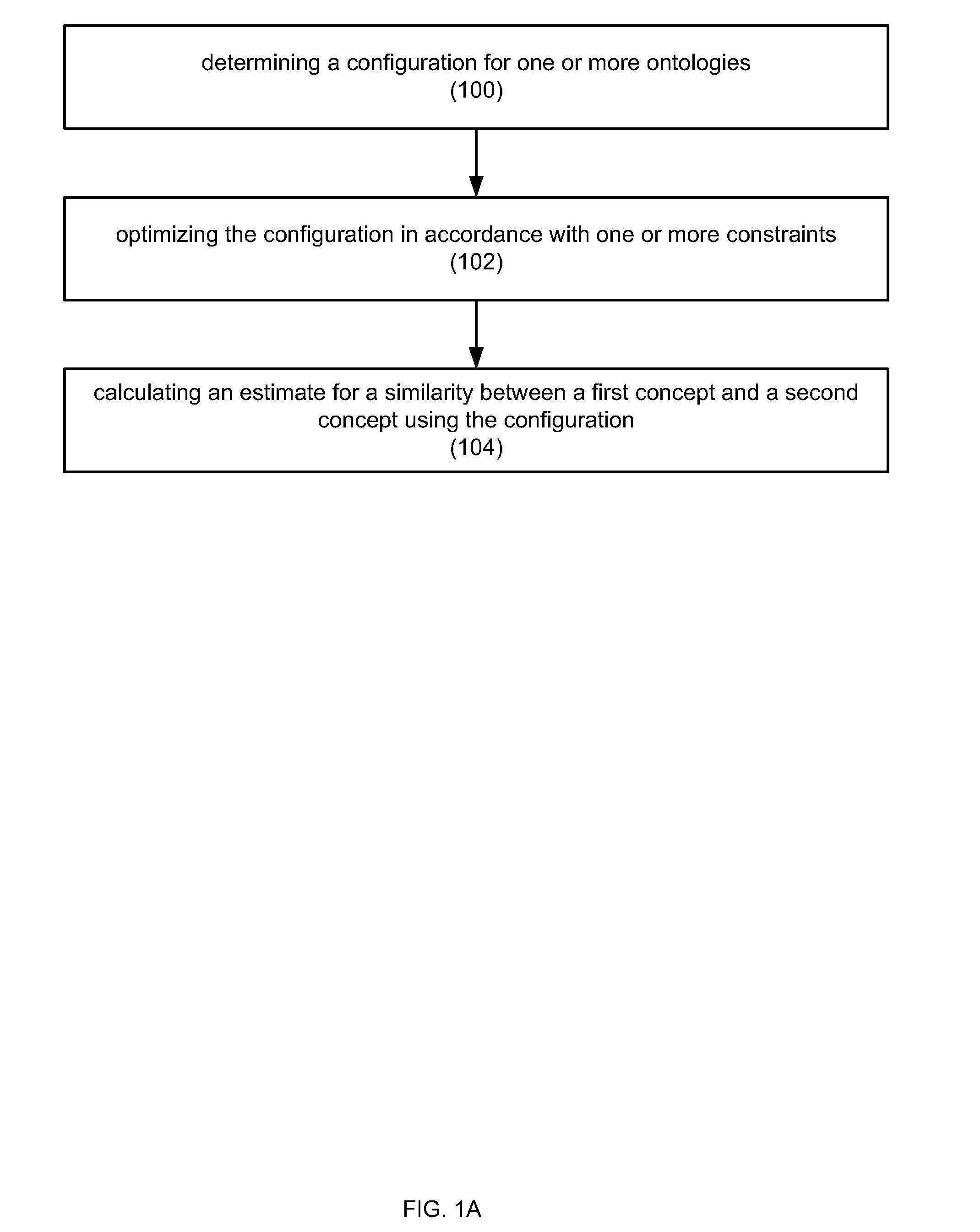
[0017]Systems, mechanisms, computer readable mediums, computer program products, and methods are provided for semantic matching. Semantic matching may be performed to identify information, objects, concepts, or any other data that is semantically related, refers to the same underlying concept, and / or similar. A semantic matching request may be received and any number of semantically similar concepts may be identified in response to the request. For example, a “car” may be semantically similar to an “automobile.” In another example, a “toaster oven with at least 1000 W power” may be a semantically similar concept to “BrandX Toast-R-Oven 4-Slice Toaster Oven” and “BrandY Convection Toaster Oven.”
[0018]In one or more embodiments, a global ontology may be created to serve as a reference in handling requests for determining whether concepts and / or objects are semantically similar. For example, a query may be received with a request to determine whether a first concept is ...
PUM
 Login to View More
 Abstract
Description
Claims
Application Information
 Login to View More