
Using the inheritance of professional-social network information to facilitate organizational position changes
a professional social network and information technology, applied in the field of data processing, can solve the problems of reducing productivity and/or efficiency, documenting and/or losing tacit information that members naturally accumulate, and often losing tacit information
- Summary
- Abstract
- Description
- Claims
- Application Information
AI Technical Summary
Benefits of technology
Problems solved by technology
Method used
Image

Examples
Embodiment Construction
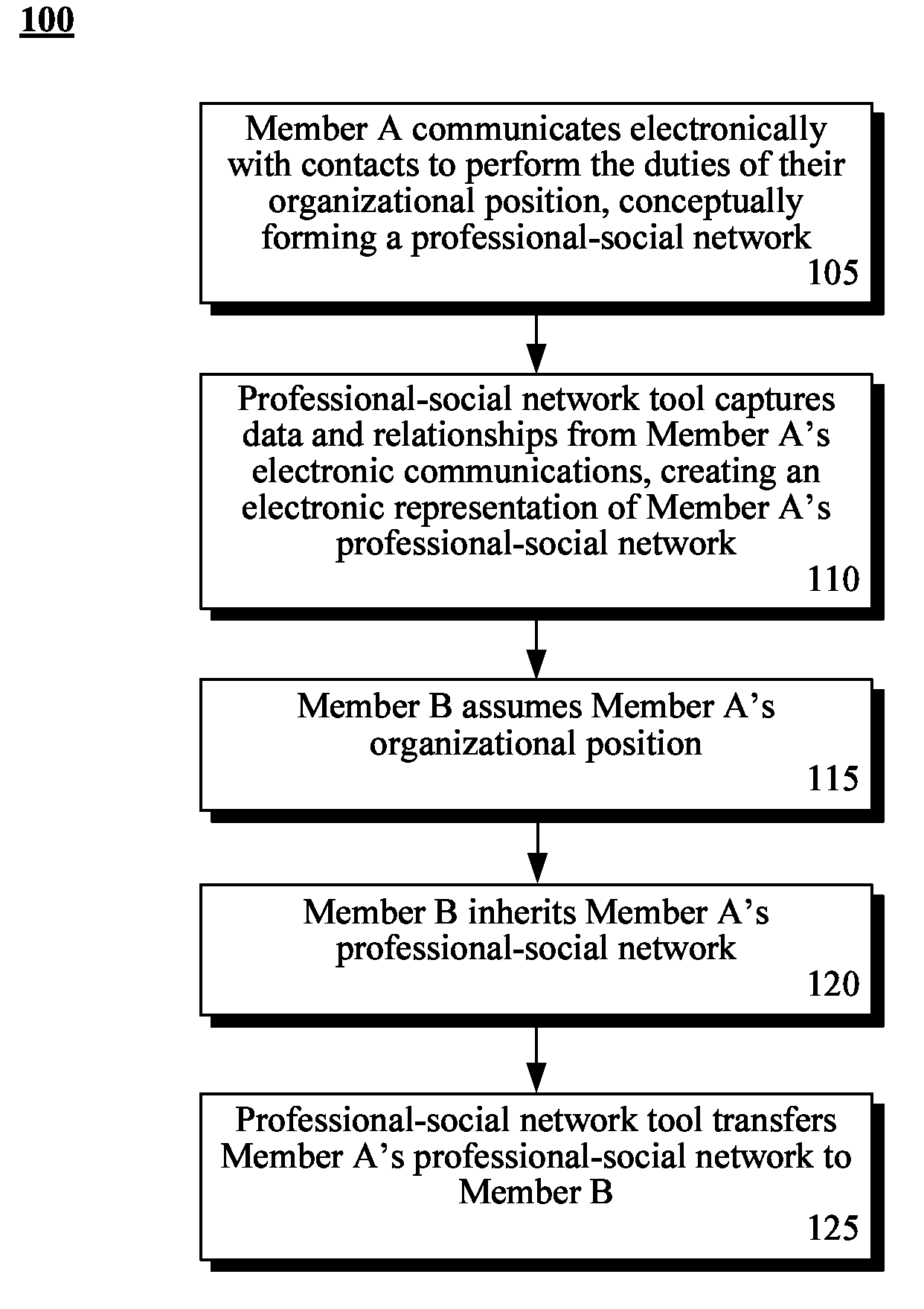
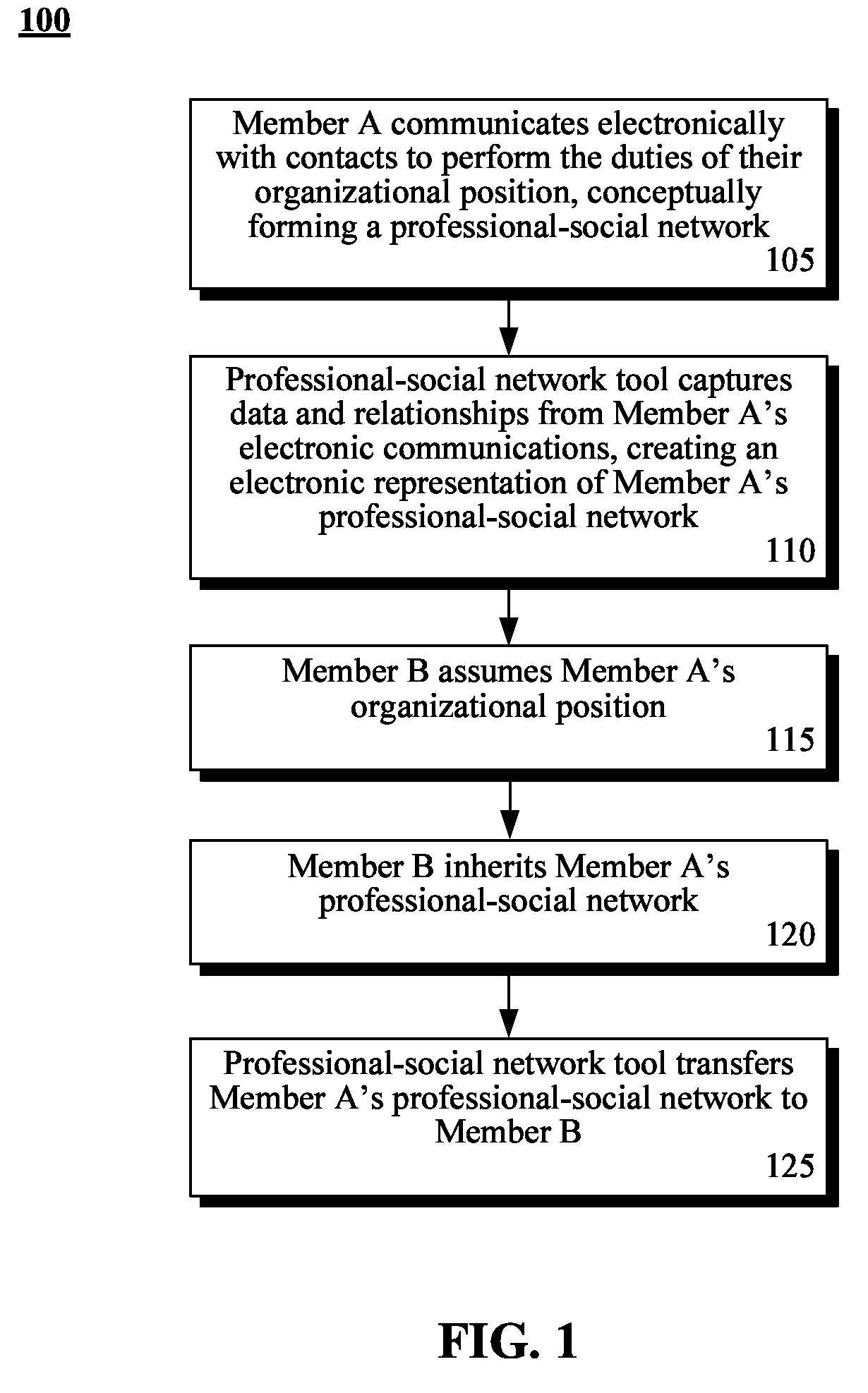
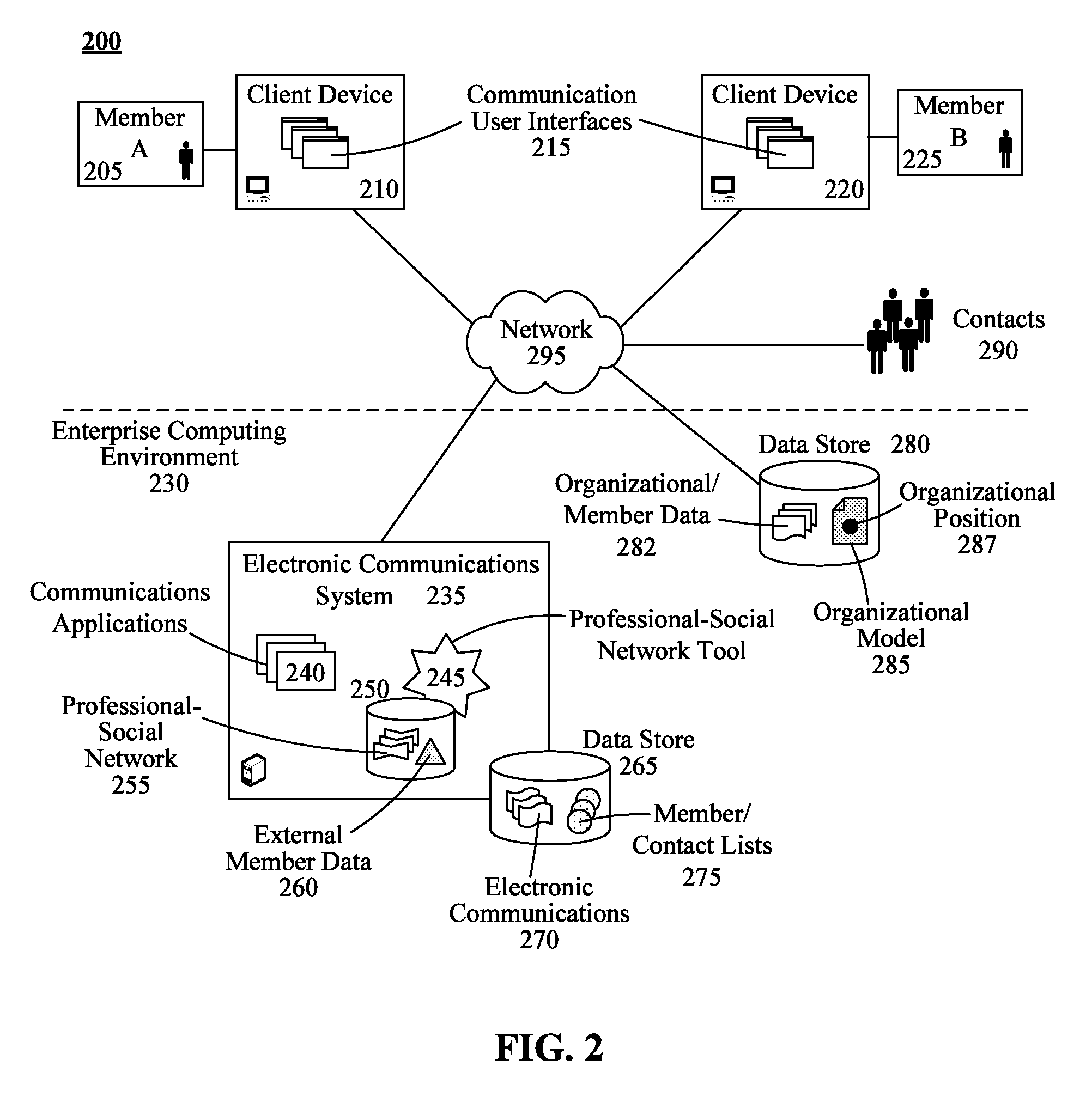
[0016]The present invention discloses a solution for maintaining professional-social networks. A professional-social network tool can automatically create and maintain professional-social networks for members of an organization based upon the analysis of electronic communications exchanged between members for job-related purposes. Each member can have an organizational position having defined job functions that are captured in the organizational model of the organization. A professional-social network can be comprised of nodes that represent contacts that a member interacts with to perform the job functions defined for their organizational position. The nodes can be connected to the member by relationships that express an interaction context. As members change organizational positions, the tacit information contained in the professional-social networks can be preserved and inherited by other members of the organization.
[0017]As will be appreciated by one skilled in the art, aspects ...
PUM
 Login to View More
 Abstract
Description
Claims
Application Information
 Login to View More