
Multiple candle lantern
a multi-functional, candle technology, applied in the direction of capillary burners, combustion types, lighting and heating apparatuses, etc., can solve the problems of reducing the illumination and heat of candles, keeping the wicks of candles, and providing adequate ventilation air, so as to achieve greater illumination
- Summary
- Abstract
- Description
- Claims
- Application Information
AI Technical Summary
Benefits of technology
Problems solved by technology
Method used
Image

Examples
Embodiment Construction
)
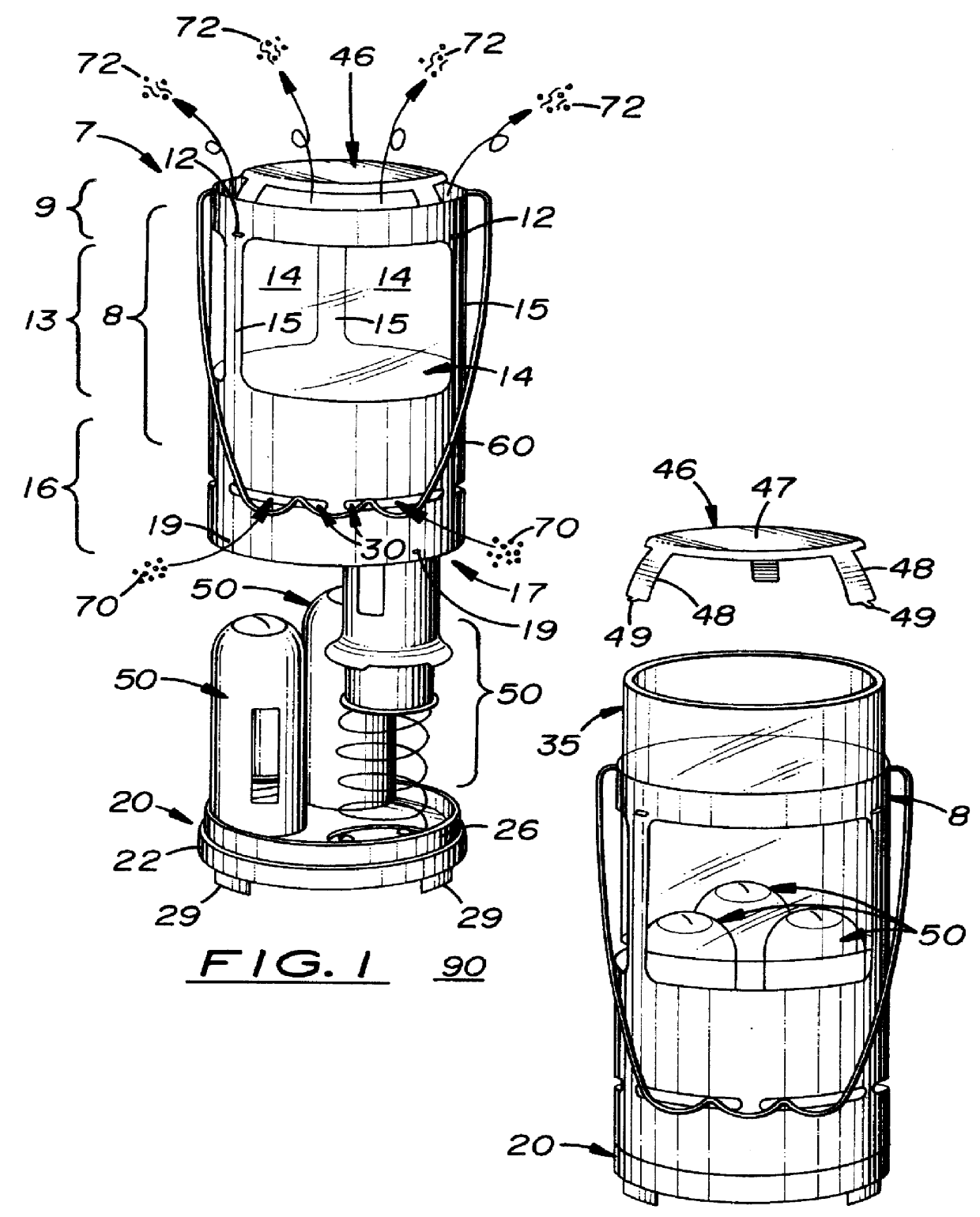
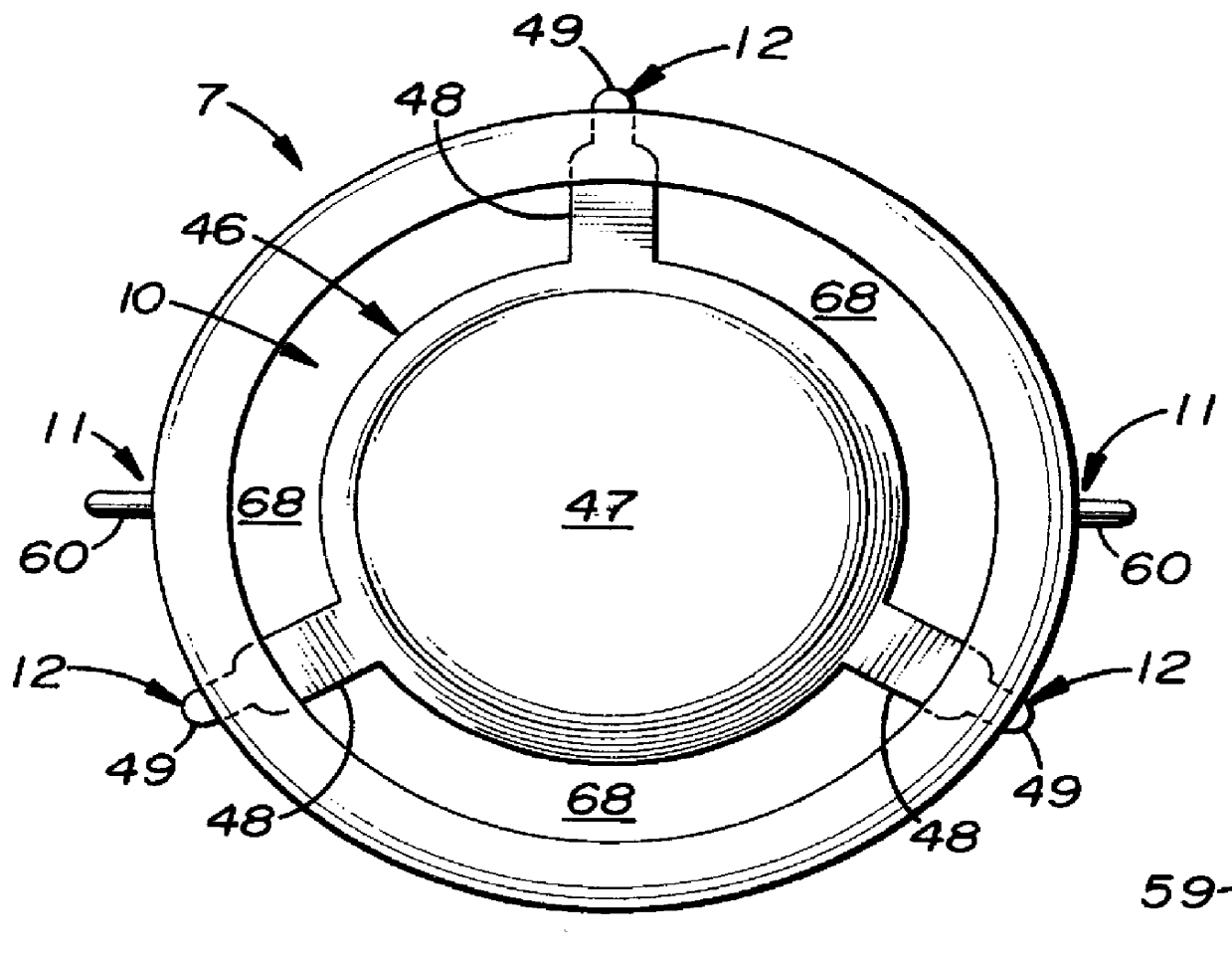
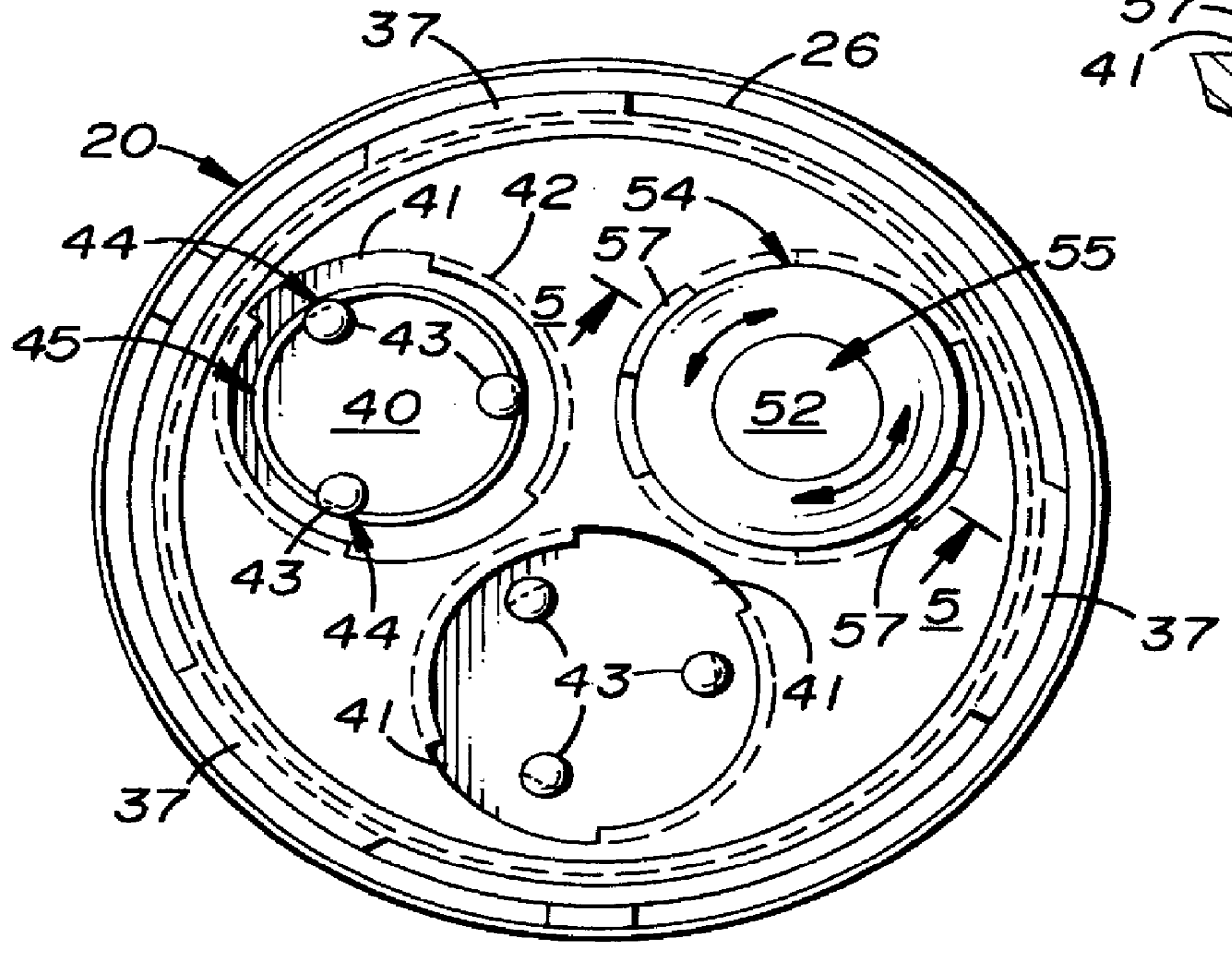
Shown in the accompanying FIGS. 1-5, there is shown a portable candle lantern, generally referred to as 7 designed to be used with a plurality of tube candles 50. The candle lantern 7 includes an upper cover 8 that selectively attaches to a relatively wide, lower base 20 which securely supports the candle lantern 7 in an upright position on a support surface 90.
The upper cover 8 is cylindrical with an upper frame section 9, a middle frame section 13, and a lower frame section 16. Located on opposite ends of the upper cover 8 is a top opening 10 and a bottom opening 17. Disposed on the middle frame section 13 are three, radially aligned viewing openings 14 (two are shown) which are separated by three, longitudinally aligned support members 15. A cylindrical glass lens 35 is positioned inside the upper cover 8. Three notches 56 are formed on the sides of the upper cover 8 just below each support member 15 which resiliently traps and holds a glass lens 35 in position inside the upper ...
PUM
 Login to View More
 Abstract
Description
Claims
Application Information
 Login to View More