
Personal communicator with flip element display
a radiotelephone and flip element technology, applied in the field of portable radiotelephones, can solve the problems of limiting the use of the display to relatively rudimentary functions, unable to provide satisfactory means for users to access, send or receive non-voice information, and business people who need to access information that is not available over the telephon
- Summary
- Abstract
- Description
- Claims
- Application Information
AI Technical Summary
Problems solved by technology
Method used
Image

Examples
first embodiment
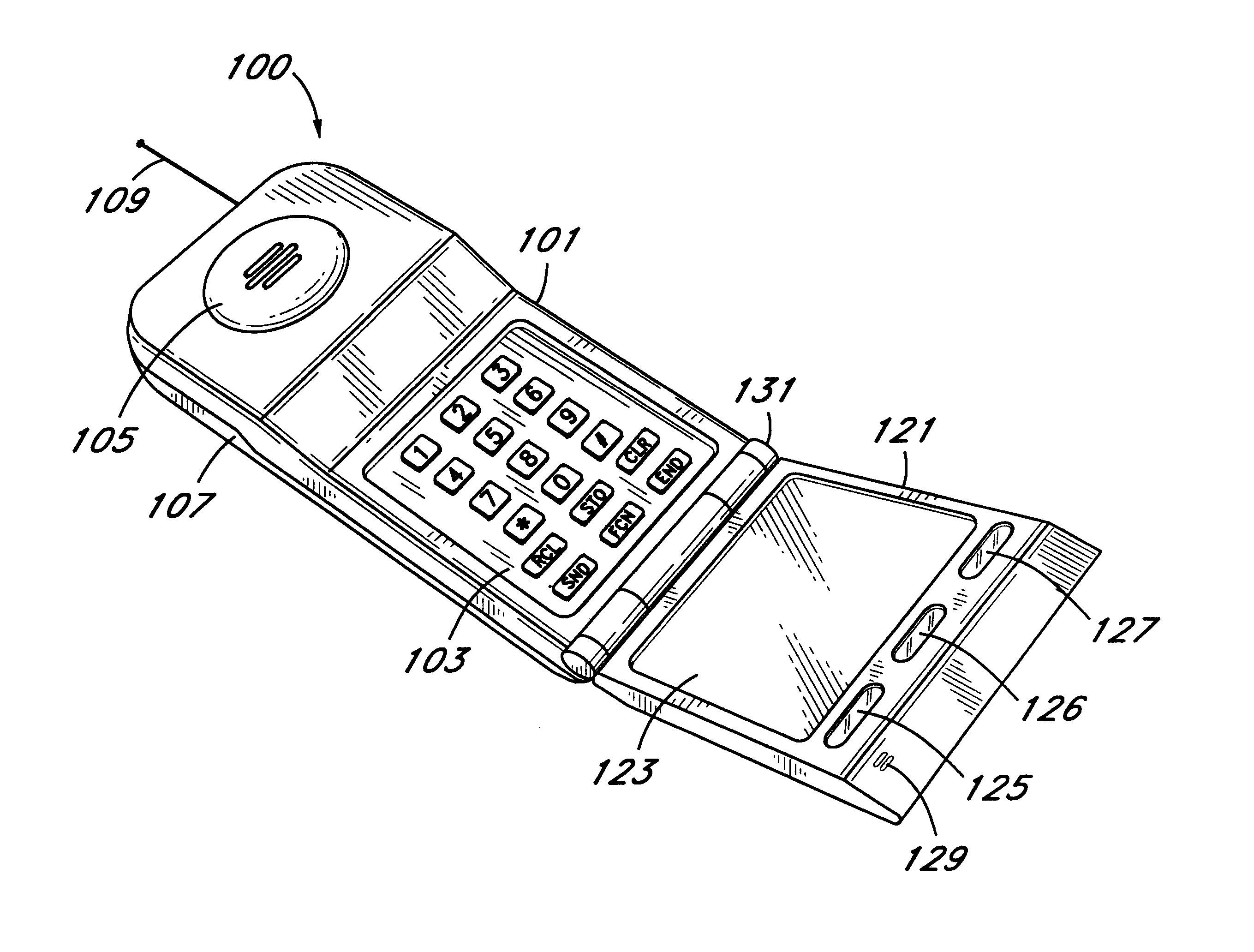
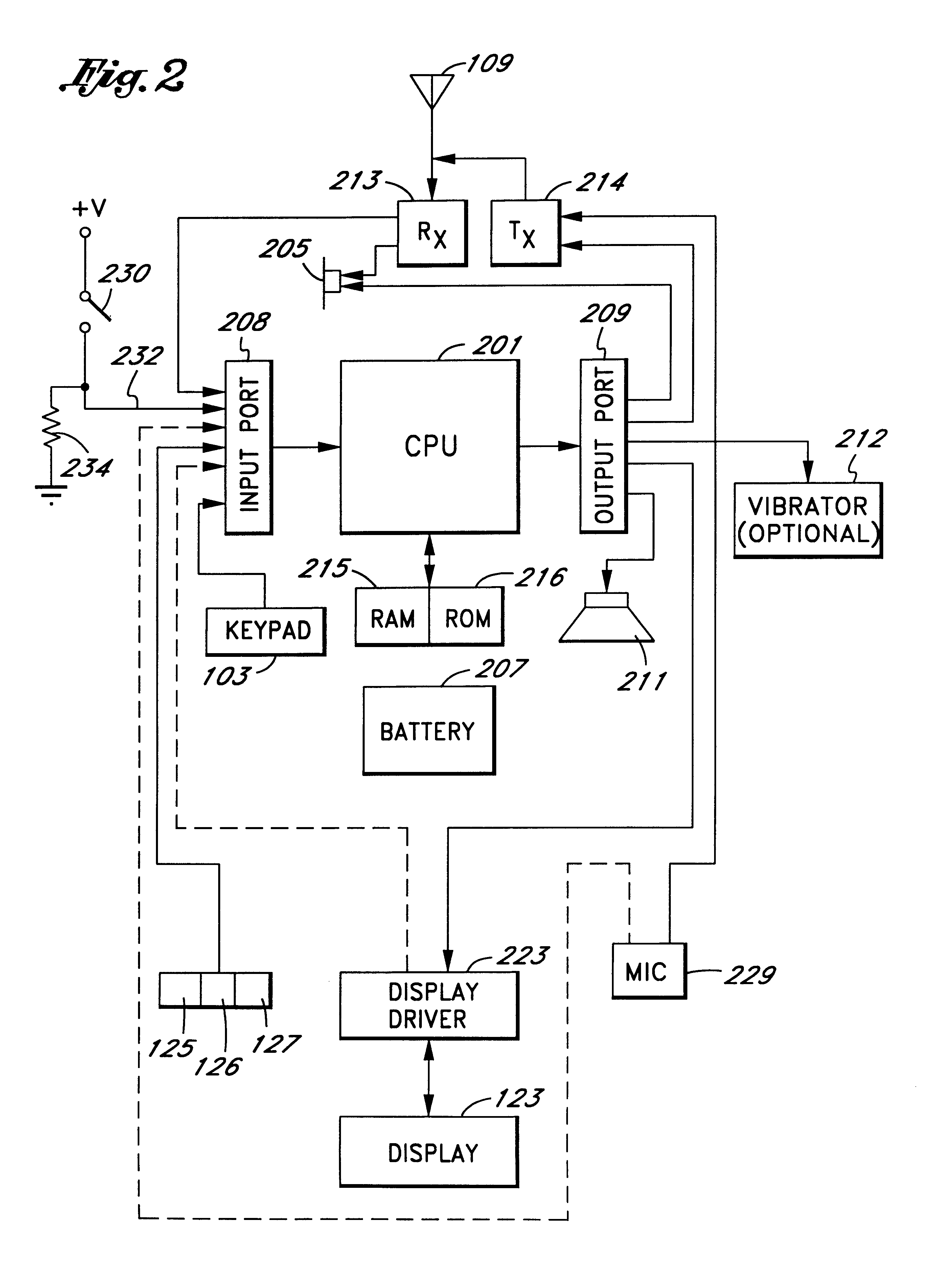
Accordingly, these and other objects are realized in the present invention which encompasses a portable radiotelephone (referred to herein as a "personal communicator") that has a display built into the flip element. In a first embodiment, the personal communicator has a single display that is disposed on the flip element and a conventional telephone keypad that is located on the body portion. The personal communicator further comprises memory and processing circuitry to permit the execution of conventional communications application programs. The display may be either touch-sensitive or non-touch-sensitive, and is preferably activated when the flip element is folded to an open position.
The display may be used to display text or graphics that is received by the personal communicator under the control of a communications application program. For example, the display may be used to display short message service (SMS), beeper, E-Mail or facsimile messages. The display may also be used ...
second embodiment
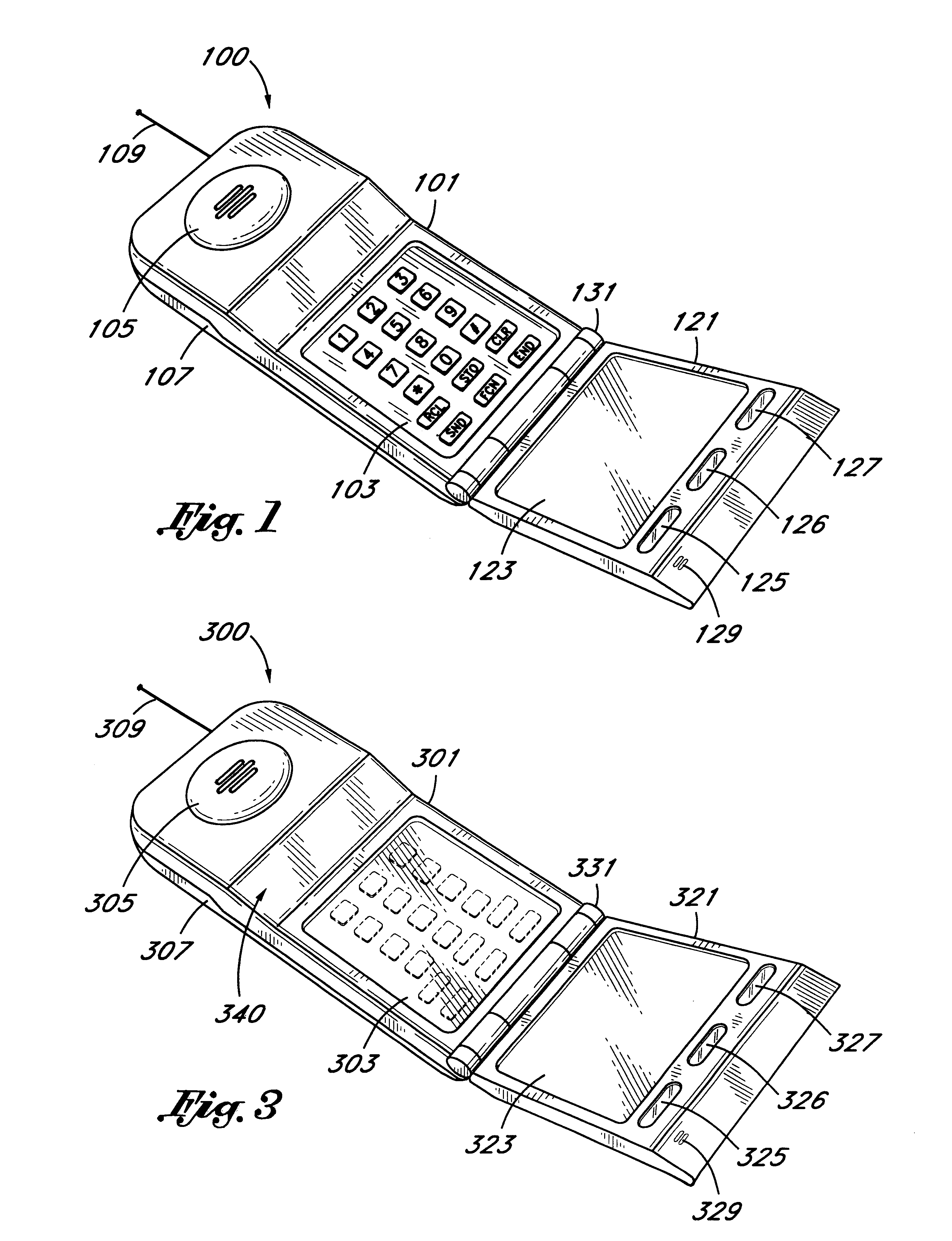
FIG. 3 is a perspective view of a personal communicator constructed in accordance with the present invention, showing displays on the body portion and on the flip element of the device.
FIG. 4 is a block diagram of the circuitry of the personal communicator shown in FIG. 3.
FIG. 5 is a front plan view of the flip element of either of the personal communicators shown in FIGS. 1 and 3, showing an example display output that indicates functions performed by input keys on the flip element.
FIG. 6 is a perspective view of either of the personal communicators shown in FIGS. 1 and 3, showing the personal communicator in a compact, folded configuration.
FIG. 7 is a high level flowchart illustrating a process that is performed when a personal communicator receives a data message.
PUM
 Login to View More
 Abstract
Description
Claims
Application Information
 Login to View More