
Sewage water body refuse type cement and method of preparing the same
A mud and sewage technology, applied in cement production, clay products, other household appliances, etc.
Patent Information
- Authority / Receiving Office
- CN · China
- Patent Type
- Patents(China)
- Current Assignee / Owner
- Publication Date
- 2011-10-26
- Estimated Expiration
- Not applicable · inactive patent
Smart Images
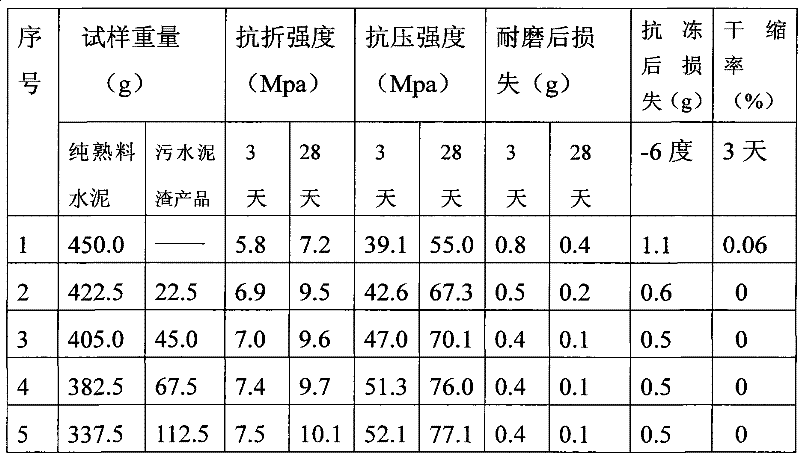
Figure 1 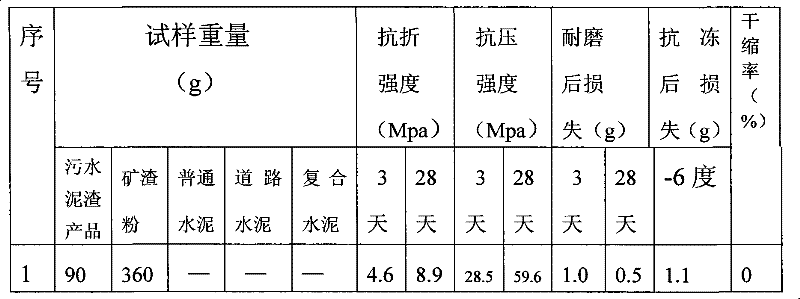
Figure 2 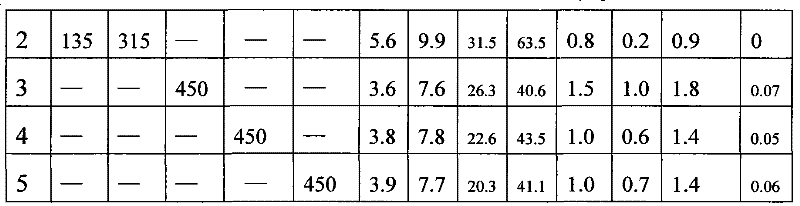
Figure 3
Abstract
Description
technical field
[0001] The invention relates to a new cement, in particular to a sewage cement slag cement produced by using sewage sludge discharged from a sewage treatment plant as a raw material, and provides a practical preparation method for it, belonging to the field of environmental protection or cement. Background technique
[0002] Sewage cement slag in sewage treatment plants is the waste residue discharged from domestic sewage mainly by gravity concentration and mechanized dehydration. The organic matter that improves the soil structure also contains pathogenic microorganisms, parasites (eggs), heavy metals and some refractory organic poisons. The moisture content is 70-80%, so it is very difficult to develop and utilize.
[0003] In order to deal with these sludges, many people at home and abroad have thought of many ways. The methods are mainly landfilling, stacking, throwing the sludge into the ocean, incineration, composting and so on. In the coming years of...
Examples
preparation example Construction
[0038]Its preferred and practical preparation method is: add appropriate amount of water to the raw materials of the above-mentioned components by weight, process them into balls in a mixer molding machine (or other mixer), and dry them naturally to form raw balls; then put the raw balls in In the drying and roasting kiln (such as tunnel kiln, etc.), it is first dried in a low-temperature drying belt at 100-200°C for 20-40 minutes, then roasted in a high-temperature baking belt at 500-1000°C for 50-100 minutes, and then cooled naturally after leaving the kiln. The mature material ball is the sewage cement slag product; finally, the sewage cement slag product and cement clinker are mixed together at a ratio of 30% to 5%: 70% to 95% and ground into powder, which is the sewage cement slag cement. Sewage cement slag products can be ground into powder and then mixed with cement at a ratio of 30% to 5%:70% to 95% to form sewage cement slag cement. The above-mentioned roasting temper...
Embodiment 2
[0044] The sewage cement slag cement mixed with the slag powder of the existing commercial cementing material and the sewage cement slag product in a certain proportion is used as the cementitious material. For performance comparison, the results are shown in Table 2:
[0045] Table 2: Performance comparison between sewage cement slag cement and several commonly used cements
[0046]
[0047]
[0048] It can be seen from Table 2 that the sewage cement slag cement that is formed by mixing a certain proportion of sewage cement products into the existing commercial slag powder is used as a cementitious material, and its flexural strength, compressive strength and wear resistance, frost resistance, The drying shrinkage performance is higher than that of ordinary cement, road cement and composite cement not mixed with sewage cement slag products. It can be seen that it can be used in place of ordinary cement, road cement and composite cement.
Embodiment 3
[0050] Sewage cement slag cement (serial number 2-5 in the table) mixed by adding a certain proportion of sewage cement slag products into the commercial slag cement is used as the cementitious material and commercial slag cement (serial number 1 in the table) is used as the glue respectively. Concrete materials were tested and compared in terms of physical properties such as strength, wear resistance, frost resistance, and dry shrinkage according to the ISO relevant cement physical property test standards. The test results are shown in Table 3:
[0051] Table 3: Performance comparison between sewage cement slag cement and slag cement with different mixing ratios
[0052]
[0053] It can be seen from Table 3 that the flexural strength, compressive strength, abrasion resistance, frost resistance, dry shrinkage and other properties of the sewage cement slag cement mixed with a certain proportion of sewage cement products in the existing commercial slag cement are higher than ...