
Multi-layer perfluor cross-linking ion membrane and preparation method thereof
A perfluorinated ion and ion membrane technology, applied in the field of functional polymer composite materials, can solve the problems of alkali instability, influence of fuel cell performance, low degree of cross-linking, etc.
Patent Information
- Authority / Receiving Office
- CN · China
- Patent Type
- Patents(China)
- Current Assignee / Owner
- Publication Date
- 2011-01-26
Smart Images
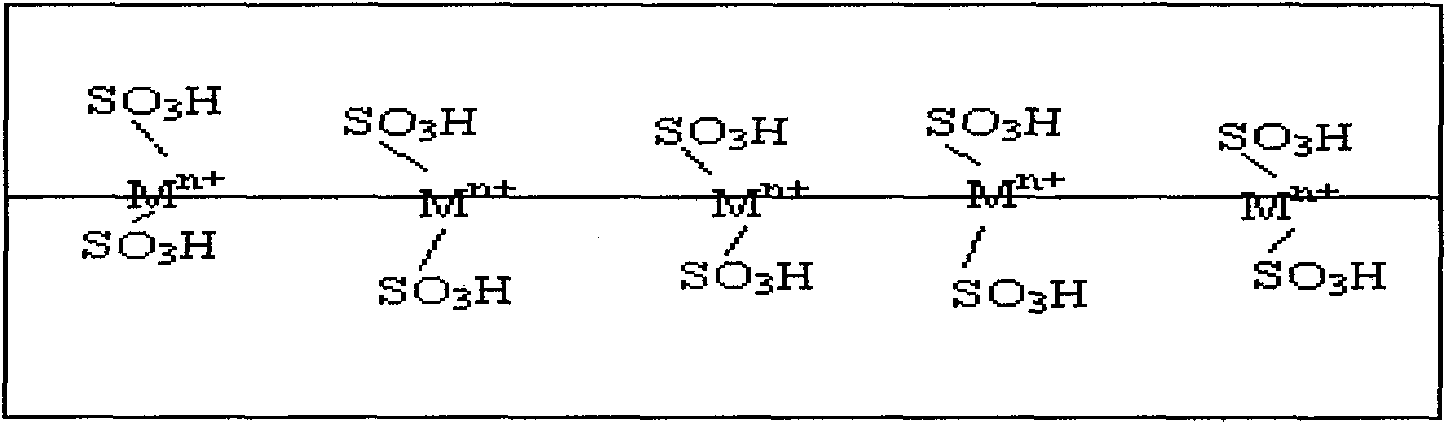
Figure 1 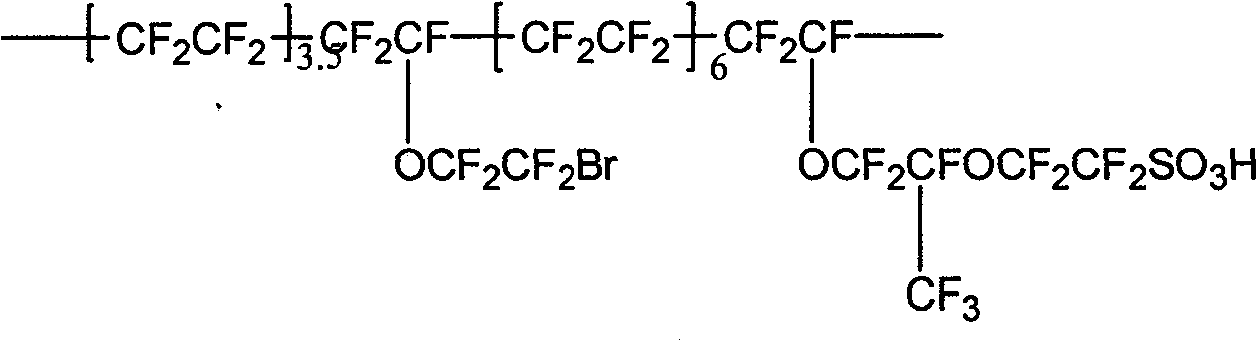
Figure 2 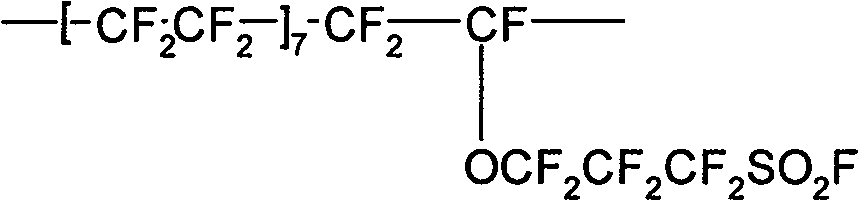
Figure 3
Abstract
Description
technical field
[0001] The invention belongs to the field of functional polymer composite materials, and relates to a perfluorinated ion-exchange membrane with a cross-linked network structure and added high-valent metal compounds and a preparation method thereof. Background technique
[0002] Proton exchange membrane fuel cell is a power generation device that directly converts chemical energy into electrical energy by electrochemical means, and is considered to be the preferred clean and efficient power generation technology in the 21st century. Proton exchange membrane (proton exchange membrane, PEM) is the key material of proton exchange membrane fuel cell (proton exchange membrane fuel cell, PEMFC).
[0003] The currently used perfluorosulfonic acid proton exchange membrane has good proton conductivity and chemical stability at relatively low temperature (such as 80° C.) and high humidity. However, they also have many defects, such as poor dimensional stability, low me...
Examples
Embodiment 1
[0079]
[0080] Convert the repeating unit to
[0081]
[0082] , EW=1000 polymer resin to make a mass concentration of 5wt% propanol aqueous solution, then add MnCO to the above solution 3 (accounting for 0.01% of the resin mass), then it is prepared into a perfluoromalonyl peroxide-DMF solution with a mass concentration of 5%, and casted into a polytetrafluoroethylene mold placed horizontally, after vacuum drying at 80°C for 12 hours , the membrane was stripped, at a molar concentration of 0.5M H 2 SO 4 The solution was boiled for 1 hour and washed with deionized water. Obtain a single-layer perfluorosulfonic acid cross-linked ion membrane (single-layer membrane 1#) with structural formula (I). The above two single-layer perfluorinated cross-linked ion membranes are stacked and hot-pressed to prepare a double-layer perfluorinated cross-linked ionized membrane containing high-valent manganese ions (multilayer membrane 1#).
Embodiment 2
[0084] Convert the repeating unit to
[0085]
[0086] , polymer resin with EW=800 and Ce with perovskite structure x Ti (1-x) o 2 (x=0.4) (accounting for 2% of resin mass) were mixed and extruded at 250° C. to obtain a film with a thickness of 10 μm. The above two films were hot pressed together at high temperature and soaked in NH 4 Cl in DMF solution for 5 hours, and then the soaked membrane was placed in triethylamine at 200 °C for 2 hours to obtain a membrane with a cross-linked network. The membrane was sequentially treated with KOH solution and hydrochloric acid solution to obtain an ion exchange membrane with a layer-layer cross-linked structure (II) (double-layer membrane 2#).
[0087] The above ionic membrane is placed with the repeating unit as
[0088]
[0089] , EW=1200 polymer resin and tetraphenyl tin are mixed, and then extruded at 200 ° C with a twin-screw extruder to obtain a film with a thickness of 20 μm, and then the film is heated at 230 ° C fo...
Embodiment 3
[0091] Convert the repeating unit to
[0092]
[0093] , EW=1100 polymer resin and La 0.7 Ce 0.15 Ca 0.15 MnO 3 (accounting for 1% of the resin mass) and urea are formed into a film with a thickness of 50 μm by hot pressing, then heated at 170° C. for 5 hours, and treated with alkali and acid successively to obtain an ionic membrane (single-layer membrane) with a crosslinked structure of (II 4#).
[0094] Convert the repeating unit to
[0095]
[0096] , EW=940 polymer resin and La-DMSO complex (accounting for 0.007% of the resin mass) are made into a DMSO solution with a mass concentration of 30%, and a thickness of 10 μm is obtained by casting at 170 ° C for 60 minutes. Membrane (single layer membrane 5#).
[0097] The perfluorosulfonic acid ion membranes of single-layer membrane 4# and 5# are stacked and hot-pressed, and then hot-pressed with single-layer membrane 1# to obtain a three-layer cross-linked ion membrane containing three different metal hypervalent s...