
Method for detecting single nucleotide polymorphism of cattle PPARGC1A genes
A single nucleotide polymorphism and nucleotide technology, applied in the field of molecular genetics, can solve problems such as lack of research and gaps
Patent Information
- Authority / Receiving Office
- CN · China
- Current Assignee / Owner
- Publication Date
- 2013-01-23
- Estimated Expiration
- Not applicable · inactive patent
Smart Images
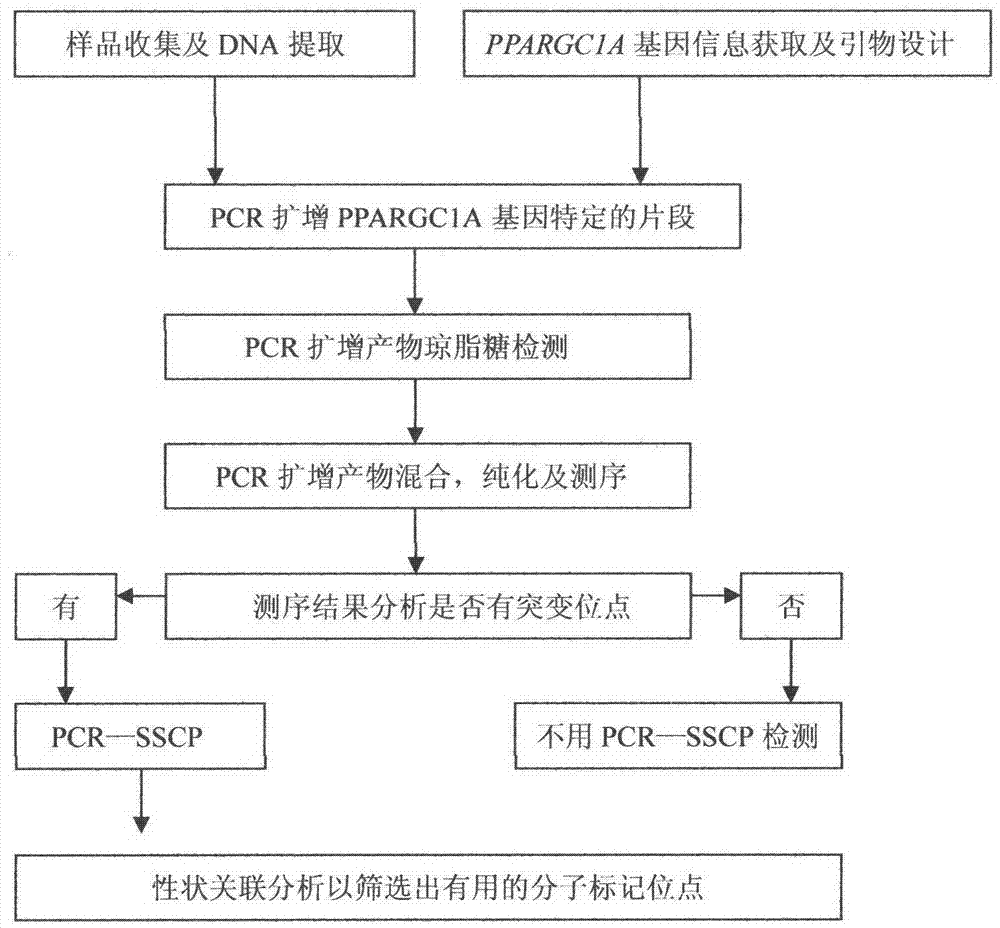
Figure 1 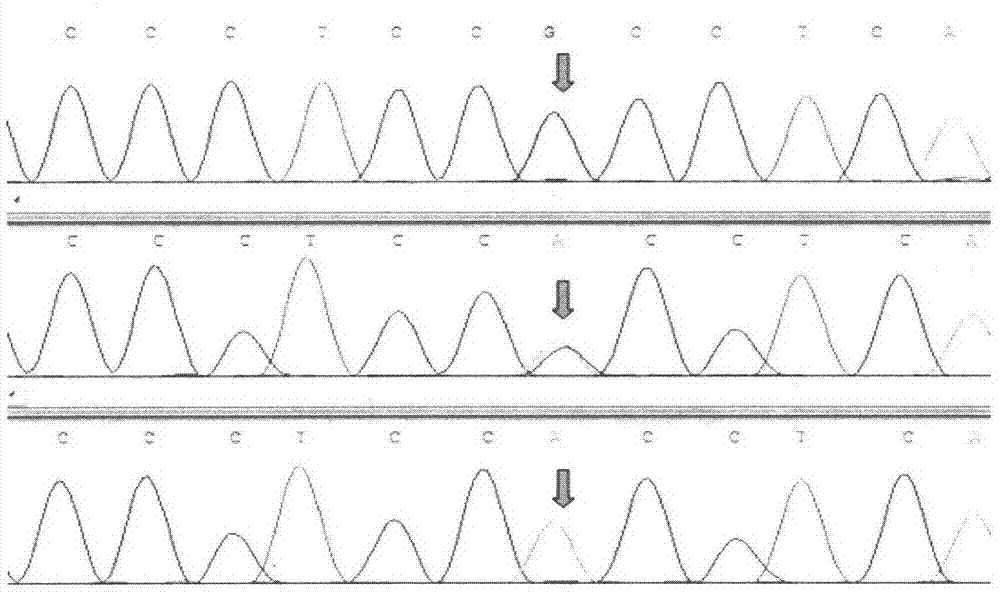
Figure 2 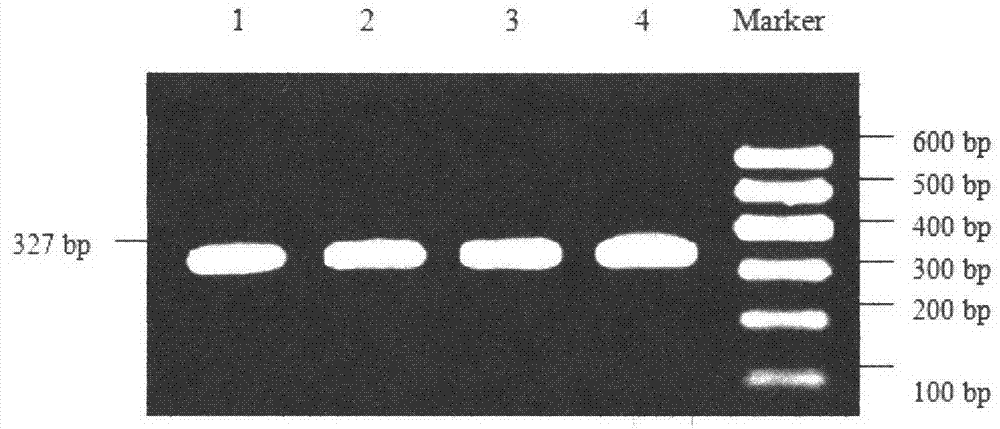
Figure 3
Abstract
Description
technical field
[0001] The invention belongs to the field of molecular genetics and relates to the detection of gene single nucleotide polymorphism, in particular to a method for detecting the single nucleotide polymorphism of cattle PPARGC1A gene. Background technique
[0002] Single nucleotide polymorphism (single nucleotide polymorphism, SNP) is a type of genetic marker system proposed by Lander (1996), a scholar at the Human Genome Research Center of the Massachusetts Institute of Technology. Polymorphism caused by changes in acid (A / T / C / G). Its variant forms include: transversion, conversion, insertion and deletion, etc., which are mainly caused by the conversion or transversion of a single base. SNPs with transformational base variation accounted for about 2 / 3. Various numbers of SNPs may be found in or near any known or unknown gene. There are relatively few SNPs (cSNPs) in the coding region of the gene, because the variation rate in the exon only accounts for 1 / 5 o...
Examples
Embodiment Construction
[0026] In the present invention, primers are firstly designed according to the PPARGC1A gene sequence (GenBank Accession No. NC_007304) published by NCBI, and the genomic DNAs of three cattle breeds are respectively used as templates for PCR amplification, and the PCR products are mixed, purified, and sequenced. Then, carry out sequencing map analysis and sequence comparison to screen out SNP sites; secondly, carry out PCR-SSCP detection of polymorphic sites in the tested population; finally, carry out statistical analysis of population genetics according to the genotypes detected in the population The association analysis with growth traits screened out the molecular markers closely related to the growth traits of cattle. The present invention will be described in detail below, which is an explanation of the present invention rather than a limitation.
[0027] Cloning of Partial DNA Sequence of PPARGC1A Gene of I Local Yellow Cattle Breed
[0028] 1. Cattle sample collection...