
Method for extracting nutritional ingredients such as free amino acids from waste cordyceps militaris cocoons
A technology of free amino acids and nutritional components, applied in applications, food preparation, food science, etc.
Patent Information
- Authority / Receiving Office
- CN · China
- Current Assignee / Owner
- Publication Date
- 2013-03-27
- Estimated Expiration
- Not applicable · inactive patent
Smart Images
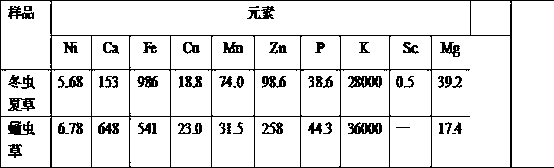
Figure 1 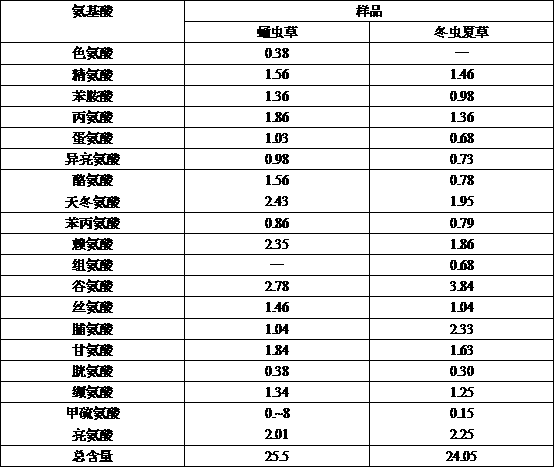
Figure 2
Abstract
Description
technical field
[0001] The invention relates to a method for extracting nutrient components such as free amino acids from waste cocoons of Cordyceps militaris. Background technique
[0002] At present, eating silkworm chrysalis is popular in many countries in the world; Americans use silkworm chrysalis to make sandwich chocolate, Australia generally uses silkworm chrysalis, and the French regard silkworm chrysalis as a high-protein delicacy, which is expensive. Many countries in Europe also eat silkworm chrysalis, so there are many kinds of silkworm chrysalis food on the market, such as: silkworm chrysalis biscuits, silkworm chrysalis milk, silkworm chrysalis wine, silkworm chrysalis canned food and so on.
[0003] Studies have shown that each kilogram of dried silkworm chrysalis contains about 60 grams of protein, 30 grams of fat, 1 gram of chitin, and 18 kinds of amino acids, 8 of which are necessary for the human body, and the proportion of the content is appropriate. ...
Examples
Embodiment Construction
[0125] According to the technological process of the present invention, after Cordyceps militaris and cocoons are mixed and crushed uniformly, the active ingredients are extracted through bioengineering enzyme treatment (separation, extraction, synthesis), and the main components are as follows: free amino acids, active polysaccharide cordycepin , protein, etc.
[0126] Clinical Trials and Results Analysis
[0127] 1. Toxicity test
[0128] 1. Acute toxicity test in mice:
[0129] Select 40 healthy mice weighing 18-22 g, half male and half male. Take Cordyceps militaris powder at a dose of 20g / kg.bw orally and gavage once on an empty stomach, observe for two weeks, and record the symptoms of poisoning and death.
[0130] Results During the 14-day observation period, no poisoning was observed, and none of the mice died. Show that this Cordyceps militaris cocoon powder is oral LD to male and female mice 50 All greater than 10g / kg.bw. According to the acut...