
Method for manufacturing porous flaky NiCo2O4 and grapheme composite capacitive material
A graphene composite and flake technology, applied in the manufacture of hybrid/electric double layer capacitors, etc., can solve the problems of poor conductivity, troublesome operation, small capacitance, etc., achieve good electrochemical stability, improve contact area, and improve conductivity performance effect
Patent Information
- Authority / Receiving Office
- CN · China
- Current Assignee / Owner
- Publication Date
- 2014-12-24
Smart Images
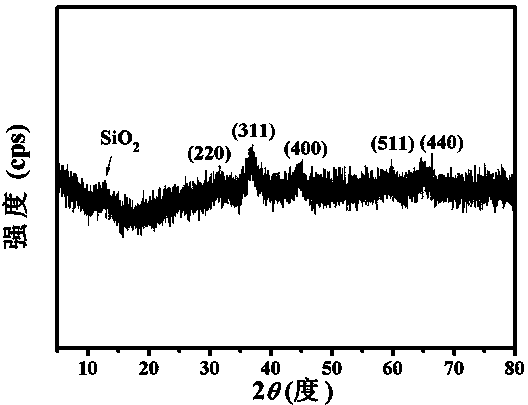
Figure 1 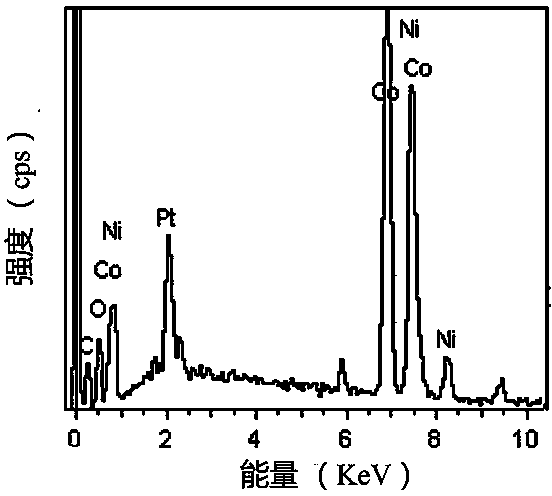
Figure 2 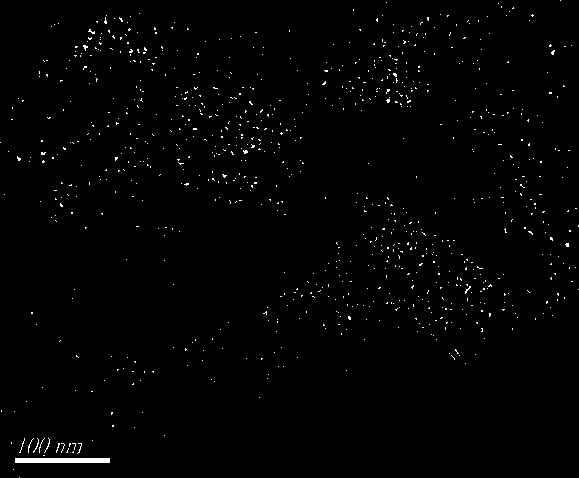
Figure 3
Abstract
Description
technical field
[0001] The invention belongs to the field of preparation of nanocomposite materials, in particular to a porous sheet NiCo 2 o 4 / The preparation method of graphene composite capacitance material. Background technique
[0002] At present, with the rapid development of the economy, the social problems caused by energy shortages are becoming more and more prominent, making people's demand for continuous and efficient energy storage devices more urgent; supercapacitors have short charging time, long service life, The characteristics of good temperature characteristics, energy saving and environmental protection have attracted widespread attention and have broad application prospects; the electrode materials for supercapacitors are usually metal oxides and conductive polymers, but these electrode materials are due to their own Small capacitance and poor conductivity restrict its popularization and application in supercapacitors; in recent years, studies have fou...
Examples
Embodiment 1
[0027] Example 1: 60 mg of graphite oxide was dispersed in 40 mL of deionized aqueous solution, and a uniform dispersion was formed by ultrasonication; 10 mL of 0.250 mmol Co(NO 3 ) 2 . 6H 2 O and 0.125 mmol Ni(NO 3 ) 2 . 6H 2 The aqueous solution of O was slowly added dropwise to the above dispersion liquid, and stirred fully; then 10 mL of aqueous solution containing 0.21 g hexamethylenetetramine was slowly added dropwise to the above mixed liquid, and continued to stir for 10 min; the mixed solution was transferred to reflux Reactor, 90 o C for 3 h; the obtained black product was centrifuged, and washed with water and ethanol for 3 times, at 45 o C and dried under vacuum; the ground powder was calcined at 330 °C for 2 h in the air atmosphere to obtain porous sheet NiCo 2 o 4 / Graphene composite capacitor material.
Embodiment 2
[0028] Example 2: 60 mg of graphite oxide was dispersed in 40 mL of deionized aqueous solution, and a uniform dispersion was formed by ultrasonication; 10 mL of 0.250 mmol Co(NO 3 ) 2 . 6H 2 O and 0.125 mmol Ni(NO 3 ) 2 . 6H 2 The aqueous solution of O was slowly added dropwise to the above dispersion liquid, and stirred fully; then 10 mL of aqueous solution containing 0.21 g hexamethylenetetramine was slowly added dropwise to the above mixed liquid, and continued to stir for 10 min; the mixed solution was transferred to reflux Reactor, 90 o C for 4 h; the obtained black product was centrifuged, and washed with water and ethanol three times respectively, at 45 o C and dried under vacuum; the ground powder was calcined at 330 °C for 2 h in the air atmosphere to obtain porous sheet NiCo 2 o 4 / Graphene composite capacitor material.
Embodiment 3
[0029] Example 3: 60 mg of graphite oxide was dispersed in 40 mL of deionized aqueous solution, and a uniform dispersion was formed by ultrasonication; 10 mL of 0.500 mmol Co(NO 3 ) 2 . 6H 2 O and 0.250 mmol Ni(NO 3 ) 2 . 6H 2 The aqueous solution of O was slowly added dropwise to the above dispersion liquid, and stirred fully; then 10 mL of aqueous solution containing 0.21 g hexamethylenetetramine was slowly added dropwise to the above mixed liquid, and continued to stir for 10 min; the mixed solution was transferred to reflux Reactor, 90 o C for 3 h; the obtained black product was centrifuged, and washed with water and ethanol for 3 times, at 45 oC and dried under vacuum; the ground powder was calcined at 330 °C for 2 h in the air atmosphere to obtain porous sheet NiCo 2 o 4 / Graphene composite capacitor material.