
Water supply line K-shaped joint with emergency self-recovery capability
A self-recovery, K-shaped technology, applied in the direction of pipe/pipe joint/pipe fitting, pipe element, sleeve/socket connection, etc., can solve the problems of water waste and untimely repair, so as to reduce water waste and reduce The effect of loss of function
Patent Information
- Authority / Receiving Office
- CN · China
- Patent Type
- Applications(China)
- Current Assignee / Owner
- Publication Date
- 2015-04-01
- Estimated Expiration
- Not applicable · inactive patent
Smart Images
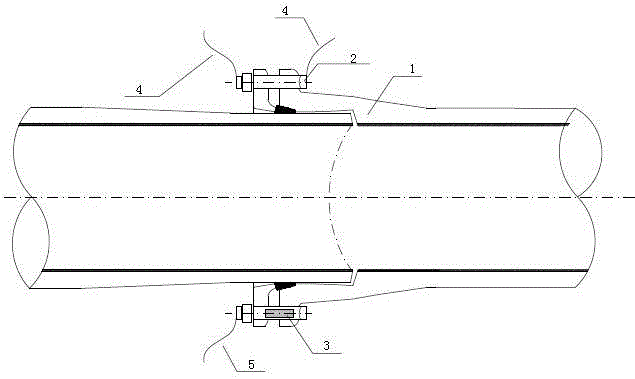
Figure 1 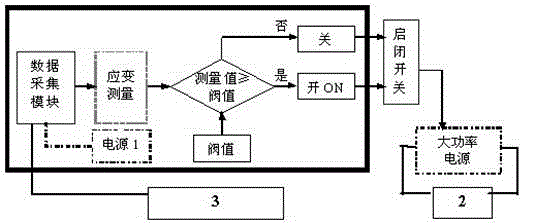
Figure 2
Abstract
Description
technical field
[0001] The invention belongs to the field of water supply pipeline engineering in municipal engineering, and specifically relates to a K-shaped joint of a water supply pipeline with emergency self-recovery capability. Background technique
[0002] The water supply pipeline is the main part of the urban water supply network, which is mainly buried underground. The destruction of these pipelines will not only lead to the economic loss of the pipeline itself, but more seriously, it will lead to the loss of urban regional functions. During the strong earthquakes that have occurred around the world in the past two decades, the urban water supply pipelines have been severely damaged, which has brought serious difficulties to post-disaster rescue and relief, post-disaster industrial production and residents' lives. The repair of the pipe network after the earthquake also needs to invest a lot of money.
[0003] The water supply pipeline usually adopts a socket-typ...
Examples
Embodiment 1
[0012] Example 1: Combining figure 1 , consists of K-shaped mechanical joint 1, shape memory alloy bolt 2, vibrating wire strain sensor 3, power line 4, data line 5 and data processing and emergency response integrated box 6. During installation, first insert the socket of the K-shaped mechanical joint 1 into the socket, and connect the K-shaped mechanical joint 1 with shape memory alloy bolts 2 . Install the vibrating wire strain sensor 3 on the shape memory alloy bolt 2 to measure the strain of the bolt. Then, two ends of the shape memory alloy bolt 2 are connected to the data processing and emergency response integration box 6 with two power lines 4;
[0013] With this device, the strain of the bolt can be monitored in real time. When the lower joint has a large deformation after the earthquake, the data processing and emergency response integration box monitors and finds that the bolt strain reaches a given maximum limit. The memory alloy bolts are energized and heated,...