
A method for synthesizing α-aryl glucosinolates
A technology of aryl glucosinolates and glycosyl thiols, applied in chemical instruments and methods, preparation of sugar derivatives, sugar derivatives, etc., can solve problems such as large-scale synthesis difficulties and high reactivity of β-halogenated sugars, and achieve Overcome the effects of expensive reagents, easy separation and high yield
Patent Information
- Authority / Receiving Office
- CN · China
- Patent Type
- Patents(China)
- Current Assignee / Owner
- Publication Date
- 2018-06-22
Smart Images
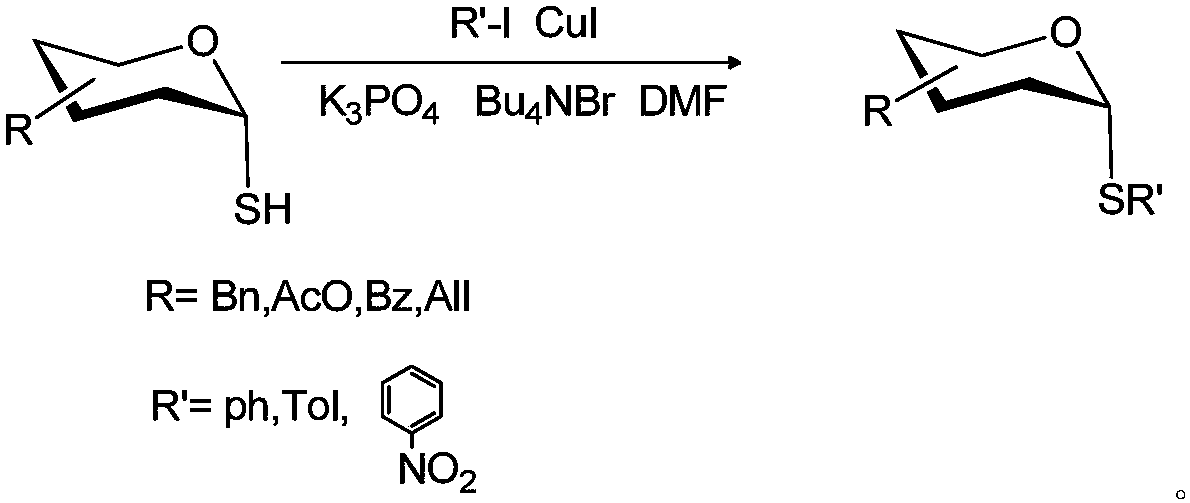
Figure 1 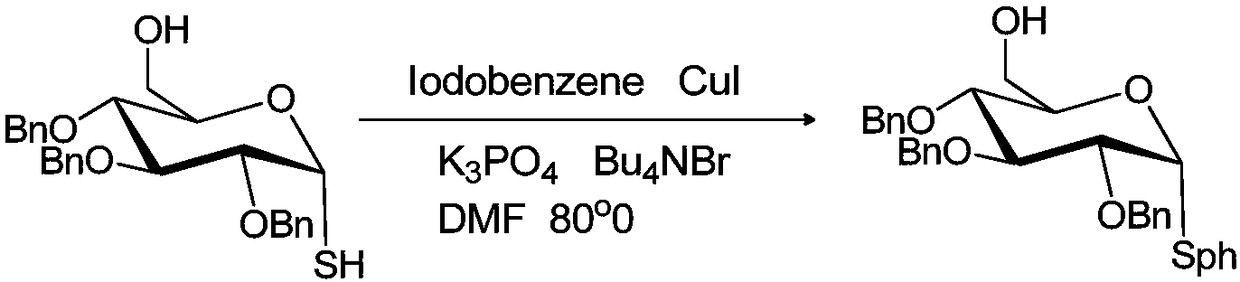
Figure 2 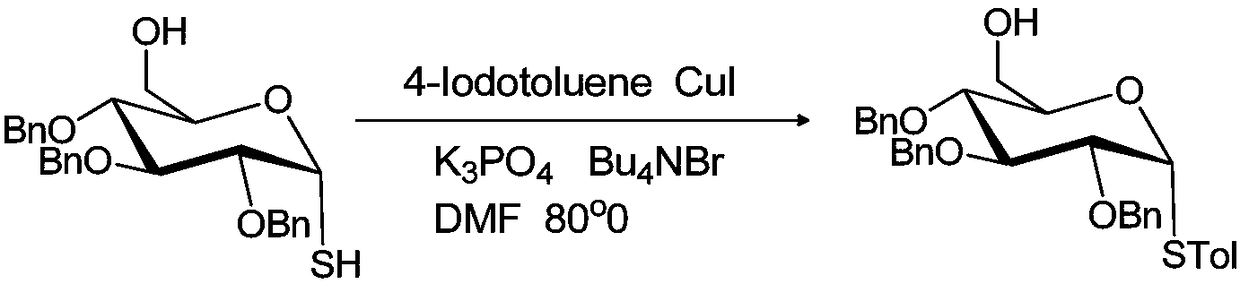
Figure 3
Abstract
Description
technical field
[0001] The invention belongs to the field of sugar chemical synthesis in organic chemistry, in particular to a method for preparing α-aryl glucosinolates. Background technique
[0002] Glucosinolates have been widely used in the synthesis of oligosaccharides. On the one hand, due to the good stability of glucosinolate donors, they can be used as donors and temporary protecting groups, and can also be converted into other donors; The activity of the glucosinolate donor can be regulated by the protecting group of the hydroxyl group on the sugar ring (especially 2- is the protecting group), the protecting group of the sulfur atom, the configuration of the glucosinolate and the reaction solvent, etc., therefore, the glucosinolate can be used Based on the "Armed-disarmed" strategy, the directional glycosylation between different glucosinolates is realized. Therefore, it is very important to efficiently synthesize glucosinolates in various configurations. [0003...
Examples
Embodiment 1
[0015] Example 1: Preparation of 6-O-hydroxyl-2,3,4-tri-O-benzyl-1-S-phenyl-α-D-glucose
[0016] The reaction formula is:
[0017]
[0018] At room temperature, add 16mg (10mol%) cuprous iodide, 177mg (0.8mmol) potassium phosphate, 42mg (0.13mmol) tetrabutylammonium bromide to a 50ml two-neck round bottom flask, vacuumize, and fill with nitrogen Three times, and then inject 0.47g (1mmol) α-glycosylthiol glucose and 0.17g (0.8mmol) iodobenzene solution dissolved in N,N dimethylformamide solvent into the circle with a disposable syringe under nitrogen protection. in the bottom flask. The round bottom flask was placed in an oil bath, and the temperature was raised to 80°C for 4 hours, and the reaction process was tracked by thin layer chromatography. After the reaction, cool down to room temperature, add saturated brine to the round bottom flask to quench the reaction, add an appropriate amount of saturated brine and ethyl acetate, extract and separate the liquids, combine t...
Embodiment 2
[0019] Example 2: Preparation of 6-O-hydroxyl-2,3,4-tri-O-benzyl-1-S-p-methylphenyl-α-D-glucose
[0020] The reaction formula is:
[0021]
[0022] At room temperature, add 16mg (10mol%) cuprous iodide, 177mg (0.8mmol) potassium phosphate, 42mg (0.13mmol) tetrabutylammonium bromide, 183mg (0.8mmol) in the two-neck round bottom flask of 50 milliliters 4-iodotoluene, evacuated, filled with nitrogen three times, and then injected 0.47g (1mmol) α-glycosylthiol glucose solution dissolved in N,N dimethylformamide solvent into in a round bottom flask. The round bottom flask was placed in an oil bath, and the temperature was raised to 80°C for 4 hours, and the reaction process was tracked by thin layer chromatography. After the reaction, cool down to room temperature, add saturated brine to the round bottom flask to quench the reaction, add an appropriate amount of saturated brine and ethyl acetate, extract and separate the liquids, combine the organic phases, and then dry with a...
Embodiment 3
[0023] Example 3: Preparation of 6-O-hydroxyl-2,3,4-tri-O-benzyl-1-S-p-nitrophenyl-α-D-glucose
[0024] The reaction formula is:
[0025]
[0026] At room temperature, add 16mg (10mol%) cuprous iodide, 1177mg (0.8mmol) potassium phosphate, 42mg (0.13mmol) tetrabutylammonium bromide, 209mg (0.8mmol) in the two-neck round bottom flask of 50 milliliters 4-iodotoluene, evacuated, filled with nitrogen three times, and then injected 0.47g (1 mmol) of α-glycosylthiol glucose solution dissolved in N,N dimethylformamide solvent into in a round bottom flask. The round bottom flask was placed in an oil bath, and the temperature was raised to 80°C for 4 hours, and the reaction process was tracked by thin layer chromatography. After the reaction, cool down to room temperature, add saturated brine to the round bottom flask to quench the reaction, add appropriate amount of saturated brine and ethyl acetate, extract and separate the liquids, combine the organic phases, and then dry with ...