
A Rapid Preparation Method of Monoclinic VO2 Metal-Insulator Phase Change Ceramic Material
A ceramic material, VO2 technology, applied in the field of rapid preparation of monoclinic VO2 metal-insulator phase change ceramics, can solve the problems of insufficient physical performance, cumbersome synthesis method, harsh raw material requirements, etc., to shorten the preparation time and reduce the cost of raw materials. , the effect of high preparation efficiency
Patent Information
- Authority / Receiving Office
- CN · China
- Patent Type
- Patents(China)
- Current Assignee / Owner
- Publication Date
- 2018-12-18
- Estimated Expiration
- Not applicable · inactive patent
Smart Images
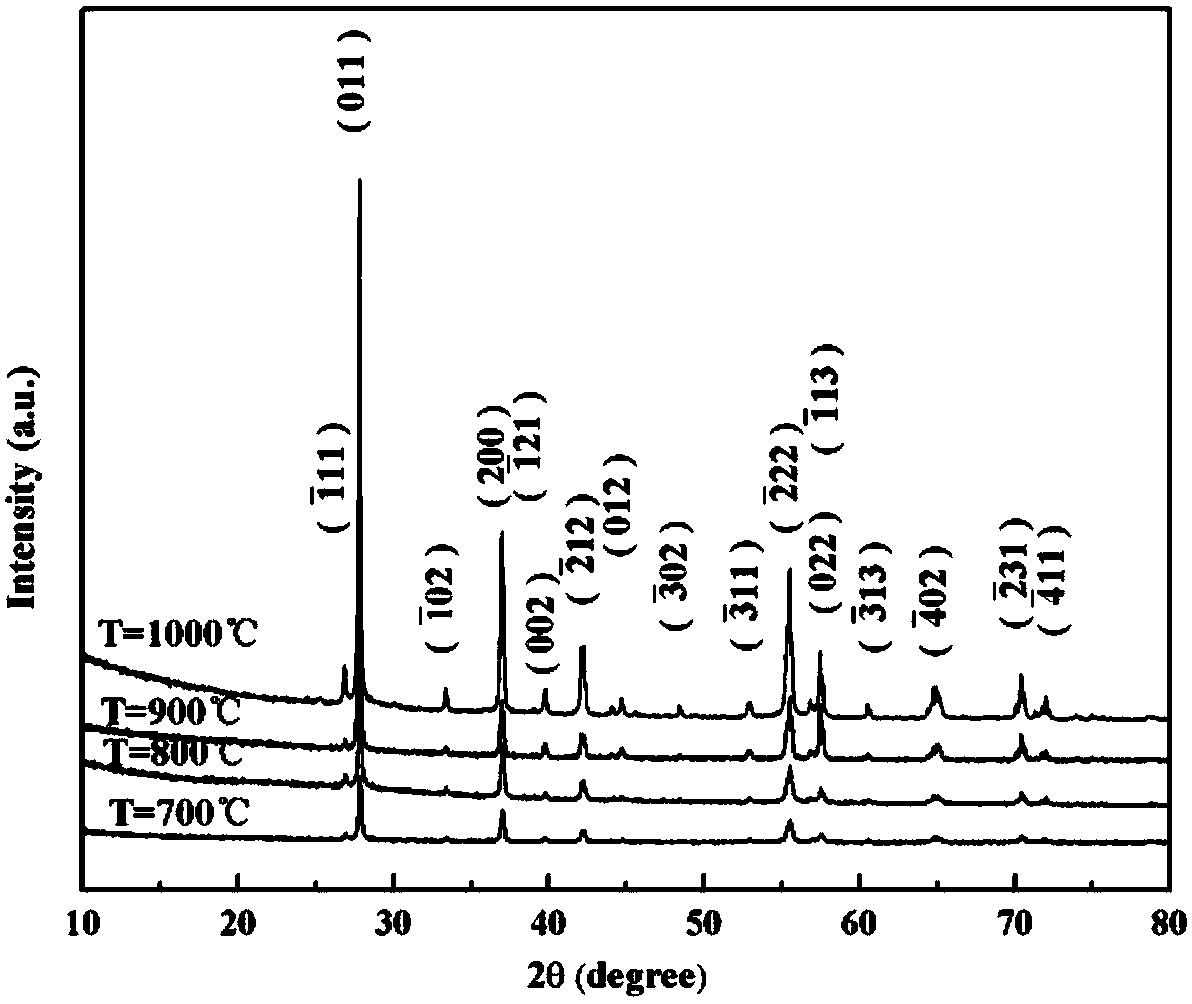
Figure 1 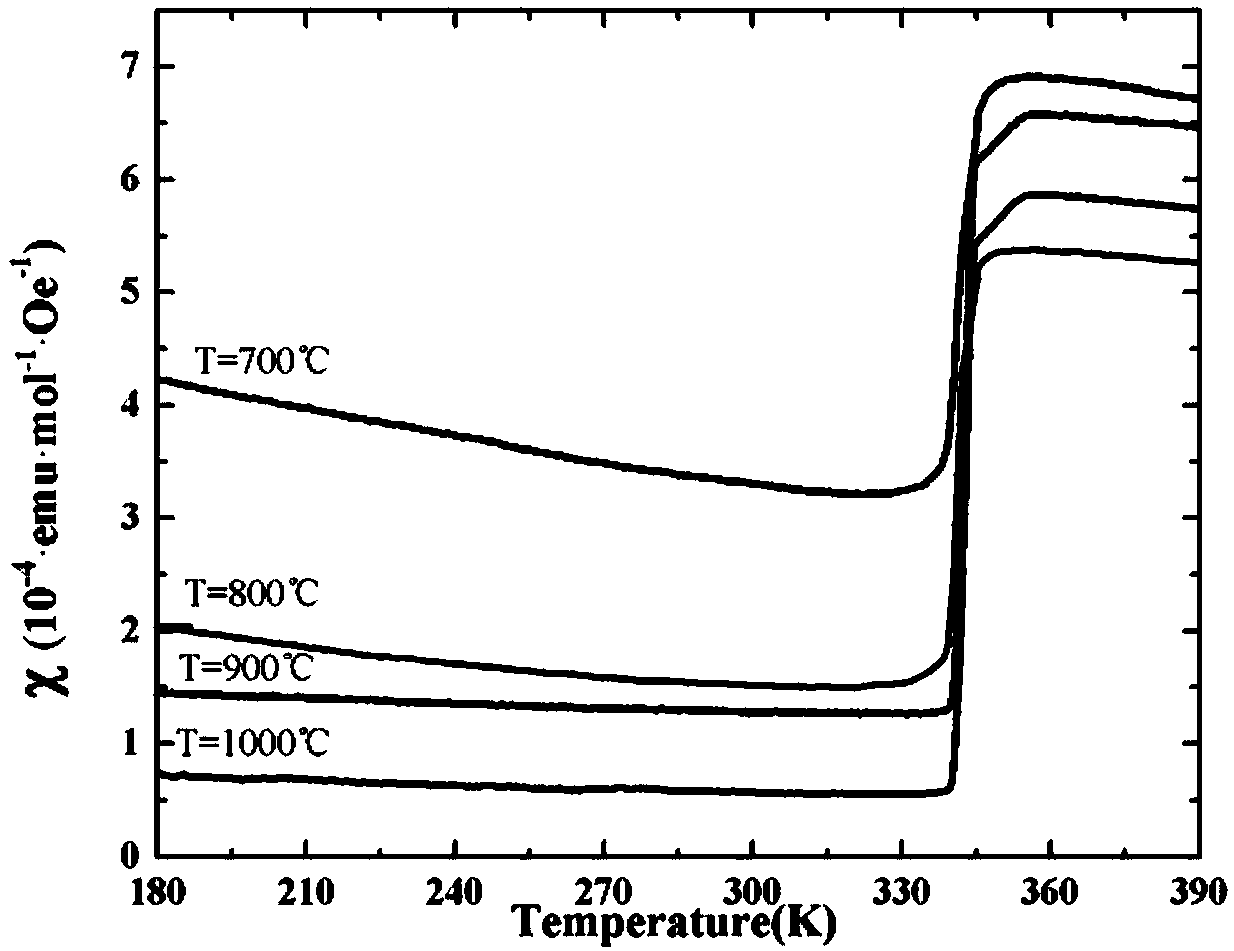
Figure 2 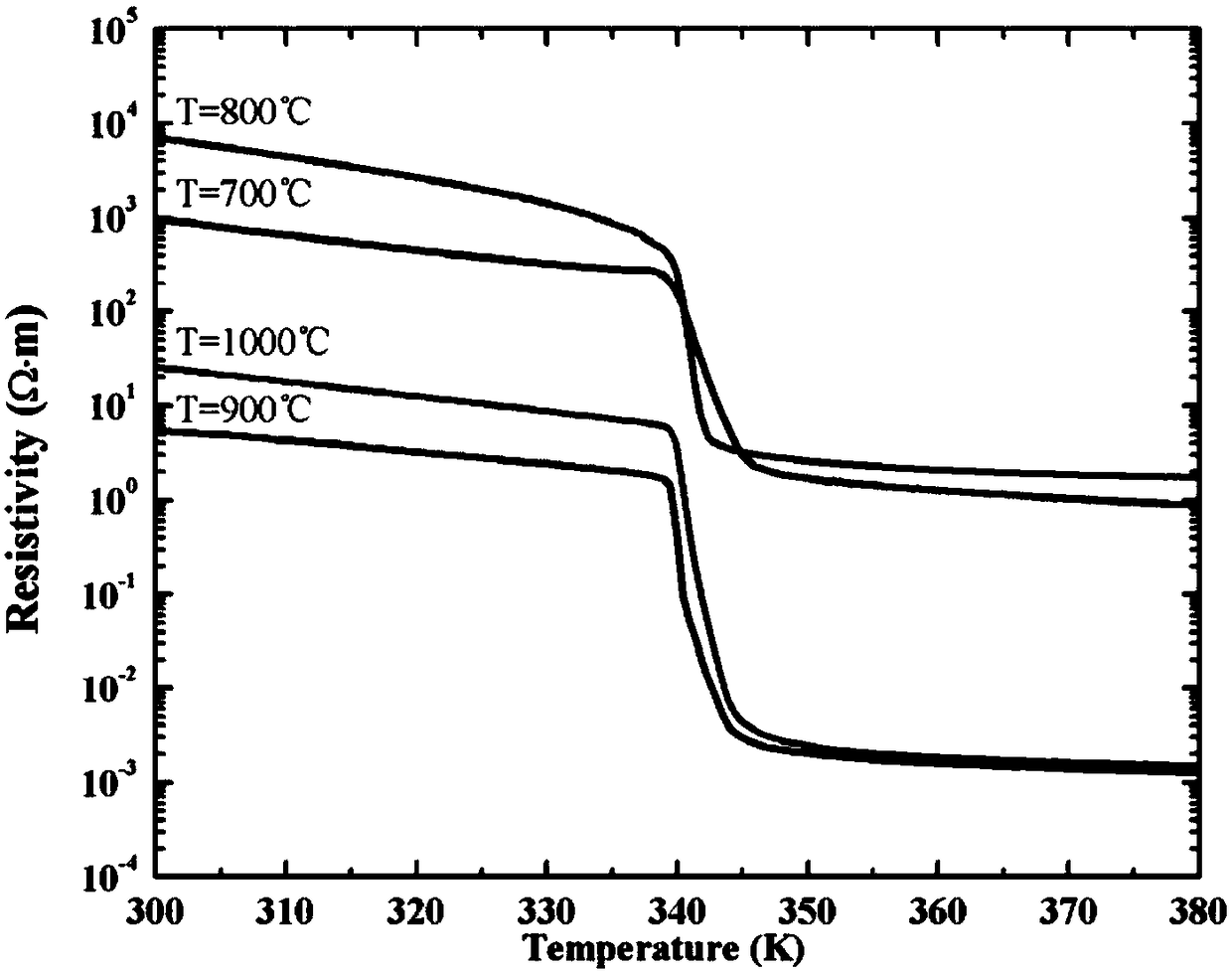
Figure 3
Abstract
Description
technical field
[0001] The invention relates to the technical field of phase change ceramic materials, in particular to a monoclinic phase VO 2 Rapid preparation method of metal-insulator phase change ceramics. Background technique
[0002] The energy band structure of conductors and non-conductors is different. The conductance of conductors is mainly determined by the situation near the Fermi surface. If the energy band structure or Fermi level can be affected by changing the external conditions, it can cause the transition between metal conductors and insulators. , There are several theoretical models for this metal-insulator mutual transformation: Anderson transformation, Mott transformation, Wilson transformation and Peierls transformation. Vanadium, as a typical representative of 3d group transition metal elements, can combine with oxygen to form a variety of oxides. According to the valence state of vanadium from low to high, it is VO, V 2 o 3 、VO 2 , V 2 o 5 and...
Examples
Embodiment 1
[0026] 1. Using Citric Acid-V 2 o 5 Preparation of Monoclinic VO by Hydrothermal Reaction 2 Powder:
[0027] (1) Measure 0.00375mol citric acid into a 50mL beaker, add 20mL deionized water, dissolve under magnetic stirring to form a transparent solution, then weigh 0.0025molV 2 o 5 Add the solid powder to the above citric acid solution, and magnetically stir together for about 30 minutes to form a uniform yellow solution. The concentration of citric acid-vanadium pentoxide in the mixed solution is 0.025±5% g / mL;
[0028] (2) Pour the above yellow solution into a 50mL stainless steel hydrothermal synthesis reaction kettle, and measure 10mL of deionized water several times to rinse the residual drug in step (1), and add it to the reaction kettle together, and the final reaction solution is about 50mL , then put the reactor into an oven, heat to 180°C, and continue the reaction for 5 hours;
[0029] (3) After the above reaction time is over, the solid-liquid separation of th...
Embodiment 2
[0036] 1. Using Citric Acid-V 2 o 5 Preparation of Monoclinic VO by Hydrothermal Reaction 2 Powder:
[0037] (1) Measure 0.00625mol citric acid into a 50mL beaker, add 20mL deionized water, dissolve under magnetic stirring to form a transparent solution, then weigh 0.0025molV 2 o 5Add the solid powder to the above citric acid solution, and magnetically stir together for about 30 minutes to form a uniform yellow solution. The concentration of citric acid-vanadium pentoxide in the mixed solution is 0.025±5% g / mL;
[0038] (2) Pour the above yellow solution into a 50mL stainless steel hydrothermal synthesis reaction kettle, and measure 10mL of deionized water several times to rinse the residual drug in step (1), and add it to the reaction kettle together, and the final reaction solution is about 50mL , and then put the reactor into an oven, heat it to 170°C, and continue the reaction for 10 hours;
[0039] (3) After the above reaction time is over, the solid-liquid separatio...
Embodiment 3
[0046] 1. Using Citric Acid-V 2 o 5 Preparation of Monoclinic VO by Hydrothermal Reaction 2 Powder:
[0047] (1) Measure 0.00525mol citric acid into a 50mL beaker, add 20mL deionized water, dissolve under magnetic stirring to form a transparent solution, then weigh 0.0025molV 2 o 5 Add the solid powder to the above citric acid solution, and magnetically stir together for about 30 minutes to form a uniform yellow solution. The concentration of citric acid-vanadium pentoxide in the mixed solution is 0.025±5% g / mL;
[0048] (2) Pour the above yellow solution into a 50mL stainless steel hydrothermal synthesis reaction kettle, and measure 10mL of deionized water several times to rinse the residual drug in step (1), and add it to the reaction kettle together, and the final reaction solution is about 50mL , then put the reactor into an oven, heat to 190°C, and continue the reaction for 8 hours;
[0049] (3) After the above reaction time is over, the solid-liquid separation of th...