
A method for synthesizing 3-fluoro-4-(4-morpholinyl)aniline in a microchannel reactor
A micro-channel reactor, morpholine-based technology, applied in organic chemistry and other directions, can solve problems such as polynitration, complex process operation, and oxidation.
Patent Information
- Authority / Receiving Office
- CN · China
- Patent Type
- Patents(China)
- Current Assignee / Owner
- Publication Date
- 2018-11-20
Smart Images
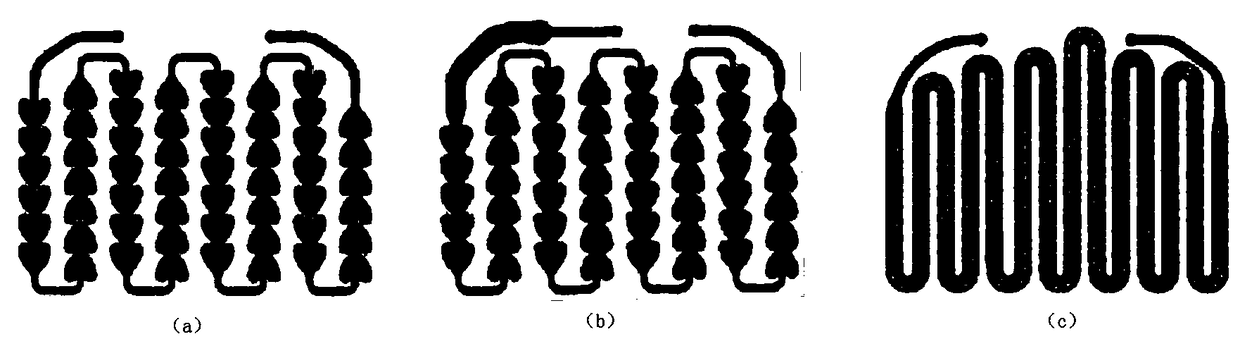
Figure 1 
Figure 2 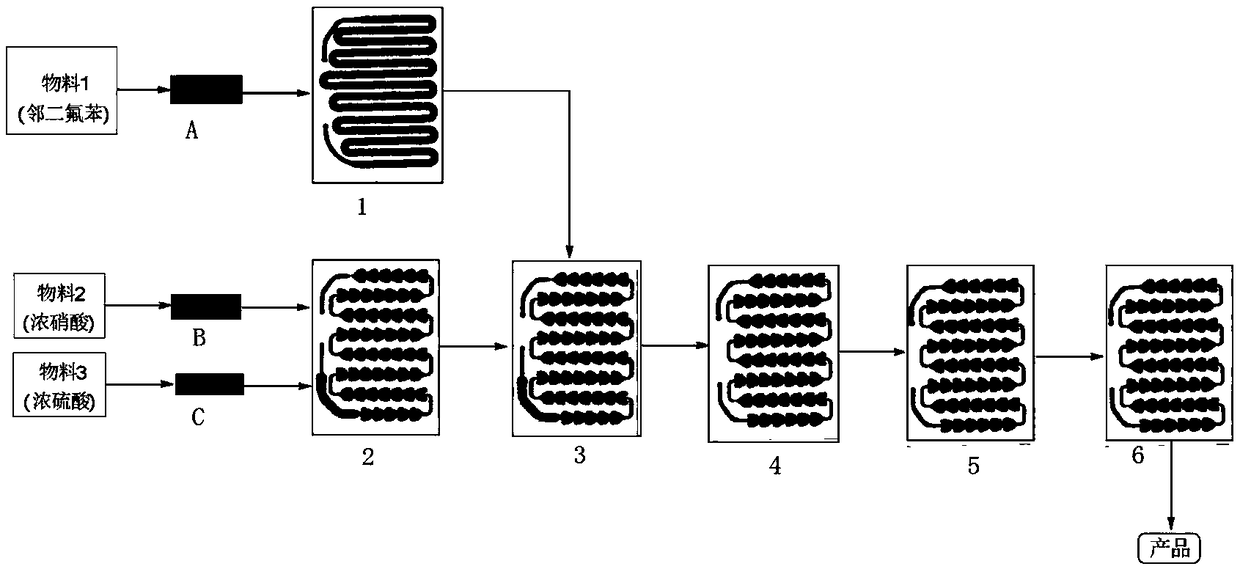
Figure 3
Abstract
Description
technical field
[0001] The invention relates to the field of organic synthesis, in particular to a method for synthesizing 3-fluoro-4-(4-morpholino)aniline. Background technique
[0002] 3-Fluoro-4-(4-morpholinyl)aniline is the key intermediate of the currently synthetic antibiotic linezolid. The structure of linezolid is as follows:
[0003]
[0004] Linezolid, which was approved by the US FDA in 2000, is a bacterial protein synthesis inhibitor used to treat infections caused by Gram-positive (G+) cocci. The site and mode of action of linezolid are unique, so in positive bacteria with essential or acquired resistance characteristics, it is not easy to cross-resistance with other antibacterial drugs that inhibit protein synthesis, and it is not easy to induce bacterial resistance in vitro generation. It is an oxazolidinone antibiotic with good clinical effect and broad-spectrum drug resistance. Therefore, it is of great significance to explore a new method for the synt...
Examples
Embodiment 1
[0075] (1) Weigh 300g of o-difluorobenzene as material 1, measure 400ml of concentrated nitric acid as material 2, and measure 600mL of concentrated sulfuric acid as material 3;
[0076] (2) The flow velocity of control material 1 is 8ml / min; The flow velocity of control material 2 is 12min / min; The flow velocity of control material 3 is 18min / min; Reaction temperature is 20 ℃, and the mol ratio of o-difluorobenzene and nitric acid is 1 :2.5; The mol ratio of nitric acid and the vitriol oil is 1:2.0; The residence time of reaction is 65s;
[0077](3) After each strand of material in the reactor reaches a steady state, collect the reaction solution flowing out from the reactor outlet, and feed the corresponding reaction solution of material 1 (that is, 240ml of material 1, 275.0g of o-difluorobenzene) for 30 minutes For example, separate the liquid, keep the organic phase, extract the acid layer once with 300ml of dichloromethane, combine the organic phases, add 300ml of 10% Na...
Embodiment 2
[0085] In the screening and optimization process of process parameters, we explored the parameters such as the concentration of the reaction raw materials, molar ratio, residence time, etc., and changed the corresponding parameters of the corresponding steps on the basis of the operation steps in Example 1, and kept other parameters unchanged. , the results are summarized as follows:
[0086] 1. Nitrification reaction:
[0087]
[0088] 2. Nucleophilic substitution reaction:
[0089]
[0090] 3. Catalytic hydrogenation reaction:
[0091]
[0092]
[0093] 4. Pd / C recovery application experiment:
[0094]