
Method for decomposing rhodamine B wastewater
A wastewater and electrolyte technology, applied in chemical instruments and methods, water pollutants, water/sewage treatment, etc., can solve the problems of poor COD removal efficiency, long degradation time, high energy, etc., to reduce electrolysis energy consumption, The effect of reducing degradation time and COD value
Patent Information
- Authority / Receiving Office
- CN · China
- Patent Type
- Applications(China)
- Current Assignee / Owner
- Publication Date
- 2018-05-29
- Estimated Expiration
- Not applicable · inactive patent
Smart Images
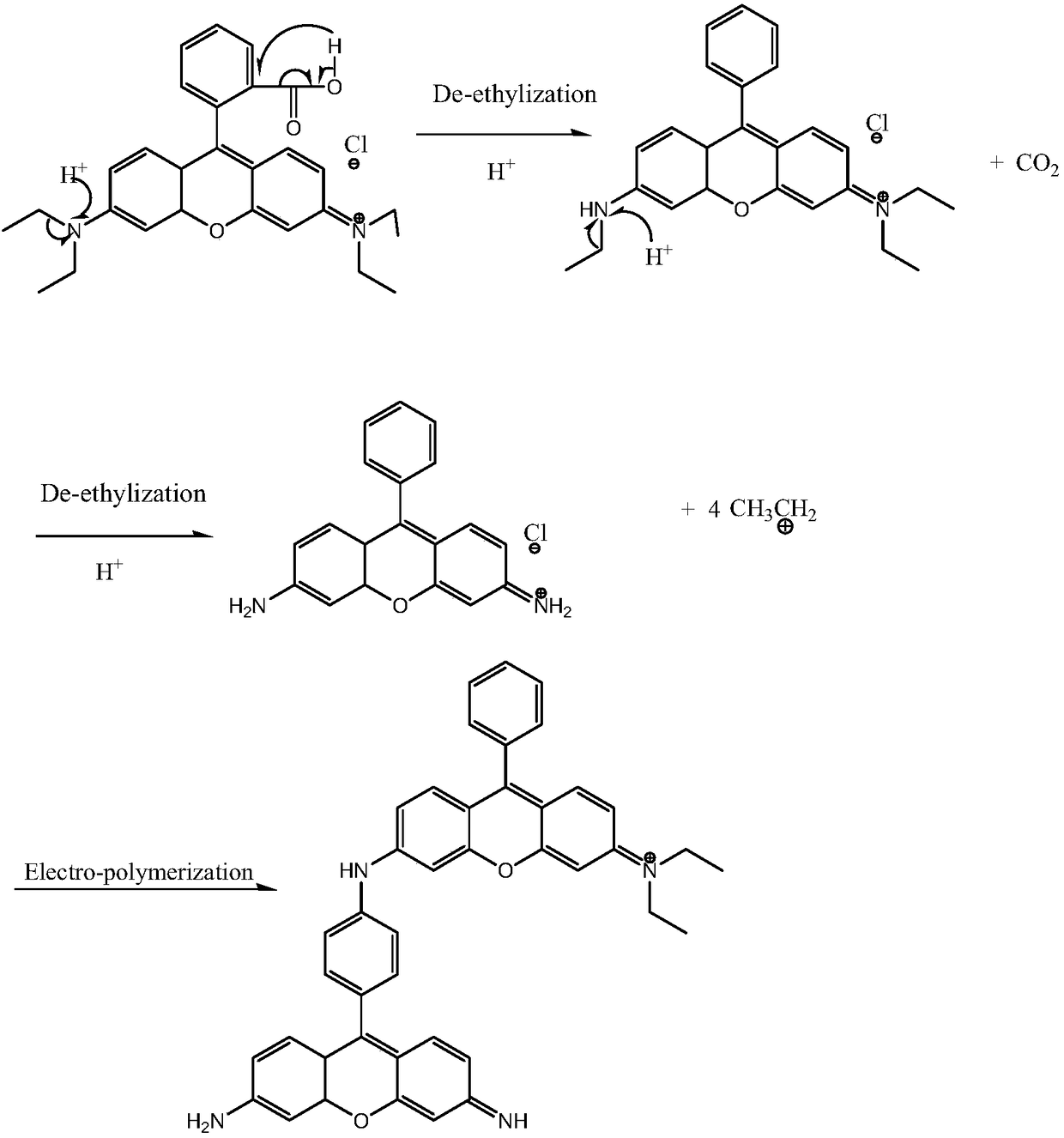
Figure 1 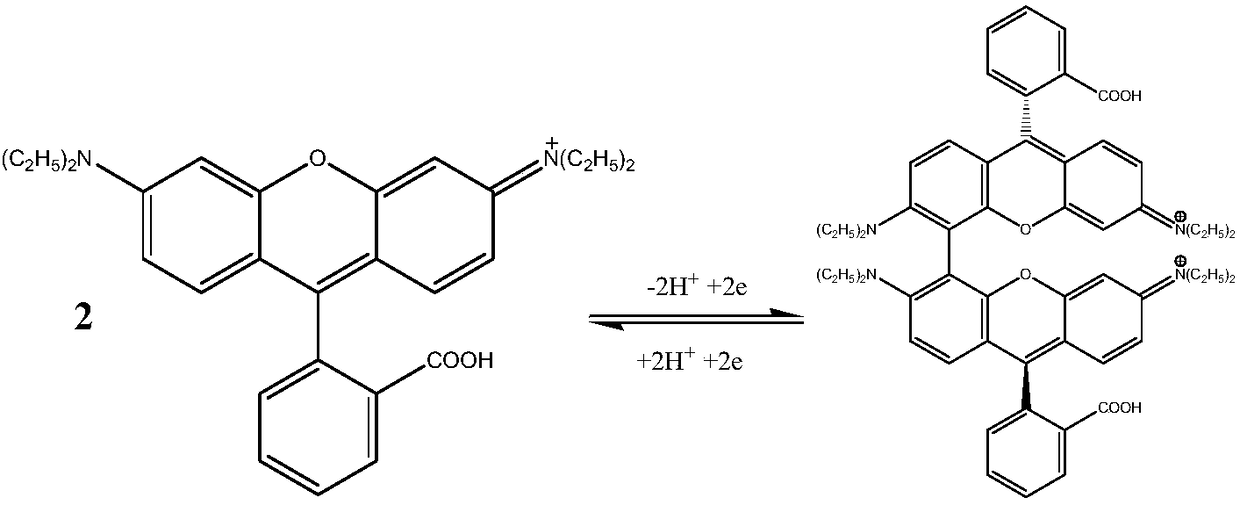
Figure 2
Abstract
Description
technical field
[0001] The invention belongs to the field of environmental protection, in particular to a method for degrading rhodamine B wastewater. Background technique
[0002] Rhodamine B is a synthetic basic dye with bright pink color. Molecular formula is C 23 h 31 ClN 2 o 3 , with a molecular weight of 479.029. Rhodamine B can dissolve 0.78% in water and 1.47% in ethanol, and its maximum absorption wavelength is 554nm. Rhodamine B is used for printing and dyeing glossy paper, typing paper, waxy paper in paper industry, textile printing and dyeing industry and dyeing of feather products, straw, leather, etc. Rhodamine B has strong fluorescence in solution and was once used as a food additive , but later experiments proved that rhodamine B can cause cancer, and now it is not allowed to be used as food dye. The compound has good stability, large molecular weight, high chromaticity of wastewater, poor biodegradability, and bioaccumulation in terrestrial and aquati...
Examples
Embodiment 1
[0022] (1) Rhodamine B (C=100mg·dm -3 ) waste water grate sedimentation;
[0023] (2) Heating the rhodamine B wastewater treated in step (1) to 35°C, adjusting the pH to 4, and filtering after 1 hour; Fe in the wastewater 2+ , Fe 3+ , Ca 2+ Wait to form precipitate, and be filtered off, and the filtrate obtained by filtering is processed in the next step;
[0024] (3) take the filtrate after step (2) processing as electrolyte, adopt platinum electrode as oxidation electrode, adopt saturated calomel electrode as reference electrode, oxidation 5 minutes under the condition that oxidation voltage is 1.3V, rhodamine B waste water Electropolymerization occurs, resulting in a precipitate. Filter the oxidized electrolyte membrane to obtain a clear solution;
[0025] Obtain clear liquid after degrading by this embodiment, and the detection COD is 15mg·dm -3 .
Embodiment 2
[0027] (1) Rhodamine B (C=100mg·dm -3 ) waste water grate sedimentation;
[0028] (2) Heating the Rhodamine B wastewater treated in step (1) to 35°C, adjusting the pH to 2, and filtering after 1 hour; Fe in the wastewater 2+ , Fe 3+ , Ca 2+ Wait to form precipitate, and be filtered off, and the filtrate obtained by filtering is processed in the next step;
[0029] (3) take the filtrate after the treatment of step (2) as electrolyte, adopt BDD electrode as oxidation electrode, adopt saturated calomel electrode as reference electrode, oxidize 5 minutes under the condition that oxidation voltage is 1.1V, rhodamine B wastewater Electropolymerization occurs, resulting in a precipitate. Filter the oxidized electrolyte membrane to obtain a clear liquid;
[0030] Obtain clear liquid after degrading by this example, and the detection COD is 50mg·dm -3 .
Embodiment 3
[0032] (1) Rhodamine B (C=100mg·dm -3 ) water grid for sedimentation;
[0033] (2) Heating the rhodamine B wastewater treated in step (1) to 50°C, adjusting the pH to 3, and filtering after 1 hour; Fe in the wastewater 2+ , Fe 3+ , Ca 2+ Wait to form precipitate, and be filtered off, and the filtrate obtained by filtering is processed in the next step;
[0034] (3) take the filtrate after the treatment of step (2) as electrolyte, adopt gold electrode as oxidation electrode, adopt saturated calomel electrode as reference electrode, oxidize 5 minutes under the condition that oxidation voltage is 1.2V, rhodamine B waste water Electropolymerization occurs, and the oxidized electrolyte membrane is filtered to obtain a clear solution;
[0035] Obtain clear liquid after degrading by this example, and the detection COD is 45mg·dm -3 .