
Vortex light-based rotating object rotary shaft tilt angle detection device
A detection device and a technology of vortex light, which are applied to devices using optical methods, measuring devices, and optical devices, etc., can solve problems such as inability to obtain effectively, and achieve the effects of novel technology, simple operation, and fast measurement speed
Patent Information
- Authority / Receiving Office
- CN · China
- Current Assignee / Owner
- Publication Date
- 2019-05-07
Smart Images
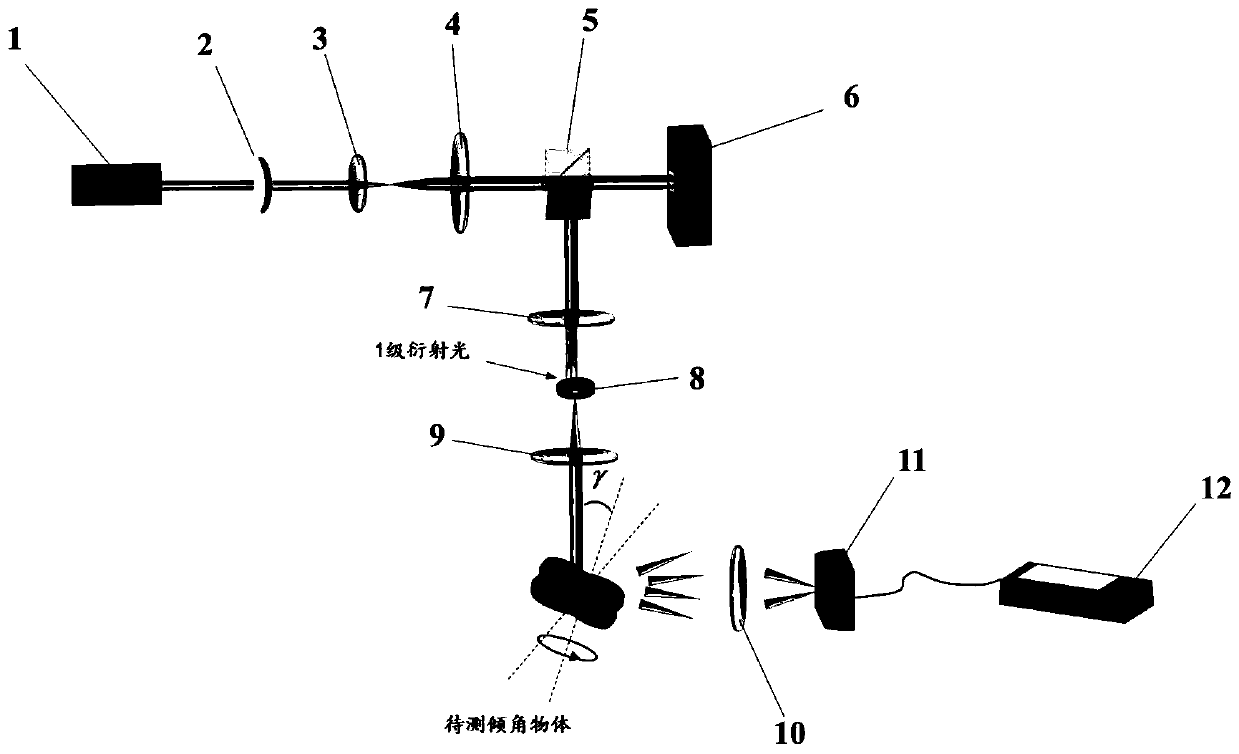
Figure 1 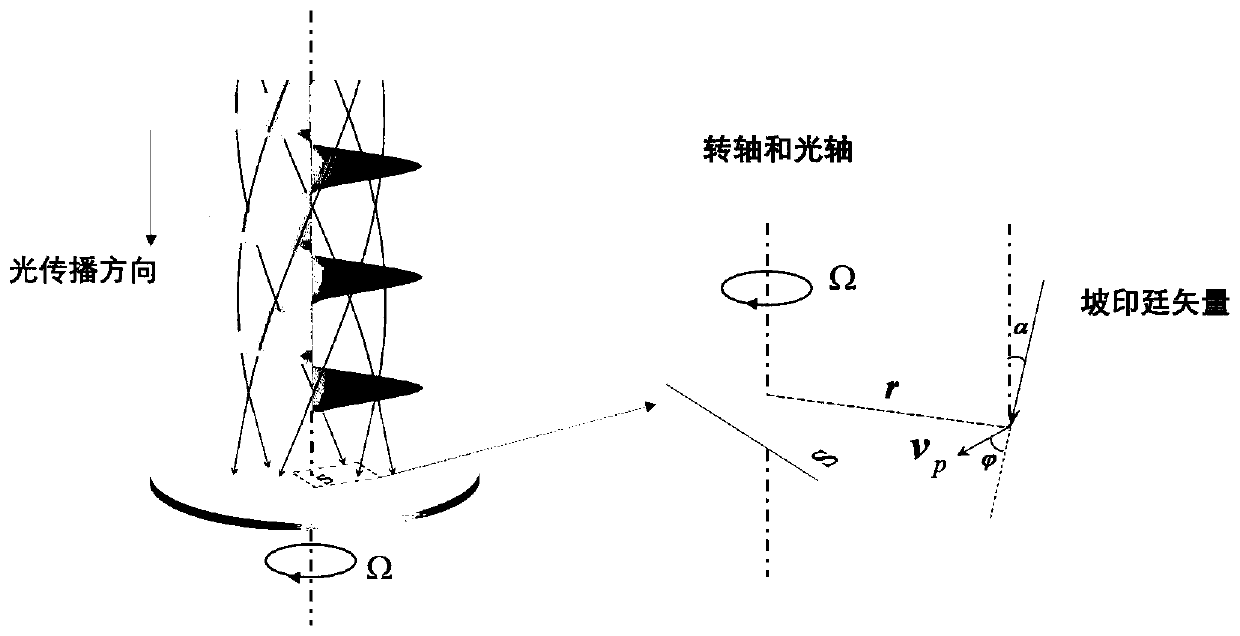
Figure 2 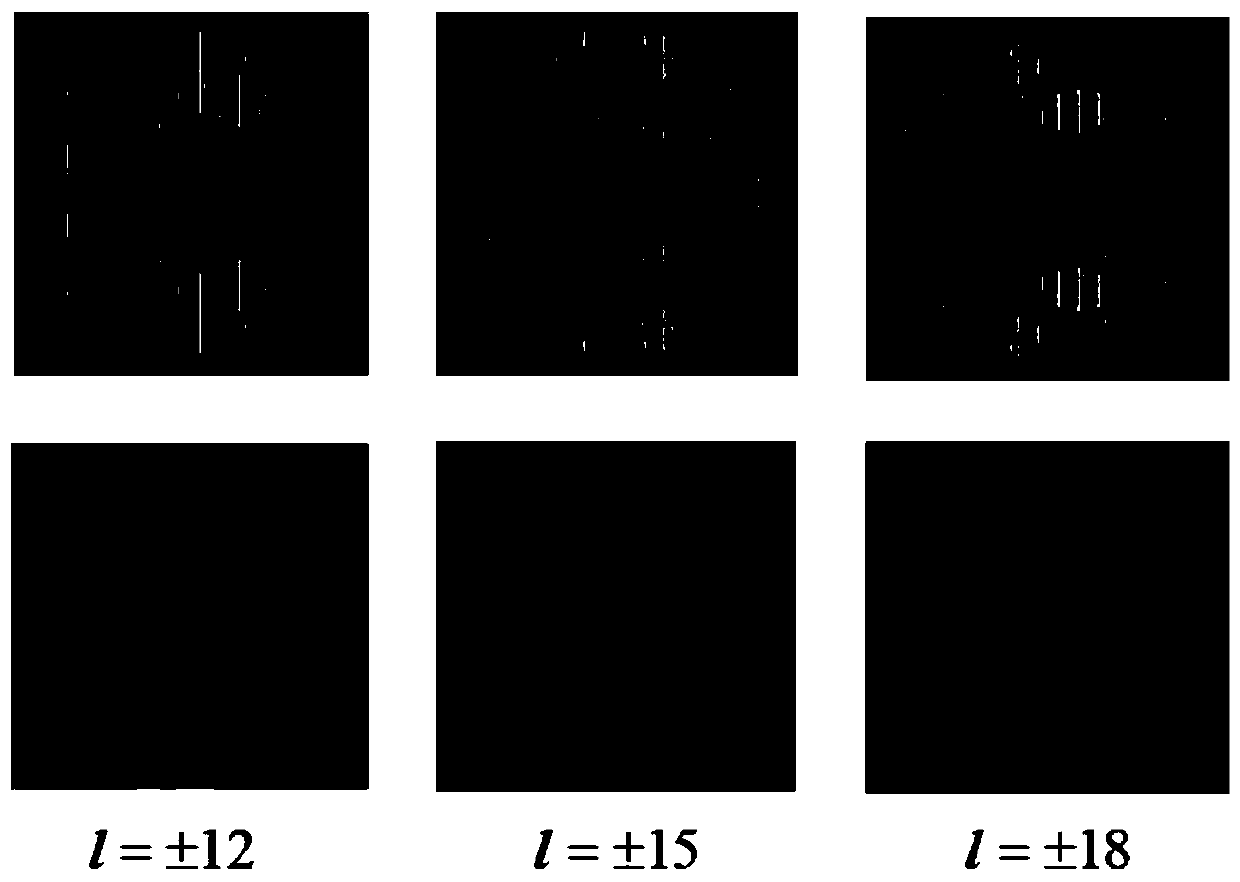
Figure 3
Abstract
Description
technical field
[0001] The invention mainly relates to the fields of optics, physics, photoelectric conversion, and signal detection, especially technical methods such as phase modulation and beat frequency detection of light beams. technical background
[0002] The technical background of the invention is mainly based on the rotational Doppler effect. The classic Doppler effect (LDE) is caused by the linear relative velocity between the object and the wave source. Due to the relative rotation speed between them, it has not been practically applied. The generation of the rotating Doppler effect requires a probe wave source with a rotational velocity around the propagation axis. In the field of classical physics, this wave source can transmit a Laguerre-Gaussian beam through a rotating Dove prism (Dove) or a 1 / 4 wave plate. get.
[0003] Since Allen discovered photon orbital angular momentum (OAM) in 1992, the characteristics of vortex light carrying OAM have been graduall...
Examples
Embodiment Construction
[0055] specific implementation plan
[0056] In the present invention, the superposition vortex beam is used as the detection carrier, and the specific implementation steps are as follows:
[0057] Firstly, the laser (1) generates a laser beam, which becomes horizontally polarized light after passing through the polarizer (2), and the Gaussian beam of the required diameter is irradiated on the SLM through the collimator beam expander lens group 1 and 2, and the SLM is loaded Hologram, an example of a loaded hologram and the corresponding vortex spot such as figure 2 shown.
[0058] Next, the vertically polarized light beam generated by SLM modulation is reflected by the polarization beam splitter prism (5), and then passes through the 4f filter system composed of convex lens (7), pinhole diaphragm (8) and convex lens (9) in turn, and selects the The first-order diffracted light generated by the SLM is collimated. Note that the diaphragm should be placed where the focal poin...