
A carbon-based composite ferric cyanamide material and its preparation method and sodium-ion battery using it as negative electrode material
A composite iron cyanamide and carbon-based technology, applied in the field of electrochemical materials, can solve problems such as difficulty in obtaining composite structures, limiting material application, etc., and achieve improved electrical conductivity and cycle reversible performance, uniform morphology distribution, and large growth opportunities. Effect
Patent Information
- Authority / Receiving Office
- CN · China
- Patent Type
- Patents(China)
- Current Assignee / Owner
- Publication Date
- 2021-06-18
Smart Images
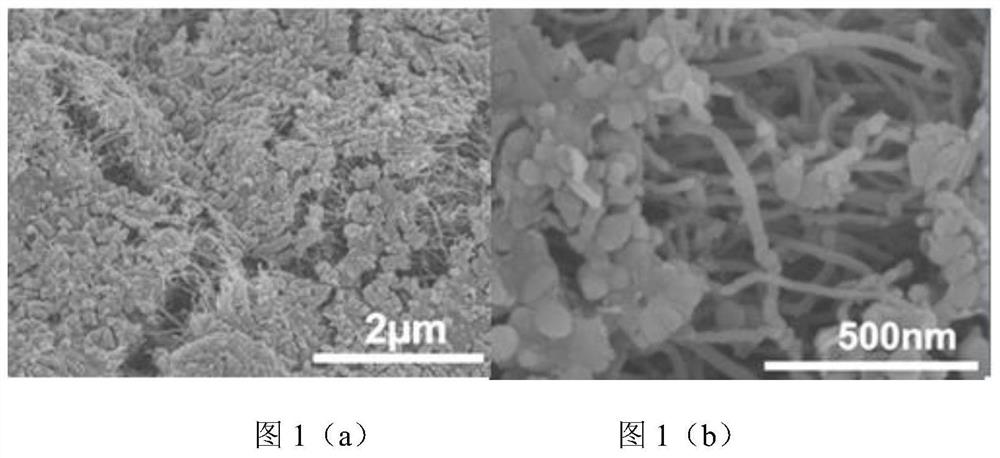
Figure 1 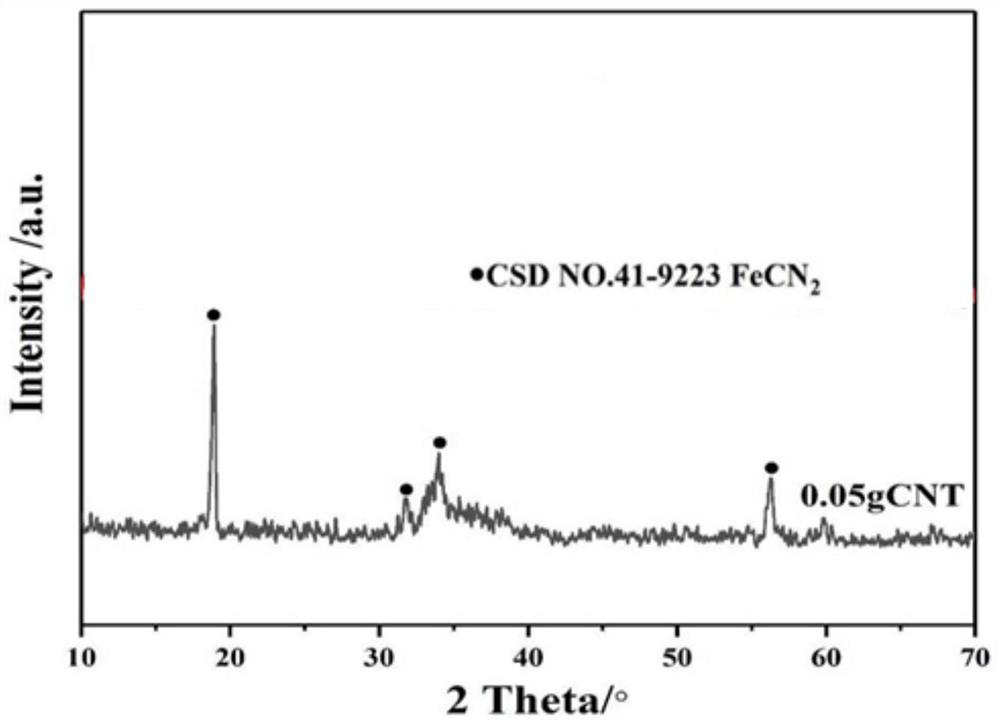
Figure 2 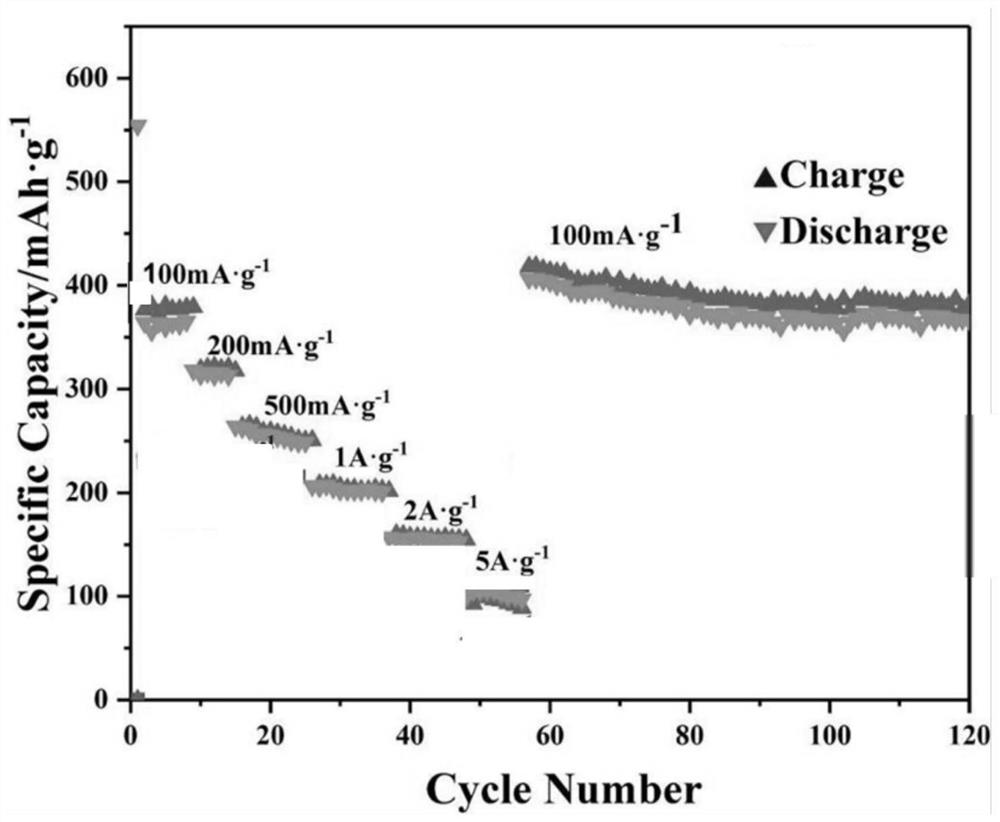
Figure 3
Abstract
Description
technical field
[0001] The invention belongs to the technical field of electrochemical materials, in particular to a carbon-based composite iron cyanamide material and a preparation method thereof, and also relates to a sodium ion battery using the material. Background technique
[0002] In recent years, due to the increasingly urgent demand for large-scale energy storage technology due to the utilization of renewable energy, resource-cheap sodium-ion batteries have received extensive attention from the scientific and industrial circles. However, due to the large size of sodium ions (DNa+=0.106nm, DLi+=0.076nm), it is difficult to directly intercalate into the electrode materials of many sodium-ion batteries to realize the electrochemical sodium storage process, which greatly limits the application prospects of such batteries. . Therefore, how to take into account the charge-discharge rate and sodium storage capacity of electrode materials for sodium-ion batteries has becom...
Examples
Embodiment 1
[0022] Adopt the following steps to prepare carbon-based composite iron cyanamide material:
[0023] 1) Take 1 g of analytically pure feroxamine oxalate, 2 g of urea and 0.1 g of CNT according to the mass ratio of 1:2:0.1, and place them in a glass mortar to fully grind to obtain a fine and uniform pale green mixture powder. The product is recorded as A;
[0024] 2) Add 0.02 g of EDTA to product A, dissolve it in water and then ultrasonically disperse it for 10 minutes, then put it into a freeze dryer, and dry it at -50°C for 12 hours to obtain a completely dried black product, denoted as B;
[0025] 3) The product B was placed in a ceramic crucible, placed in a tube furnace, pyrolyzed in an argon atmosphere, heated from room temperature to 160°C at a rate of 30°C / min, kept for 1 h, and then continued at 5°C The heating rate of / min continued to keep the temperature up to 400°C, and the obtained product was the carbon-based composite iron cyanamide material.
[0026] The obt...
Embodiment 2
[0028] Prepare carbon-based composite iron cyanamide material according to the following steps:
[0029] 1) respectively take analytically pure feroxamine oxalate 1.5g, urea 3g and graphene 0.45g in a mass ratio of 1:2:0.3, place in a glass mortar and fully grind to obtain a fine and uniform pale green mixture powder, the product denoted as A;
[0030] 2) Add 0.045g of ethanolamine to product A, dissolve it in water and then ultrasonically disperse it for 30min, then put it into a freeze dryer, and dry it at -50°C for 16h to obtain a completely dried black product and denote it as B;
[0031] 3) The product B was placed in a ceramic crucible, placed in a tube furnace, pyrolyzed in an argon atmosphere, heated from room temperature to 160°C at a rate of 30°C / min, kept for 1 hour, and then continued at 6°C The heating rate of / min continued to keep the temperature up to 600°C, and the obtained product was the carbon-based composite iron cyanamide material.
[0032] The obtained...
Embodiment 3
[0034] Prepare carbon-based composite iron cyanamide material according to the following steps:
[0035] 1) Take 2 g of analytically pure feroxamine oxalate, 4 g of urea and 0.12 g of super-p respectively in a mass ratio of 1:2:0.6, and place them in a glass mortar to fully grind and mix to obtain a fine and uniform pale green mixture powder, The product is denoted as A;
[0036] 2) Add 0.08 g of oleic acid to product A, dissolve it in water, and then ultrasonically disperse it for 60 minutes, then put it into a freeze dryer, and dry it at -50°C for 18 hours to obtain a completely dried black product, denoted as B;
[0037] 3) The product B was placed in a ceramic crucible, and put into a tube furnace together, pyrolyzed in an argon atmosphere, heated from room temperature to 160 °C at a rate of 30 °C / min, and kept for 1 h, and then continued to heat for 8 The temperature rising rate of ℃ / min continued to keep heating up to 600 ℃, and the obtained product was the carbon-based...